Friday, July 29, 2011

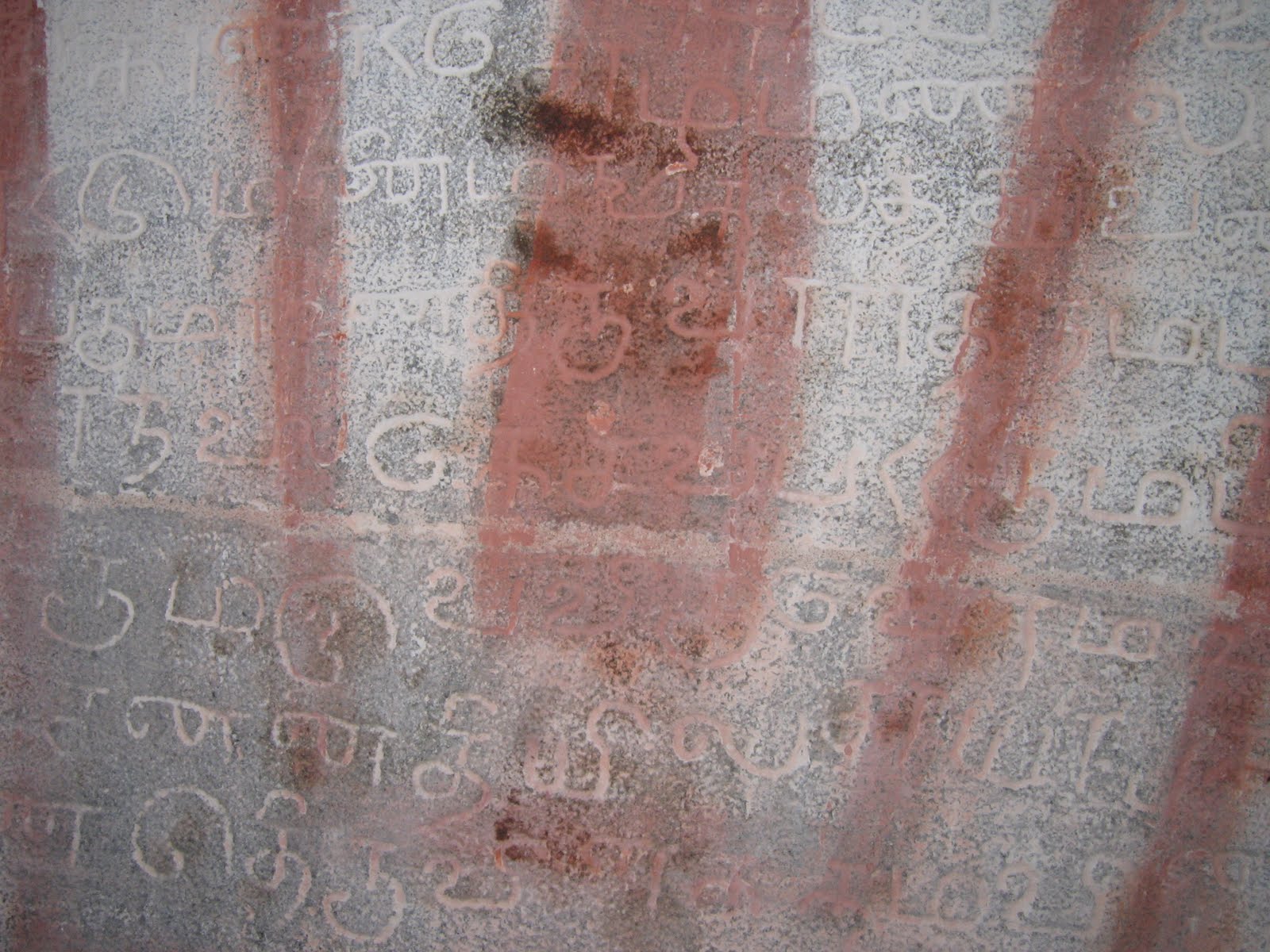
Thiru Mukoodal Pallava Chola Inscriptions

Bhattar was paid 120Kalams of Paddy and 10 Kasu annually

Gold Offerings to the temple were to be utilised for Vedic School and the Hospital at Thiru Mukoodal


Inscriptions provide rich insights into the salaries of the Vedic Teachers, number of Vedic Teachers/ Students, Number of beds in the hospital as well as the hospital staff and their salaries

Inscription also records the presence of the Barber at the Hospital and the salary paid to him

Inscription in ancient temples gives one an insight into the historical chronology of the temple, the life style of the town and the architectural patterns at the temple depending on when it was constructed and later renovated and the kings who lived during that period.

Interestingly at the 2000 year old Appan Venkatesan temple in Thiru Mukoodal in Pazhaya Seevaram about 12kms east of Kanchipuram, inscriptions provide us with an indepth insights into the kind of health care facilities available at that time, the number of staff involved and even the salary paid to them.

While presence of Vedic schools and the loud recital of the Vedas was not uncommon in those days, insights through the inscriptions here at Thiru Mukoodal give us an indication on the extent to which it was prevelant in that early Pallava Period.

Earliest Inscription- Late 9th Century


An inscription in Tamil dating back to 893AD to the rule of Pallava Nripatunga Varma records a gift of 30 Kalanju of Gold for perpetual lamp. The assembly of Siyapuram entrusted with the gift agreed to supply oil for the lamp from the interest on the capital amount. Interest was fixed at 3 Manjadi per Kalanju. The Oil was to be supplied at 40 Nali per Kalanju.

A 1013AD inscription relating to Raja Raja Chola I records the gift of gold and land for offerings. Another inscription dating to the same year and the ruler records an agreement to pay taxes on certain temple lands from the interest on a specified quantity of gold which they had received from temple treasury.

Conduct of Maasi Magam Festival

On the western wall, a 1015AD inscription relating to Rajendra I records the gift of gold for offerings on Maasi Magam Festival. The gold to be offered was weighed and found to be equal to 3 Kalanju, interest fetched one Manjadi per year. Paddy was sold at 40 Kadi per Kalanju.

There is another inscription dating to 1016-17AD to the rule of Rajendra I recording the gift of paddy for offerings and festival on new Moon days.

Rajendra I- Gift of Sheep for lamp

A 1017AD inscription on the Western Wall relating to Rajendra I records the gift of 90sheep for lamp, a 1021AD inscription records gift of 90sheep and a 1023AD inscriptions records the gift of 113sheep for a lamp. An agreement was entered in 1028AD by the Vaikhanasas to use surplus paddy for reciting Thiruppadiyam at the temple.

The Huge Temple Garden and its functioning

A 1019-20AD inscription relating to Rajendra Chola Deva on the Western wall of the central shrine records the gift of Padagams of Garden land for flower garden. An agreement to have 7000baskets of manure spread on the field had two underlying conditions:

1. The priests of the temple were to have Kilbhogam rights while the Vaikhanasas were to have lease rights for cultivation

2. The bundles of hay weighing not less than one Kalam of Paddy each were to be collected from every tenant of the village by Vaikhanasas and used for the benefit of garden only and not to be sold for private purposes and permitting the temple garden the first claim over the irrigation of wet lands


A 1065AD inscription on the eastern wall of the first prakara relating to Raja Kesarivarma records the gift of two twilight lamps by a Brahmana lady.

On the South Wall of the temple a 1075AD inscription relating to Kulotunga I records the gift of land to the temple. An 1121AD inscription relating to Vikrama Chola Deva records the sale of land

Gold offering to be utilised for Vedic School and Hospital


Vira Rajendra Deva’s inscription in 1069AD records the order by the king that the 75 Kalanju of gold which the residents were paying at that time be entered as tax free Devadana to be utilised for God’s expense including the maintenance of Vedic School and the upkeep of the hospital. The hospital seemed to have 15beds. The physician was paid 90Kalams of Paddy and 8Kasu annually in addition of the grant of a land.
The surgeon was given 30Kalams of Paddy, two nurses were given 30kalams of Paddy and one Kasu annually. There was also a barber who was paid 15kalams of Paddy. In addition to the above, there were two persons who were to get medicinal herbs. These two got 60kalams of Paddy and two Kasu.

Vedic School


The Vedic schools taught Rig Veda and Yajur Veda. The vedic teachers were paid 60Kalams of paddy and 4Kasus annually. The bhattar at the temple was paid 120Kalam of Paddy and 10 Kasu annually

Inscriptions indicate that there were 10Brahmins who were studying Rig Veda, 10 Brahmins who were learning Yajur Veda, 20 Brahmins were studying Vyakarma and Rupavatara and 10 were learning Mahapancharatna. It also records the presence of 3 Saivite Brahmins, 5 Vaikanasas and two others.

Located about 70kms South of Madras, off the Chengalpet-Kanchipuram SH58 at the confluence of three rivers – Palar, Vegavathi and Cheyyar- is The temple is one km South of Pazhaya Seevaram Narasimha temple on the Salavakkam Highway.

For the story on Thiru Mukoodal, visit: http://prtraveller.blogspot.com/2010/05/thiru-mukoodal-appan-venkatesan.html

Thursday, July 28, 2011

Kovil Pathagai Sundara Raja Perumal Temple

Two forms of Vishnu provided darshan to two Great Rishis
Ashta Naga Garuda is a special feature at this temple


Located 3kms North of Avadi Railway Station in Kovil Pathagai is the Sundara Raja Perumal temple, believed to date back 750years, one that has two moolavar deities and where two rishis performed penance and were provided darshan by two different forms of Vishnu.

Brigu Maha Rishi is believed to have undertaken penance at this place. Answering his prayers, Sundara Raja Perumal provided darshan to him in a grand sitting posture and stayed here as per the wishes of the rishi.

Vaikunta Natha Perumal, believed to be the original presiding deity at this temple, provided darshan to Markandeya Maha rishi who is seen alongside the west facing Lord Vaikuntanathan. Opposite Vaikuntanathan is the Ashta Naga Garuda in a sitting posture.

Centuries ago, there was a chariot here at the temple and the Lord is believed to have undertaken processions sitting atop the chariot.

On the Vimana are sculptures of Parthasarathy and Ranganatha, in a Sayana Posture.

Festivals

Vaikasi Brahmotsavam
Aani Garuda Seva
Panguni – 13 streets procession- Kalyana Utsavam


Quick Facts

Moolavar: Sundara Raja Perumal East facing sitting posture
Vaikunta Nathan West Facing sitting posture

Thaayar : Sundara Valli Thaayar ( Separate Sannidhi)
Temple Time: 7am-8am and 530pm-7pm
Priest: Janakiraman Bhattar @ 98406 29471

How to reach

Bus Numbers: 61D, 61E, 61R and 61K from Avadi bus stand (will take 10minutes to reach the temple)

Share auto from Avadi bus stand will cost Rs.10/-

Saturday, July 23, 2011

Natha Muni Avathara Utsavam in Kattu Mannar Koil

Paranthaka I renovated the temple and built the Veera Narayana Lake


In celebration of Natha Muni’s contribution in the compilation of Nalayira Divya Prabhandham and the initiation of the Vaishnava Sampradaya, one witnessed a grand 10 day Utsavam at the Veera Narayana Perumal temple in Kattu Mannar Koil near Chidambaram, that culminated on his birthday this Tuesday with the Great Vaishnavite Savant being taken out around the four Mada Streets on a Garuda Vahana procession.

On this day, there was also the recital of 4000sacred verses. On each of the preceding 9days, Natha Muni, decorated in a special Alankara, went out on a procession in a palanquin with the chanting of Nam Azhvar’s Thiruvoimozhi.


Veera Narayana Perumal's direction to Nathamuni


Kattu Mannar Koil is the Avathara Sthalam of Natha Muni who was responsible for bringing back the Nalayira Divya Prabandham that had been previously lost to the world. It was Veera Narayana Perumal, the presiding deity at Kattu Mannar Koil, who asked Nathamuni to collect the verses of the Azhwars and to spread the positive message contained in these sacred verses.

In centuries gone by, the direction to Kattu Mannar Koil was given as being North of Cauvery / Coloroon, West of Veda Pushkarani and South of Vedanarayana (Veeranam) lake.

The story
Pleased with the penance of Jhirumbana Raja Maharishi, who was childless, Goddess Mahalakshmi herself was born here as his child. Once she grew up into a beautiful young girl, there was a svayamvara organised to find her match.

Lord Narayana came here in his Garuda Vahana in the guise of a king (Mannan) to participate in the Swayamvara. Having won over her, he took her away much to the wrath of the other kings who attacked him. Lord Narayana, displaying his Vishwaroopa, defeated them all. Having shown his valour here, the Lord came to be called ‘Veera’ Narayana Perumal.


Another story goes that Mathanga Rishi, to liberate himself from Brahma’s curse for having committed an error in the recital of the vedic chant, went to Srimushnam, where the Lord appeared before him and redirected him to Manyu Kshetram (Kattu Mannar Koil), South East of Srimushnam to undertake penance in the Veda Pushkarani. Answering his prayers, Lord Narayana displayed his Chathurbhuja form here at Kattu Mannar Koil and acceding to the request of the rishi stayed here to provide darshan to the devotees.

Nalayira Divya Prabhandham

Nathamuni, who mastered himself in Vedas at a young age, was very attached to Veera Narayana Perumal of Kattu Mannar Koil and spent most of his time performing daily poojas for the Lord here. One day, while he was performing his daily rituals, he heard a set of devotees from Thiru Narayanapuram chanting the Aaravamuthey verse. These devotees ended their chanting with the words “these 10 out of the 1000”.
Nathamuni was drawn to these songs and asked them to sing the rest of the 990 verses. However, they knew only these 10 songs.

Nathamuni goes to Thiru Kurugur

Seeking to find these 1000verses, Nathamuni left Kattu Mannar Koil for Kumbakonam, where Lord Aaravamudhan directed him to Thiru Kurugur. Unable to get his answers at Kurugur, he went to Thiru Kolur, where he got initiated with Madura Kavi Azhwar’s verses of Kannin Siruthambinaal. He came back to Thiru Kurugur and sitting under the Tamarind tree recited these verses 12000 times, on completion of which Nam Azhwar appeared before him and shared not just the 1000songs that he was looking for but the entire 4000 verses.

Veera Narayana Perumal then called Nathamuni back to Kattu Mannar Koil where the Vaishnavite Savant chanted and shared the Nalayira Divya Prabandham to the world at large. Thus, Nathamuni of Kattu Mannar Koil, was instrumental in bringing back to the world the 4000 verses of the Azhwars.

Creation of Araiyar Sevai

Along with his nephews, Keezhaiyagath Azhwar and Melaiagath Azhwar (the Araiyars are descendents of these two), Nathamuni presented the Naalayira Divya Prabandham, that was until then only in a text form, in a musical and dance form, creating Raga and Thala, that the world could experience and enjoy. To Natha Muni goes the credit of creating the Araiyar Sevai, a visual song and dance enactment of the ‘Paasurams’ through the Abhinaya.

He went to Srirangam and presented the Araiyar Sevai, of the Thiruvoi Mozhi verses with his two Nephews, and once again started the Adhyayana Utsavam at Srirangam which had been discontinued after the time of Thirumangai Azhwar.

Different Names under different rulers

During the Chozha period, this place was referred to as Veera Narayana Vinnagaram, while during the times of Sundarapandyan this was called Mannanar. Krishna Deva Raya referred to the Lord as Azhagiya Mannanar. This place has also been referred to as Veera Narayanan Chaturveda Mangalam and Thuvarapathi Mannan Thiru Koil.

There are 5 wells inside the temple and an expansive garden, which Nathamuni used for his daily poojas for Veera Narayana Perumal.

The name - ‘Kattum Mannan-Aanaar’ koil
As Lord Narayana came here as ‘Mannan’ to take the hand of Mahalakshmi and later showed the way for Nathamuni to compile the Divya Prabandham and the Vaishnava Sampradaya to the world at large, he was referred to as ‘ Kattum’ ‘Mannan- Aanaar’. In course of time, Kattum Mannan-Aanaar became Kattu Mannar.

Aalavanthan- Grandson of Nathamuni

Born in Kattu Mannar Koil, Nathamuni’s grandson ‘Yamunai Thuraivan’ (Alavanthan) travelled often to Srirangam to spread the message of Vaishnavism. Alavanthan nominated Ramanuja as the acharya to succeed him after his death.

Structure of Kattu Mannar Koil

The temple is perfectly built as per KoorathAzhwar's sacred verse:
"Lakshmi Naatha Samaarambaan Nathayaamuna Mathyamaam Asmath Aacharya Pariyantham Vanthey Guru Parampara" - Lord Veera Narayanan in the middle, Natha Muni (facing South) to his left, Alavanthan (facing North) to his right (exactly opposite to Nathamuni) and with Maragathavalli Thaayar to his right between the Nathamuni and Alavanthan Sannidhi.


Quick Facts

Moolavar: Veera Narayanan East Facing Standing Posture
Thaayar: Maragatha Valli Thaayar
Utsavar:
1. Rajagopalan with Rukmini and Satyabhama
2. NithyaUtsava Perumal- Sundara Gopalan
3. Prarthana Perumal- Shenbagamannan with Sridevi and Bhoodevi’
Temple time: 730am-12noon and 430pm-9pm
Contact details: Annan Srinivasan Bhattar @ 99522 76110/ Venkatesh Bhattar @ 99940 34634

How to reach Kattu Mannar Koil
Buses every half hour between Chidambaram and Kattu Mannar Koil. One can also reach Kattu Mannar Koil from Vriddachalam, Srimushnum and Jayakondam.

By road from Chennai, one can reach Kattu Mannar Koil by taking the Vikravandi- Panruti-Sethiya Thope route (about 235kms)

Rajagopalaswamy temple in Manimangalam

Chola Rulers including Kulothunga I, Vikrama Chola Deva and Raja Raja contributed immensely to the upkeep of the temple but the temple now craves for attention
Parikara Sthalam for getting back one's eye sight


Temples in Tamil Nadu that once upon a time flourished with expansive gifts from the rulers of those days have deteriorated and today find themselves in a sorry state.

One such is the 1000year old Rajagopalaswamy temple in Manimangalam housed on a 1 ¼ acre area, about 12kms West of Tambaram, a temple whose construction dates back to the Chola period and one that is abound with rich stone inscriptions providing us with insights into the glory of this temple.

Conch in his right hand

Moolavar Lord Rajagopalaswamy is seen in a standing posture with a Conch Shell in his right hand and a discus in his left hand. This is also a temple that Ramanuja is believed to have visited.

1000year old inscriptions


The temple is abound with inscriptions in Tamil and Sanskrit earliest of which dates back to the 11th Century AD and continued to find updates of contribution to the temple with the passing of each century.

On the South wall of the central shrine of this temple is an inscription in Sanskrit that records a grant made to Lord Rajagopalaswamy. A Tamil inscription on the same wall records a sale of 4000 kuli of land. Another inscription dating back to Chola Raja Raja I records a gift made by members of the mahasabha to this temple.

On the North and West walls of the temple, inscriptions indicate gifts provided for the offerings and expenses of worship of the temple by making 3200kuli of land.


Gifting by Kulothunga I

An 1118AD inscription records a grand of 4450kuli of land. A few more inscriptions dating to 12th Century AD and to the period of Kulothunga I registers gift of land to the temple as well as the grant of land for providing offerings to the temple.

Several Inscriptions relating to 12Century AD

Two inscriptions on the west wall of the temple relating to Vikrama Chola Deva, in his 13th year of reign, and again to the 12th Century AD, provide us insights into the purchases of land for the offerings at the temple. A 1154AD inscription in Tamil on the outside of the East wall of the inner prakara records a donation of tax free lands to the temple for sacred offerings.

Inscriptions on the North and East Walls dating to 1198AD record gifts of four lamps for the temple.

Raja Raja's Contribution to Manimangalam

Inscriptions dating to 13th Century AD and to the rule of Raja Raja II/III record resolutions relating to gifts for the deity. Another interesting inscription of 1229AD and to the rule of Raja Raja III talks about payments into the treasury for maintaining the Sannidhi lamps. On the South wall in Tamil is an inscription dating to the rule of Jatavarma Sundara Pandya that records the sale by a devotee of a Pattam to be worn by the deity.

Inscriptions also indicate gifts of several lamps by devotees and also gift of gold to support the continuous burning of the lamps.

Craves for Attention
A temple that once seems to have thrived with rich gifts from the then rulers and the devotees alike is now bereft of funds so much so that the festivals have been limited to just one - Garuda Seva in Puratasi. The temple does not have a gopuram.

The surrounding area around the Central Shrine is full of thick bushes with snakes running into the Madapalli on a regular basis giving the priest a scare. Except for select days in the year, devotees have by and large given this ancient temple a miss, though the story goes that this temple is believed to be a Parikara Sthalam for bringing back ‘eye sight’.

Those who wish to support the temple and to bring back the lost glory including the conduct of festivals can contact Jayaraman Bhattar @ 88707 25799


Quick Facts:

Moolavar: Rajagopalaswamy standing posture facing East
Thaayar : Shengamala Valli Thaayar (Separate Sannidhi)
Temple Time: 7am- 10am and 4pm-7pm


How to reach

The temple is about 12kms from Tambaram on the Mudichur road and 5kms from Vandalur on the Sriperambudur highway. One can take the Tambaram- Sriperambudur bus (route numbers: 55N, 80, 583C, 583D) to reach the temple

Thursday, June 16, 2011

Nava Tirupathi Garuda Sevai Azhvaar Tirunagari

Nava Tirupathi Divya Desam Lords come together at Azhvaar Tirunagari to Celebrate Namazhvaar’s Greatness

Last week, Aathi Natha Azhvaar Temple in Azhvaar Tirunagari played host to the grandest of the festivals at Nava Tirupathi - nine Vishnu temples either side of Tamaraibarani off the Tirunelveli -Tiruchendur state highway. On the occasion of the 5th day (Wednesday June 8) of the Vaikasi Azhvaar Utsavam, the utsava deities of all the nine temples congregated at Azhvaar Tirunagari in a celebratory gesture to thank Nam Azhvaar for his significant contribution to the 4000 sacred verses (Nalayira Divya Prabhandham).

After his birth, Nam Azhvaar did not consume anything. Neither did he open his mouth for 16years. God was everything to him as he sat quietly under the Tamarind tree at Thiru Kurugur (another name for Azhvaar Tirunagari). God is always looking for such a special devotee. And for this reason, the Lord does not mind coming all the way to the devotee’s place and providing darshan.

Ahead of the visit of the Nava Tirupathi Lords, Azhvaar Tirunagari, the only Divya Desam to be named after an Azhvaar, wore a festive look. The women on the Sannidhi Street had started their traditional Pulli Kolam as early as 4am. Temporary shops sprung up on both sides of the Sannidhi Street, Nam Azhvaar was being decked up inside the temple and there was a buzz all around with devotees queuing up in and around the temple taking up vantage positions as they waited with bated breath for the first glimpse of the Nava Tirupathi Lords.

While Azhvaar Tirunagari was thus getting ready for the big event, by 6am that morning each of other eight ‘Nava Tirupathi’ Lords had begun their procession to this Divya Desam from their respective abodes in Nava Tirupathi to join the 9th Lord (Polintha Ninra Piraan, utsava deity of Aathi Natha Azhvaar Temple).

Nam Azhvaar’s welcoming gesture

By 9am, Nam Azhvaar, with a beautifully decorated and colourful green umbrella atop him, made his way to the Ramayana Mandapa at the entrance of the temple to await the arrival of the Nava Tirupathi dieties. Shortly after, Nam Azhvaar, who is the only Azhvaar to have sung praise of all the Nava Tirupathi temples, received the first three of the Nava Tirupathi Lords- Kallapiran of Sri Vaikuntam, Vijayasayanar of Varagunamangai (Natham) and Kaisina Venthar of Thiru Pulingudi.


Welcoming them, Araiyar Natha Muni of Azhvaar Tirunagari (Azhvaar Tirunagari is one of the only three Divya Desams where Araiyar Seva is still being performed) presented Nam Azhvaar’s Thiruvoimozhi verse –‘புளிங்குடி கிடந்தது வரகுணமங்கை இருந்து வைகுந்தத்தில் நின்று ……’ - in which he sung praise of all three of them in one go referring to the Standing Lord of SriVaikuntam, the one in a grand sitting posture at Varagumangai and the Sleeping Lord of Pulingudi.

Nam Azhvaar accepted the parivattam (the turban linen) and the garland from the first of the three Nava Tirupathi Lord. Over the next hour, he accorded a similar welcome to the rest of the Nava Tirupathi Lords.


Nam Azhvaar refers to Aravinda Losana and Devapiran (Erettai Tirupathi) as the prosperous temple in Thulai Villi Mangalam on the Northern Bank of Porunai River (Tamaraibarani) where there was constant Vedic Chanting. This was followed by Mayakoothan from Perungulam who Nam Azhvaar referred to as a wonder dancer riding on Garuda in the West in Southern Kulanthai. His reference to groves and big mansions indicates that this was a prosperous location in centuries gone by.

Nam Azhvaar then welcomed the last two of the Nava Tirupathi Lords, from the East, Nigaril Mugil Vannan from ThenThiruperai, who he refers to as ‘மகர நெடுஞ் குலை காதன்’ (the one with the Makara ear rings) and Vaitha Maa Nidhi from Thiru Kolur, birth place of Madura Kavi Azhvaar.

While Nam Azhvaar received garland from all the 9 Nava Tirupathi lords, Madura Kavi Azhvaar, who pronounced Nam Azhvaar as his God, received the garland from the Azhvaar himself.

Natha Muni, who came here to compile the Naalayira Divya Prabhandham which had been lost to the world, first met with Madura Kavi Azhvaar and picked up his ‘Kanninun Sirutha Ambinaal’ composition. It was after reciting these verses 12000 times that Nam Azhvaar shared with Natha Muni the contents of the Naalayira Divya Prabhandham.

After Thirumanjanam and Alankaram through the evening and recital of 273 verses from the Divya Prabhandham (173 verses of Andal’s Thiruppavai and Nachiyar Thirumozhi and 100 verses from Nam Azhvaar’s Thiruvoimozhi), all the Nava Tirupathi Lords were all set to mount on their respective Garuda Vahana.

Much awaited Event - Once in a year procession
At 11.30pm, much to the delight of the devotees who had gathered at the temple for the big event of the Azhvaar Utsavam, Nam Azhvaar, on his Hamsa Vahana, and Madura Kavi Azhvaar, on a special Parangi Narkali (Bamboo chair), came out to a loud cheer and positioned themselves at the entrance of the temple. For the next hour, beginning with Polintha Ninra Piraan, all the nine Utsava deities with extensive flower decoration came out one after another on their Garuda Vahana providing this special darshan to Nam Azhvaar.


Well after mid night, all the Nava Tirupathi deities along with Nam Azhvaar and Madura Kavi Azhvaar went on the once in a year procession, first around the four Mada streets and then around the Car streets of Azhvaar Tirunagari to provide darshan to devotees who had stayed awake through the night to witness this marvellous spectacle.

By 6am, the next morning, all of them were back at the Aathi Natha Azhvaar Tirunagari temple and shortly afterwards it was time for them to bid adieu to Nam Azhvaar and head back to their respective abodes in Nava Tirupathi.

Azhvaar’s send off - Special Gesture 
Being the farthest from Azhvaar Tirunagari, Mayakoothan of Perungulam (10kms away) was sent off first by Nam Azhvaar, followed by Kallapiran, Vijayasayanar and Kaisina Venthar.

Having seen Devapiran of Erettai Tirupathi as his own father and mother (சிந்தையாலும் சொல்லாலும் செய்கையினாலும் தேவபிரனையே தந்தை தாய் என்று அடைந்தவன் ……..Thiruvoimozhi verse), Nam Azhvaar in a special gesture of showing that extra care for his ‘parents’ waited a few extra minutes till Aravinda Losana and Devapiran of Errettai Tirupathi went completely out of sight at the Eastern end of Sannidhi Street past the Nayaka Mandapa on his way back to their abode. Following this, Nam Azhvaar saw off for another year Nigaril Mugil Vannan and Vaitha Maa Nithi.

To the Tamarai Barani
On the occasion of his birthday (Vaikasi Visakam) - the 10th day of the Utsavam this Monday (13th June) - Nam Azhvaar entered the Tamarai Barani for one of the only two occasions in the year (the other being in Maasi) for Theertha Vari accompanied by the loud rendering of Divya Prabhandham verses bringing to end Nava Tirupathi’s biggest utsavam.

For auto to Nava Tirupathi temples contact:  9442370844 / 94435 27620  or For Cabs @ 9952755336

Thursday, June 9, 2011

Malayadipatti Anantha Padmanabhaswamy Temple

8th Century AD temple that has Mamalla Style of Architecture
15ft Moolavar in a Sthala Sayana Posture
Malola Narisimha, Vaikunta Nathan, Hayagriva idols seen inside the sanctum


Located 45kms from Tiruchirapalli in a remote village in the Kulattur Taluk of Pudukottai District is the largely unknown North Facing Rock Cut Anantha Padmanabhaswamy cave temple in Malayadipatti, one that dates back around 1200 years to the late 8th Century AD / early 9th Century AD.

Name

In centuries gone by, Malayadipatti was also referred to as Thiru Valattur Malai and was known for two rock cut temples – one dedicated to Shiva and the other to Vishnu- both hewn out of the same rock.

Architecture

While the rock cut style is more reminiscent of the temple at Thirumayam ( also in Pudukottai District) and the stucco decorations there, the Perumal temple at Malayadipatti is more of the Mamalla style with elegant pillars. The pillared hall contains large panels cut in the side walls filled with scriptures including those of Narasimha and Varaha.

The 15feet Moolavar is a beautifully carved image of Lord Anantha Padmanabhan in a Sthala Sayana Posture lying on the serpent Adisesha and is similar to the one seen in Thiruvananthapuram Divya Desam. The five heads of the serpent are spread out like a canopy over the God’s head. While his right hand is hanging down in a posture of blessing the devotees, the Lord’s feet rest on a lotus. Performing poojas with Lotus flowers is a speciality at this temple. Above Anantha Padmanabhaswamy idol are interesting paintings on the ceiling.

Inside the sanctum are Pundareekaksha, in a standing posture, with the Gandharvas seen performing pooja on him, Malola Narasimha in a Sitting Posture, Vaikunta Nathan, with Sri and Bhoodevi, in a posture similar to the one seen at Vaikuntam and Chaturbhuja Hayagriva in a grand sitting posture.

On the wall of the sanctum are two demons, Madhu and Kaitabha, who threatened to kill Brahmma- but were slain in the process.

The two Dwarapalakas, Jaya and Vijaya, at the entrance are not conventional sculptures and are more in the form of portrait sculptures.

The Story
Legend has it that Diwakara Rishi, who in a fit of anger tried to disrupt the yagna of King Indradyumna, was cursed to lose his powers. He is believed to have undertaken penance here invoking the blessings of Lord Vishnu, who pleased with sincerity of the prayers, provided him darshan as Anantha Padmanabhan in a Sayana Posture and handed back his yogic powers and knowledge. The temple is an Abhimana Sthalam.

Inscriptions


There are several inscriptions that provide interesting insights about the temple. An 8th Century AD inscription refers to Danti Varma Pallava and the Siva temple which is just next to the Perumal temple. The structure of this Malayadipatti cave temple and the Lord himself also has similarities to the Sthala Sayana Perumal Divya Desam at Thiru Kadal Mallai (Mahabalipuram).


Inscriptions also refer to the renovation undertaken in 960AD by Raja Kesari Sundara Chozhan.

A 16th Century AD inscription relating to the period of Achuthappa Nayaka of Thanjavur refers to gifts of villages and other grants made to this temple describing the Lord as ‘Kan Niraintha Perumal’ and to this place as Thiruvai Malai. Another inscription dating back to the same period refers to the Lord as Thiru Vaazha Vantha Perumal.

Festivals
Procession on Full moon day in Chitrai
Theerthavari on Maasi Magam


Quick Facts

Moolavar: Ananthapadmanabhan in Sthala Sayana Posture
Thaayar : Kamala Valli Nachiyar
Temple time : 7am- 11am and 5pm-630pm
Priest : Srinivasa Bhattar @ 99407 49234

How to reach

One can reach Malayadipatti by taking the Trichy- Keeranur - Killukottai route (17kms from Keeranur) or Trichy - Thuvakudi – Poyyakudi- Asur- Sengalur route.

Bus Numbers: K3 and K12 from Keeranur
No. 100 from Tiruverambur
No. 26 from Chatram Bus Stand

The temple is 33kms from Pudukottai.

Auto/Taxi from Trichy will cost around Rs.500.

For local help, contact: Saivaraj @ 97878 18987

Friday, May 27, 2011

Abhinav Mukund in Indian Test Squad to West Indies

Tamil Nadu rookie Abhinav Mukund has been picked in the Indian test squad to tour West Indies next month. In 1989, two other Tamil Nadu cricketers, Robin Singh and M. Venkatramana had their first overseas tours to the Carribean as had L. Sivaramakrishnan earlier that decade in 1982.

Abhinav’s selection is fully justified coming on the back of a spectacular domestic season where he scored over 1000runs, though it must be said that he failed in the most important knock out match for Tamil Nadu in the Ranji Trophy. Interestingly, Abhinav has not been picked in the XI for most part of CSK's campaign in the IPL this season, endorsing prtraveller's view that he should concentrate on the longer version of the game, for which his strong technique is more suited to.

With this leap into the next phase of his career, Abhinav has everything going for him to kick start his Test Career. He could open with his TN team mate M. Vijay with whom he has been partnering over the last couple of years at the top of the order. West Indies will have an inexperienced bowling attack led by Sammy and newcomer Bishoo.

If he can play his typical long innings that he has come to be known since his school days, Abhinav could stabilise his place in the Test team, especially with the increasing amount of cricket leading to more frequent injuries to the top Indian cricketers.

Surprisingly, Abhinav who has been known to have a cool head, got into controversy last season in the Deodhar Trophy match for South Zone when he seemingly refused to bat down the order .Going forward, into the next level, it would be important for him to maintain the sense of balance and not get into such controversies.

In mid 2007, prtraveller had suggested that Abhinav could be the most stable, solid opener for India after Sunil Gavaskar. And like Gavaskar in 1971, this tour of the West Indies could turn out to be the ideal launch pad for a long and successful test career for Abhinav


http://prtraveller.blogspot.com/2007/09/cricket-pick-of-month-abhinav-mukund.html

Sunday, May 15, 2011

Azhagar Koil Renovation

http://www.thehindu.com/arts/history-and-culture/article2011899.ece

Sunday, May 8, 2011

Azhagar Chitrai Thiruvizha April 2011

http://www.thehindu.com/arts/history-and-culture/article1792832.ece

Tuesday, April 26, 2011

Thiru Vayinthirapuram Paasuram

வையம் எழும் உண்டு ஆல்இலை வைகிய
மாயவன் அடியவர்க்கு

மெய்யன் ஆகிய தெய்வ நாயகன் இடம்
மெய்தகு வரைச் சாரல்

மொய் கொள் மாதவி சண்பகம் முயங்கிய
முல்லை அம் கொடி ஆட

செய்ய தாமரைச் செழும் பணை திகழ்தரு
திருவயிந்தி புரமே


In some verses, Thirumangai Azhvaar just makes a passing reference to the temple that he has visited. Sometimes, he combines two-three temples in a particular verse and only makes a passing reference to the place without even a mention of the Lord's name.

In this Periya Thirumozhi Verse, Thirumangai Azhvaar sings praise of Thiru Vayinthirapuram temple referring to the location, the Lord's name as well as providing a description of the place surrounding the temple.

He refers to Lord Deivanayagan as the one who consumed the 7worlds and one who lays on the fig leaf.

Referring to the location, he says Thiru Vayinthirapuram temple where Deivanayakan provides darshan to the devotees is one surrounded by mountain with the mullai creepers swaying in the breeze and the Lotus flowers springing up all over the water tanks by the side of the temple.

Thirumangai further refers to this place as a pleasant garden area where the dense Shenbagam trees protects the devotees from the hot sun.

Sunday, March 6, 2011

Kulasekara Azhvaar's Perumal Thirumozhi

மரம்திகழும் மனம் ஒழிந்து வஞ்சம் மாற்றி
வன் புலன்கள் அடக்கி இடர்பு பாரத் துன்பம்

துறந்து இரு முப்பொழுது ஏத்தி எல்லை இல்லாத்
தொல் நெறிக்கண் நிலை நின்ற தொண்டரான

அறம்திகழும் மனத்தவர்தம் கதியை பொன்னி
அணி அரங்கத்து அரவணையிர் பள்ளிகொள்ளும்

நிறம்திகழும் மாயோனை கண்டு என் கண்கள்
நீர்மல்க என்றுகொலோ நிற்கும் நாளே


Kulasekara Azhvaar describes the handsome Lord of Srirangam
as one who resides on a serpant bed between the Cauvery and Coloroon rivers.

He says that for all those who practice the true form of Dharma with unshakeable faith and never swerve from the the righteous path, cleansing the vices in them and controlling their negative senses, Lord Ranganatha is the sole refuge.

For the true devotee, visiting Arangan Lord rids them of the painful load of karma.

I ask, when will I be in Arangam to be in the midst of the true devotees offering my sincere prayers and ridding myself from this cycle of birth...

Saturday, March 5, 2011

Poonamallee Varadaraja Perumal


Located 25kms from Madras on the Bangalore Highway is the 1100year old Varadaraja Perumal temple in Poonamallee. This place is also referred to as Pushpaporu Kshetram and Poovirantha Kshetram.

Construction
The temple is believed to have been built in the 10th Century AD during the reign of the great Chozha King Paranthaka Chozha ( 907-954AD). Inscriptions dating back to this period refer to this place as Puliyur Kottam Poonthamallee and Nedunchezhiya Vinnagaram.

Story
This is the avathara sthalam of Thirukachi Nambi, the Guru of Ramanuja. Thirukachi Nambi used to walk to Kanchipuram and present flowers in the morning to Lord Varadarajan. Given his special devotion , Lord Varadarajan would engage in conversations with Nambi.

Once when Nambi fell ill and could not walk to Kanchipuiram to present his flowers, Lord Varadarajan himself came here in the morning and provided darshan to Nambi with the Sun’s chakra behind him, a special feature at this temple.

Thirukachi Nambi also had darshan of Lord Ranganatha of Srirangam and Lord Srinivasa of Tirupathi at this place. Ranganatha is seen in a handsome sleeping posture with four hands.

This place came to known as 'Poovirintha mallee'after the Thaayar 'Poovirintha Thaayar'.

Avathara Sthalam of Thirukachi Nambi


Festivals
Thirukachi Nambi Avathara Utsavam in Maasi
Ranganatha Utsavam in Chitrai
Varadaraja Utsavam in Vaikasi
Srinivasa Utsavam in Puratasi

In Panguni (on April 10, 2011), Garuda Seva with all the three Lords


Quick Facts

Moolavar: Devaraja Perumal in a standing posture facing West
Thaayar : Pushpavalli thaayar (separate sannidhi)
Temple Time: 7am-1130am and 430pm-830pm
Contact : S. Gopalakrishna Bhattar/Sriram Bhattar @ 97911 42968 or Sowriraja Bhattar@ 98401 22515

How to reach
This is on the Madras- Porur-Poonamallee-Sriperumbudur highway. The temple is a 5minute walk from the Poonamallee bus stand.
Number of buses ply between Parrys/Broadway and Poonamallee.

Friday, February 25, 2011

Nava Narasimha Ahobilam

Bharghava Narasimha


6kms from Lower Ahobilam is Bharghava Narasimha temple. One has to go through a rugged muddy road to the foot of the temple and then climb 130steps to reach the temple.

Parasurama while on his theertha yatra reached here and wanted darshan of Narasimha. Answering his prayers, Lord Narayana presented the Dasavathara display. Narasimha is seen here in his Hiranya Samhara posture.

Yoga Narasimha


On completion of Hiranya Samhara, Narasimha came here to the west of Lower Ahobilam and rested in a yogic posture. It was here that he initiated a few yogic mantras to Prahalada.

Chatravada Narasimha


Half a km East of Yoga Narasimha is Chatravada Narasimha, the most handsome of the Nava Narasimha temples. At the end of the Hiranya Samhara, Narasimha was in an angry state. In an effort to cool him down, two Gandharva musicians, Aaha and Oohoo are said to have played music. Pleased with their music, a happy Narasimha is believed to have patted on his lap tapping in to their music.
In recognition of their role, one finds their sculptures at this temple.

Pavana Narasimha
This is the most difficult of the nava narasimha temples to reach. One will have to take special jeep to reach this temple or walk through a tough 6hour trip across a rocky terrain to reach this temple.

Returning after the completion of Hiranya Samhara, an angry narasimha’s eyes fell on the beautiful Senjulakshmi of the Ahobilam hills. Lured by her beauty and wanting to marry her, he displayed his love by searching the entire hilly region to find non vegetarian food for Senjulakshmi, a resident of this place.

In memory of this event, every Saturday, the residents of this region present a hen as food to Lakshmi Narasimha at this temple.

Lakshmi Narasimha is seen in a seated posture with serpant God atop him. Lakshmi is seen sitting on his left lap.

Malola Narasimha
After Hiranya Samhara, this is the place where narasimha got back together with Lakshmi once again. He is seen with his left leg folded, his right leg hanging down with Lakshmi on his left lap.

Malola Naraimha, the utsava deity, is the processional deity of Ahobila Jeer.

Friday, February 11, 2011

Theppa Utsavam Srirangam

Fourth day of the Float Festival
Only day in the year when Namperumal takes an evening ride on the Silver Garuda Vahana


1000years ago, the float festival in Srirangam was held in the Cauvery with Namperumal alongside Nachiyars.On one such occasion, Sorcerers, using their magic powers, created a flood like scenario in the cauvery and Namperumal and Nachiyars were taken away by the floods.

Hearing this untoward event on a big occasion, Koora Narayana Jeer, a disciple of Koorathazhvaan, rushed to the place and twisting the darbha on his right finger pulled back Lord Namperumal to the banks of the Cauvery.

Given this negative turn of events, Koora Narayana Jeer, about 900years ago, created a tank to the west of the Srirangam Ranganatha temple and the float festival has since been organized here on the first day of Maasi. No more was the float festival celebrated in the Cauvery and it became a Maasi Festival.

Koora Jeer, who is credited with saving the Lord from the Sorcerers and for the continuation of this festival, is paid special respects on the last day of the festival.

Koora Jeer is also believed to have slightly turned the direction of the Cauvery away from the Srirangam temple to prevent flooding at the temple.

Krishnadeva Raya's contributionLegend has it that Vijayanagara King Krishnadeva Raya, who patronized several Vaishnavite temples and who contributed in no small measure, was the one made this into a big festival that one sees today. However, this festival has come to be referred to as the Maasi Float Festival.

Namperumal atop the Silver Garuda

On the fourth morning of the 9day festival, Lord Namperumal sitting in the comfort of a palanquin and listening the chanting of Vedas and Naalayira Divya Prabhandham takes a long 6hour processional trip to the Thathachariar Gardens on the Melur Road stopping at over 25locations on the way.


After a 5 hour rest there in the cool of the Thathachariar Gardens, during which time the devotees are treated to a sumptuous lunch by the Thathachariar family, Namperumal begins his trip back to the temple at 6pm on a Silver Garuda Vahana.

This is the only day in the year when Namperumal rides on the Silver Garuda Vahana in the evening.

He is finally back at his abode at 930pm after spending the whole day providing darshan to the devotees.

Tuesday, February 8, 2011

Thondaradipodi's Thirupalli Ezhuchi

Its twilight time, wake up and provide darshan


சுடர் ஒளி பரந்தன சூழ் திசை எல்லாம்
துன்னிய தாரகை மின்னொளி சுருங்கிப்

படர் ஒழி பசுத்தனன் பனி மதி இவனோ
பாயிருள் அகன்றது, பைம் பொழிற் கமுகின்

மடலிடைக் கீறி வண் பாளைகள் நாற
வைகறை கூர்ந்தது மாருதம் இதுவோ

அடல் ஒளி திகழ் தரு திகிரி அம் தடக்கை
அரங்கத்தம்மா பள்ளி எழுந்தருளாயே


With the stars disappearing and the moon fading, there's twilight.
Darkness of the night is now set to give way to the brightness of the morning
that has a sweet fragrance with the cool wind of the early morning.

Setting the stage thus, Thondaradipodi requests the Lord to wake up and provide darshan to those waiting for him this morning.