Showing posts with label Desigar Prabhandham. Show all posts

Monday, October 11, 2021

Natteri Srihari Prabhandham Acharya 35 years Felicitation

Vayam Namaamaha Dravida Veda Vaibhavam - Celebrate together the glory of Divya Prabhandham
To mark 35years of his Prabhandham Acharya service including 25years at the Vedantha Desikar Srinivasa Perumal temple, Sishyas are planning a grand four day celebration later this month
He will be felicitated by the Jeer of Ahobila Mutt and it is likely he will be honoured with a Title for his over three decades service and creating the next generation of Prabhandham members
Around 100 Students have been initiated into Prabhandham during this period
1970s and 80s marked a low key period in the devotional movement. There was a mass exodus of original inhabitants from historic temple towns to cities in search of greener pastures. Most moved into corporate jobs away from the previous traditional endeavours connected with temple and related activity. Recital of Nalayira Divya Prabhandham is one such that has now been lost in most of the remote temples in Tamil Nadu as the Prabhandham Scholars of yesteryears have moved into cities and the next gen too has.

It is in light of this background that the contribution of Prabhandham Acharya Natteri Srihari Parthasarathy assumes significance. 

His own Prabhandham initiation in the 1970s
Hailing from an orthodox family in the Ahobila Mutt tradition, Srihari,  son of renowned Bruhaspathi and Vedic scholar Natteri Parthasarathy, learned Nalayira Divya Prabandham from Vaikuntavaasi Sevilimedu Srinivasacharya and later from his maternal uncle Esayanur Sridhara Satakopacharya (presently Aradhakar, Ahobila Mutt) and completed the course at the age of 17. Srihari had the fortune of undergoing Aahnikam and Grantha Chathushtaya Kalakshepam from Maha Vidwans Vaikuntavaasi Purisai Nadadhur Sri Bhashya Simhasanam Krishnamacharya Swami and Azhisoor Srinivasacharya Swami.

The first batch of students in the mid 1980s
He had joined the kainkaryam at the Vedantha Desikar Srinivasa Perumal temple in Mylapore (https://prtraveller.blogspot.com/2021/01/vedantha-desikar-srinivasa-perumal.html) in the early 1970s. By the mid 1980s, a large proportion of devotees had moved into the corporate world. The traditional service personnel in temples were dwindling. Having learnt from such stalwarts in the 1970s, Srihari was keen to share his learning with the next generation of students and began his Divya Prabhandham tutoring in the mid 1980s initiating the sacred verses of the Azhvaars to a small group of students. 

1996 - Formal Full Fledged Prabhandham Course at the Desikar Temple
A decade later, in 1996, he formally began the full time Prabhandham class at the temple arriving at the temple at 6am every morning (though initially for a period the classes had been in the evening) after his late night work at the Sports Desk at The Hindu, from where he often returned home well past 1am.

The first batch of students, who are still an integral part of the Prabhandham Ghosti at the temple utsavams, graduated in 2007. With these students he adopted different techniques to get them to imbibe not just aspects relating to the recital but also to understand the essence of the verses through a secret process. 

Felicitation in 2017
Over the next decade, he initiated around 40 students into Divya Prabhandham. In May 2017, the Prabhandham Students had felicitated him for his two decades of service at the Vedantha Desikar temple. 
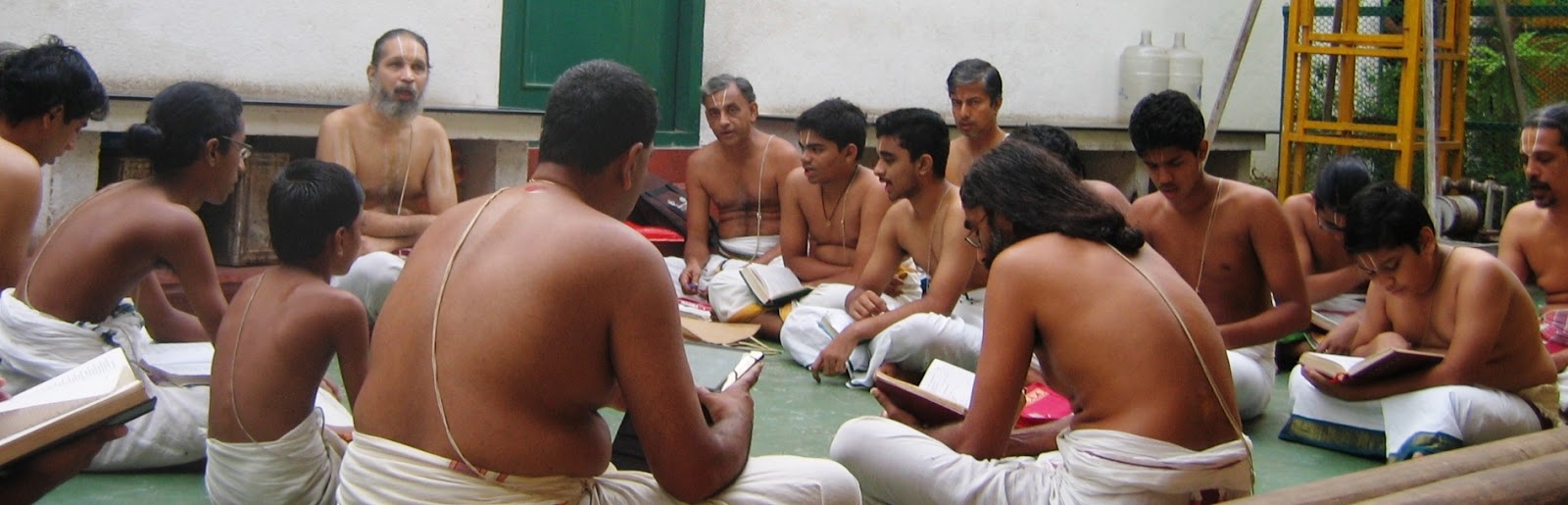
Now well into his 50s, Srihari has begun, in the last few years, the third batch comprising of another 35 students. The new batch of students has been already initiated into Namazhvaar’s Tiruvoimozhi and is currently learning the Iyarpa verses.

End of 2006, when the temple was planning to launch a website, Srihari was entrusted with the task of creating a strong content to propagate the time-tested values of the rich tradition of Sanathana Dharma and important tenets of the Visishtaadvaita philosophy. As the Founder Editor of the website, Srihari has been conducting online quizzes and contests on varied topics relating to this philosophy. As part of this engagement, he has also been writing commentaries, online, on Vaishnavite Philosophy.

When a book was brought out in 2006 as part of the 80th Birthday Celebrations of 45th Jeer of Ahobila Mutt, Srihari wrote a ten page commentary with his own interpretation of each of the decads of the 10th Canto of Nam Azhvaar’s Tiruvoimozhi including praising Lord’s Kalyana Gunas, describing the way in which Azhvaar has shown us the noble path and about how Prapatti’s five Angams have been showcased in this last canto.

Four Day Celebrations - Oct 25 -28
Marking the completion of 35 years of Prabhandham Acharya service, the Sishyas of Srihari, are planning a grand four day celebration - 'Vayam Namaamaha Dravida Veda Vaibhavam - Celebrate together the glory of Divya Prabhandham' - later this month at the Vedantha Desikar Srinivasa Perumal temple in Mylapore. The celebration will start with Veda Parayanam on Monday October 25. This will be followed by an Upanyasam on Divya Prabhandham by Esayanur Sridhara Satakopacharyar on Tuesday (Oct 26) evening. 

Felicitation by Ahobila Mutt Jeer
Prabhandham Acharya Srihari will be felicitated on Wednesday October 27 evening by Azhagiyasingar, the Head of the Ahobila Mutt. The felicitation function will be preceded on Wednesday morning by a Vidwat Sadas on Divya Prabhandham & Desika Prabhandham. It is likely that he will also be conferred a title for his 'Prabhandham Kainkaryam' that day. The four day event will conclude on Thursday Oct 28 with a Music Concert exclusively on Divya Prabandham by Smt. Jayanthi Sridharan. A Thematic Souvenir is expected to be released soon after the celebratory event.

Creating the Next Gen Prabhandham Members
Srihari has made a Significant Contribution in taking forward the Prabhandham recital into this new Century. He has gone about creating the next generation of Divya Prabhandham Experts in a quiet and unassuming way. While the idea has been for youngsters to learn and become proficient, he has also encouraged older people to take up to learning the Divya Prabhandham. One of the important lessons he has imbibed in his students throughout these three and a half decades has been to present these verses at temples and not to use it to further their financial interests.  His outstanding efforts to initiate four different set of students over the last 35years has been a great act of selfless service that he has rendered to our society in the process helping keep the Prabhandham tradition for the foreseeable future.

Wednesday, June 7, 2017

Mahavira Vaibhavam Aranya Kaandam

In these 13 churnikas of Aranya Kaandam, Vedanta Desikar praises Rama's valour and sets the stage for the sad phase in his life of being separated from Sita 
Sees Jatayu as his 2nd father, performs obsequies for the valiant battle that the Eagle bird fought
Demon Kabhandha's directs Rama to seek Sugriva's friendship - a turning point in this episode

விராத ஹரிண ஷார்துல 
விளுளித பஹுபல மக களம ரஜனிகர 
ம்றக மர்கயாரம்ப சம்ப்ருத சீற ப்ருதநுரோத 

Having promised Sage Atri to protect all the sages in the forest from the demons, Rama began his task starting with Viraatha (Tumburu), who was earlier an assistant of Kubera. Once he was lost in thoughts with damsel Rambha, thus angering his boss Kubera, who cursed him along with Rambha to become a demon (Celestials Tumburu and Rambha are referred in Periyazhvaar’s Thirumozhi http://prtraveller.blogspot.in/2015/09/krishna-plays-flute.html as well as well as in Kulasekara  Azhvaar’s Perumal Thirumozhi http://prtraveller.blogspot.in/2016/04/thiruvenkatam-kulasekara-azhvaar.html ).

One day in the Dhandaka forest, Rama was intercepted by this ugly figure. Lured by the beautiful looking Sita, he picked her up and flew away only to be knocked down by Rama’s arrows. He then turned his attention on the two brothers whom he lifted with his two hands. After a long tussle, Rama chopped off his two arms and the huge demon fell down on the ground. He then gained his original form of Tumburu and flew skywards praising Rama as a ‘Tiger’.

It is in this context that Desikar refers to Rama as the Tiger who laid low the deer (Viraatha). Rama thus killed many demons that disturbed the peace of the Sages.

த்ரிஷிரஷிஷிரஸ்ட்ரிதய திமிர நிராச வாஸர கர 

Having protected Sage Sutikshana, Rama moved on in the forest to another location where he met Agastya. From there, he moved to Panchavati.  It was here that demoness Surpanaka set her sights on the handsome Rama. Turning herself into a beautiful maiden, she approached him. When he rejected her offer, she struck at Sita seeing her as the stumbling block. And immediately Lakshmana, on instruction from Rama, lashed out at her.  She rushed to her brother Khara for help. He assigned the task of taking on Rama to the three headed Trisaras.

Desikar refers to this asura as an embodiment of darkness that could only be dispelled by the rays of the Sun. Thus he refers to Rama as the bright Sun who brought back light by killing the asura.

தூஷண ஜலநிதி ஷோஷண தோஷித
ருசி கண கோஷித விஜய கோஷண  
Following the death of Trisaras, Desikar moved on to the episode relating to the death of Dooshana who was assigned the task of killing Rama. He came with a large army, but Rama deprived him of the chariot, bow, arrows and then while on the ground chopped off his arms. And finally killed him much to the delight of Agastya. Desikar refers to this approach as that of an ocean.

கரதர கரதரு கண்டன சண்ட பவன 

Khara himself came forward to try and fulfil his promise to Surpanaka. And he too fell down in a trance unable to match the strength of the arrows that came in his direction.

 த்விசப்த ரக்சஸ்சாஹர நலவன விலோலன மஹாகலப 
அஸஹாய ஷூர ....... அநபாய சாஹச 

Along with the three asuras, he also destroyed their contingent of 14000 demons. Swami Desikar compares this episode to a young elephant that would crush the sticks on the ground.

This seemed like a battle of unequals. Rama directed Lakshmana to take care of Sita and ventured out to take on the army of 14000 demons leaving the celestials anxious of the likely outcome. Desikar praises Rama as one who could vanquish the opponent without any support. Unmindful of the size of the opposition, Rama went to the battlefield with confidence as he was determined to fulfil his promise to the Sages. Desikar attributed this confidence to his commitment to protect those that had approached him for help.

Desikar specifically refers to 'Saahasa' thus bringing to one’s attention the situation around Rama as he faced 14000 fierce warriors and this scenario of taking them on single handedly was fraught with risk and there was a likelihood of a failure.

மஹித மஹாம்ருத தர்ஷன முதித மைதிலி 
ட்ருட தர பறிறம்பன  விபவ விரோபித விகட வீர வ்ருந  
When Rama came back victorious Sita held him in a tight embrace that relieved him of all the pains of and injuries from the battle. 

The episode leading to the separation

மாரீச மாயா ம்ருக சர்ம பரிகர்மித நீர்பர தர்பாஸ்தரன 

Desikar moves on to the episode of Maaricha disguising himself as a golden deer and luring Sita with his rare never before seen look. When Rama earlier killed three demons one of the assistants Akampana escaped and reported the series of events to Ravana. Praising Rama’s strengths Akampana told Ravana that not even he could enter the forest and fight Rama and that the only way to lie him low was to take away his beautiful wife.

When Ravana approached his uncle Maricha, he was warned to let go off this idea, for Maricha had already experienced the might of Rama (earlier churnika http://prtraveller.blogspot.in/2017/01/vedantha-desikar-mahaveera-vaibhavam.html).

Ravana trusted his uncle’s words and went back to Lanka. However when his sister Soorpanaka came back disfigured, Ravana’s anger knew no bounds. Lured by her description of Sita’s beauty, the desire rose and he once again reached out to his uncle for help. When he threatened Maricha with death if he refused, the latter who knew his time had come believed that it was better to die killed by Rama than Ravana.

And when Maricha took the form of the deer, Sita, as expected, fell for this rare beauty and thus Maricha took Rama far away into the forest before finally falling to Rama’s arrow. 

In this churnika, Desikar hints at this killing by referring to Rama acquiring the skin of the deer to serve as his seat. (Sita had suggested to Rama that even if he is not able to catch the deer alive, Just the skin would do)

விக்ரம யஷோ லாப விக்ரித ஜீவித 
கிருதராஜா தேஹ திதஷா 
லக்ஷிதா பக்த ஜன தாக்ஷிண்ய 

Jatayu just stays alive to inform Rama

Desikar narrates the events surrounding the death of Jatayu and thus points to the abduction of Sita. When Maricha was struck by Rama’s arrow, he shouted ‘Sita, Lakshmana’ thus creating doubts in Sita’s mind about the safety of her husband. She ordered Lakshmana to track Rama. On his refusal she accused him and finally forced him to go in search of her husband.

Following this, Ravana appeared in an ascetic form. Sita welcomed him.  Once near, he cast off the disguise and snatched her away.

It was then that the old eagle bird, hearing the cries of Sita, fought a determined battle before his wings were cut off.  He kept himself alive just to inform Rama of the developments.

Away from this last battle of Jatayu, Rama rushed back to find that his worst fears had come true. Sita wasn’t to be found and it was during his search that he came across Jatayu. While recounting the tale of his last fight, Jatayu breathed his last.

As Jatayu had mentioned that he was an old friend of King Dasaratha, Rama who was unable to perform the final rites of his father performed obsequies for the eagle bird as if he was his second father.

Kabhandha directs Rama to seek Sugriva's help

கல்பித விபுத பாவ கபந்தாபிணந்தித 

They continued their search in the forest and encountered Demon Kabhandha, who with his long arms dragged both Rama and Lakshmana. When his arms were cut off, he requested Rama to dig a pit and burn him. He had once robbed Sage Sthulasiras of his daily provisions and was cursed to remain a demon till Rama was to relieve him from the curse.

And once relieved of the curse, he had the unique ability to foretell events. In a transformative event in the Ramayana, it was here that Kabhandha on his death bed directed Rama to go westwards and seek the friendship of Sugriva, who he suggested would help him locate Sita. Thus Rama moved on to the next phase with the single minded focus on attaining Sugriva's friendship. 

Though Kabhandha was not a celestial, he acquired the divine form on his death, thanks to Rama’s touch.

The episode of Sabari Moksham
அவந்த்ய மஹிம முநிஜந பஜண  முசித ஹ்ருதய 
கலுஷ சபரீ  மோக்ஷ சாட்சிபூத 

Rama proceeded west wards and reached Matanga’s ashrama. Every one there had reached the heavenly abode except a lady who even though was from a lower caste was taught yoga based on her committed service to her leader.  Sabari sought his help to rid her from this life and lit a pyre and gave her life by jumping into the sacrificial fire. 

With this ends Aranya Kaandam and Desikar then moves on to Kishkandha Kaandam in the next set of Churnikas

Wednesday, May 17, 2017

Desikar Mahavira Vaibhavam Ayodhya Canto

Enforcement of one’s right is not the way to a Dharmic life but fulfilling a father’s wish is
Rama as the 'Lord of Dharma'
Having showcase the teenage valour of Rama in the first 20 Churnikas through the Bala Canto (http://prtraveller.blogspot.in/2017/01/vedantha-desikar-mahaveera-vaibhavam.html) , Vedantha Desikar showcases first Dharmic qualities of Rama, the importance he placed to fulfilling his father’s wishes above all else and then his noble qualities in the Ayodhya Canto that comprises of a short eight churnikas. 

Desikar brings out Rama’s love for his brother Lakshmana after the latter had built a beautiful home in Chitrakoota and how his presence had made his stay in the forest so enjoyable and without pain. 

Towards the end of this canto, Desikar sets the stage for the upcoming Cantos by showing Rama’s love for Sita as well as his invincible powers that even Indra, Shiva and Brahmma could not match. He has had a lovely and happy time during this phase alongside Sita and his dutiful brother Lakshmana.

அன்ருதபய முஷித ஹ்ருதய பித்ரவசன பாலன 
ப்ரதிஜனாவஜனாத யவ்வராஜ்ய

Desikar having showcased Rama’s valour of breaking two bows in succession and returning to Ayodhya with his wife Sita towards the end of the Bala Kaandam now showcases the dharmic side of Rama.

He begins the Ayodhya Canto with a simple churnika where he crowns Rama as the Lord of Dharma. All was set for his coronation the next day and grand celebrations were on at Ayodhya. People were eagerly looking forward to the Prince taking over the kingdom from Dasaratha.

It was at this time that Manthara angered at the celebratory process all around poisoned the mind of Kaikeyi and made her call out for the two unfulfilled boons that her husband had granted her earlier for saving his life.

Shocked at her making such an outlandish attitude of invoking an old promise at this inappropriate moment, the great emperor swooned following which Kaikeyi called on Rama and revealed the fulfilment of his father’s promise – that of him spending 14 years in the forest and crowning her son Bharata as the king and the predicament he was in, in conveying these to his beloved Rama.

It is in relation to this background that Desikar brings out the Dharmic qualities of Rama. To him, nothing was more important than making his father fulfil his promise.

It is a great lesson in life on the way to Dharmic life. In this heart warming Churnika conveying a great message, Desikar says that Rama did not battle an eyelid at hearing this piece of information from Kaikeyi. To most others, this would have been shocking news but not to Rama.

To him, the state of mind on hearing the news of the coronation, earlier, and that of now being despatched to the forest were the same. Fulfilling his father’s wish was paramount to him. Not for a moment could he visualise a scenario of his father’s promise being broken. Wearing the robe of a crown prince or that of one in a bark in the forest- both were the same to him for each was the wish of his father.

In this churnika, Desikar showed through Rama’s conduct that enforcement of one’s right is not the way to Dharmic life but fulfilling a father’s wish is.

நிஷாத ராஜ சௌஹ்ருத சுசித ஸுசீல்ய சாகர
பரத்வாஜ ஷாசன பரிகிரஹித விசித சிட்ரகூட கிரி கடக தட ரம்யாவசத

Rama and Nobility
Desikar then goes on to the next quality of Rama- Nobility towards people of all classes and strata.

When he reached the banks of the Ganges, he greeted hunter and boatman Guha with a warm embrace, unmindful of the fact that Guha was a mere tribesman. He did not forget that Guha was a friend from earlier times and illustrated to the world through this episode as to what friendship meant to him.

Having spent time with Guha, Rama moved on to the ashrama of Sage Bharadwaja crossing the Ganges. The sage directed him to the plains below the hills of Chitrakoota and Rama instantly followed the Sage’s instructions. There Lakshmana built a Home so beautiful that Rama felt at peace with himself in the midst of birds and parrots and was full of beautiful colourful flowers and fruits.

He had fallen so much in love with that place that rarely did he miss the richness of his wealthy kingdom and felt that he could spend the rest of his life in this beautiful place.

When Sumantra who had stayed back on the banks of the Ganges in the hope that Rama would return was convinced that it was now a forlorn hope, he returned to Ayodhya to convey the news to King Dasaratha, on hearing which the King breathed his last.

ப்ரணத பரத மகுட தட சுகடித பாதுகா கர்யாபிஷேக
நிரவர்தித சர்வலோக யோகக்ஷேமா

When Bharata who was at his uncle’s place was called back to be informed of the developments, he promised to return with Rama.  On reaching Chitrakoota after dispelling the suspicion of Guha, he tried his best to convince Rama to return but Rama remained steadfast in the fulfilment of his father’s wish.

Unable to convince Rama, Bharata carried back with him the pair of Sandals of Rama and placed it on a throne in Nandigrama where he performed the coronation ceremony for Rama and ruled the kingdom through the Sandals.

Despatches the crow on a Worldwide Trip
பிஷித ருசி விஹித துரித வள மதன தனய பலி புகுணுகதி சரபஸ
ஷயன    த்ருண ஷகள பறிபதன பய சகித சகல சுரமுனி வர பஹுமத மஹாஸ் ட்ர சாமர்த்ய

திருஹிந ஹர வலமதன துராலக்ஷ்ய ஷர லக்ஷ்ய

Desikar moves on to the next and the last episode in the Ayodhya Canto and to his invincible powers, one that showcased his dear love for Sita. This episode also set the scene for the upcoming trauma that he was to undergo.

When a crow pecked at Sita, while Rama was asleep on her lap, he rose and angered at the pain caused to his wife, invoked the power of the Brahmastra and directed a simple blade of grass towards the crow.

Unable to get protection from any of the renowned sages as well as from Shiva and Brahma, the crow came back and sought protection from Sita. Her compassionate gesture meant that Rama forgave the crow by taking out just one eye, bringing loud cheer from the celestials and the Sages.

Setting the stage for the purpose of his incarnation

தண்டகா தபோவன ஜங்கம பாரிஜாத

Having seen the return of Bharata, Rama was keen to shift locations for he expected the residents of Ayodhya to turn up in large numbers to convince him to return. Around the same time, the sages who were continuously harassed by Khara suggested that he leave this place. Thus Rama moved into the Dhandakaranya forest where after meeting Sage Atri and his wife Anasuya, he moved on further. A number of the rishis there requested his help in protecting them from the asuras.


It is in this connection that Desikar refers to Rama being like a Parijatha. While the tree provides everything to those who ask from a stationary position, Rama was mobile moving from one to another demolishing asuras thus fulfilling the wishes of the rishis.

Sunday, January 22, 2017

Vedantha Desikar Mahaveera Vaibhavam


In the first twenty of 94 Churnikas, Desikar showcases the valour of Lord Rama in his teenage phase

Taking up the challenges of King Janaka and Sage Parasurama, Rama showed his extraordinary strength in the art of weaponry and a preview of what he was capable of

(This series on Vedanta Desikar’s Mahaveera Vaibhavam is inspired by Shri. TE Madhavan, a IIT Madras Research Scholar and a Theerthakar who presented a brilliant devotional rendering of this hymn in a fast paced style at the Madurantakam Eri Kaatha Rama Temple)

In the concluding decad of the Perumal Thirumozhi, Kulasekara Azhvaar captured the entire story of the Ramayana in just those ten verses (http://prtraveller.blogspot.in/2017/01/kulasekara-azhvaar-thiru-chitrakoodam.html)

Centuries later Vedanta Desikar through the unique Gadyam style presentation in the Mahaveera Vaibhavam showcases the valourous acts of Rama highlighting his dharmic deeds through the different phases of his life and how he always protected the true devotees.

To the devotees, Desikar says that reciting the Mahaveera vaibhavam in a sincere and devoted way will give them a lot of confidence and courage towards leading a dharmic life and fighting the evil forces.

Unlike the story of Krishnan, especially as seen through the verses of Periyazhvaar, where multiple cantos were dedicated to his childhood, the story of Ramayana is very different with minimal insights into the childhood of Rama. Only a few verses are dedicated to the childhood of Rama and even that to the greatness of his birth and not to any activities as a child. It is only after Rama is into his teens that Vedanta Desikar begins describing his valourous acts.

It was in Thiruvahindrapuram (http://prtraveller.blogspot.in/2008/03/thiruvahindrapuram-devanathan_29.html)  that Vedanta Desikar composed the  devotional hymns of Mahavira Vaibhavam dedicated to the valour of Lord Rama after invoking the blessings of Hayagriva. Through the 94 prosaic verses (Churnikas), Desikar extols the valour of Rama providing relevant examples in each phase of his life as endorsement of his valour that was exhibited as part of upholding the dharmic principles of life.

Birth in the Solar Dynasty
Vedanta Desikar begins his Mahaveea Vaibhavam presentation providing one insights into the purpose of his advent into this world. Just like the Sun that rises in the morning to dispel the darkness of the night Lord Rama took birth to put an end to the miseries of the people and to showcase the principles of Dharma.
ஜயத்தியாச்ரித சண்ட்ராச தவாந்த வித்வன்சனோதயஹா
பிரபாவான் சீதையா தேவ்யா பரமவ்யோம பாஸ்கரஹ

With Ravana creating havoc with his arrogance arising out of the immortality boon given by Brahma, Lord Vishnu answering the prayers of the Devas agreed to be born as Rama, the son of King Dasaratha who was performing a yagna seeking a son.

தஷவதன  தமித தைவித பரிஷதப்யர்த்தித தாக்ஷரதி பாவ

Dispelling the miseries of True Devotees
In the 6th verse, Desikar once again makes a comparison of Rama to the glorious rays of the bright sun and praises him as enhancing the glory of the solar dynasty. Sun is a special God as he illuminates the sky with his shining glory. Similarly to be born in the Solar Dynasty was an indication that he had come to dispel the darkness caused by the harassment of Ravana.
தினகர குல கமல திவாகர

The story of how Rama cleaned up King Dasaratha’s debts
திவிஷததிபதி ரண சஹசரணசதுர தஷ்ரத சரம ருண விமோசன

For long King Dasaratha had been childless and he was worried that not having a son would continue to keep him in a state of debt despite being a famous ruler of a large kingdom for it is believed that it is the son who discharges the debt of the ancestors by performing the rites in a timely manner.

Following the praise of Rama’s role in discharging his father’s debt, Desikar refers to mother Kausalya and how by being born in hier womb he concealed to the entire world his real identity. Desikar also praises the greatness of Kausalya for she was the chosen one to given birth to Rama.

Praising the Mother
As seen in Perumal Thirumozhi, Kulasekara Azhvaar too begins his decad of lullaby with a praise of Kausalya (http://prtraveller.blogspot.in/2016/12/kulasekara-azhvaar-lord-rama.html)

கோசலசுத குமார பவ கன்சுகித காரணாகார

The 1st set of churnikas relate to the birth of Rama. Desikar then moves on to the teenage phase of Rama and describes the first valorous deeds of Rama.
 Rama’s first act of Valour – a playful gesture
The 9th churnika recounts the first display of valour of Rama. Not yet 16, he is directed hesitatingly by King Dasaratha to accompany Sage Vishwamitra who sought the help of the young boy to protect his sacrificial rites that he was performing. Rama demolished the asuras with effortless ease that Desikar compares this treatment by Rama to a child spending his playfully with his friends.

கௌமார கேலி கோபாயித கௌஷிகாத்வரா

Initiation into the art of Weaponry – kills Tataka, throws Mareecha away
Desikar then takes one through the story of the Sage’s initiation of magic weapons that he believed would be relevant to Rama at a later stage in his life. In this verse, Desikar refers to the weapons as ‘Bhavya’, one that would simply listen to the words of the master.

Soon after the initiation, Desikar provides glimpses into how Rama put it into practice by using the small arrows to demolish the demons in the forest. Rama put an end to Tataka who had been a hurdle to the sacrificial rites that Sage Viswamitra had been performing. And his next arrow sent Mareecha into the ocean. He was still a young boy but even at that age showed his special skills of handling the weapons to protect the good from the evil.

Desikar showcases here the great learning abilities of Rama. Having absorbed the teachings of the great Sage in the art of weaponry, Ramya displayed his learnings in the destruction of Tataka and her son Mareecha.

ப்ரணதஜன விமத விமதன துர்லலித தோர்லலிதா
தனுதர விஷிக விதாதன விகடித விஷராறு ஷாராறு தாடகா தாடகேய

A soft Churnika – Ahalya’s Liberation
Desikar then turns soft in his narration of the episode of liberating the beautiful Ahalya from her husbands’s curse. In his narration, Desikar says that just a mere touch of his lotus foot on the stone was enough to liberate the beautiful lady.

On the way to Mithila, while at the Ashrama of Sage Gautama ,Viswamitra directed Rama to place his foot on the stone lying in the ashrama. Immediately the stone turned into a beautiful girl much to Rama’s surprise. Ahalya in a thanking gesture invoked his blessings with folded hands.

In this verse Desikar also describes the event of Shiva stopping the Ganga with his matted hair that purified the Ganges.

ஜட  கிரண ஷகள தரஜடில  நடபதி மகுட தட
நடன பது விபுத சரிததி
பஹுல மது களன லலித பத நளின ரஜ உபம்ருதித நிஜ
வ்ரிஜின ஜஹதுபல தணுருசின
பரம முநிவரா யுவதி நுத

Nava Stories to Rama and Lakshmana
Deskiar then presents the important story of Sage’s educative messages to Rama. When in the forest, he describes Nava stories of Gods, Demons and human beings with the intention of carrying Rama through the forest forgetting the hardship of the journey for it was the young lad’s first real long trip.

As they entered the beautiful town of Mithila, Rama was the cynosure of all eyes. The dames had never seen such a handsome man. He was as beautiful as the large moon on a full moon day and they did not take their eyes off him.
மைதில நகர சுலோசனா லோசண சகோர சந்திர

Janaka like every father wanted a handsome man for his daughter Sita who had grown into a beautiful girl. In a moment of haste, seeking the most valourous man on earth, Janaka had thrown an open challenge to anyone to string the mighty weapon of Shiva.

At that time, he had hoped that he would get the bravest man for her. But as time passed he grew anxious for no man could even lift the bow. He was now apprehensive that he had thrown far too big a challenge and that he may now not be able to find the right man.

As Rama entered the court, Janaka wondered as to what the young boy was doing there when several mighty warriors had even failed to move the bow. But he was convinced that this was the man for his daughter such were his handsome features. His eyes were as beautiful as a 1000 lotuses. Desikar also refers to ‘Stealing’ the beauty away from the lotuses as the entire Mithila glanced at the new man who had arrived there.

மோசித ஜனக ஹ்ருதய ஷாங்காதன்க

The attendants in several hundreds were directed to bring the bow to the court. And then in a dramatic moment the young lad lifted the seemingly strong bow of Siva, strung it and broke it with ease into two pieces.

Barely initiated into the art of weaponry, Rama displayed extra ordinary skill that seemed to be outside the capability of normal human beings.

The moment Rama strung the bow Janaka’s joy knew no bounds especially to have found a boy belonging to the solar dynasty for his daughter. He believed that she had done her clan proud by now being part of the clan of the Ishvakus.

கண்டபரஷு கோதண்ட ப்ரகாண்ட கண்டன ஷவுண்ட புஜதண்ட

After the wedding, Rama returned to Ayodhya. But before his return he provided to-date the most valourous display of his strength. 

Extra Ordinary Strength
On the way back, he had to face the taunt of that sworn enemy of the Kshatriyas Parasurama, who suggested that he had managed to string what he called was a 2nd best bow for he had the best one in the world, given by Lord Vishnu himself. And that Rama’s real merit lay in trying to string this bow of Parasurama.

ஷாதகோடி ஷாதகுந கதின பரஸுதர முனிவரா
கரத்ருட துறவனம தம நிஜ தணுராகர்ஷண
ப்ரகாஷித பாரமேஷுத்ய

The sage had offered the fruits of all his penances if Rama managed to string the bowl. Rama took away all the fruits of the good deeds of Parasurama by stringing the mighty bow and also thus got back his own bow. Sage Parasurama too acknowledged Rama as the supreme power after this episode.

The story of Parasurama’s anger and Rama’s greatness through this episode
As King Kartavyarjuna had taken away the sacred cow from Jamadagini’s ashrama in the absence of his son Parasurama, an angry son went after the king and killed him with his axe. In retaliation the army of the king killed Jamadigni, once again in the son’s absence. It was then that Parasurama took the vow to kill 21 generations of Kshatriyas and to perform the ceremonial rites with the blood of the kshatriyas.

It must be recalled that Kartavyarjuna had once held Ravana captive in his kingdom having defeated him in a battle only to release him after the great Ravana pleaded with him. Ravana himself had earlier shaken the great Mount Kailasa while Shiva and Paravati were spending their time in leisure there.

This final Churnika of Bala Kandam showcases to us the extraordinary valour of Rama as one who strung the mighty bows of Shiva and Vishnu and in correlation of the above set of events was a supreme power.

க்ருதுஹர ஷிகரி  கந்துக விஹ்ருத்யுன்முக ஜகதருந்துத
ஜிதஹரிதந்த தஷவதன தமன குஷள
தக்ஷஷத பூஜந்ருபதி குல ருதிர ஜர பரித
ப்ருதுதர தடாக தர்பித பித்ருக ப்ருகுபதி சுகதி
விஹாதிகர நத பருதிஷு பரிக

This first set of 20 churnikas of the Mahaveera Vaibhavam relate to the description of Rama’s valour leading to this marriage as a teenager and immediately after.