Inaugural Test Sri Lanka against India
25 years after his country's entry into Test Cricket, a Lankan stands on the verge of creating history for Sri Lankan cricket
On the eve of what could be a momentous test (Australia v Sri Lanka in Hobart begins Friday 16th Nov) for the Lankans (Muralidharan could become the highest wicket taker in tests in the coming days), we take a look at the first ever test Sri Lanka played in India.
Its been 25 years since SL played its first ever test against India. Through the 1970s, Ceylon/Sri Lanka played Tamil Nadu for the Gopalan Trophy in a ‘ feature match’ on the annual cricket calendar. We had seen several exciting players in the 1970s, many Carribean style. However, all of them had to be content with ‘unofficial tests’. Anura Tennakone, Neil Shanmugham, Michael Tissera, Kaluperuma were a few who could have been hugely successful at the Test Level.
India of course had not had such a good experience, having lost the World Cup match to SriLanka in 1979.
I used to admire Sri Lankan cricket even from its pre ‘official’ test days. Such was their passion that Radio Ceylon used to broadcast commentary even on local matches – college matches, district matches. Almost every local match used to be broadcast on the radio so much I had learnt a bit of Sinhalese in the late 70s, early 80s (Tamil was also part of the commentary).
As early as 1980, Rupavaahini, the state owned Television of Sri Lanka, used to telecast highlights of WSC one dayers played in Australia (they were not even a test side then and SriLanka had no connection to those matches).
In those early days, Sri Lanka seemed to be the West Indies of Asia cricket, in terms of style of play.
Test Status
Sri Lanka got the test status in 1982. And their coming to Madras (almost a 2nd home for them) to play their first ever test against India was a big moment not just for Sri Lankan cricket, but for the people of TN as well.
SL’s inaugural test was against a strong England team at home in early 1982. After having competed well in the first innings and after a strong 2nd innings start, they collapsed dramatically after, at one stage, being in with a chance to secure a draw or may be even pull off a surprise win (10 years later, against Australia, they were once again in a similar kind of position only to collapse dramatically to lose the test at home).
SL then went to Pakistan for a 3 test series and lost to a strong team comprising of Imran, Javed and Zaheer. It was a tough early initiation for SL into test cricket.
Later that year, in September 1982, Sri Lanka made a trip to Madras for a one off test match, one that was broadcast on Sri Lanka Broadcasting Corporation in 3 languages English, Sinhalese and Tamil.
Sri Lankans impressed straightaway. Three things came to the fore in that test:
They were dashers
They were a good fielding team
They seemed like fighters (something that has been representative of them over the last 2 decades)
Two of the Best Knocks at Chepauk- Roy Dias
What the Madras crowd saw that morning on day 1 was something that still remains etched in one’s memory and we were to witness another gem from Dias within the next 3 days. Those two knocks of Roy Dias would rank as one of the best knocks seen at Chepauk after GR Vishwanath’s 97.
Coming in at No. 3, Roy Dias, possibly Sri Lanka’s most stylish stroke player of the last 25 years, took the attack to the Indian bowlers in his knock of 60 (Dias also starred in the one day series displaying his full array of strokes. It was a one day series which was one of Srikkanth’s best as well alongside the 1985 WCC)
Short and stocky, Duleep Mendis took over from where Dias left and played a knock that left many stunned (Mendis had already been a thorn in the flesh for the Indians having been the architect of the Lankan victory in the world cup in 1979). He made a century in each innings including reaching his century with a six.
Fighting Spirit of the Lankans
Sri Lanka’s fighting spirit was seen in the 2nd innings. After being behind by over 200 runs on first innings, Sri Lankan batsmen fought till the end. Roy Dias’ classy 97 pushed India back (though very few today talk about Dias’ innings- any talk of Great Chennai knocks has reference only to GRV’s 97!!!!), Mendis’s 2nd century of the test match brought him into limelight on the international (test) scene.
One man who played in that first test could have gone on to become a key figure in the Sri Lankan line up that decade. He showed glimpses of his talent with a swashbuckling 70+ in the 2nd innings that pulled Sri Lanka from a precarious position and actually saved them from defeat.
India chase the win
India, for a change (they have not done that too many times in test cricket), chose to go for the win on the final evening. Kapil and Sandeep Patil, fresh from his onslaught on Bob Willis just 3 months before, (Patil had struck Willis for 6 fours in an over) kept India in the chase for a while, but Kapil’s exit triggered a collapse and in the final few minutes that evening India had to fight to make sure they didn’t go down to an embarrassing defeat with Gavaskar being surrounded by fielders around him in the final minutes of the game.
It was quite a rare sight and for a team playing its first ever test against India, it was a psychological victory that they had first held on and then even threw open the possibility of an unlikely win.
3 years later, after this first test against India, and in a most controversial series, Sri Lanka were to register their first series win at home.
Impact those cricketers made in Sri Lankan Cricket
Several cricketers who played in this test went on to make a big impact in Sri Lanka cricket in the first 2 decades of its entry into international(test) cricket.
Mendis went on to play many a good knock for Sri Lanka through the 1980s and later became a cricket administrator. Arjuna Ranatunga, one of the youngest to play test cricket for Sri Lanka, would go on to become Sri Lanka’s first world cup winning captain. Ranjan Madugalle had a compact technique and a lot was expected from him. But he failed to live up to his potential on the playing field but made up for it off the field with his current status as the best match referee in world cricket.
Anura Ranasinghe was a dasher and an early version of Jayasuriya. He, along with Arjuna Ranatunga, were seen as the players for the future. However, while Ranatunga went on to become one of the all time greats of Sri Lankan cricket, Ranasinghe, along with his captain Bandula Warnapura, joined the rebel tour and that was the last one heard of him.
The Leggie- DS De Silva bowling to Gavaskar
One of my favourites in that team was the leggie all rounder Somachandra De Silva. During the early years of Sri Lankan cricket, he played many a vital knock in the middle / late middle order and bowled long spells not giving away too many runs. During those formative years, he was a vital cog in the Sri Lankan armory.
While he did score a few runs and took a few wickets in this test match, my unforgettable memory of DS D’Silva from this test match was his bowling to Gavaskar on the final evening with 7 men round the bat. It was a dream situation for him, to be bowling to one of the all time great batsman with all the fielders around him.
Tamil Nadu had seen quite a bit of a tear away fast bowler who has recently been in a lot of controversy. Asantha De Mel was the bright young quickie who led the pace attack. He did take a lot of wickets for Sri Lanka in the early 1980s but was always expensive.
My other favourite of those early years of Sri Lankan cricket missed this test match but Sidath Wettimuny(his brother Mithra too played for Lanka) would be the rock solid opener of Sri Lankan cricket after their entry into Test cricket.
(India had a few players in this test who were hoping to stay on the international scene for longer but that did not materialise. Arun Lal, a prolific scorer in domestic circuit made his debut here, but really did not get enough chances to stabilise himself in the team. Rakesh Shukla, a late middle order bat and a leggie, was picked on the back of having secured Delhi an unlikely win in the ranji trophy final but he too did not play much after this test. The one who really failed to live up to his full potential was Sandeep Patil, who seemed to be a dashing batsman ready to take on the best of fast bowlers in the world. He too failed to make it big on the International scene despite playing a couple of memorable and unforgettable innings)
Conclusion
The first 6 months of test cricket that year was quite an initiation for Sri Lanka into the big league. They had played against Botham, Willis, Gower and Underwood at home, Zaheer, Javed and Imran in Pak and against Gavaskar and Kapil in another away series.
In each of these tests, they showed to the world that they brought excitement to the cricket field and were never a boring side to watch (People in TN already had seen in the Gopalan Trophy matches and even earlier, the unofficial tests were ample evidence of this).
25 years ago, not many would have given Sri Lanka a chance of producing a cricketer who would be on top of the wickets chart. But here they are on the verge of creating history. The ‘gentleman cricketer’ Muralidharan may claim the glory of the highest wicket taker in the next few days. That really is a significant achievement for this small island, dogged for a large part of this period with a war.
Friday, November 16, 2007


Thursday, November 15, 2007
Railway Stations and Retiring Rooms
The introduction of toilets in Trains
The story of ‘JUST AS I AM DOING NUISANCE……’
My endorsement of retiring rooms in railway stations continues, even more so now after my stay, earlier this week, at the retiring room of the Bangalore City railway station.
Looks like the station has outsourced the retiring rooms to 3rd party. The rooms have a fresh, clean look and is quite refreshing. There are old historic train stories outside every room.
Ramanujam Sridhar’s article in Brand Line(Business Line) today 15/11/07 talked about the value, readers can bring to the society through their letters to the editor.
And inside the bathroom of the retiring room I stayed, I found a laminated board with this 'nuisance story'…...
Here goes the story:
Toilets were introduced on Indian trains only after this passenger, Okhit Chandra Sen, wrote a letter to the Divisional Traffic Superintendent Sahabgunj Divisional Office, in 1909, complaining about how he missed the train when he got down to attend the call of nature.
Reproduced below as is, is a letter the passenger wrote almost a 100 years ago - a little humourous in language but very significant in its contribution to passenger comfort on the Indian Railways.
UNEDITED LETTER
Beloved Sir,
I am arrive by passenger train at Ahmedpore station and my belly is too much swelling with jackfruit.
I am therefore sent to privy. Just as I am doing the nuisance that guard making whistle blow for train to go off and I am running with Lota in one hand and dhoti in the next when I fall over and expose all my shockings to many female women on the platform I got leaved on Ahmedpore Station.
This is too much bad for passengers go to make dung that dam guard not wait train for five minutes for him. I am therefore praying otherwise I am making big report to papers. Pray your honour to make big fine on that dam guard for public sake otherwise I am making big report to papers
Without Okhit Chandra Sen’s letter, we may not have had toilets in trains!!!
The story of ‘JUST AS I AM DOING NUISANCE……’
My endorsement of retiring rooms in railway stations continues, even more so now after my stay, earlier this week, at the retiring room of the Bangalore City railway station.
Looks like the station has outsourced the retiring rooms to 3rd party. The rooms have a fresh, clean look and is quite refreshing. There are old historic train stories outside every room.
Ramanujam Sridhar’s article in Brand Line(Business Line) today 15/11/07 talked about the value, readers can bring to the society through their letters to the editor.
And inside the bathroom of the retiring room I stayed, I found a laminated board with this 'nuisance story'…...
Here goes the story:
Toilets were introduced on Indian trains only after this passenger, Okhit Chandra Sen, wrote a letter to the Divisional Traffic Superintendent Sahabgunj Divisional Office, in 1909, complaining about how he missed the train when he got down to attend the call of nature.
Reproduced below as is, is a letter the passenger wrote almost a 100 years ago - a little humourous in language but very significant in its contribution to passenger comfort on the Indian Railways.
UNEDITED LETTER
Beloved Sir,
I am arrive by passenger train at Ahmedpore station and my belly is too much swelling with jackfruit.
I am therefore sent to privy. Just as I am doing the nuisance that guard making whistle blow for train to go off and I am running with Lota in one hand and dhoti in the next when I fall over and expose all my shockings to many female women on the platform I got leaved on Ahmedpore Station.
This is too much bad for passengers go to make dung that dam guard not wait train for five minutes for him. I am therefore praying otherwise I am making big report to papers. Pray your honour to make big fine on that dam guard for public sake otherwise I am making big report to papers
Without Okhit Chandra Sen’s letter, we may not have had toilets in trains!!!
Sunday, November 11, 2007
Varadaraja Perumal Kanchipuram
‘Perumal Koil’ among Divya Desams
Varadaraja Perumal is credited with the handing over of Ramanuja to Srirangam

The story-Brahmma completes Ashwametha Yaagam

 Sun’s rays on Lord Varadarajan
Golden Lizard
Two disciples of Gauthama Rishi used to fill water every day for their Guru. One day, to their shock, they found a lizard jumping out when they placed the tumbler in front of their Guru. An angry Rishi cursed the two for their carelessness and they instantly turned into Lizards. The 2 disciples stayed here at Kanchipuram as lizards until Indra came, as Elephant Gajendra, to worship Varadarajan Perumal and relieved them from their curse.
In memory of this, there is a golden lizard and a silver lizard outside the Varadarajan Sannidhi. Belief is that one will be relieved of all diseases if one prays to Lord Varadarajan and touches the Lizard on the way out.
Azhvaars
அத்தியூறான் புல்லை ஊர்வான் அணி மணியின் துத்திசேர்
நாகத்தின் மேல் துயில்வான் முதி மறை ஆவான்
மா கடல் நஞ்சு உண்டான்
தனக்கும் இறை ஆவன் எங்கள் பிரான் - பூதத்தாழ்வார்
Special Privilege to Vedantha Desikar


Varadaraja Perumal is credited with the handing over of Ramanuja to Srirangam

The last temple (15th) in the series on Kanchipuram Divya Desams, ThiruKachi Athigiri - Varadaraja Perumal temple is referred to as the ‘Perumal Koil’ among Divya Desams.
While Srirangam is referred to as ‘ The Koil’ and Tirupathi as the ‘Malai’ among Divya Desams, Kanchipuram Varadaraja Perumal temple is known as the ‘Perumal Koil’. Varadaraja Perumal temple is on a 22acre temple complex in Chinna (small) Kanchipuram on the Kanchipuram - Chengalpet -Madras road.
There are two big Gopurams - the Eastern Gopuram built by Krishnadeva Raaya and the Western temple tower built earlier by the Pallavas. Later, several rulers contributed to the renovation of this temple. Several beautiful sculptures can be seen at this temple.
The story-Brahmma completes Ashwametha Yaagam

Brahmma wanted to see Lord Vishnu, on earth, in his full form. He undertook penance and the Lord appeared in the form of water in Pushkaram and in the form of forest in Naimisarinyam. He was then asked to do Ashwametha Yaagam at ‘Sathya Kshetram’.
It was here in Kanchipuram that Brahmma performed the Ashwametha Yaagam. As seen in the earlier Divya Desam stories (relating to Kanchipuram), Saraswathi was angry that Brahmma undertook the Yaagam without her support and presence and adopted different ways to stop the Yaagam.
Lord Vishnu took different forms to thwart her attempts. At ThiruVekka, he stopped river VegaVathi by sleeping across as a dam, at Ashtabhujam he came with 8 hands to kill the asura and subdue Kaali, at Thiru Thanka, he appeared as a flame to provide light (after Saraswathi had plunged the place into darkness).
Finally, Lord Vishnu is said to have landed here in his Punyakoti Vimaanam and appeared before Brahmma to signal the completion of the Ashwametha Yaagam.
One finds the Azhagiya Singar (Lord Narasimhar) Sannidhi on the way to Varadaraja Perumal Sannidhi. 24 steps from the Eastern side(entrance) leads one to the Prakaram of the Varadaraja Perumal. Once into the Sannidhi, another few steps takes one to the tall standing posture of VaradarajaPerumal, seen facing the West.
Brahmma visits Lord Varadarajan once a year
Belief is that Brahmma comes here once a year on the full moon day in the Tamil month of Chitrai (April-May) -around mid night- for a darshan of Varadarajan. On this day, it is the practice for the priests to place food inside the sanctum and to wait outside for 24 minutes. At the end of this, the food is said to smell sweeter.

For 15 days succeeding this (after the full moon day in Chitrai), Sun’s rays fall directly on Lord Varadarajan at the time of dusk.
(At SriVaikuntam- Nava Tirupathi-, Sun’s rays fall directly on Lord Vaikuntanathan on two days (April-May and October-November period) every year.)
On a Trip to Pazhaya Seevaram
During the Muslim invasion, the moolavar deity(Lord Varadarajan) is said to have been damaged. As a damaged deity could not be worshipped, it was immersed in the temple tank. The moolavar that we see today at Kanchipuram was brought from Pazhaya Seevaram, about 20kms from Kanchipuram. In memory of this, the Utsava idol of Lord Varadarajan is taken on a procession once a year, during the Tamil month of Thai (Jan-Feb) to Pazhaya Seevaram. Lord Narasimha is also taken on a procession to Keezh Seevaram during the Sankaranthi period (Kanu).
Athi Varadan-The Original Moolavar- once in 40 years
The original moolavar of Lord Varadarajan which was immersed in the temple tank - Athi Varadan- is taken out once in 40 years and placed outside for public worship for a period of 10 days. This event took place last in 1979 and the next one is slated for 2019.
Street Procession
Every Friday, Goddess Perundevi Thaayar goes out on a procession within the prakaram(Goddess does not leave the temple premises). Lord Varadarajan goes on a street procession every month on Pancha Paravam days. When this falls on a Friday, the Lord goes out on a street procession with the Goddess waiting at the Main Gopuram for Lord Varadarajan to return. From the main gopuram, Lord Varadarajan and Perundevi Thaayar come back together and both proceed to the garden behind Sudhasaran sannidhi for the devotees to offer their worship.
The street procession of Lord Varadarajan on Garuda mount in the tamil month of Vaikaasi is one of the most popular festivals here at Kanchipuram.
During winter, Lord Varadarajan wears a sweater to protect him from cold. Sacred bath for the Lord during this period take place with hot water/milk.
On Navarathri(all days) and Theppotsavam festival days, Lord and Goddess are seen together within the temple prakaram.
Golden Lizard
Two disciples of Gauthama Rishi used to fill water every day for their Guru. One day, to their shock, they found a lizard jumping out when they placed the tumbler in front of their Guru. An angry Rishi cursed the two for their carelessness and they instantly turned into Lizards. The 2 disciples stayed here at Kanchipuram as lizards until Indra came, as Elephant Gajendra, to worship Varadarajan Perumal and relieved them from their curse.
In memory of this, there is a golden lizard and a silver lizard outside the Varadarajan Sannidhi. Belief is that one will be relieved of all diseases if one prays to Lord Varadarajan and touches the Lizard on the way out.
Azhvaars
Thirumangai Azhvaar, BhootathAzhvaar and PeyAzhvaar have praised Lord Varadarajan. Kanchipuram is the birth place of Poigai Azhvaar and Vedantha Desigan. It was here that ThirumangaiAzhvaar was given money for the construction/renovation of the Srirangam temple.
அத்தியூறான் புல்லை ஊர்வான் அணி மணியின் துத்திசேர்
நாகத்தின் மேல் துயில்வான் முதி மறை ஆவான்
மா கடல் நஞ்சு உண்டான்
தனக்கும் இறை ஆவன் எங்கள் பிரான் - பூதத்தாழ்வார்
Special Privilege to Vedantha Desikar
Vedantha Desikar( of Thoopal) visits Varadaraja Perumal once a year during the month of Puratasi(Sept-Oct). This is the only Divya Desam, where Desikar enters the Sanctum of Lord Varadaraja. No other Azhvaar has this privilege.

Brihaspathi’s curse
A debate took place in the court of the Devas as to which was more worthy – ‘Family life’ or “Life of a Sanyasi’. When they could not come to a conclusive answer, the Devas looked to their preceptor, Brihaspathi for a final decision. Brihaspathi pronounced that Sanyasin was better.
Angered at this decision of not recognizing the difficulty of family life, Indra cursed Brihaspathi to become a poor Brahmin with children. Leading this life, Brihaspathi one day chased away a hungry dog which had come inside his house and was cursed for not providing refuge to a hungry animal. And he was turned into a dog.
The Devas, by now, were feeling the absence of their preceptor. When Indra approached Brahmma to help get Brihaspathi back amongst them, he was asked to accompany Brahmma to ThiruKachi where Brihaspathi was already undertaking a penance before Varadaraja Perumal. Answering their prayers, Lord Varadarajan is said to have given Brihaspathi his original status and form.
The Name
As Lord Vishnu accepted requests of everyone and gave what they wanted, he came to be called ‘Varadar’(one who gives).

Lord Varadarajan Saves Ramanuja
Aalavanthaan met Ramanuja for the first time here in Kanchipuram.The story goes that Ramanuja once lost his way in the Vindhya forest. Lord Varadarajan is said to have appeared as a hunter and carried Ramanuja all the way to Kanchipuram. A tired Varadarajan (the hunter) asked Ramanuja for water. When Ramanuja brought water from the street well, he is said to have seen Lord Varadarajan, along with the Goddess, disappear right in front of him into the temple sannidhi. To this day, sacred water for Lord Varadarajan is brought from this street well.
Ramanuja moved from Kanchi to Srirangam
ThiruKachi Nambi used to ‘fan’ Lord Varadarajan to prevent the Lord from sweating under the heat. It is believed that he also used to have daily interactions with the Lord. Ramanuja, who was performing the daily rituals for Kanchi Varadaraja Perumal, had to be moved to Srirangam to succeed Aalavanthan. ThiruKachi Nambi is said to have got the permission from Varadarajan to allow Ramanuja to move to Srirangam. Hence, Varadaraja Perumal is credited with the handing over of Ramanuja to Srirangam.
Quick Facts
Moolavar : Lord Varadarajan West Facing Standing Posture
Goddess : Perundevi Thaayar facing East (Separate Sannidhi)
Azhvaar :Thirumangai(4),BhoothathAzhvaar(2), PeyAzhvaar(1)
Time : 630am-1230pm and 330pm-830pm
Contact : Rangaraja Bhattar @ 93643 22440/ 94449 93370 or Krishna @ 98412 82616
Address : 54/40 South Mada Street, Chinna Kanchipuram 631 501
Festivals : All round the year- well known for Prabandham recital on all festive occasions
How to reach
Temple town Kanchipuram is about 75kms from Madras. One can take the Madras- Bangalore highway or Madras-Chengalpet route to reach Kanchipuram. There are 15 Divya Desams in Kanchipuram alone. Also, in Kanchipuram, are two famous Saivite Temples- Ekaambareswar and Kamakshi Amman Temples.
Train Facilities: There is a new railway station in Kanchipuram- the line has been recently converted to broad gauge- with trains running between Chengalpet and Arakkonam. There are also daily local trains between Madras and Kanchipuram via Chengalpet.
Hotels : There are a number of good hotels in the heart of the town to stay. Good Restaurants available including Saravana Bhavan.
Auto Contact to take one around all Divya Desams in Kanchipuram: Narasimhan@ 94432 30556/ Anand @ 99407 35272
Tuesday, November 6, 2007
ThiruPutkuzhi Vijaya Raghava Perumal
Two Divya Desams having the same story - Does the Jataayu Moksham story relate to Pulla Bhoothangkudi or Thiru PutKuzhi?
Lord Vijaya Raaghavan on Horse Vaahanam is a special feature


To this day, when the Lord is taken on a street procession on the Horse Vaahanam, he visits the place where the horse maker lived to pay regards the creater.
Raamaanuja learnt his early lessons here
Raamaanuja learnt the advaitha lessons from Yaadava Prakaasar at this place. The mandapam where he learnt his lessons still exist here.
Sri Devi to the Left of the Lord- A unique feature

அலங்கெழு தடக்கையாயன் வாயாம்பர் கழியுமாலேன்னுல்லாம்
மென்னும் புலங்கெழு பொருநீர் புட்குழி பாடும் போதுமோ
நீர் மலை கென்னும் குளம் கெழு கொல்லி கோமளவல்லி கொடியிடை
நெடுமழைக் கன்னி இலங்கு எழில் தோழிக்கு என் நினைந்து இருந்தாய் இட வேந்தை எந்தை பிரானே - Thirumangai Azhvaar
There is no direct reference to Raama or any Raamaayana episode in the above Pasuram. However, in ThirumangaiAzhvaar’s Periya Thirumadal, he says 'மரகதத்தை புட்குழியும் போறேதை …' referring to the Goddess, the location and the Lord. By ‘Porethai’, Thirumangai is possibly referring to 'Lord Rama before the war/going for the war (with Raavana)'
The temple management view is as under:
“Jataayu wanted darshan of Lord Vishnu as seen in ParamaPatham. Acceding to his prayers, the Lord is said to have appeared here as Paramapatha Nathan in a sitting posture. There must have been a definitive reason as to why the historians/our predecessors left behind this story for the ThiruPutKuzhi Divya Desam.”
The commonality to Pullabhoothangkudi and ThiruPutkuzhi Divya Desams does not stop with the story alone. The Bhattars in both the temples are quite ‘devotee friendly’ and explain the temple history in loud and clear voice, that sends positive vibrations to the devotees.
Management of the Temple and Temple Renovation
Sundara Pandyan, the Pandya King, was one of the earliest rulers to have renovated this temple. Raayas, known for their attachment to Vishnu temples, are also said to have contributed to the renovation of this temple.
While the temple currently comes under the endowment board, it is completely run by the Maragadavalli Trust (MSVRP Trust), which has done a commendable job in recent years. What one saw 10 years ago and what one sees now is a complete transformation. The Vijayaraghava temple wears a clean and neat look, with the Trust management cleaning the prakaram on a regular basis. The temple tank, which had worn a barren look several years ago (the Theppam fest had been stopped temporarily in 1974), is now brimming with water.
The Temple requires a Chariot
The one thing the temple lacks today is a Chariot. The trust, which has renovated the temple with devotees’ contribution, is hoping to get a Chariot for this temple over the next year or so.
Festivals
Theppotsavam in Thai
10 day Brahmotsavam in Maasi
Rama Navami

Quick Facts
Deity : Vijayaraghavan, East facing sitting posture
Goddess : Maragadavalli
Azhvaar : Thirumangai Azhvaar –2 Paasurams
Timing : 7am-12noon, 4pm-7pm
Contact : Srinivasa Bhattar @ 90474 89295 / Sesharaghavan @ 9585299764 /V. Narayanan @ 2724 6501
Address : Vijayaraghava Perumal Koil, Thiruputkuzhi
Via Balu Chetty Chattiram
Kanchi District 631 551
How to reach ThiruPutkuzhi
Buses between Chennai and Vellore stop at Balu Chetty Chattiram. Several local buses available from Kanchipuram.
Lord Vijaya Raaghavan on Horse Vaahanam is a special feature

Located 12kms west of Kanchipuram on the Madras -Bangalore Highway, near Balu Chetty Chattiram (about 80kms from Madras), the Vijaya Raaghava Perumal temple at ThiruPutkuzhi relates to the episode of Jataayu Moksham in the Raamaayana.
The Story - Jataayu Moksham??
Eagle King Jataayu, a friend of King Dasharatha, had fought a valiant battle trying to rescue Sita from the Lankan king Ravana. Finally, the bird’s wings were cut off and Jataayu is said to have found Moksham here.
Legend has it that Raama, who had not been able to perform the last rites for his father as he was away in the forest at that time, derived some consolation by performing his obsequies and giving moksham to the Bird. In the Raamayana, this episode is referred to as the death of the 2nd father.
There is a separate sannidhi for Jataayu opposite the temple tank. On all festive occasions, Lord first visits the Jataayu sannidhi during his street procession.
Raama is said to have sent an arrow that created a pit here to bring sacred water into this place (this is where the temple tank is currently).
Horse Vahana- A Special Feature
On certain festive occasions, Lord Vijaya Raaghavan goes on street processions mounted on his ‘Horse Vaahanam’. For a moment, one almost feels that this is a real Horse, with its jumping stride and movements. The man who created this horse specifically for Lord Vijaya Raaghava was asked to make another horse. He refused to recreate his magic for anyone other than the Lord.

To this day, when the Lord is taken on a street procession on the Horse Vaahanam, he visits the place where the horse maker lived to pay regards the creater.
Raamaanuja learnt his early lessons here
Raamaanuja learnt the advaitha lessons from Yaadava Prakaasar at this place. The mandapam where he learnt his lessons still exist here.
Sri Devi to the Left of the Lord- A unique feature
Vijaya Raghava Perumal is seen in a sitting posture, having the bird (Jataayu) on his thigh. Not able to bear the smell caused by the final rites and because of the flames that arose out of the cremation of Jaatayu, Sri Devi Thaayar is said to have moved to the other side of the Lord. At this temple, the Goddess is seen to the left of the Lord Vijayaraghava with her head slightly turned in the Lord’s direction (in all Divya Desams, Sri Devi Thaayar is seen to the right of the Lord). Also, the Thaayar Sannidhi is to the left of the Lord…In all Divya Desams, the Thaayar Sannidhi is always to the right of the Lord.

2 Divya Desams with the same story
While each Divya Desam has its own unique story, the Vijayaraaghava temple at Thruputkuzhi shares the same story as another.
As seen earlier in this Divya Desam series (in fact the first story in this series -(http://prtraveller.blogspot.com/2007/04/108-divya-desam-pulla-bhoothankudi.html), the Jataayu Moksham is a story that relates to Pulla Bhoothangkudi Divya Desam (about 10 kms West of Kumbakonam). The question arises as to how two Divya Desams can have the same event connected to it.
There are many reasons to believe that Pullabhoothangkudi is more likely to be connected with Jataayu Moksham and not ThiruPutkuzhi. ThirumangaiAzhvaar in his praise of the Lord at Pulla Bhoothangkudi refers specifically to Raama with a bow (called Valvil Rama) while in his praise of ThiruPutkuzhi Lord, Thirumangai does not refer directly to Raama.
Also, in several of his Paasurams relating to Pullabhoothangkudi, Thirumangai refers to the Raamaayana. Raama is said to have taken the Chola route to Thirupullani and then to Lanka and is unlikely to have passed through Kanchipuram.
Childless Couple and Unmarried girls
Sincere prayers to Maragadavalli Thaayar at this temple, on 'No Moon' day, by observing fast, is said to yield immediate results for childless couples and unmarried girls.
Azhvaar
Thirumangai has praised the ThiruPutKuzhi Lord with 2 Paasurams.
அலங்கெழு தடக்கையாயன் வாயாம்பர் கழியுமாலேன்னுல்லாம்
மென்னும் புலங்கெழு பொருநீர் புட்குழி பாடும் போதுமோ
நீர் மலை கென்னும் குளம் கெழு கொல்லி கோமளவல்லி கொடியிடை
நெடுமழைக் கன்னி இலங்கு எழில் தோழிக்கு என் நினைந்து இருந்தாய் இட வேந்தை எந்தை பிரானே - Thirumangai Azhvaar
There is no direct reference to Raama or any Raamaayana episode in the above Pasuram. However, in ThirumangaiAzhvaar’s Periya Thirumadal, he says 'மரகதத்தை புட்குழியும் போறேதை …' referring to the Goddess, the location and the Lord. By ‘Porethai’, Thirumangai is possibly referring to 'Lord Rama before the war/going for the war (with Raavana)'
The temple management view is as under:
“Jataayu wanted darshan of Lord Vishnu as seen in ParamaPatham. Acceding to his prayers, the Lord is said to have appeared here as Paramapatha Nathan in a sitting posture. There must have been a definitive reason as to why the historians/our predecessors left behind this story for the ThiruPutKuzhi Divya Desam.”
The commonality to Pullabhoothangkudi and ThiruPutkuzhi Divya Desams does not stop with the story alone. The Bhattars in both the temples are quite ‘devotee friendly’ and explain the temple history in loud and clear voice, that sends positive vibrations to the devotees.
Management of the Temple and Temple Renovation
Sundara Pandyan, the Pandya King, was one of the earliest rulers to have renovated this temple. Raayas, known for their attachment to Vishnu temples, are also said to have contributed to the renovation of this temple.
While the temple currently comes under the endowment board, it is completely run by the Maragadavalli Trust (MSVRP Trust), which has done a commendable job in recent years. What one saw 10 years ago and what one sees now is a complete transformation. The Vijayaraghava temple wears a clean and neat look, with the Trust management cleaning the prakaram on a regular basis. The temple tank, which had worn a barren look several years ago (the Theppam fest had been stopped temporarily in 1974), is now brimming with water.
The Temple requires a Chariot
The one thing the temple lacks today is a Chariot. The trust, which has renovated the temple with devotees’ contribution, is hoping to get a Chariot for this temple over the next year or so.
Festivals
Theppotsavam in Thai
10 day Brahmotsavam in Maasi
Rama Navami

Quick Facts
Deity : Vijayaraghavan, East facing sitting posture
Goddess : Maragadavalli
Azhvaar : Thirumangai Azhvaar –2 Paasurams
Timing : 7am-12noon, 4pm-7pm
Contact : Srinivasa Bhattar @ 90474 89295 / Sesharaghavan @ 9585299764 /
Address : Vijayaraghava Perumal Koil, Thiruputkuzhi
Via Balu Chetty Chattiram
Kanchi District 631 551
How to reach ThiruPutkuzhi
Buses between Chennai and Vellore stop at Balu Chetty Chattiram. Several local buses available from Kanchipuram.
Sunday, November 4, 2007
Thiru Kalvanur, Thiru NilaaThingal Thundam
Yet another Controversial tale at the Kanchipuram Divya Desam
Two Divya Desams inside Big Saivite Temples
Divya Desams in Kanchipuram require a very in depth research and analysis and a close look at historical records and inscriptions to answer a few of the unsolved mysteries. Several of the Divya Desam temples here raise some very serious questions.
In the earlier piece on Neeragam, Kaaragam and Kaarvannam, we raised questions on how 3 temples came to be located within the Ooragam Divya Desam temple complex.
In a piece that follows this story, we throw up another big controversy relating to yet another Divya Desam on the outskirts of Kanchipuram (ThiruPutkuzhi).
Thiru Kalvanur and Thiru NilaaThingal Thundam Temple
Today’s story relates to two Divya Desams in Kanchipuram which are housed inside now well known and big Saivite temples - Thiru Kalvanur inside Kaamaakshi Temple and Thiru NilaaThingal Thundam Temple inside Ekaambareshwar Temple. In both these temples, it’s the Saivite priests who perform the daily poojas at the Divya Desams (They are currently not too clued in on Azhvaars, Mangalaasaasanams, Divya Desams and one really cannot blame them for that).
Both these Divya Desams seem to have a very small and almost insignificant presence within these huge Saivite temples.
One wonders why. The Azhvaars who have praised the Lords at these two temples don’t seem to give an answer or even a clue.
For a city that boasts the now renowned Varadaraja Perumal Divya Desam ( to be seen later in this series), these two Divya Desams seem to be almost ‘anti climatic’.
Were the Divya Desams inside Saivite Temples when Thirumangai praised the Lord??
In fact, the indications are that these two Divya Desams were not here inside the Saivite Temples and may have been brought here much later, may be to show the world the coming together of Saivism and Vaishnavism. For, if the Kaamaakshi temple existed then in its current form and if the Divya Desam was in the place it is now within the Kaamaakshi temple, it is very unlikely that Thirumangai Azhvaar would not have made a mention of the presence of the Saivite giant. From this, one can be sure that the two (Kaamakshi temple & Kalvanur Divya Desam as well as Ekaambareshwar temple & NilaaThingal Thundathaan Perumal) were not in the same place at the time Thirumangai praised the Kalvanur and NilaThingal Lord.
Whether the Divya Desam idol came up here later or if the huge Kaamaakshi and Ekaambareshwar temples came up at the Divya Desam temple is a matter for debate, research and analysis.
More Controversy
This is not the end to the controversy. There is one other twist within Thirumangai Azhvaar’s praise of the Lord. In his Paasuram, Thirumangai Azhvaar says,
“Kaaragathaai Kaarvannathullaai Kalvaa………..
Kaamarubhoong Peyraathen Nenjinullaai………”
The Divya Desam inside Kaamaakshi temple is called Thiru Kalvanur and the Lord is called Aathi Varaaha Perumal.
When Thirumangai Azhvaar praises the Lord as Kaaragathaai Kaarvannathullaai Kalvaa, is he referring to the Lord at Kaaragam and Kaarvannam or is he referring to the Kalvanur Divya Desam Lord within Kaamakshi temple as ‘Kalva’.
Thirumangai Azhvaar and his Paasurams
As seen in several of the Divya Desam stories featured in this series, Thirumangai Azhvaar, who has praised the most number of Divya Desam deities (well over ¾ of the 108), has sometimes praised the location alone, in others he has sung verses combining location and the Lord. Sometimes, Thirumangai Azhvaar has sung praise of the Lord with the location and related that particular Divya Desam with reference to several others that he had already seen.
நீரகத்தாய் நெடுவரையினுசி மேலாய்
நிலாத்திங்கள் துண்டத்தாய் நிறைந்த
கச்சி ஊரகத்தாய் ஒன துறை நீர் வெக்காவுள்ளை
உள்ளவாருள்ளதாய் உலகமெதும்
காரகத்தாய் காரவன்னதுல்லாய் கல்வா
காமருபுங் காவேரியின் தென்பால் மண்ணு
பேரகத்தாய் பேராதேன் நெஞ்சினுல்லை
திருவடியே பேநினேனே
However, in this particular Paasuram, Thirumangai Azhvaar seems to have left a lot to one’s imagination. It looks like he has included 5 and more Divya Desams in this one Paasuram but it does not give one a clear idea as to who he is referring to specifically and also whether some of these temples actually were located in Kanchipuram.
For example, in line 3 above, he makes a specific mention of Ooragam Divya Desam as ‘Kachi Ooragathaai’ confirming the presence of Ooragam in Kanchipuram. No such mention or reference relating to Neeragam, Kaaragam and Kaarvannam.
Reference of Kalvanur Lord in Thirumangai Azhvaar’s Paasuram
The only probable reference that Thirumangai Azhvaar has made of Thiru Kalvanur in this Paasuram is the mention of ‘Kalva’, but as discussed above, one is not sure if he is referring to Kaaragam / Kaarvannam as Kalva or are we to take that as his reference of the Thiru Kalvanur Lord.
However, what one can be reasonably confident of is the fact that these 5-6 Divya Desams were within a touching distance of one another…as he has referred to all of them in one single Paasuram.
Thirumangai Azhvaar must have visited each of these temples in one go and then composed a ‘combined’ praise of the Lord!!!!
Quick Facts
Moolavar ; Aathi Varaaha Perumal Standing Posture West Facing
Thayar : Anjilai Valli
Thiru NilaaThingal Thundam
Moolavar ; NilaaThingal Thundanthaan Perumal Standing Posture West Facing
Thayar : NilaaThingal Thunda Thayar
Saturday, November 3, 2007
Thiru Neeragam,Thiru Kaaragam, Thiru Kaarvannam
3 Divya Desams within the Ooragam Temple Complex
Thirumangai Azhvaar praises all three Divya Desams in a single Paasuram

நீரகத்தை........நிலாத்திங்கள் துண்டத்தாய் நிறைந்த
கச்சி ஊர்கதை .....நீர் வேக்கவுல்லாய்
காரகத்தை கார்வன்னதுல்லை கலவா
பேரகத்தாய் ......பெருமாநுண் திருவடியே பெநிநேனே
ThiruMangai Azhvaar in his Periya Thirumozhi verse

This particular Paasuram is a perfect example of the beautiful way Thirumangai connects different Divya Desams. Starting with Neeragam, he moves to Nilaa Thingal and then to Ooragam and then brings in Kaaragam and Kaarvannam as well.
Neeragam
Deity : No Moolavar ,Jagadeeswara Perumal(Utsavar)Standing South Facing
Goddess : Nilamangai Valli
Kannan Bhattar
Kaaragam
Deity : Karunakara Perumal Standing North Facing
Goddess : Padmaamani, Ramaamani
Vijaraaghava Bhattar
Kaarvannam
Deity : Kalvar Standing North facing
Goddess : Kamalavalli
Murali Bhattar
Temple Timing: 7am-12noon and 4pm-8pm
Contact : Raghu @ 94425 53820

Thirumangai Azhvaar praises all three Divya Desams in a single Paasuram

These 3 temples- Neeragam, Kaaragam and Kaarvannam- are currently found within the Ooragam Divya Desam temple complex, North of Kanchipuram bus stand. All these three temples have been praised by Thirumangai Azhvaar in a single Paasuram along with Thiru Ooragam. There are no specific stories relating to any of these temples. However, a close reading of the Paasuram throws open a few questions.
நீரகத்தை........நிலாத்திங்கள் துண்டத்தாய் நிறைந்த
கச்சி ஊர்கதை .....நீர் வேக்கவுல்லாய்
காரகத்தை கார்வன்னதுல்லை கலவா
பேரகத்தாய் ......பெருமாநுண் திருவடியே பெநிநேனே
ThiruMangai Azhvaar in his Periya Thirumozhi verse
Thirumangai specifically refers to Ooragam Divya Desam as ‘Kachi Ooragathaai’ confirming the presence of Ulagalantha Perumal in Kanchipuram.
However, when referring to Neeragam, Kaaragam and Kaarvannam in the same Paasuram, Thirumangai does not bring the Kanchi connect, throwing open the question as to whether these three Divya Desams were originally outside Kanchi and were then brought into this temple complex much later, after Thirumangai’s time.
Thirumangai Azhvaar’s devotion and attachment to the Lord stands out. This can be seen in the way he connects Lords from different Divya Desams in a single Paasuram. Even as he is praising one Lord belonging to one Divya Desam, his thoughts seem to be immediately moving to and connecting with Lords belonging to other Divya Desams, that he had already seen.

This particular Paasuram is a perfect example of the beautiful way Thirumangai connects different Divya Desams. Starting with Neeragam, he moves to Nilaa Thingal and then to Ooragam and then brings in Kaaragam and Kaarvannam as well.
Neeragam
Deity : No Moolavar ,Jagadeeswara Perumal(Utsavar)Standing South Facing
Goddess : Nilamangai Valli
Kannan Bhattar
Kaaragam
Deity : Karunakara Perumal Standing North Facing
Goddess : Padmaamani, Ramaamani
Vijaraaghava Bhattar
Kaarvannam
Deity : Kalvar Standing North facing
Goddess : Kamalavalli
Murali Bhattar
Temple Timing: 7am-12noon and 4pm-8pm
Contact : Raghu @ 94425 53820

Thiru Ooragam Ulagalantha Perumal
A Gigantic 30 feet Thiruvikrama with his left leg lifted at right angle and parallel to the ground and with fingers of right and left hand describing the Maha Bali story

Ulagalantha Perumal temple is situated just a kilometer north of Kanchipuram bus stand. Lord Vishnu is normally seen in one of the three postures- Standing, Sitting or Sleeping posture. From that point, the Ulagalantha Perumal at Ooragam is no different. However, while he is seen standing facing west, this is no simple standing posture of the Lord.
This unique posture of the Lord is detailed below in this story that relates to Lord Vishnu’s Vamana Avatara.
Lord Vishnu who took the Narasimha Avatara to kill Hiranyakashipu, the father of Prahalada then took the Vamana Avatara, the first avatara of Lord Vishnu as a human being, to subdue the demon king MahaBali, the grandson of Prahalada, and to restore Indra’s power back to him.
The story
King Bali had conquered almost the entire world and had gained such power that he seemed irresistible. Indra looked up to Lord Vishnu to protect him from Bali and his fast expansion.
Disguising himself as a dwarf Brahmin, Lord Vishnu attends a Yaagam undertaken by king Bali. Pleased with his presence, Bali greeted the Brahmain and asked him what he could give from his huge empire.
Brahmin that he was and contended with what he had, the dwarf asked Bali for just 3 feet of land. Bali’s Guru, the knowledgeable and shrewd Sukraachaarya, who knew the intention behind the Brahmin’s visit, advised the King against giving him the 3 feet of land.
MahaBali, who was a great devotee of Vishnu, was also known for his upkeep of Dharma. Having asked the Brahmin what he wanted and having promised him to give whatever he wanted, MahaBali would not go back on his word, even if something negative were to happen to him. And hence he readily agreed to part with the 3 feet of land.
The Vamana measured the entire earth and sky with one step and the heaven with his 2nd step. And having covered the entire universe with just 2 steps, there was no place left for the third step.
The 3rd Step of Vamana and the end of King Bali
When asked where he could place his 3rd step, King Bali asked the Lord to place it on him. And with this, Lord Vishnu placed his foot on King Bali’s head sending him into the nether world, thus marking bringing to end the purpose of his Avataaram.
Thiru Vikrama Darshan to Bali
Bali, who was thus crushed, wanted to see the full form of the Lord who measured the entire world. Answering his prayers, Lord is said to have appeared before Bali at this place as Ulagalantha Perumal (the one who measured the entire universe).
Another Darshan in a smaller form
Having been reduced to a normal human being in the nether world, Bali was not able to see the full manifestation of Lord Vishnu in this gigantic form. Hence, it is believed that the Lord appeared once again before Bali in a smaller form at this place as the serpent lord Adhisesha.
The name

As Uragam signifies Snake and Lord Vishnu gave darshan once again to Bali as the Serpent Lord, this place came to be called Ooragam and the Lord came to be known as Ooragathaan.
It is believed that this Lord fulfils the prayers of unwedded girls and childless couples.
A description of Thiruvikrama
Over 30 feet in height
Left leg is seen lifted at a right angle(to the body), parallel to the ground.
Right leg is seen placed on Mahabali’s head
2 fingers on his left hand stretched out referring to the two steps he took to measure this world
1 stretched finger on his right hand indicates the question the Lord posed to MahaBali as to where he could place his 3rd step
The gigantic Ulagalantha Perumal is special to Kanchipuram and a Lord of this size, and in this form, cannot be seen in any other Divya Desam.
Azhvaar
Thirumangai Azhvaar and Thirumazhisai Azhvaar have praised Ulagalantha Perumal. Thirumangai Azhvaar has referred to all four Divya Desams in this temple complex in a single Paasuram.
Quick Facts
Moolavar :ThiruVikraman Standing Posture West Facing
Thaayar : AmuthaValli
Time : 7am-12noon and 4pm-8pm
Contact : Vijayaraghavan Bhattar @ 94425 53820 Raghuram Bhattar 90879 78224/ Azhagiya Singar 98425 65126 / GR Ravi 96865 69467
Festivals
OnamBrahmotsavam in Thai
Panguni Utsavam
Friday, November 2, 2007
Thiru Velukkai Azhagiya Singar
Lord Narasimha chose to reside at this place to protect the people from evil forces
 Located South of Thiru Thanka and about ½ km West of Ashtabhujam temple is the Narasimha temple in Thiru Velukkai.
 Vel signifies desire and since the Lord chose to reside at this place out of his own desire, this place came to called ‘Thiru Velukkai’.
Pey Azhvaar and Thirumangai Azhvaar have sung praise of the Lord.
அன்று இவ்வுலகம் அளந்த....
நின்று இருந்த வேளுக்கை நீள்
நகர்வாய் அன்று கிடந்தானை கேடு இல் சீரானை
முன் கண்சைகடந்தானை நெஞ்சமே கான் - Pey Azhvaar

Quick Facts
Moolavar : Azhagiya Singar West Facing Sitting Posture
Thaayar : VelukkaiValli, AmruthaValli
Utsavar : ‘Aal Ari’, Mukuntha Naayakan
Time : 7am-1030am, 5pm-730pm
Contact : Raja Bhattar
Address : Velukkai Azhagiya Singar Temple, Kanchipuram 631 501

Lord Vishnu who took the Narasimha Avataaram to kill Hiranya took another form of Narasimha at this place and went behind a group of asuras who were causing misery to people. The scared asuras ran away and were not to be found. Happy at keeping the Asuras away from this place, Lord Narasimha decided to stay put at this place so he could protect the people from evil force at all times.

Pey Azhvaar and Thirumangai Azhvaar have sung praise of the Lord.
அன்று இவ்வுலகம் அளந்த....
நின்று இருந்த வேளுக்கை நீள்
நகர்வாய் அன்று கிடந்தானை கேடு இல் சீரானை
முன் கண்சைகடந்தானை நெஞ்சமே கான் - Pey Azhvaar

Quick Facts
Moolavar : Azhagiya Singar West Facing Sitting Posture
Thaayar : VelukkaiValli, AmruthaValli
Utsavar : ‘Aal Ari’, Mukuntha Naayakan
Time : 7am-1030am, 5pm-730pm
Contact : Raja Bhattar
Address : Velukkai Azhagiya Singar Temple, Kanchipuram 631 501
Tuesday, October 30, 2007
Parameswara Vinnagaram
Vaikunta Perumal
Beautiful sand stone sculptures around the prakaram leaves one amazed at the artistic capabilities of the Pallavas
 Located one km East of the Kanchipuram East Railway Station, this Divya Desam has been designated as a heritage temple and is under the archaeological survey of India.
 So attached was the Pallava king to this temple, that he used to invoke the blessing of this Lord before he embarked on any battle, especially before he went to face their arch rivals, The Pandyas. This has been brought out beautifully by Thirumangai Azhvaar in several of his Paasurams in praise of the Lord here.
தாமரைகண்ணன் இடம் தடம்
 Secret Underground Tunnel
Every Ekadasi, devotees can have darshan of Ranganatha in the Tier 1 of the temple between 8am and 12noon.
Devarajan Bhattar, whose father had performed service for three decades at a salary of Rs. 35 per month, is helping revive the Utsavams at the temple.
 He too joined the temple just under a couple of decades ago at a three digit salary and has served the Lord selflessly ever since. He is hoping to organise a 3 day Pavitrotsavam in Karthigai this year.
Brahmotsavam takes place in Vaikasi with Theerthavari on Punar Poosam day.
Garuda Sevai takes place in the morning on the 3rd day
On the Bhogi day, Lord goes out on a procession with Andal.
 Quick Facts
Thaayar : Vaikunta Valli
Azhvaar : Thirumangai Azhvaar- 10 Paasurams (Periya Thirumozhi)
The temple is open between 7am-12noon and 4pm-8pm. Contact:Devarajan Bhattar @ 99444 64383
Beautiful sand stone sculptures around the prakaram leaves one amazed at the artistic capabilities of the Pallavas

(In 2018, funds have been allocated to install LED bulbs around the temple)
The story goes that a Gandharva beauty tried to distract Baradwaja Rishi in his penance. A child was born to them and a perturbed Rishi prayed to Brahmma regarding the child’s up bringing. Vishnu and Brahmma came to his rescue and promised to take care of the child. During the same period, a Pallava king, who was childless, was undertaking penance. They presented this child to the Pallava King and named him Parameswaran.
Another story goes that Lord’s security guards, Dwara Paalakaas, are said to have born to a Vidarbha king, who was childless. Later the two are said to have performed the Ashwamedha Yaagam, upon which Lord Vishnu is believed to have appeared before them.
Lord and his 3 postures
Lord is said to have appeared before the devoted Parameswara Varma in his three postures. Lord Vishnu is believed to have stood up and taught Parameswara 18 different arts of life. In his grand sitting posture, he is said to have passed on advice to Parameswara, as an acharya would to his disciple. And is then believed to have got into a sleeping posture so as to be served by Parameswara.
To mark these event, Parameswara Pallava is said to have built this 3 tier structure. The 2nd tier is open only on Ekadesi days.The steps to the 3rd Tier are damaged and hence cannot be visited anymore.

“கார்மன்னு நீள் விசும்பும்
கடலும் சுடரும் நிலனும் மழையும்
தன உந்தி தார் மண்ணு அழகு ஆய் கச்சி கடலும் சுடரும் நிலனும் மழையும்
தாமரைகண்ணன் இடம் தடம்
மா மதில் சூழ்ந்து
தேர்மன்னு தன்னவனை முனையில் செருவில்
திரள் வாட்டிய திண்சிலை யோன் பார் மண்ணு
பல்லவர்கோன் பணிந்தவரும்
திரள் வாட்டிய திண்சிலை யோன் பார் மண்ணு
பல்லவர்கோன் பணிந்தவரும்
பரமேஸ்வர வின்னகரமதுவே ” –Thirumangai Azhvaar
Krishnadeva Raya, who contributed to the development of several Divya Desams, also helped in the renovation of this temple.
Artistic Pallava style Sculptures
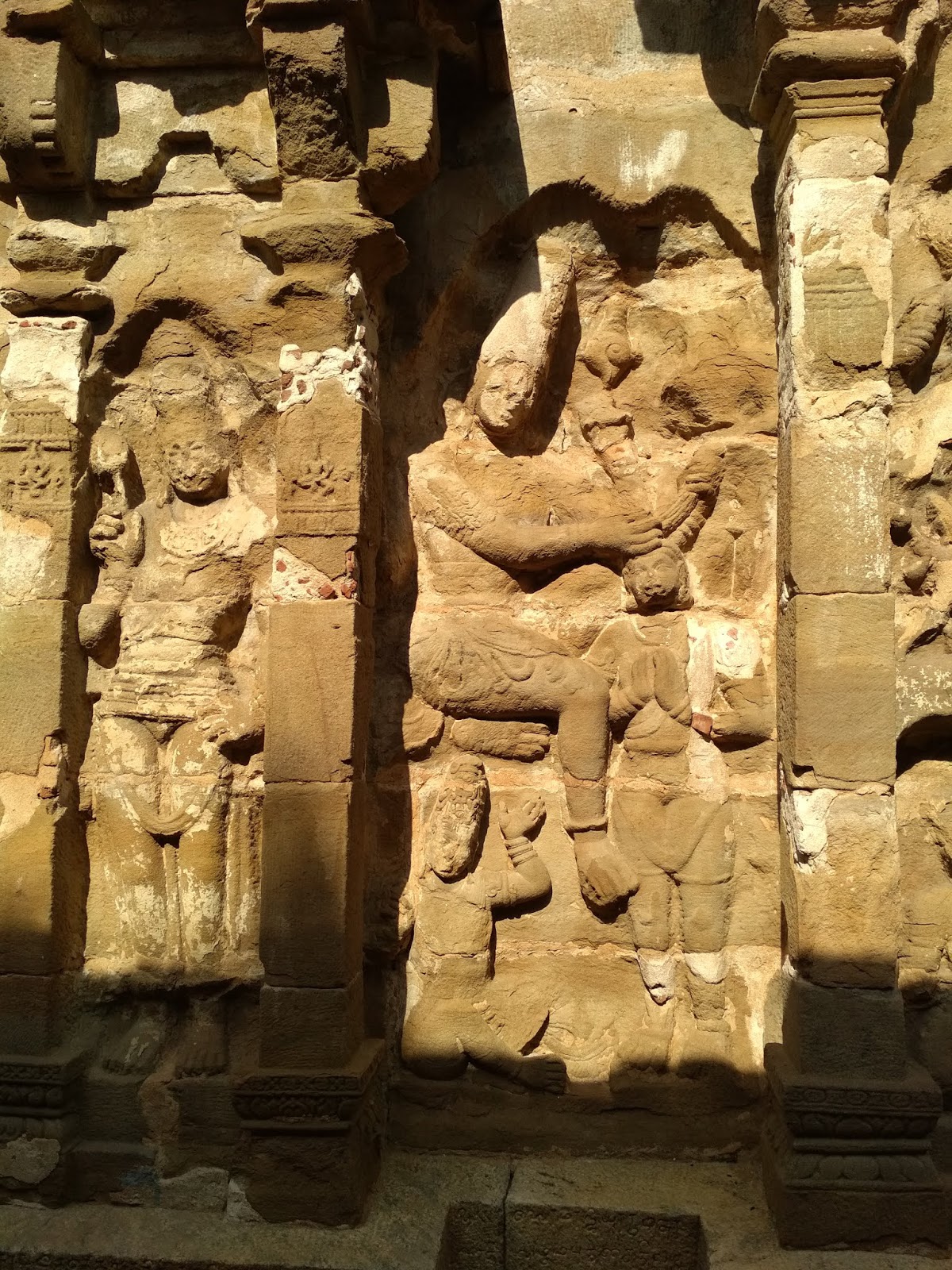
The temple has beautiful old sculptures around the prakaram depicting the different stages of Parameswara’s life right from his childhood. The temple is a terrific example of Pallava Architecture and is believed to have been built by them on a single piece of rock.

Legend has it that there was a secret underground tunnel laid out from this temple all the way to Mahabalipuram , on the eastern sea shore, as well as to Parameswara Pallava’s court. When Britishers got a scent of this, they came here to trace this. Coming together as one, the devotees of this temple are said to have built out steps across the tunnel to the temple sannidhi, thus turning away the Britishers.
Every Ekadasi, devotees can have darshan of Ranganatha in the Tier 1 of the temple between 8am and 12noon.
Devarajan Bhattar, whose father had performed service for three decades at a salary of Rs. 35 per month, is helping revive the Utsavams at the temple.
Brahmotsavam takes place in Vaikasi with Theerthavari on Punar Poosam day.
Garuda Sevai takes place in the morning on the 3rd day
On the Bhogi day, Lord goes out on a procession with Andal.
Festival
About 3 lakh people visit this temple on the Vaikunta Ekadesi day

Moolavar : Paramapatha Nathan sitting posture West facing
Lord Ranganatha can be seen in Tier 2
Paramapathanathan is said to reside in Tier 3Thaayar : Vaikunta Valli
Azhvaar : Thirumangai Azhvaar- 10 Paasurams (Periya Thirumozhi)
The temple is open between 7am-12noon and 4pm-8pm. Contact:Devarajan Bhattar @ 99444 64383
Monday, October 29, 2007
ThiruThanka Vilakoli Perumal
Birth Place of Vedantha Desigar


Azhvaar’s high praise of this Lord
So impressed was Thirumangai Azhvaar with this ‘Lord with the fire’ that he compares the Lord here to ThiruKurundi Nambi, Kumbakonam Aaravamudhan, Srirangam Ranganatha and Tirupathi Srinivasa.
“குருங்குடியில் நின்றானே , மூவுலகிற்கும் முதலாவனை
அளவிடா வியலா ஆராவமுதனை,
அரங்கத்து அரவணையில் பள்ளி கொண்ட ஐயனை
வேக்கவில் துயில் அமர்ந்தானை வேங்கடத்து நின்றானை
இந்த திருதன்காவில் கண்டேன் ”
Quick Fact
Moolavar : Deepa Prakaasar West Facing Standing Posture
Thaayar : Maragada Valli
Utsavar : Vilakoli Perumal
Contact: 94475 73942

Thoopal is the birth place of Vedantha Desigar, the acharya who created the Vedantha Siddhaantha for Vaishnavites. Desigar’s life story has been depicted at this temple in form of beautiful photographs.
Thiru Thanka Vilakoli Perumal temple is about ½ km West of Thiru Vekka Divya Desam.
Saraswathi’s attempts to disrupt Brahmma’s Yaagam continue
Having failed in her previous attempts to stop Brahmma’s Ashwamedha Yaagam, Saraswathi decide to take an extreme step. She used her powers and put the entire place into darkness. Lord Vishnu appeared as a flame, thus providing the much needed light to Brahmma’s Yaagam.
Another Asura to destroy the Yaagam
Brahmma invited the Devas to attend the Yaagam. Not to be left behind, the Asuras too decided to attend. However, Brahmma ignored them. Angered at Brahmma not taking notice of their presence, the Asuras went to Saraswathi and poisoned her thoughts once again. They decided to create a dangerous Asura to destroy the Yaagam. The Asura, Maaya Nalan, went to the Yaagam in the form of a dangerous fire.
Once again coming to Brahmma’s rescue, Lord Vishnu took the fire in his hand and held it so served as a lighting lamp. He appeared in this form before Saraswathi, who had followed the Asura. Saraswathi accepted her mistake in trying to repeatedly block the Yaagam and came back to Brahmma. It is believed that Saraswathi herself appeared here as the ‘sacred
water’, and a cold one at that, so as to cool the hot burning hand of
Lord Vishnu, who had taken the fire in his hand to protect Brahmma.

Azhvaar’s high praise of this Lord
So impressed was Thirumangai Azhvaar with this ‘Lord with the fire’ that he compares the Lord here to ThiruKurundi Nambi, Kumbakonam Aaravamudhan, Srirangam Ranganatha and Tirupathi Srinivasa.
“குருங்குடியில் நின்றானே , மூவுலகிற்கும் முதலாவனை
அளவிடா வியலா ஆராவமுதனை,
அரங்கத்து அரவணையில் பள்ளி கொண்ட ஐயனை
வேக்கவில் துயில் அமர்ந்தானை வேங்கடத்து நின்றானை
இந்த திருதன்காவில் கண்டேன் ”
Quick Fact
Moolavar : Deepa Prakaasar West Facing Standing Posture
Thaayar : Maragada Valli
Utsavar : Vilakoli Perumal
Contact: 94475 73942
108Divya Desam- Kanchipuram PavalaVannan
PavalaVannan
The Only Divya Desam where Lord Vishnu is praised for his colour

ThirumangaiAzhvaar was completely startled looking at the colour of the Lord here. He had seen and praised different forms of the Lord but none had left him as bemused as this one. He had never seen such a colour.
Not able to fathom as to who this one looked like, he wondered if this was similar to the one at Kadanmallai (Mahabalipuram) or the one at ThiruperNagar. And quickly realized that one was different and dissimilar. In different Yugams, Lord has been seen in different forms and colour. Thirumangai could not relate to this one.
PavalaVannan Perumal Divya Desam is situated near the Kanchipuram New Railway station off Madras Road.
The Story
Continuing her effort to stop Brahmma’s Yaagam, Saraswathi sent Asuras. With Brahmma once again looking up to Lord Vishnu for help, Vishnu took on the Asuras and killed them all. In the process of slaying them, blood sprained all over his body. This mix of blood on his body had given the Lord a different colour - ‘Pavalam’. And he remained so ever after.

Opposite this temple, ½ a km away and facing PavalaVannan is Pachai Vannan temple (not praised by Azhvaar).
Festival
On the 5th day of Vaikasi, Kanchi Varadarajan comes here on a procession from Chinna Kanchipuram.
Quick Facts
Deity : PavalaVanna Perumal
Posture : Standing West facing
Goddess : Pavalavalli Thaayar
Azhvaar : Thirumangai – 1 Paasuram(2060)
Timing : 730am-1130am, 5pm-8pm
Tel : Rangaraja Bhattar @ 92453 71910 / 99521 84249
Address : 12B Kalandar Street, Kanchipuram 631 602
Festivals: Navarathri, Deepavali, Vaikasi
The Only Divya Desam where Lord Vishnu is praised for his colour

ThirumangaiAzhvaar was completely startled looking at the colour of the Lord here. He had seen and praised different forms of the Lord but none had left him as bemused as this one. He had never seen such a colour.
Not able to fathom as to who this one looked like, he wondered if this was similar to the one at Kadanmallai (Mahabalipuram) or the one at ThiruperNagar. And quickly realized that one was different and dissimilar. In different Yugams, Lord has been seen in different forms and colour. Thirumangai could not relate to this one.
PavalaVannan Perumal Divya Desam is situated near the Kanchipuram New Railway station off Madras Road.
The Story
Continuing her effort to stop Brahmma’s Yaagam, Saraswathi sent Asuras. With Brahmma once again looking up to Lord Vishnu for help, Vishnu took on the Asuras and killed them all. In the process of slaying them, blood sprained all over his body. This mix of blood on his body had given the Lord a different colour - ‘Pavalam’. And he remained so ever after.

Opposite this temple, ½ a km away and facing PavalaVannan is Pachai Vannan temple (not praised by Azhvaar).
Festival
On the 5th day of Vaikasi, Kanchi Varadarajan comes here on a procession from Chinna Kanchipuram.
Quick Facts
Deity : PavalaVanna Perumal
Posture : Standing West facing
Goddess : Pavalavalli Thaayar
Azhvaar : Thirumangai – 1 Paasuram(2060)
Timing : 730am-1130am, 5pm-8pm
Tel : Rangaraja Bhattar @ 92453 71910 / 99521 84249
Address : 12B Kalandar Street, Kanchipuram 631 602
Festivals: Navarathri, Deepavali, Vaikasi
Sunday, October 28, 2007
Kanchipuram Ashtabhujam
The only divya desam where Lord Vishnu is seen with 8 hands
Lord with 8 hands evokes Thirumangai Azhvaar's curiosity

This is the only Divya Desam in Kanchipuram that has a Swarga Vaasal ( Gateway to Heaven).
Festivals
10 day Brahmotsavam in Chitrai
Gajendra Moksham in Aadi
Pavitrotsavam in Avani
Margazhi Festival
Quick Facts
Moolavar: Gajendra Varadan Standing West facing Posture
Thayar : Alarmel Mangai
Utsavar : Aathi Kesavan
Azhvaar : Thirumangai, PeyAzhvaar- 12 Paasurams
Timing : 730am-12noon, 430pm-8pm
Contact : Murali Bhattar @ 98656 98666/82205 63977 or Kamala Kannan Bhattar @ 96290 48396
Lord with 8 hands evokes Thirumangai Azhvaar's curiosity

Located 2 kms South West of Varadaraja Perumal temple and ½ km South of ThiruVekka is the Ashtabhujam Gajendra Varadan temple in Kanchipuram.
The story of this temple too revolves around Saraswathi’s attempt to stop Brahmma’s Ashwamedha Yaagam. Continuing her quest to stop Brahmma’s Ashwamedha Yaagam, Saraswathi sends a dangerous looking Kaali along with an asura. Lord Vishnu appeared with 8 hands with a weapon in each hand to kill the asura and to subdue Kaali. In memory of this event, there is a Kaali temple next to this Divya Desam.
Thirumangai Azhvaar had praised Lord Vishnu in different forms and sizes but he had not seen one with 8 hands. Looking at this Lord, he could not understand who the one with 8 hands was and how one could be in this form.He tires to recount all the different forms of Lords Vishnu that he had praised but could not relate to this one. Hence, in each of his Paasurams directed at the Lord here, he, with a lot of curiosity, constantly asks the question 'who are you- the one with 8 hands.'
“மேவி அப்பாலும் விண்ணோர் வணங்க
வேதம் உரைப்பார் முனீர் மதந்தை தேவி
அப்பால் அதிர் சங்கம் இப்பால்
சக்ரம் மற்று இவர் வண்ணம் என்னில்
சக்ரம் மற்று இவர் வண்ணம் என்னில்
காவி ஒப்பார் கடலேயும் ஒப்பார்
கண்ணும் வடிவும் நெடியார் ஆய்
கண்ணும் வடிவும் நெடியார் ஆய்
என் ஆவி ஒப்பார் இவர் யார்கொல் என்ன
அஷ்ட புயகரம் என்றாரே ”- Thirumangai Azhvaar
Gajendra Moksham
An elephant which came to the temple tank to pick up flowers for the Lord was caught in the clutches of a crocodile. Lord Vishnu is said to have hurled his disc at the crocodile to save the elephant. Lord here is said to have provided a ‘replayed version’ of Gajendra Moksham to PeyAzhvaar.
Festivals
10 day Brahmotsavam in Chitrai
Gajendra Moksham in Aadi
Pavitrotsavam in Avani
Margazhi Festival
Quick Facts
Moolavar: Gajendra Varadan Standing West facing Posture
Thayar : Alarmel Mangai
Utsavar : Aathi Kesavan
Azhvaar : Thirumangai, PeyAzhvaar- 12 Paasurams
Timing : 730am-12noon, 430pm-8pm
Contact : Murali Bhattar @ 98656 98666/82205 63977 or Kamala Kannan Bhattar @ 96290 48396
Friday, October 26, 2007
Kanchipuram Thiru Vekka
Sonna Vannam Seitha Perumal
The Only Divya Desam that features Lord Vishnu in a ‘Maaru Sayanam’
Lord Vishnu is seen sleeping in the opposite direction from Right to Left

Thirumazhisai Azhvaar went up to the Lord and requested him too to join them on their journey.
கனி கண்ணன் போகின்றான் காமருப்பூண்
கச்சி மணி வண்ணா நீ கிடக்க வேண்டாம்
துணிவுடைய சென்னா புலவனும் போகின்றேன்
நீயும் உன்ருன் பை நாகப்பாய் சுருட்டிகொள் - திருமழிசை ஆழ்வார்
இசைந்த வரவமும் வேர்புங்கடலும்
பசைதனமுது படப்ப
அசைந்து கடைந்த வருத்தமோ
வேக்காவில் கிடந்திருந்து நின்றது மங்கு - பேயாழ்வார்
Quick Facts
Moolavar : YaaThotha Gaari Perumal in a west facing maaru sayana posture
Goddess : Komalavalli Thaayar
Utsavar : Sonna Vannam Seitha Perumal
Birth place : Poigai Azhvaar
Timing : 8am-11am, 5pm-8pm
Contact : S. Ramanuja Acharya Bhattar @ 044 3720 9752
Address : Old 28, Aanai Katti Street, Chinna Kanchipuram 631 503
The Only Divya Desam that features Lord Vishnu in a ‘Maaru Sayanam’
Lord Vishnu is seen sleeping in the opposite direction from Right to Left

Located in Chinna Kanchipuram 2 kms west of Varadaraja Perumal Koil, Sonna Vannam Seitha Perumal gets one thinking. As one enters the Sannidhi, one feels that there is something wrong, something different, that one is not normally used to seeing in Vishnu temples.
It takes a little time for one to realize that Lord Vishnu, here at Thiru Vekka, is seen in a different sleeping posture from right to left (Maaru Sayanam) with his head resting on the left hand. In all other Divya Desams, where the Lord is represented in a sleeping posture, he can be seen sleeping from left to right with his head resting on his right hand.
புருபிடையே நின்றும் புனல் குளித்தும்
ஐந்து நேரிபிடையே நிற்கவும் நீர் வேண்ட விருப்பு
உடைய வெக்காவே செர்தானை
தூயக் தொழுதால்
அக்காவே தீவினைகள் ஐந்து - பேயாழ்வார்
Such is the fame of the Lord here that PeyAzhvaar in this Paasuram says 'One need not stand atop mountains to penance. Neither does one need to be stick our neck into ice cold deep water nor in the midst of five fires to penance. It is just enough if we worship Sonna Vannam Seitha Perumal at ThiruVekka with flowers and a sincere heart. And we will liberated from all our sins.'
The story
5 temples in Chinna Kanchipuram have stories relating to Brahmma’s Ashwamedha Yagna and Saraswathi’s anger at being ignored for the Yagna. To prove a point to Brahmma that a yagna cannot be successful without her presence, Saraswathi tries many different ways to stop the yagna.
In the story relating to ThiruVekka, she takes the form of a fast flowing river (VEGAVATHI) and tries to flood the place. Brahmma looks up to Lord Vishnu to help him with the smooth and safe conduct of the Yagna.
Vishnu, this time, sleeps across the river as a dam, thus stopping the flow of the river. With the river being blocked, Lord Vishnu, along with MahaLakshmi provides darshan to Brahmma, who then continues his Yagna.
ThirumazhisaiAzhvaar and the Lord Leaving this Place
Once ThirumazhisaiAzhvaar’s disciple Kani Kannan was heard singing praise of the Lord. Pleased with his voice, the king ordered that Kani Kannan sing praise of him too. KaniKannan refused stating that he would sing praise only of the Lord and not of others.An upset king banished him from the kingdom. Kanni Kannan narrated the happening to his preceptor Thirumazhisai Azhvaar who decided to accompany him out of the kingdom.
Thirumazhisai Azhvaar went up to the Lord and requested him too to join them on their journey.
கனி கண்ணன் போகின்றான் காமருப்பூண்
கச்சி மணி வண்ணா நீ கிடக்க வேண்டாம்
துணிவுடைய சென்னா புலவனும் போகின்றேன்
நீயும் உன்ருன் பை நாகப்பாய் சுருட்டிகொள் - திருமழிசை ஆழ்வார்
And the three left the place- This action plunged the entire kingdom into darkness.
Realizing his mistake, the king reached out to Thirumazhisai Azhvaar and requested that the three of them come back to the kingdom. Thirumazhisai Azhvaar asked the Lord to return to his residing place. The Lord is said to have followed this instruction immediately and in this hurried return is said to have slept in the opposite direction.
In memory of the event marking Thirumazhisai Azhvaar leaving the place, the Lord along with the idol of Thirumazhisai Azhvaar is taken in a procession to the nearby river VegaVathi, every year during the Tamil Calendar month of ‘Thai’(Jan-Feb),
Other Reasons for Maaru Sayanam
Two other reasons are also stated for Lord’s opposite sleeping posture. Since he left his residing place and later returned, he is said to have slept in the opposite direction as proof that he had left the place once.
Legend also has it that, as Lord Vishnu came in a tearing hurry, on Brahmma’s request, to block River VegaVathi ( Saraswathi), he is said to have slept in the opposite direction.
Name of the Lord
As the Lord listened, in strict obedience, to the instructions of Thirumazhisai Azhvaar and did as the Azhvaar wanted, he is called ‘Sonna Vannam Seitha Perumal’.
Azhvaars
5 Azhvaars have sung praise of the Lord- Poigai, PeyAzhvaar, NammAzhvaar, Thirumangai Azhvaar and Thirumazhisai Azhvaar. This is also the birth place of Poigai Azhvaar.
In early days of Vaishnavism, this temple was referred to as the Lord representing ‘Sleeping Posture’ as can be seen from the songs of the Azhvaars.
இசைந்த வரவமும் வேர்புங்கடலும்
பசைதனமுது படப்ப
அசைந்து கடைந்த வருத்தமோ
வேக்காவில் கிடந்திருந்து நின்றது மங்கு - பேயாழ்வார்
Quick Facts
Moolavar : YaaThotha Gaari Perumal in a west facing maaru sayana posture
Goddess : Komalavalli Thaayar
Utsavar : Sonna Vannam Seitha Perumal
Birth place : Poigai Azhvaar
Timing : 8am-11am, 5pm-8pm
Contact : S. Ramanuja Acharya Bhattar @ 044 3720 9752
Address : Old 28, Aanai Katti Street, Chinna Kanchipuram 631 503
Thursday, October 25, 2007
Thiru Paadagam Pandava Dhootha Perumal
Pandava Dhootha Perumal- A majestic 25 feet Lord Krishna


Located one km West of Kanchipuram Bus Stand is the Pandava Dhootha Perumal temple, one that was renovated by the Kulothunga Chola I.
The entrance to the temple through the very old looking temple tower is rather sedate. This leads one to a very small sized sanctum However, this modest entry sets one up for quite an unexpected surprise - A gigantic over 25 feet tall Lord Krishna in a majestic sitting posture (facing East), almost suggestive of the Lord’s Vishvaroopam.
The Story
In order to make peace with the Kauravas, Krishna goes to Hastinapura to the court of Duryodhana on behalf of the Pandavas. With a plot to kill Krishna and thus to put all hopes of a peace treaty, Duryodhana digs a pit and tops it with bamboo sticks. On this bamboo topped pit, he puts up a grand stage, thus setting up Krishna for a mega fall.
Once he enters the hall, the all knowing Krishna presses the stage with his little toe to send it crushing below. And immediately after, Krishna displays his Vishwaroopam to the blind Dhirdharashtra (and only to him), by giving him the vision.
Seeing the Lord in his full divine form, a delighted Dhirdharashtra requests Krishna to make him blind again, for he does not want to see anything else after having seen the Lord himself. Says Dhirdharashtra to Krishna, “I have seen you in your full form. This is enough. No more do I want the vision.”
Years after this episode, Arjuna’s Grandson Janmejaya, who listened to the Mahabharata story from Vaisampaayana wanted to relive the moment (that of Lord Krishna displaying his Vishwaroopam) and undertook penance at this place. Krishna is believed to have provided Darshan to Janmejaya, as ‘Pandava Dhootha’, in the same way he had in the Mahabharatha episode.
Name of the Lord
Having played the role of a messenger for the Pandavas, Krishna, here at this temple, is known by that same name- Pandava Dhootha Perumal.
Azhvaars
Four Azhvaars have praised the Lord here. Thirumazhisai Azhvaar refers to 3 temples in Kanchipuram as representative of the 3 postures of Lord Vishnu. Among the Divya Desams, this temple (Thiru Paadagam) was just referred to as ‘Lord in Sitting Posture’ in those days, while Thiru Ooragam was referred to the Lord in standing posture and Thiru Vekka as the Lord in Sleeping Posture. It was only later that other Azhvaars referred to Lord Vishnu and his 3 postures.
“நின்றதேந்தை ஊரகத்து, இருந்ததேந்தை பாடகத்து
அன்று வேக்கனை கிடந்தது எண்ணிலாத முன்னெல்லாம்
அன்று நான் பிறந்திலேன் பிறந்தபின் மறந்திலேன்
நின்றதும் இருந்ததும் கிடந்ததும் என் நெஞ்சுள்ளே ”- Thirumazhisai Azhvaar
Just in the way Krishna protected the Pandavas, it is believed that the Lord here will protect devotees who pray with sincerity and unflinching devotion.
There is said to have been a 18 day debate between Ramanuja and a Saivite Scholar. Having lost the debate to Ramanuja, the Saivite Scholar is said to have become his discipline and changed his name to Arulaala Perumal Emberumaanar. His descendents are the ones currently managing the temple.
Festivals
Krishna Jayanthi
Vaikunta Ekadesi
Panguni Uthiram
Quick Facts
Moolavar : Pandava Dhootha Perumal
Goddess : Rukmini
Azhvaars : 4 Azhvaars have praised this Lord - Thirumazhisai, Thirumangai, Bhoothath and PeyAzhvaar
Time : 7am-11am and 4pm-730pm
Contact : TV Srinivasan Bhattar @ 94438 84698
Address : 28B/75 Pandava Perumal Koil Street, Kanchipuram 631502
Subscribe to:
Posts (Atom)