Thursday, September 22, 2011

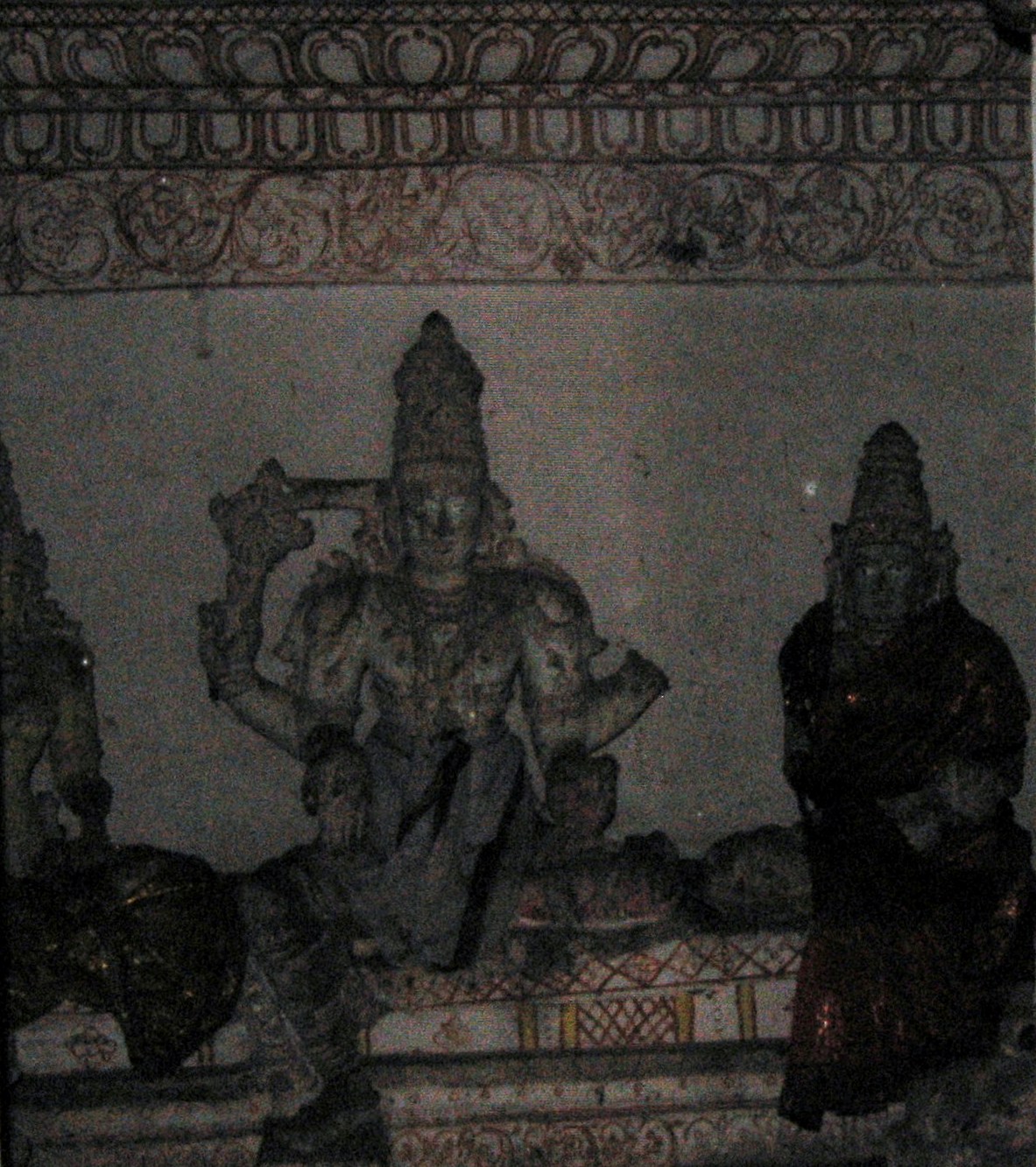
Thiru Koshtiyur Sowmya Narayana Perumal Divya Desam

Ramanuja learnt the Thiru Mandiram here on his 18th visit from Srirangam
A Divya Desam with a 'Three Tier Ashtanga Vimana'
Avathara Sthalam of Thiru Koshtiyur Nambi

Located 8kms South West of Tirupattur on the Sivaganga Highway is the Sowmya Narayana Divya Desam in Thiru Koshtiyur, a temple that finds a reference in the Brahmanda Purana. Lord Sheerabdhi Nathan, who had come here from Thiru Parkadal on the request of the Devas, is seen in a Bhujanga Sayana Posture at this temple.

This is the place where Ramanuja was initiated the Thiru Mandiram by his Acharya Thiru Koshtiyur Nambi on his 18th trip from Srirangam.

Direction to Thiru Koshtiyur
In centuries gone by, the direction to this place was given as being South of the Cauvery and 40miles East of Azhagar Koil.

Story of Hiranya Kashipu and ThiruKoshtiyurAsura Hiranyakashipu prayed to Brahmma for a boon that he would not be killed by Devas, human race, animals or by weapons. Having secured the boon, he went on a rampage harassing everyone and forcing them to utter ‘Namo Hiranyaya Namaha’.

Worried at his increasing power and anxious at what his next action would be, Devas sought Shiva’s help, who directed them to Brahmma, who further directed them to Vishnu as the only one who could pin down Hiranyakashipu.

The Devas went to Thiru Paarkadal only to be told by Lord Narayana that Hiranya’s powers had spread around the world and they had to go and find a place in the world where His name was still being chanted. They managed to find Kadamba Rishi’s ashram as the one place where Lord Narayana’s name was still being uttered. The Rishi was undertaking severe penance in his quest to have darshan of the Lord as Sheerabdhi Nathan.

The Devas and Tri Murthies went to Kadamba Rishi’s ashram to discuss the plan to kill Hiranya. While everyone remained there, Lord Narayana went back to Thiru Paarkadal where, he asked Sanghu Karna to be born as Hiranyakashipu’s son Prahalada who would utter Namo Narayana all the time, much to his father’s shock.

After Hiranya Samhara, Kadamba Rishi requested Brahmma to give him a model of Lord Narayana killing Hiranya. It was Brahmma who directed Vishwakarma to construct a 3 tier structure at this place- one with Om, another with Namo and the third with Narayana with the Southern side of the tower depicting ‘Lord ‘Narasimha catching Hiranyan’. He asked Maayan to construct the Northern side of the tower depicting ‘Narasimha killing Hiranyan’.

Indra, who had stayed back here till the Hiranya Samhara, presented to Kadamba Rishi the silver plated idols of Sowmya Narayana along with Sri, Bhoo and Neela Devi.

When Pururavan, the son of Budhan (Mercury) flew above Thiru Koshtiyur on his way for a bath in the Ganges, he was brought down to this place through the powers of the Ashtanga Vimana. Having had a darshan of the Thiru Koshtiyur Lord and lured by his presence, Pururavan built the town where people could stay and have darshan of Sheerbadhi Nathan.

'3 Tier Ashtanga Vimana'
This is a Divya Desam with a 'Three tier Ashtanga Vimana', similar to Thiru Koodal in Madurai. At the ground level, there’s a Sannidhi here for Lord Shiva. Above that is a 3 Tier Vimana. On level 1 is Lord Uraga Mellanaiyaan – Sheerabdhi Nathan in a Sleeping Posture. Above him in Tier 2 is Lord Upendra Narayana in a Standing Posture. And on Tier 3 is Paramapada Nathan in a Sitting Posture.

There is a Ramaswamy temple in Cheran Maha Devi, near Ambasamudram, which has a similar three tier Ashtanga Vimana.

On Tier 3, through a small gap one can reach the place from where Ramanuja pronounced the Thiru Mandhiram to the world at large.

Thiru Mandhiram- Ramanuja and Nambi
Ramanuja came to Thiru Koshtiyur to meet Nambi and learn the Thiru Mandhiram. On reaching here, he says ‘I have come to meet you..’ but was turned back on 17 occasions.

On the 18th occasion, Ramanuja started with ‘Adiyen Daasan (your disciple) Ramanuja has come.’ And to his surprise, this time Nambi welcomed him saying ‘Your arrogance is gone. Now we can talk’.

Ramanuja requested his Acharya Nambi to teach him the Thiru (Narayana) Mandhiram. He was initiated the Thiru Mandhiram, subject to one condition that Ramanuja would not share it with anyone else and that if he failed, he would go to hell. Having learnt the Thiru Mandhiram, Ramanuja came up here to the 3rd tier, called out for the people and recited the Thiru Mandhiram to the world at large.

Shocked at this ‘break of promise’, Nambi questioned Ramanuja on his failure to keep up the promise and the consequence of this ‘public’ utterance In a stunning reply, Ramanuja said ‘By sharing the Thiru Mandhiram, I alone (one person only) will go to hell but by having shared it with the world at large, several people will get Moksham.’ And hence, he was ready to go to hell.

Ramanuja as Emberumaanar
Impressed with Ramanuja’s reply, Nambi called him ‘Ne Emperumaal Aanar’ (you have become my Lord). Hence Ramanuja here is called ‘Emberumaanar’. Ramanuja and Nambi have separate Sannidhis at this temple. Outside the Nambi Sannidhi is a board that contains the list of 18 Thiru Mandhiram.


On the third tier, on the Southern side, there is a beautifully sculpted statue of Ramanuja in a sitting posture to mark the ‘ThiruMandhiram’ pronunciation to the world.

Pallandu Verse praising Thiru Koshtiyur Lord
அவ் வழக்கு ஒன்றுமில்லா அணி கோட்டியர்
கோன் அபிமானதுங்கன், செல்வனைப் போல
திருமாலே நானும் உனக்கு பழவடியேன்

நல் வகையால் நமோ நாராயணா வென்று
நாமம் பல பரவி

பல்வகையாலும் பவித்தரனே
உன்னைப் பல்லாண்டு கூறுவனே

In the Thirupallandu verse, Peri Azhvaar says that having seen him here at Thiru Koshtiyur, he too like the faultless Thiru Koshtiyur Nambi will become a faithful Servant of the Lord and that he will forever chant and spread the Om Namo Narayana mantra as well as the several other names of the Lord with the sole aim of relinquishing all other unwanted desires in life.

In addition to Peri Azhvaar, Four other Azhvaars - Thirumangai Azhvaar, Peyazhvaar, Thirumazhisai Azhvaar and Bhoothath Azhvaar have sung praise of the Thiru Koshtiyur Lord in a total of 40 verses.

PeriAzhvaar visualised ‘Aayarpadi’ when he saw Thiru Koshtiyur
வண்ண மாடங்கள் சூழ் திருகோட்டியூர்
கண்ணன் கேசவன் நம்பி பிறந்தினில்

எண்ணெய் சுண்ணம் எதிரெதிர் தூவிடக்
கண்ணன் முற்றம் கலந்து அளறு ஆயிற்றே

When Peri Azhvaar visited Thiru Koshtiyur for the first time, it was Krishna Jayanthi period and the whole place was agog with a festival atmosphere with people singing and dancing around bringing back memories of the young and playful Krishna. Peri Azhvaar visualised Thiru Koshtiyur as ‘Aayarpadi’ and sung praise of this place referring to this as ‘one with big mansions’.

The Name- Removal of all Sins As the Devas came here in Groups (Ghosti) requesting Lord Narayana to kill Asura Hiranyakashipu, this place is called Koshtiyur. The belief is that a visit to this place will remove one’s sins as can be seen from the name – Thiruku (Sin) – Otiyur (removed).

Belief is that visiting Thiru Koshtiyur provides one the fruits of visiting Naimisaranyam Divya Desam, a bath in the Ganges and a visit to Kurukshetra. It is said that a Vaishnavite who does not visit Thiru Koshtiyur will become a monkey in the next birth.

Quick Facts


Moolavar : Uraga Mellanaiyaan East Facing Sleeping Posture
Thaayar : Thiru Maamagal ( also called Nilaamagal and Kulamaamagal)
Utsavar : Sowmya Narayanan
Azhvaar Praise: 5 Azhvaars - Thirumangai Azhvaar, Peyazhvaar, Thirumazhisai Azhvaar, Bhoothathazhvaar and Periyazhvaar

Temple time: 730am –1230pm and 5pm-8pm

Priest: G.S. Madhavan Bhattar @ 94433 41163 / 98654 85886 / 04577 261248, Ramanujam @ 97519 48520

Temple Address: Soumya Narayana Perumal Koil, Thirukoshtiyur 630 210
Also contact: Krishnamurthy ( Guide/Assistant) on reaching there.

How to reach Thiru Koshtiyur is 8Kms South West of Tirupattur, 25kms North of Sivaganga and about 30kms West of Karaikudi. Buses ply every 5-10 minutes between Tiruppatur and Sivaganga

Nearest Railway Station is Sivaganga

Auto will charge anything Rs.80-100 for a one way drop from Tirupattur to Thirukoshtiyur

Place to Stay: Madhavan Bhattar will organise a traditional place to stay at Thiru Koshtiyur

For Cab to go around Divya Desams in the Madurai region, Contact: Manimaran @ 99659 99222/ Vinod @ 96773 23382

Wednesday, September 21, 2011

Cheran Maha Devi Ramaswamy Temple

A temple with a Three Tier Vimanam like Thiru Koshtiyur and Koodal is in a dilapidated condition and requires immediate attention

Located 1kilometer North of Cheran Maha Devi (Tirunelveli-Tenkasi rail route) bus stand at the foot of the Western Ghats amidst green paddy fields is an ancient at least 1000years old Three Tier Aadhi Narayanan Ramaswamy temple, referred to as the Nigarili Chola Vinnagar Azhvaar temple in 10th Century AD inscriptions and whose deity was referred to as Raghava Chakravarti in a 1020AD Rajendra I period inscription, that currently finds itself in a rather dilapidated condition with bats being the main occupants of the dark prakaras in Tier 1 and 2.

Inscription Insights

There are several inscriptions on the inner and outer walls of the Ramaswamy temple. There are also inscriptions on the way up the steps to Tier 1 of the temple that provide insights into the conduct of the festivals, the daily poojas at the temple, the state of the temple under different rulers and their contribution to the well being of the temple.

Grand Festivals in Centuries gone by

As late as the first half of the last century, there were several festivals conducted in a Grand manner at the Ramaswamy temple. A 10day Unjal Utsavam in Chitrai, Garuda Sevai on the fourth Saturday in Puratasai, a 10th day Chariot Festival (indicating the temple had a Chariot) and a11th day Theerthavari utsavam were among the popular festivals at this temple.

Such was the importance to the festivals at the Ramaswamy temple that there were deposits made for conducting worship of the God on Festival days of Chitrai and there was a gift of money for providing rose water to the God on the Chitrai Festival day (Kulasekhara I -13th Century AD- period inscription).

Theppotsavam in Margazhi was a big event
The Theppotsavam about which we find details in these ancient Chola and Pandya Period inscriptions continues to take place in the Tamil Calendar month of Margazhi. Belief is that Ganga comes here to Porunai river every year on the day of Maa Viyathi Paatham in Margazhi to cleanse her sins. It is said that people from Cheran Maha Devi used to congregate here for a bath at this river on this day.
There are separate rooms on the Southern side for the Vahanas.

Four times a day Pooja- Where is that now?
Even 65years ago, there were poojas performed four times a day as per the Vaikanasa tradition. Now, the temple is open only for a couple of hours in the evening with the opening in the first half dependent on request from devotees on prior intimation.

God was well lit!!!

A 10th Century AD inscription records a specific praise of Vaikanasas for taking care of the lamps at the Ramaswamy temple as they would of their own body, so committed were they that they pledged themselves to maintain a perpetual lamp at the temple ( 1015AD Rajendra I period inscription). The inscription goes on to add that they would have to pay a penalty of twice the ghee for them to continue the lamp service. Deposit of Kasu was also made in the hands of the Vaikanasas for burning a half lamp.

The inscriptions record several gifts to the temple including gift of money for lamp, gift of 25cows for lamp, a gift of 75cows for 3lamps, a gift of money for 2lamps and 4food offerings to Thiru VaykulathAzhvaar and his consort and a gift of cash for lamp for the deity which was to be maintained by the Vaikanasas (1015AD Inscription) clearly indicating that the daily burning of lamps was well taken care of.

Watchman for the Temple

Not just the lamps, the overall security of the Ramaswamy temple too was provided for as can be seen from the 1036AD inscription of Sundara Chola Pandya Deva which refers to a gift of pieces of land by the Merchant Guild for maintenance of a watchman at the temple. One could also assume from the gifting by the Merchant Guild that the business and economy at this place was robust at that point of time.

Loss of Jewels- 12th Century AD Pandya Period event
A Jatavarma Pandya Kulasekhara I inscription of 1195AD narrates an interesting story, that of two priests being held responsible for loss of temple jewels and how they borrowed 3Achchus from the temple and gave a written agreement that they would conduct the same from interest accruing from these 3Achchus.

War time and reference to places around Cheran Maha Devi

A 985AD inscription and similar one in 1000AD in Tamil both on the North Wall relating to Raja Raja I mentions the destruction of fleets at Kandalurch Chalai and Mandalaurch Chalai and conquests of Ganga Padi, Nulamba Padi, Tadigai Padi, Vegai Nadu, Kudagamalai Nadu, Kollam, Kalingam, Ila Mandalam and Cheran Madevi.

Cheran Maha Devi - Location
Cheran Maha Devi is at a very centric location on the Tirunelveli- Ambasamudram- Papanasam route. About 15kms East is Tirunelveli, about 30kms South East is the Nambi Divya Desam at Thiru Kurungudi and about 15kmsWest is Kulasekara Azhvaar Rajagolaswamy temple in Mannar Koil. One can also reach Nagercoil and Kanyakumari from Cheran Maha Devi via Kalakkad and Valliyoor.

The Name

Inscriptions indicate that this place was referred to as Cheran Maha Devi Chaturvedi Mangalam. In those days, the hilly terrain of Papanasam was the short cut from Cheran Maha Devi to Trivandrum. Also, culverts refer to this place as Nigarili Chola Chaturvedi Mangalam. The inscriptions refer to the Ramaswamy temple as. Early 11th Century AD inscriptions state that Cheran Maha Devi was situated in Mulli Nadu.

Three Tier Vimana

Similar to Thirukoshtiyur Sowmya Narayana Divya Desam, Parameswara Vinnagara Divya Desam and Koodal Divya Desam in Madurai, the Ramaswamy temple in Cheran Maha Devi too has a three tier vimana, with Adhi Narayanan in a Standing Posture at the Ground level, Veetrituntha Perumal in a sitting posture in Tier 1 along with Sri and Bhoo Devi and Thiruparkadalnathan in a sleeping posture in Tier 2. Unfortunately, unlike the other too Divya Desam vimanam, this one at Cheran Maha Devi has a worn out look and seems to be asking for immediate attention to bring it to a vibrancy that this temple once had centuries ago.

The three tier vimanam finds a reference in the ancient inscriptions which talks about the ‘top tier’ Azhvaar idol, the ‘mid tier’ Azhvaar idol and ‘lower tier’ Azhvaar idol.

Current Festivals
Puratasi – Garuda Seva
Rama Navami
Krishna Jayanthi
Puratasi Parivettai
Marghazhi Theppotsavam
Vaikunta Ekadesi Procession

Quick Facts
Moolavar: Aadhi Narayanan East Facing Standing Posture along with Sri and Bhoo devi
Tier 1: Veetriruntha Perumal with Sri and Bhoo devi in a Sitting Posture
Tier 2: Thiru Parkadal Lord in Sayana posture atop Adhisesha

Utsava Deity: Rama with Sita, Lakshmana and Hanuman
Separate Sannidhi: Veda Narayanan with Bhoo and Neela Devi
Temple Time: 630pm and 8pm ( but the Bhattar will open in the morning if you call and inform in advance)
Priest : Sathyanarayana Bhattar @ 90435 48173
Also contact Kannan @ 90436 73430 for any local assistance

How to reach
The temple is 1km North of Cheran Maha Devi bus stand and railway station
Tirunelveli bound buses (Kallur route) stop at the Rama temple
Currently, rail services on this route stands suspended because of broad gauge conversion.
Train Services likely to resume next year.

Auto from Cheran Maha Devi bus stand will cost Rs.25/-


Also Visit Appan Temple
While at Cheran Maha Devi, also visit Appan Venkatachalapathy temple, which is 1km North of this temple.

Friday, September 9, 2011

Thiru Karambanur Uthamar Koil Pasuram

Thiru Mangai Azhvaar refers to the Karambanur Lord as the 'Perfect Lord' thus giving him all the glory in just one word

“Peraanai Kurungudi En Perumanai, Thiruthangal Ooraanai
Karambanur Uthamanai
Muthu Ilangu Kaar Aar Thin Kadal Ezhum
Malai Ezh Il Ulagu Ezhl Undu
Aaraathu Enru Irunthaanaik Kandathu Then Arangathey”- 1399


At many a Divya Desam, Thiru Mangai Azhvaar has showered several verses of praise, referring to the location, describing the Lord, referring to his postures, comparing him with Lords he has seen else where and showering heaps of praise.

However, there are temples where he has made a reference only in passing.Thiru Karambanur Divya Desam near Srirangam is one such temple where he makes only a passing mention. But the lack of verses (quantity) is made up by the quality of reference.

Thiru Mangai Azhvaar showers the Karambanur Lord with the ultimate praise referring to him as Uthamar, the perfect Lord. This is the only Divya Desam Lord that Thiru Mangai has referred to as 'Uthamar'. Hence, with just one word, he has positioned the Karambanur Lord as the Ultimate place to visit for us to see the 'Perfect One'.

Thiru Vahindrapuram Inscriptions

Providing a Sacred Bath for Deva Nathan during a procession on Maasi Magam day
King Vira Narasimha Deva vowed to secure the release of the Chola Emperor from Kapperunjinga
A Gold Necklace was gifted to Vahindrapuram Lord during the rule of Kulotunga III
Thiru Vahindrapuram is a Divya Desam (http://prtraveller.blogspot.in/2008/03/thiruvahindrapuram-devanathan_29.htmlwhose history dates back to the Dwapara Yuga when Arjuna is believed to have had darshan of Deiva Nayagan. Inscriptions at the temple relating to the period 11th-13th Century AD on the walls of the prakara of the main shrine of Deiva Nayakan provides insights into the functioning of the temple, the festivals, ornaments of the Lord and the battles in this region.

While inscriptions on the walls of the Vahindrapuram temple record gifts of lands and villages for offerings and worship to the Lord, gifts of sheep and cows for perpetual lamps, gift of ‘Kasu’ for feeding the Vaishnavas at the temple Mutt and for providing offerings to God on the 8th day of the festival, one of the lengthier inscriptions found on the West Wall of the Prakara of the Deiva Nayakan Divya Desam in Thiru Vahindrapuram that dates back to 1232 AD to the rule of Raja Raja Chola III records the process of securing the release of the Chola Emperor from Kapperunjinga.

When King Vira Narasimha Deva heard that Kapperunjinga had captured the Chola Emperor at Sendamangalam, he vowed to vindicate his title as the leader of the Chola Country. Starting from Dorasamudra, he uprooted the Makara Kingdom, while his two generals destroyed Ellers and Kalliyurmulai village.  On their way, they offered their prayers to the Lord at Ponnambalam following which they went on to destroy Tondaima Nallur.

They then camped at Tiruppaadiri Puliyur (today’s Cuddalore) before the Hoysala army marched on to Thiru Vadigai (about 15 kms West of Thiru Vahindrapuram and now popular for Sayana Narasimha temple) destroying that village.  Finally, they reached Sendamangalam forcing Kopperunjinga to release the Chola Emperor. Celebrating the release, the Chola Emperor was accompanied by the army into his dominion.
On the Western Gopura, at the entrance, there is a reference to Tondaiyar Koman Adaiya Valaindapiran and his heroism in battle.

Garden for the temple
There was an order in 12th Century for a flower garden for the temple. In addition, expenses were also provided for, for the subsequent repairs and maintenance of the garden.

Necklace for Deiva Nayagan
An inscription dating to the rule of Kulotunga III refers to a gift of a gold necklace to Deiva Nayagan

The Standing Vishnu 
An inscription dating back a 1000 years refers in simple terms to the Lord of Thiru Vahindrapuram as ‘The Standing Vishnu’.

Sacred Bath for Deva Nathan
Inscriptions also record minute details like taking care of God's bath during his processions on Festive occasions when he leaves the temple premises. Expenses were sanctioned for providing a sacred bath to the Lord. One such inscription in Tamil on the South Wall of the Prakara records an order communicated to the trustees of the temple granting lands and a garden, free of taxes, for expenses of taking God for a sacred bath to the sea near Nissankhamallan Pattinam on the Maasi Magam day.

Thursday, September 8, 2011

Railway Time Table July 2011

New Railway Time Table and misleading information

Misleading information once again in the new railway time table almost brought a big fight in a family from Madras. Recently, when a ticket for 4-5 family members was to be booked to Srirangam, one of the family members booked the ticket by the 10pm 6107 Mangalore Express.

When the person brought the ticket home, a fight erupted when another family member found from the time table that the train reaches Srirangam at 3am, a time of the night that was too early to go and disturb their hosts.

Finally, it was decided to cancel the ticket and book by 6177 Rock Fort Express which according to the time table was to reach Srirangam at 4am.

Thankfully on enquiries with more frequent train travellers, the person came to realise that arrival time at Srirangam for both these trains and several others was more on paper and that 6107 Mangalore Express reaches Srirangam at 415am and never at 3am as mentioned in the time table.

Once this was communicated to their family members, they heaped a sigh of relief and decided to travel by 6107Express.

This family was lucky that they were informed ahead of travel about the likely arrival. Many train travellers unaware of the likely arrival wake up on time in line with the timings mentioned in the time table only to realise that the train is still about 75-100kms away from their destination. Having once woken up and switched on the lights, these travellers tend to chat up with other family members/friends putting the ‘sleeping’ passengers at inconvenience.

While the information in the time table is the best possible arrival time for these trains, most of the time ( almost always) the trains reach much later because of the challenges relating to ‘single line’ and long stoppages at odd stations to facilitate ‘crossing’.

Table 7- Chennai- Ariyalur-Srirangam-Trichy Section
A look at table 7 of the new railway time table may leave an infrequent train traveller perplexed. As per this time table below, to cover a distance of 11kms between Srgm and Tpj, Mangalore Express takes over 90minutes, Rockfort takes around 90minutes, Howrah Kanyakumari Exp takes around 90minutes and Howrah Trichy Express takes 150minutes.


Table 8- Chennai- Thanjavur-Trichy Section

In this below table 8 of the new railway time table, Chozhan Exp and Rameswaram Exp take 100minutes to cover 50kms between Thanjavur and Trichy, while Tirupati Madurai Exp takes almost 2 ½ hours to cover this distance of 50kms ( which is a speed of about 20kms per hour)


Table 9- Coimbatore-Trichy- Mayiladuthurai Section
In the below Table 9, Jan Shatabdhi and Mysore Exp take 75minutes to cover a distance of 30kms which again is a speed of just over 20kms per hour.

Wednesday, September 7, 2011

Kattu Mannar Koil Inscriptions


13th Century inscription records that the product of the growing lands between Kollidam and Vellaru be assigned for repairs to the temple
 

Kattu Mannar Koil is home to inscriptions that provide insights into its history dating back in time to different periods and rulers.

The earliest inscription dates back to Chozha King Parantaka I who renovated the temple with brick construction. It was also Parantaka I who built the Veera Narayana Lake (now Veeranam) in the 10th Century AD.  Following him, during the time of Kulotunga I, the temple witnessed another renovation with the Granite structure replacing the previous brick construction in line with the materials used during that period.

Name of the Place
 
Inscriptions also reveal different names for this place as referred by different rulers in different periods of time. In the 12th Century AD, this place was referred to as Veeranarayanapuram and the tank as Veeranarayana Eri. During the Chozha period, this place was referred to as Veera Narayana Vinnagaram,   Krishna Deva Raya referred to the Lord as Azhagiya Mannanar, while during the times of Sundara Pandyan, the name was simply ‘Mannanar’. In other periods of time, this place has also been referred to as Veera Narayana Chaturveda Mangalam and Thuvarapathi Mannan Thiru Koil.

Inscription Insights
The Inscriptions at Kattu Mannar Koil also provide insights into the festivals organised during that period as well the jewels adorned by the Lord as well as allocation of land to meet the expenses for repairs to the temple

A 13th century AD inscription refers to an order to sell certain lands to the temple and the purchase by the temple from this cash of ornaments for the Lord.  During the rule of Jatavarma Sundara Pandya I, a festival was organised every month on Moolam with tax free gifts of cultivable land for providing offerings and conducting this festival. Also, during his rule, there is a record of a similar gift of tax free land for providing offerings and worship to the God.

Repairs to the temple
Interesting, there were provisions made to take care of any repairs to Kattu Mannar Koil temple. A 13th Century inscription records that the product of the growing lands between Kollidam and Vellaru be assigned for repairs to the temple.

As per the inscriptions, the moolavar deity that one sees today dates back to the 13th Century AD to the period of Sadayavarma Sundarapandyan, who ruled between 1250 and 1274. He undertook extensive renovation of the Kattu Mannar Koil giving the temple a lot of what we see today.

Inscriptions in Tamil also indicate significant contributions made by Chozhas, Rayas and Nayak Kings.


Kattu Mannar Koil is 25kms South West of Chidambaram and a similar distance East of Sri Mushnam. The temple is located 8kms East of Meensuruti off the Chennai-Kumbakonam Highway.

Buses every half hour between Chidambaram and Kattu Mannar Koil. One can also reach Kattu Mannar Koil from Vriddachalam, Srimushnum and Jayakondam.


By road from Chennai, one can reach Kattu Mannar Koil by taking the Vikravandi- Panruti-Sethiya Thope route (about 235kms)

Monday, August 29, 2011

Srirangam Pasuram

Thiru Mangai Azhvaar refers to five Divya Desam Lords in a single verse and says that he sees all of them in Lord Ranganatha of Srirangam.


பேரானை, குறுங்குடி எம் பெருமானை
திருதண்கால் ஊரானை, கரமபனுர் உத்தமனை

முத்து இலங்கு கார் ஆர் திண் கடல் ஏழும் மலை ஏழ்
இவ் உலகு ஏழ் உண்டு
ஆராது என்று இருந்தாளைக் கண்டது
தென் அரங்கத்தே


He refers to Koviladi's Appa Kudathan as just 'Thiruper Perumal'. He calls the Lord of Thiru Kurungudi as 'My Lord of Kurungudi'.

Thirumangai refers to Thiruthangalappan as the one who resides at Thiruthangal, while in a rare shower of the ultimate praise on a Divya Desam Lord, he calls the Lord of Karambanur as the 'Perfect Lord'.

He says he has seen all of these Lords, the one who conquered the seven mountains and the seven continents and every thing else in this world, in Lord Ranganatha who resides at Srirangam amidst the cool waters of the Cauvery.


Saturday, August 27, 2011

Kathir Narasinga Perumal Devar Malai

Veerasana Kolam of Narasimha 
After having completed a complete renovation of the temple in under 4years, the temple now has plans to construct the Raja Gopuram as well as a Chariot
 
Located 65kms West of Tiruchirapalli and 35kms South East of Karur is the 550year old Kathir Narasinga Perumal temple in Devar Malai, a temple whose story dates back to Hiranya Samhara and who construction in its present form to the Nayak period. The Story After Hiranya Samhara, an angry Lord Narasimha came here to this forest area of Devar Malai, where he was intercepted by the Devas who had congregated here in large numbers. The Devas brought sacred water and performed Abhishekam on Narasimha in an effort to cool him down. Pleased with their gesture, Lord Narasimha sat down at this place and provided darshan. Having cooled down by the Devas, He is seen here in a Jaya Veera King like majestic Posture with his right feet placed on the ground and the left leg in a folded position. His left hand is in a Posture inviting the devotees while his right hand is an Abhaya Hastham Posture blessing them. This is referred to as the Veerasana Kolam of Lord Narasimha. The Sacred water here is believed to liberate those with Pitru Dosham. 
The Structure 
There is no Raja Gopuram at the entrance. Today, it is seen as a Mottai Gopuram. There is a separate Thaayar Sannidhi with a separate Deepasthambam where lamps are lit on special occasions.

Inscriptions 
There are centuries old inscriptions at the entrance of the Thaayar Sannidhi that tells the story of the temple. Nayaks, belonging to the Kurivarkothram in Bellary, came here to Palayam, 5kms West of this temple. They were the earliest of the Nayaks and their stay here marked their first entry into this region after capturing Puliyur through their killings of Vengals. Pandyas were very impressed with the Nayaks and presented them with lands. Nayaks, who were adept at grazing cows, would bring the cows every day to this forest area of Devar Malai. 
 Once, they witnessed a unique occurrence of a boy drinking the milk directly from the cow. Angered at this, the cow herd fought with the boy only to find the boy disappear. Stunned at this incident, he sat there near the banyan tree while the cows returned to Palayam. When Vathipala Muthappa Nayak came there, he tapped the cow herd and instantly found a divine light. Digging this place, they found sacred water pouring out and realised that Lord Narasimha himself was present here and that the Lord had come there to enact the drama of drinking the milk from the cow. The delighted Nayaks built this temple, and the grand granite structure that one sees today belongs to the Nayak period construction. While the temple itself is about 550years old, the moolavar deity is said to date back to over a 1000years. The Nayaks who then went on to rule large parts of Tamil Nadu had many of those places named as palayam ( Palayam Kottai, Raja Palayam etc) but the Palayam near Devar Malai is said to be the first of the ‘Palayams’, marking their entry into this region. Bairavar Sannidhi The Swarna Bairavar Sannidhi at the Northern side is special at this temple similar to the idol seen at Dhadi Kombu temple near Dindigul. Renovation- Raja Gopuram and Chariot Over the last 3-4years, the temple which had been in ruins has been completely renovated and wears a fresh new look. However, the temple is bereft of two important aspects- One is welcomed at the entrance by the ‘Mottai Gopuram’ and the Chariot is in a dilapidated condition. The temple has plans to build a Raja Gopuram as well as a new Chariot. Devotees interested in supporting this can call: Shri Kannan @ 99401 82717 Festivals Navarathri Kolu for Thaayar Vaikasi 10day Brahmotsavam Puratasi Saturday Lakshmi Narayana – Chakra Pongal Thaligai on Mondays There is a special Abhishekam on the Ashtami day at this temple Pradosham and Amavasya days are also special at this temple Quick Facts Moolavar: Kathir Narasinga Perumal East Facing Sitting Posture Goddess: Kamalavalli Thaayar ( Separate Sannidhi) Temple time: 7am-12noon and 5pm-7pm Contact: Balaji Bhattar @ 99436 10705 How to reach Devar Malai Devar Malai is 65kms West of Tiruchirapalli on the Thogamalai-Palayam route and 35kms South of Karur off the Karur-Dindgual Highway 5kms East of Palayam. Buses from Trichy every one hour on the Devar Malai route (buses going towards Palayam/Pallapatti) with the first bus at 4am. One should get down at Kuruni Kalathapatti and walk 1km North to reach the temple One can also reach Devar Malai by taking the Karur- Dindigul bus (old Dindigul road) and getting down at Palayam. From Palayam, one can take an auto to Devar Malai temple Car from Trichy and back: Rs. 950/- . Car from Karur and back: Rs.600/- Auto from Palayam bus stop to the temple: Rs. 100/- (about 5kms)


Saturday, August 20, 2011

Aadi28 Festival in Srirangam

Namperumal's First Procession of the Year
Exchanges Garland with Andal at Veli Andal Sannidhi

In the first procession of the year at the Srirangam Ranganathaswamy temple, following his month long break ( there was no procession during the entire month of Aani) on the occasion of Aadi28 Utsavam, Namperumal exchanged garland with Andal at the Veli Andal Sannidhi, the original Andal Temple at the Southern end of West Adayavalanjan in Srirangam. This first procession of the year in Aadi sets the celebratory tone for the festivities at the Srirangam temple for the rest of the year.


VELI ANDAL BHATTAR CARRYING NAMPERUMAL'S GARLAND TO ANDAL

This special event at the Veli Andal Sannidhi assumes even more significance as this was the location in Srirangam that Andal first came to from Srivilliputhur in her endeavour to meet with her favourite Lord and to be with him forever. This visit of Namperumal to the Veli Andal Sannidhi in Aadi is one of the two occasions in the year when he comes here to meet Andal, the other being during his return trip from Woraiyur in Panguni.

Earlier in the morning, Namperumal left for Amma Mandapam to honour Goddess Cauvery for her significant role in the development of the Srirangam temple leading to the peaceful and prosperous lives of the people in this historical temple town.

Goddess Cauvery’s Significance
The significance of Cauvery can be compared to the Vraja River which flows in Vaikuntam. Just as one who attains moksham has to enter Vaikuntam only after a bath in the Vraja, so too one who wishes to have darshan of Lord Ranganatha at Srirangam has to first bathe in the Cauvery before entering the temple.

River Cauvery is believed to be even more pious than the sacred Ganges and is so pure that she is said to make all other rivers pious as well. For was it not here that Lord Ranganatha desired to remain and make Srirangam his abode right on the banks of the Cauvery.

CAUVERY THAYAR SANNIDHI AT AMMA MANDAPAM

During this period, in Aadi, the water flow at the Cauvery is fast, touching the edges of the banks on both the sides. Belief is that those who bathe here with purity of thought will be relieved from all sins. The beautiful garlands that one sees every day around Lord Ranganatha are a result of the pure water from the Cauvery. Trees are seen all around the place, flowers bloom every day and the streets are clean thanks to the water from the Cauvery, who has encircled the Lord from all sides of Srirangam.

Sacred Water from the Cauvery While there are several wells inside the Srirangam temple, the sacred water for the Lord and his Thirumanjanam is brought from the Cauvery (Coloroon), every single day. It is also Goddess Cauvery who has kept the farmers in the delta region of Tamil Nadu happy and prosperous all these years. It is around this time that the Cauvery is at its peak with water gushing across from the West flowing through the green belt of Tamil Nadu down East - Thiruvayaru, Thanjavur and Kumbakonam. It is for this significant contribution that Namperumal goes on a 6hour procession to Northern Banks of Cauvery at Amma Mandapam to shower gifts such as Garland, Thiru Mangalyam, Fruits and Saree on Goddess Cauvery in a thanks giving gesture.


Having exchanged garland with Andal late that evening, Namperumal bid adieu and returned to his sanctum at around 10pm bringing to end for another year the Aadi28 Festival.

Aadi28 Festival 2011 took place at Srirangam on Saturday 13th August.