Sunday, December 20, 2020

Sharath S TN Cricket's ATG

The Dogged Run Machine
The First TN cricketer to play a 100 Ranji matches was one of the most consistent batsmen for the state but his strong match winning performances in the Ranji, Duleep and Deodhar Trophy was not enough to break into the National team in the 1990s
To play that length of time and score the number of runs he did in domestic cricket in challenging situations after overcoming a career threatening injury early in his career is testimony to his resilience, his determination to succeed against odds and his gritty batting skill
Sharath was the best batsman we had at that time, in the Team –the most solid technique amongst all of us, a rare combination a very sound defence  with a good range of strokes and an ability to adapt to different conditions and formats very easily – S Sriram, TN teammate and former India Batsman
It was the summer of 1988 and YMCA TSR CC hosted a 30overs match against a team from St Bedes/Santhome at the YMCA Pavilion ground (Nandanam). The talk that morning was all about two players from the opposition. One had just returned from his stint at U19 World Cup for India (though he had had a disastrous tourney) and the other was a young lean 15 year old rookie just getting into class XI who stole singles right through that innings with nudges and placements. He was not elegant in stroke play and did not seem naturally talented but it was difficult to get him out that day and he remained so throughout his cricket career, often fighting it out till the very end for his team’s cause. A major road accident 5 years later set his cricketing progress back by a year but came back strong from that career threatening injury and went on to play well over a 100 first class matches. Stats may not always reveal a true story but in this cricketer's case, it probably does. Throughout his career, he contributed to victories  be it at the club level or the state or zone but the national call remained elusive all his cricketing life. To play that length of time and score the number of runs he did in domestic cricket in challenging situations after overcoming a career threatening injury early in his career is testimony to his resilience, his determination to succeed against odds and his dogged batting skill. Here is the story of the man who is popularly referred to as the 'ATG' of TN cricket.

S Sharath’s first knock at cricket was by accident. It was an inter class match at Montford School and Class V-B was short of a full XI. And the young boy was asked if he could join (to just fill the XI). He scored a half century against the strong A side and was immediately called for school practice. Ganesh, who repairs bats opposite St. Bedes ground secured for him an entry into the TNCA league when he was in class VI. In those early days, he would join the fielding practice of TS Mohan at St. Bedes, a group that included G Shyamsundar, CK Suresh and RI Palani. 

By the time he was in class XI, he had graduated to play in the 2nd division (Sridhar CC) where he scored 450 runs and those runs were enough to get him a place in the RBI team. 

The Formative Years at Chemplast
Bharath Reddy remembers picking up Sharath early from RBI when he was still a teenager "We roped him in early and he contributed significantly for us for almost a decade. He was a very dependable batsman. While he was not naturally talented like many other cricketers of the time, he made up for it with hard work, grit and determination. He always placed a high prize on his wicket."

Sharath had earlier told this writer that the period at Jolly Rovers was the best he had experienced in terms of professionalism. He recalls the contribution of Bharath Reddy from his early years at Jolly Rovers “Bharath was a no nonsense man, who pulled up those who did not measure up. He made me realise how professional cricket is to be played. It was a great learning experience for me early on to be guided by Bharath.”
After a fine first season with Jolly Rovers when won the first division trophy he had found a place in the Buchi Babu team.  Sharath credits Abdul Jabbar the legendary Southpaw from the 1970s and 80s as the reason for his growth in his emerging years at Jolly Rovers "Jabbar was the one who threw deep insights into batting that had a long standing impact on me especially on how to craft an innings and work your runs. The technical inputs that he shared with me in those early days at Chemplast was unmatched."

In those formative years, he also credits B Arun for a profound impact on him as a cricketer 'Arun handled the youngsters so well. He knew the way to handle the different 'characters' - the stars as well as the newcomers in the team and created that comfort factor for us. His man management skills were among the best and the dressing room atmosphere was lovely whenever he was there."

Century in U19 Test
The first signs of his long innings ability at the national level came in the U19 test where playing for India under the captaincy of Rahul Dravid, he scored 135 and 74 against Stephen Fleming’s New Zealand in Bangalore in the first test in 1992. He followed this with a half century in the 2nd test. He had already notched up a double century in the domestic U19 inter state matches and led TN to the (joint) national championship with a 75 in the final. Clearly at that time, he was matching Dravid run for run. 
Former India cricketer Sujith Somasundar, who played with Sharath for Chemplast as well as for South Zone in the late 1990s remembers Sharath from his teenage days “I watched him bat for the first time as a 17 year old in Tirupathi and was instantly impressed with his footwork. He stood out as a teenager. It was rare for someone to jump out to spinners at that age but he used his feet beautifully.”

The accident – a set back to his career
Shortly after his success in the U19 tests, he made his Ranji debut and had a solid first year for TN. And then all of a sudden on the evening of Dec 7, 1993, his cricketing life was pushed back by another accident – a tragic one on the road. The first match of the 1993-94 Ranji season at Chepauk was washed off due to rain. As was the practice in those days, the one dayer immediately followed the Ranji match. TN was bundled out by Azhar’s Hyderabad for just 69 in the 50overs match with Sharath scoring a duck. Disappointed with his performance and the failure in the first innings of the new season, he headed to PK Dharmalingam’s nets at Sishya soon after the early completion of the match.
At the Ayappan temple junction on Santhome High Road a speeding police jeep knocked him flat on the road that resulted in the flesh on his left ankle gushing out. It needed multiple surgeries and he was for sure to be out of action for the rest of the cricket season. But the doctor’s feedback at the Malar Hospital left him shell shocked “You can have a normal work life but you may have to forget cricket for the rest of your life” recalls Sharath of the first words of the doctor. At a time when doctors did not give him cricketing hope, he found strength from friends George John, DJ Gokulakrishnan and Shanmugham who kept his spirits up. He remembers the support from Chemplast in the first fortnight after the accident “Without support from Chemplast it is unlikely I would have recovered in cricket. It was Vijay Sankar’s initial encouragement when I was at Malar that boosted my confidence.”

A failed Surgery 
If the accident was bad, the initial surgery was worse. It did not go well. After a fortnight, he continued to experience excruciating pain on his left leg that led him to believe that something was not right. He reached out to his doctor aunt in Bangalore and his suspicion came true as she confirmed to him that the initial surgery had not gone well On January 1, 1994 (the week when a few kms from the hospital, he was hearing news of Karnataka scripting a great comeback Ranji win against TN thanks to the then upcoming Rahul Dravid) he underwent another surgery in Bangalore. He had been bed ridden through most of December, and January proved to be another painful month.

An Unlikely helping hand 
In Bangalore, he received support from an unexpected quarter. Sujit Somasundar, who had played U17 cricket with Sharath and who too had made his Ranji debut for Karnataka, came to know of his presence in the city and helped him with physiotherapy at a time when Sharath was not able to place his feet on the ground. Sharath says it was a most unexpected and timely support by a cricketer from another state at an important moment in his life. In those days, the relationship between TN and Karnataka cricketers was not particularly rosy but Sujith went out of his way to reach out to Sharath and help him that first quarter of 1994.
A Friendly Character
Also, Sujith, who is currently the Head of Education, NCA, saw Sharath as being very different from many of the other players from TN of that era “While he was very competitive on the field, he was very friendly off the field and moved well with us (Karnataka players). He was the kind of guy who would come on his own and talk to you. In fact, that is what helped him in the recuperation of the injury as well. Some times as one from another state you do not know if the other player would be receptive to your solution. But Sharath was with the physiotherapy that I suggested. While I may have helped him a bit with a solution, credit goes to him for being open to receiving support from someone like me. And that does not always happen.”

By May that year, Sharath was back on his feet contributing to a victory in a summer tourney in Kodaikanal. A month or so later, he came back with a bang in league cricket scoring a century at the start of the new season. After having missed the entire Ranji Season in 1993-94, he returned to the Ranji team and was never dropped in his career for runs flowed from his bat the following decade as he went on to become the first cricketer from Tamil Nadu to play 100 Ranji matches topping 8000 runs that remained a record for over a decade before Abhinav passed that recently.

Sujith says that while the injury did hamper him in the initial phase, he adapted himself like no other cricketer of the generation “Getting operated multiple times on an ankle is likely to have a very serious impact on the leg. Sheer determination and passion for the game helped him overcome such a major injury. He was fleet footed especially to the spinners when he was 17. Much later in the 1990s after the injury, I did not see him stepping out often. He adapted himself and created other favourite strokes. He was one of the most intelligent batsmen I have seen and had this uncanny ability to play on the bowler’s psyche. To come out of such an injury and play well over 100 matches is creditable. I did not see any other player of my generation with such a major injury who came back as strongly as Sharath did in the 1990s.”
One of his favourite matches
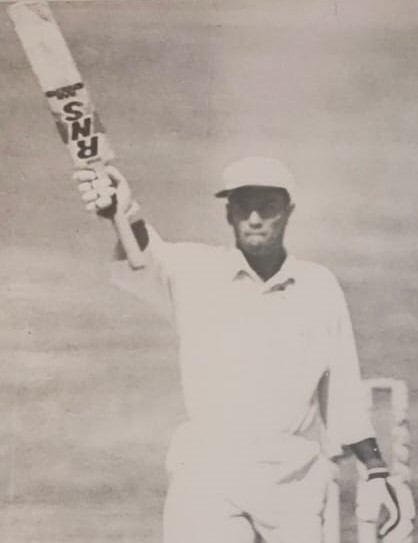
95-96 was a big year for him when he scored close to 800 runs including a double century.  It was one of the matches that season that he counts among his most favourite in his long 15 year career. In the quarter final against Bombay in Tirunelveli in February 1996, Sharath top scored in both the innings on an underprepared wicket with knocks of 86 and 90 in a match when both the teams did not top 250 “If I had got another 24 runs ( 14+10), my career may have taken a different turn/ A century in both innings in a winning effort against Bombay may have caught national attention. Even though I played two match winning knocks, it did not get the  attention it deserved” points out Sharath, quite disappointed at not having scored those extra runs to the century in both the innings. 

He followed this with another match winning 4th innings partnership with WV Raman in the Semi Final against Delhi at Chepauk after TN had lost both openers early in what seemed to be a difficult chase. In two successive knock out matches against strong oppositions, he had recorded match winning knocks. The final that year turned out to be an anti climax after Karnataka scored over 600 runs in its first innings. 

Closest to National Selection - India A and against Touring teams
He began the next season in terrific form with centuries in his first match in all the three domestic tournaments – Ranji, Duleep and Deodhar including securing a big comeback win for South Zone with a double century stand with TN teammate S Ramesh as the team chased close to 400 in the 4th innings. 

These knocks earned him his first major national call at the senior level with him being included in the Board Presidents XI against the touring South Africans and then a couple of months later in February 1997 for the India A team for the SAARC tournament. His unbeaten half century helped India A crush Bangladesh to take the team to the final, where too he was taking India A to victory with a run chase against Pakistan when rain forced a wash out. But despite these two brilliant knocks, he went out of favour when India A toured Pakistan, with Rohan Gavaskar replacing him "That was one of my biggest shocks and disappointments. I was so confident of selection that I had even checked with WV Raman about the various grounds in Pakistan. I had also purchased formals ahead of the tour but I was not picked. It was one of the most shocking moments of my career."

He was in the 25member probables for the 1997 Asia Cup but was not in the final squad. Later that year, he played another tour match this time against the visiting Lankans but failed to score.
Failure to score against visiting International teams
Former middle order batsman from the 1980s, PC Prakash, who was the Head Coach of the TN U23 team last year and from whom Sharath learnt a lot, while endorsing the tag of ‘ATG’ points out to the missed opportunities “He was no doubt one of the most consistent performers in that period and got runs in tough situations. But in those decades, the performance against touring teams was often the clincher. Sharath did not perform in the two matches against SA and SL. May be unfortunate but it was those one or two matches that really counted in those times."

A couple of years later, he was in top form again across formats and tournaments. Once again he topped 800runs in the Ranji season and scored centuries in the Duleep and Deodhar Trophy as well. But he never came close to national selection again. A year later, in 2000, he resigned himself to the fact that he was unlikely to be considered again at the National level (even the A tours). But he continued on from those disappointments and played for a major part of the next decade for Tamil Nadu in the process becoming the first cricketer from the state to play 100 Ranji matches. 
In first division league cricket, he played a significant role in IOB bagging the Palayampatti Shield in the only year he played for them after he moved from Jolly Rovers. Much later, when he was well into his late 30s, he continued to score centuries at will in the first division playing for the 2nd team of India Cements with the 170 against his former club Jolly Rovers comprising of R Ashwin, L Balaji and Piyush Chawla being a particularly cherished knock.

Biggest Day of his Life - 100 Ranji Matches
He scored four centuries in Duleep Trophy, 2 each against North and West including match winning knocks. For long, he was not considered a one day player but his match winning record in Deodhar Trophy speaks for itself. In a period of three years in the late 90s, he had six knocks of over 75, three of which he converted to centuries. He is particularly proud that he averages 45 in one day cricket for TN even though the general perception in that phase had been that he was an average one day player. He scored a century in his 100th Ranji match at Rajkot and counts being honoured by the TNCA and his boss at India Cements, N Srinivasan, for his century of Ranji matches as the biggest day of his life. 

The Best Bat in the TN team
Former India batsman and a teammate of Sharath through the late 90s and early 2000s, Sridharan Sriram points to how Sharath was looked up to by players from the NextGen "Sharath was the best batsman we had at that time, in the Team. He had the most solid technique amongst all of us, a rare combination of someone who had a very sound defence but also a good range of strokes. He could adapt to different conditions and formats very easily. He was looked upto by the youngsters who wanted to emulate his appetite for runs and therefore set a very high standard for someone coming into the Team. It was just unfortunate that he did not go on to represent the country, something he deserved."
Throughout his 15year cricketing career, he placed a high value on his wicket. A majority of his big knocks were played under pressure when the team had lost early wickets. With his consistency, he created a 'presence' for himself in the team with the opponents always wanting to get his wicket. A match was never safe for the opposition till the time Sharath was there in the middle. 

Two decades after his roller coaster domestic performances in the late 1990s, there is disappointment writ large on his face when he is reminded of not playing for the country.  He points to the fact that he was not a ‘stats’ players and the unfair treatment meted out to him when he was in peak form.  “Out of the 23 centuries in Ranji Trophy, over 75% were match winning knocks. I was not one to score runs in dead matches. Those at the helm at that time just did not back me and my prowess with the bat.”

This story will leave the final word with former India Cricketer WV Raman, who Sharath looked up to as an icon when he grew up as a cricketer. He says that Sharath may have underrated himself and not backed himself enough.
He was always consistent and recorded a lot of big knocks on tough tracks. He played very long. In a way it was sort of unfortunate he could not break into the national side, even though he had done enough to get in. Sometimes it is very tough on a domestic cricketer to not get the right breaks but then his contribution or ability is no way less. One has to genuinely feel sorry for him. The 'levers in a lock' did not click together at the same time. The one thing I would have against him is that he probably underrated himself and hence did not back himself enough."

"But despite the disappointments and frustrations, the fact that he continued to play and perform creditably till the 2000s is testimony to his application, determination and perseverance. And that is admirable. In the annals of TN cricket, Sharath will definitely go down as an ATG (All Time Great).

After his retirement, he donned the role of Chairman of Selectors for five years and has been a match referee over the last many years. His next big goal is to become a National Selector. With the credibility he has had as a player, that day may not be far off. And may be, he will bring to the new age cricketers justice that he for long did not seem to get during his playing days!!!

Monday, December 7, 2020

Othuvar Sargurunathan Kapali Temple

From Karukadipatti to Mylapore's Kapali
He has carved a niche in Thirumurai Presentation
Pradosham evening is an eagerly awaited event every fortnight with devotees lining up to listen to his devotional recital

A seemingly innocuous discussion at a tea shop with its owner transformed the life of Balasubramanian Sargurunathan of Karukadipatti village. That morning, he decided that he wanted to be known to the ‘common man’ and that meeting led him to focus on the Thevaram Songs with musical intonation. Two decades later, he is one of the few Othuvars actively presenting the verses of the Saivite Saint Poets in ancient temples and a popular one at that whose presentation is eagerly sought after everywhere. Here is the story.

Quits academics, Joins Thevaram Patshala
As a teenager studying in a school in a remote village near Thanjavur, Sargurunathan was not keen on pursuing academics for his mind was clearly devotionally attached. He was destined to present the sacred verses in front of the Lord in a historical Paadal Petra Sthalam and thus quit school at 12 to move into a Thevaram Patshala in Chidambaram, where his uncle D Somasundaram was the Guru (with the dwindling student count, that patshala saw a natural death in the 2nd half of the 1990s. Recently another patshala has been launched in Chidambaram - https://prtraveller.blogspot.com/2020/02/thevaram-patshala-chidambaram.html)

The Thevaram Patshala was started by AC Muthiah (SPIC Group) in the mid 1980s, and with the corporate backing and the personal attention of Devaki Muthiah the students were taken care of well in that phase. Sargurunathan recounts the joyful five years he spent there “We woke up early in the morning, plucked flowers in the Nandavanam and presented it to Lord Natarajar at Thillai. Every evening, we presented the sacred verses that we learnt at the Patshala in front of the Naalvar Sannidhi at the temple. During the Utsavams, we went on the Lord’s street processions presenting the sacred verses of the Saint Poets.”

He learnt Thirumurai by heart and the sacred verses became an integral part of his life even as a teenager. In addition to the Thirumurai verses, he also took special interest in ‘Arbutham’ Pathigams and a liking to Thirunavukarasar’s verses (Appar) for he found that to be simplistic and easy to grasp for the common man. Even during the fortnight’s break when he returned to his native village for Deepavali and Pongal, Sargurunathan focused on ‘home work’ that centered on excelling in the sacred verses. During that phase, in the late 1980s, he also accompanied his Guru Somasundaram on Kumbabhisekam trips and presented the sacred verses during the multiple sessions leading up to the consecration. 

In 1990, as a student of the Patshala, he presented his first major Thirumurai programme at Tamil Isai Sangam and has been a regular there ever since.

His Future after Patshala Education
However, as he neared the end of his five years, there was anxiety at his home. His two elder brothers were on corporate duty while his father was an elementary school teacher. It was only this young boy who chose the Godly route to life. 

There were no Othuvars in most of the Paadal Petral Sthalams in Tamil Nadu and hence there was an opportunity that existed for a trained Othuvar to be hired in any of the popular temples in the state. He remembers that final year at the Patshala “I had discontinued school education after class VIII. So there was no question of getting into a corporate life. None of the ancient temples were hiring Othuvars at that time and my parents were anxious as to what would happen to me.”

The most disappointing aspect as a 17 year old was the fact that temples did not look at securing the services of the few trained Othuvars who had graduated after formaltraining. As a teenager, this paradox was difficult for him to understand. It was a historical service dating back several centuries and there was a severe shortage of the trained personnel. And those that came out of Patshala were not absorbed by even the large and wealthy temples in the state. 

Even as he was exploring options after completion of his Patshala in September 1991, AC Muthiah’s father the legendary cricket administrator MA Chidambaram noticed the insecurity that was creeping in and offered him an Othuvar role at the temple run by his group firm TN Petro in Manali. And thus he came into contact with the city life for the first time that year. For almost seven years, he spent his life in North Madras living in a ‘bachelor’s’ room.

Transformative Conversation at Tea Shop
Very early on into his stay in North Madras, he had what seemed to be one of those innocuous tea shop discussions. He says that the meeting with the tea shop owner transformed him and made him what he is today. While he was practicing one of the Thevaram Verses there, moved by the devotional recital of Sargurunathan, the tea shop owner asked him if he knew Dharmapuram Swaminathan, a question that stunned him. He recounts that moment as his life changing one “I did not imagine that a tea shop man would know the verses of the Saint Poets. Even more, it just did not occur to me that he would know a man who recited the sacred verses of the Poets. I clearly underestimated the devotion of the common man and how the historical verses moved him.”

Swaminathan was part of the Dharmapuram Aatheenam and had been a prominent Thevaram personality in the 1970s and 80s.

That morning, Sargurunathan promised to himself that like Swaminathan he would endeavour to be ‘known’ among the common man on the street. He took to Swaminathan as his role model and as the first step, through his goldsmith friend Bhuvaneswar in Tondiarpet, he became a music disciple of B Achutha Raman and learnt the nuances of music for five years under his tutorship.

He also got an opportunity to present a 25 minutes Thirumurai programme at the AIR, in 1993 as a 19 year old. The word spread in the city that there was a next gen Othuvar with a devotional voice, one who seemed to have a mastery over the Thirumurai presentation. He visited over 200 Paadal Petra Sthalams along with Adiyars and presented relevant verses in those temples on festive occasions.

Wedding and Kapali’s blessings!!!
The wedding bells also brought with it the greatest opportunity of his life. Within months of his marriage with the daughter of the renowned Vedaranyam Ganapathi Desikar in Feb 1998, by when he had completed his five year musical initiation under Guru Achutha Raman, he received a surprise call. The HR & CE decided to appoint Othuvars in the historical city temples. He had been stationed in North Madras in Thiruvottiyur for seven years and he applied in ancient Thiruvottiyur temple as well as at the Vadapalani temple. But his mind was clearly focused on Mylapore, the headquarters of music connoisseurs and the most traditional spiritual location in the city.

Chidambaram Sirkazhi Siva Chidambaram was the Thakkar of the Kapaleeswarar temple at that time and he interviewed Sargurunathan. Impressed with the knowledge and the devotional recita,l he offered him the Othuvar post at the temple. Sargurunathan also received offers from the other two temples but his mind lay with Lord Kapaleeswarar and Karpagambal and thus he joined the temple as the Othuvar in June 1998 at a consolidated pay of Rs. 1200. And he began presenting the sacred verses six times a day, each day of the year!!!
For the last 22 years, he has been an Othuvar at the Kapaleeswarar temple, a phase when his popularity has shot up worldwide. One of the big occasions every fortnight is the Pradosham event when devotees look forward to his recital. His presentations of Thirumurai has also been brought out as cassettes and CDs.. He has also been initiating the sacred verses to those that are interested.

He looks back at his over two decades at the Kapaleeswarar temple with great happiness “The Lord and Ambal have helped me reach out to the common man. Wherever I go, people recognize me and convey their appreciation of my recital. And that really is the greatest blessing I have had.”
However, things have not been all that rosy financially. Anyone who has been associated with a temple as popular as the historical Mylapore temple should be sound financially by now after over two decades of service. Unlike priests of the temple, the Othuvars do not receive Thattu Kaasu. Those who visited him in the 2000s would recall the dilapidated condition of the house he lived in, one that had not been refurbished for several decades. 

However he is not unduly worried. Sargurunathan counts presenting in front of the Lord and Ambal as a divine God sent opportunity and his mind is focused on that. Over the last two decades, he has graduated to Grade A artiste at the AIR and presents the Thirumurai at least once a quarter. He is also a regular at Sabhas in the city when opportunities present itself for presentation of the sacred verses. During the lockdown, he has presented, online, the sacred verses at regular intervals. He has also been taking Thirumurai classes, online, over the last nine months.

Appar's Verses and the Devotee Connect
His greatest joy is when he presents the Appar’s verses at the Kapaleeswarar temple for he believes Appar has gained the acceptance of the devotee with his simplistic verses. Like Appar, Othuvar Sargurunathan too has captured the mind of not just the devotees at the Kapali Temple but those worldwide as well.

Three decades ago, he wanted to get into the hearts of the common man. He is now someone who is recognised by almost everyone in the temple space. As his next goal in life, he wants to create at least a few in the next gen to take up the role of Othuvars so this service continues into the future. It is likely that this divine soul will accomplish that as well. 

Other Othuvars in TN temples


Thiru Kurungudi Shiva Sannidhi Restoration Update

16 years after the demolition, 'Pakkam Ninraar' remains in ‘Balalayam’
After the High Court order directing the restoration of the Shiva Sannidhi, an appeal  has been pending in the Supreme Court for many years
Out of Court reconciliation efforts in recent times have failed and it looks like the devotees will have to wait it out for the next Court verdict 
It has been a rather saddening story at Thiru Kurungkudi Divya Desam, the home to the Vaishnava tradition of ‘Kaisika Ekadesi’ and Araiyar Sevai (https://prtraveller.blogspot.com/2009/12/kaisika-puranam-in-thirukurungudi.html) with a prolonged court battle over the Shiva Sannidhi that does not seem to have its end near.

The over 1000years old art of Araiyar Sevai originated at Thiru Kurungkudi and was first introduced by Natha Muni. Legend has it that Lord Nambi, hiding behind a wall in Bashyam Street (now South Mada Street), used to watch the young Araiyars practice for hours this difficult art form. Hence, the Lord here is also referred to as ‘Gaana Priyan’ (https://prtraveller.blogspot.com/2013/08/araiyar-srinivasachariyar-srivilliputhur.html). There are several exquisite sculptures and beautiful images inside the temple that date back to the Nayak period. 

Demolition in May 2004
It has been 16 long years since the demolition of the Shiva Sannidhi in Thiru Kurungudi Azhagiya Nambi Divya Desam(https://prtraveller.blogspot.com/2017/08/thiru-kurungudi-divya-desam.html) on that Vaikasi day (May 31) in 2004. Since then several court battles, interestingly initiated first by the now Pontiff of the Mutt (Sundararajan became Perarulala Ramanuja Jeer in 2009), have been fought but the end is not in sight, though the residents continue to feel that it is just around the corner!!! In more recent years, the Shiva Sannidhi in Thiru Koshtiyur too had been dug up as part of the renovation exercise at that Divya Desam (https://prtraveller.blogspot.com/2016/06/thiru-koshtiyur-renovation-issues.html).

From the local court in Valliyur and Tirunelveli to the Madurai and Madras High Courts and then to the Supreme Court, the battle has been long drawn. Thiru Koshtiyur Madhavan who has opposed, vehemently, the demolition of the Sannidhi right from the beginning has persistently been calling for the Sannidhi to be restored at its original location citing both Thiru Mangai Azhvaar’s Pakkam Ninraar reference in his verse in Periya Thirumozhi as well as the Dyana Slokam of the temple that refers to the Shiva Sannidhi being within the temple complex.
Thiru Mangai Azhvaar's praise of Lord Shiva
When Thirumangai Azhvaar sought Moksham, Lord Ranganatha of Srirangam directed him to visit his ‘Southern Home’ at Thiru Kurungudi. Accordingly, Thirumangai Azhvaar came to this Vamana Kshetram and performed service invoking the blessings of Lord Azhagiya Nambi and attained moksham here. Hence, it is believed that ‘Vaikuntam’ (the ultimate destination for Vaishnavites) is in ‘calling distance’ from the Lord’s Southern Home at Thiru Kurungudi. 
Thiru Mangai Azhvaar in his Periya Thirumozhi verses refers to Peacocks dancing in the groves and Parrots speaking like the beautiful girls of Thiru Kurungudi, streams in full flow washing aside precious gems, Mullai Flowers seen in the groves with dripping nectar, swans playing in groups in the cool lakes that are abound with lotuses. He finds Kuravu trees all around Thiru Kurungudi. There were mansions so tall that they seemed to touch the moon. He makes a specific mention of ripe paddy fields where water birds play.

However, it is the opening verse of the sixth Decad of the ninth Canto of Periya Thirumozhi that has been the center of controversy at this ancient Divya Desam. In this verse, Thiru Mangai Azhvaar refers to the Lord (Nambi) of Thiru Kurungudi as one in a standing Posture with the skull and tiger skin bearing Shiva by his side.

அக்குà®®் புலியின் அதளுà®®் உடையாà®°் 
அவர் à®’à®°ுவர் பக்கம் நிà®±்க நின்à®± பண்பர் ஊர்போலுà®®் 

Seeking Lord Shiva's nod
Thiru Koshtiyur Madhavan says that historically the tradition has been for the Sri Karyam of the Mutt to stand in front of the Shiva Sannidhi and enquire if there have been any shortcomings on the day. It is only after confirming that there has been none that the Artha Jaama Pooja is performed and completed at the Azhagiya Nambi Sannidhi. Also, when Nambi goes on a procession, there is a Deepaam Aaradhanai for Shiva. Such is the Unity of Vaishnavites and Saivites in this Divya Desam. The demolition takes away the historical significance of the temple.
Venu Srinivasan as a donor!!!
For Venu Srinivasan, who has been involved in the restoration of historical and dilapidated temples for 25 years (https://prtraveller.blogspot.com/2020/07/venu-srinivasan-historical-temples.html) and prided on exercises of bringing down new and additional constructions within temple complexes, this one in 2004 was an exercise that was characterized by the demolition of a historical sannidhi and the construction of a new Sannidhi for Shiva in the outer prakara, one that he has often referred to as having been done as a Kainkaryapaka under the directions and orders of the Mutt.
Flawed Balalayam
Thiru Koshiyur Madhavan, who has been a witness in the case and has photos of the demolition work undertaken in the Shiva Sannidhi in 2004, points out that the Balalayam itself was flawed "One does not perform a Balalayam for a Swayambu Idol. Hence it is flawed as per the agama. In addition, to demolish the Bimbam was an inappropriate act.”

How much longer?
89 year old Periya Nambi K Srinivasachariyar, the son of the 47th Jeer of the Thiru Kurungudi Mutt performed Kainkaryam at Thiru Kurungudi Divya Desam for almost 8 decades including initiating some of the ‘bats removal’ exercises in the early 1990s moves around now with a help of a walker at his home in Thiru Kurungudi. Typically, the tradition in many temples has been for Samprokshanam/ Kumbabhisekam to be performed every 12 years. In this case, the Lord has been in Balalayam for 16 years. He says that the positivity of a Balalayam will be lost with Lord Shiva having been ‘away’ for such a long time “16 years is really a long time for an idol to be in Balalayam and it (the Balalayam) would lose its sanctity if the Lord was away for almost close to two decades. For years, it has been the story of the case being in the court and most are clueless on when the restoration will happen. I do not know how much longer it will take before the Sannidhi is restored.”
The Mutt's view in 2017
In an interaction with this writer in 2017, Perarulala Ramanuja Jeer the 50th Pontiff of the Thiru Kurungudi Mutt (who incidentally was the one who initiated the demolition case against the Mutt in 2004!!!) said that he had no 2nd thoughts on placing the Shiva idol back at a ‘suitable location’ in the inner prakara and that the Sannidhi would ‘soon’ be restored to its original location but status quo has remained in the three years that has passed since.

Conciliatory talks fail
Madhavan says that a conciliatory meeting was held earlier with Tridandi Jeer who recommended for the restoration of the Sannidhi to its original location but there are still no signs of the restoration even though a long time has elapsed since that meeting. Madhavan has also been vocal for long that the restoration of the idol has to be at the same location and the same historical stones that were removed have to be used to rebuild the Sannidhi.

Pulling back the appeal and acting as per 2012 HC order?
If the Mutt pulls back the appeal in the Supreme Court, it is possible to restore the Sannidhi sooner than later as per the earlier High Court order that directed the Sannidhi to be restored to its original location. Temple activist TR Ramesh (https://prtraveller.blogspot.com/2018/02/tr-ramesh-temple-activist.html) who has fought many a temple battle in the court on his own had told this writer earlier that it is possible for the Mutt to pull back the appeal in the Supreme Court ‘They can tell the court that they are willing to implement the restoration order as per the previous direction and request for pulling back the appeal. The court can then decide based on the facts of the case and it is possible that the court would accept this pulling back of the appeal. That way the restoration of the Sannidhi can be done as per the previous court order without going through the process of a battle in the Supreme Court.” 
Maniyakarar Ramanujam, who also serves delicious homemade food for the visiting devotees says that he is hopeful of a final closure by January.

Perarulala Ramanuja Jeer had told this writer earlier that the temple as well as the Shiva Sannidhi is integral to the Village and that he is ready to execute as per the court orders. He had said that all the three Lords have the same Vishwaksenar. It is just that the ‘Prakshanam’ had pointed out that the Veetriruntha Perumal was being blocked by Shiva and there was the suggestion that it should not be blocked.
                       
The Mutt's stated position has been that they would like to restore but they have gone on an appeal, Thiru Koshtiyur Madhavan is insistent that the restoration takes place at the same location and with the same historical stones and Venu Srinivasan calls himself just a donor in this exercise and that it is the Mutt's call (is/was he not just a donor everywhere else too - Nava Tirupathi/ Nanguneri/ Srirangam/ Ahobilam?). Even as a donor, it is incumbent on him to proactively push for restoring the Sannidhi back to its historical location and to ensure that Lord Shiva is brought out of Balalayam. While the two sides are not seeing eye to eye, it would not be difficult for the Mutt to pull back the appeal and restore the sannidhi in the larger interest of the devotees and the historical significance of Lord Shiva at this temple.  

How one wished that this battle was as simple as that. 

This could have seen a smooth closure after the High Court verdict in 2012 that directed the restoration of the Sannidhi at its same location. But the Mutt sought an appeal and this has prolonged another 8 years. 

For the moment it continues to remain an endless ‘wait and watch’ exercise for the devotee. One hopes that Maniyakarar Ramanuja’s words will come true and that the Sannidhi restored by January. Surely, the devotees do not want this to be fought further in the court and would like to have darshan of Lord Shiva next to Nambi's Sannidhi. But it has not been in their hands!!!

Wednesday, November 25, 2020

Mannar Koil Narasimha Gopalan Hereditary Trustee

Periya Nambi descendant seeks status of Hereditary Trustee
He has been donning multiple roles at the Kulasekara Azhvaar Rajagopalaswamy temple over the last 15years including that of the lone Archaka
If he is officially anointed as the Trustee, he will have to relinquish the role of an archaka at the temple
Continuing his spate of cases in the high court, Mannar Koil’s PS Narasimha Gopalan, a descendent of Periya Nambi Acharya has filed a case pleading with the court to direct his nomination as the hereditary trustee of the Kulasekara Azhvaar Rajagopalaswamy temple where his forefathers had performed the Srikaryam service for centuries till that was taken away just under a 100 years ago. In addition to this, he has also filed a case in the High Court restraining the HR & CE from appointing Politicians as trustees of the temples in TN. Currently, only a few temples in TN such as Srirangam, Madurai Meenakshi Amman and Kapaleeswar  have prominent individuals as Trustees.  He has also asked for a board to be placed in each temple announcing the details of the trustees including their contact numbers so aggrieved devotees can contact them for solutions.

The three tiered Kulasekara Azhvaar Rajagopalaswamy temple in Mannar Koil is located 5kms from Ambasamudram off the Tenkasi highway. The temple is named after Kulasekara Azhvaar who spent the last years of his life here performing service and attained Moksham here. There is a separate Flag Post for the Kulasekara Azhvaar Sannidhi. 

The Lord is seen in three forms - standing posture at the ground level, sitting posture in tier 1 and in a Sayana Kolam in Tier 2 under the Ashtanga Vimana. In recognition of Rajendra Chozha’s big contributions to this temple, this place was referred to as Rajendra Vinnagaram. Inscriptions refer to Rajasimhan donating several pieces of land and Jatavarma Chozha Pandya as well as Nayak kings making contributions to the temple.

Over the last decade, Narasimha Gopalan has filed several petitions in the Madurai High Court starting with the one on abusive depiction of the ‘Vaishnavite Thiruman’ in movies and public places.

Historical Inscriptions of their 'Srikaryam' appointment
In his latest petition, he has referred to the centuries old inscriptions dating back to the period when this region was referred to as Rajendra Vinnagaram. In the inscriptions, the then king had assigned the Srikaryam rights to the Periya Nambi clan. He has also stated that over the last several centuries, he and his forefathers have not quit the services at the temple and have been associated with the temple without a break. 
Doubles up as Priest at Rs. 250
With no priests in the region willing to take up the archaka role for a few hundred rupees, Narasimha Gopalan has also been doubling up as the archaka since 2005 at a salary of Rs. 250 which after a decade was increased to Rs. 750. His father had earlier served as an archaka for several decades at a salary of Rs. 55 that went up to Rs. 135 at the start of this century. 

In line with the teachings of his father, Narasimha Gopalan cites the verses of Kulasekara Azhvaar to reason out his logic for staying away from the lure of a more lucrative city life and being attached to the Lord at Mannar Koil.

Narasimha Gopalan performs the role of an archaka in the mornings and evenings, prepares the sacred food for the Lord donning the hat of a cook and turns into a gardener watering and plucking flowers from the huge garden that he himself had created from scratch and performs Samasrayanams as a Periya Nambi Acharya for his disciples. 
Rejects a lucrative overseas offer
In times, when sthalathars, theerthakarars,  adyapakas, vedic pundits and priests have all moved out of hereditary temples over the last many decades seeking greener pastures elsewhere, this 29th descendent of Periya Nambi has not travelled past the Tirunelveli region in decades for he is too attached to the historic Kulasekara Azhvaar Rajagopalaswamy temple. He does not know what a city life is like. He has not worn a shirt and continues to sport a tuft.

A few years ago, he had received a luring offer to perform services in a temple overseas. Had he accepted that and gone there just for a few years, his financial status would have seen a big positive upturn. But he resisted the temptation for he had long ago decided to commit himself to the Lord of Mannar Koil. When he was reminded again of this lucrative prospect with the suggestion that all temples are the same and that he would still be performing service to the Lord, he retorted to that person asking whethere 'Kulaseakar Azhvaar's Thiruvarasu would be present there in that overseas location'!!! And with that ended the discussion on that topic!!

He says in the petition that his forefathers have been taking care of the conduct of all the Utsavams and the daily poojas at the temple for several centuries. It was only in the 20th century that the HR & CE took over the administration of the temple. Over the last decade or so, he has revived, with the financial support from his sishyas, a few of the Utsavams including Theppotsavam and Pavitrotsavam that had been historically performed at the temple.

The High Court has directed the JC of the temple to arrive at a decision on the appointment of Periya Nambi clan as the hereditary trustees within 8 weeks. On the politicians as trustees, the Court has asked the HR & CE to provide details of the trustee in all the temples under its control.

If Narasimha Gopalan gets the order in his favour as the Hereditary Trustee, he would have to relinquish the role of archaka at the temple for he cannot don both the roles at the same time. However, it would be a big challenge for him to find a Vaishnavite Archaka who accepts to take charge of the daily poojas in such a remote location even if he is offered a lucrative remuneration.

While Politicians as trustees may be a serious issue that has cropped up over the last couple of decades, there are not enough traditionalists with knowledge in historical remote towns to take charge as Trustees as defined in the  HR & CE act for the remote temple towns in most cases are even short of priests and 'sacred' cooks and associated personnel. Hence, traditional trustees taking responsibility of and overseeing the activities at the remote temples is unlikely to happen in the foreseeable future, unless the original inhabitants decide to make their way back to their 'home towns'.

(Over the last decade, while he has filed several cases and these have been increasing over time, there has not been positive progress in any of these cases)

Tuesday, November 24, 2020

MS Gurumurthy YSCA Somasundaram Ground

For over 60 years, the indefatigable ‘Cricketing Guru’ has run an ‘academy that has groomed and produced several top notch cricketers and umpires
The All India YSCA Tourney at the RKM ground was a big hit with both the cricketers and fans alike, in the 1980s
As a 14 year old RKM school boy, MS Gurumurthy, along with Srinivasan, launched, in 1956, an ‘academy’ that brought together boys in T Nagar to play ‘Tennis Ball five day Test Cricket’ at the Somasundaram Ground. Several of them went up the ranks and played for the state and one even for the country. He himself was a medium pacer and opening bat (a wicket keeper once in a while!!) and played U25 for the state. In 1970, he launched, at the RKM ground, an annual 30 over tournament that later gained national prominence and has now completed 50 summers. With over a 100 cricketers practicing in different divisions, almost a quarter of the Somasundaram ground was once occupied with Guru’s players!!! On many days, the members also played cricket under the lights at the nearby basketball court at the West end of the ground after the tennis ball test match.

Brothers K Bharathan and K Srinivasan rose from the Somasundaram ground to national heights with the former playing in the famous Ranji Final for Railways against TN in 1988 and the latter reaching the Top 10 Umpires in India. It was at Guru's nets that  S Madhavan became a leg spinner and went on to play for Central Zone. S Srinivasan played Ranji cricket for Bombay and TN after learning the basics from coach Audi Chetty at YSCA summer camp.  S Ravi, who played both tennis ball and league cricket for Guru team in the 1970s, went on to become an Elite Panel Umpire (https://prtraveller.blogspot.com/2020/07/umpire-s-ravi-end-of-road.html?m=1). TN opener from the early 1990s ‘Sunny’ Ramesh was another who played the formative years of his cricket at the Somasundaram ground. S Suresh, who has just been appointed as the Chairman of the Cricket Advisory Committee and who captained TN to successive Ranji finals, learnt his cricket basics from Gurumuthy at the Somasundaram ground in the 1980s(https://prtraveller.blogspot.com/2020/11/sweety-s-suresh-tn-ranji-finals-captain.html?m=1). Kalpathi Aghoram, former VP of TNCA and co founder of SSI / Kalpathi Investments too is a product of YSCA. TA Sekar, the biggest of them all having played for India in the 1980s, learnt how to bowl fast, at Guru’s Somasundaram ground nets.

Here is the story of the man who has provided a cricketing platform for budding cricketers for over 60 years. 

RKM School boy MS Gurumurthy (Guru) was just 14 when one evening in 1956 he discussed the launch of a formal cricket academy with his senior and friend Srinivasan, another cricket enthusiast. Thus was launched YSCA (Young Stars Cricket Association) 54 years ago. Till 1978, there were four divisions within Guru Team - Division A for office goers, B for collegians, C for High schoolers and D for lower classes.  Division A and B went to the ‘Nets’ on a matting wicket while players in Division C and D played Tennis Ball cricket (Tennis Ball Test cricket at YSCA continued till 2000 when it was discontinued after almost 45 years).

Every year on the occasion of the annual day, players would eagerly await the announcement of promotions into higher division based on the performance of the previous year. Each of the divisions comprised of at least 25players.
He bought the first mat from YMCA Nandanam for Rs. 100 and paid Rs. 15 as a full day rent for the RKM school ground. In 1962, aged just 20, he took charge of a league team (NSC B). Since then, for almost six decades he has been running at least one league team in the city every year. He also joined LIC that year (1962) and worked there for four decades, during which time he was the Secretary, Recreation Club and the Union.

In 1965, Gurumurthy began taking his students on cricketing tours and has done that for over five decades. His first tour with them was to Tirupathi. Last year,  he took them to Delhi. This gave them match exposure and also opened them up to play in different conditions and pitches.

Gurumurthy set in motion a disciplined process at the YSCA “Every player had to sign an attendance register. Those who turned late for (the tennis ball) matches would not bat that day!!! And those who came early were presented with additional batting time in the nets. There were score sheets maintained for every match. Those who played well in tennis ball cricket graduated to the nets and league cricket. Youngsters from the team also doubled up as scorers and umpires.”

He would be there every evening at the Somasundaram ground with the noise of that distinctive Rajdoot that was heard far away alerting the wards that the ‘Cricketing Guru’ had arrived. When they were done for the day after the cricket session, each one of them had to inform him before leaving home. Most of them did that in Telugu!!!

A referral for Tennis Ball cricket!!!
Those who graduated from Gurumurthy’s YSCA were seen with a special regard within cricket and outside for he instilled a great sense of discipline and character in the young boys. Former Bombay and TN State cricketer S Srinivasan who had the formative years of his cricket at the Somasundaram ground remembers how difficult it was to gain entry into the YSCA “One could not easily get into the Guru team even if it was for tennis ball matches. One had to get a credible referral to join his team. My uncle at LIC, a colleague of Gurumurthy, had to refer me to him for him to absorb me into his tennis ball team.”
(In the 1980s, this writer's grand father secured a referral letter from TNCA's PVH Babu that was handed to Gurumurthy but the writer did not join the team)
Centuries flowed from Srinivasan’s bat in the tennis ball 5 day test matches and he credits those long duration matches for vetting his appetite for runs!!! An impressed Guru took him into Rising Stars, a team that he was managing at that time “The team for the league match would be written on a note pad a day in advance and all the players gathered as a team at his house on Lakshmi Narasimhan Street and went to the ground as one team. Such was the spirit he developed among the team members” recalls Srinivasan of the way Guru went about the preparation ahead of the league matches.

The incentive every day for an outstanding performance was a Kulfi.

Srinivasan who played for TN and South Zone Schools while still in the Guru team dedicates his growing up in cricket to Gurumurthy “He stood up to his name as Guru to many cricketers in the city. It was from him that we learnt not to be afraid of the red cherry as he set an example for all of us to be gutsy with his close in fielding. If it was not for the strong foundation that he gave us, we would not be what we are today.”

Gurumurthy roped in the well respected AE Audi Chetty to coach his students during the summer and that made an impactful difference to the boys. Gurumurthy would himself go to the Kodambakkam station to pick up Audi Chetty and bring him to the Somasundaram ground. It was Audi Chetty who taught the cricketers of the YSCA the fundamentals of cricket.

Central Zone leggie’s magic ball to Gurumurthy
Central Zone leggie S Madhavan (https://prtraveller.blogspot.com/2018/11/rbi-madhavan-leg-spinner.html) belonged to a middle class family. His father was far away from cricket and did not understand even the basics of the game. As was the case in those days, the ‘direction’ was to not spend too much time on the cricket field. A student of RKM North, Madhavan spent the evenings at Somasundaram ground watching the nets organized by ‘YSCA’ Gurumurthy. He was already playing for his school as a wicketkeeper batsman along with NP Sridhar (elder brother of NP Madhavan (https://prtraveller.blogspot.com/2016/05/np-madhavan.html)).

Madhavan told this writer in 2018 as to how Gurumurthy inducted him straightaway into the ‘nets’ “Seeing my height and interest in cricket, Gurumurthy asked me to bowl in the ‘cricket ball nets’ alongside TA Sekar.”

One of those days, he struck Gurumurthy twice on the arm with fast paced balls leaving him furious at this school boy “He asked me to bowl a little slow and that’s when I just tried a leg break from a few steps. The ball pitched and turned square beating Gurumurthy all ends up leaving everyone stunned.”
A new leg spinner had been born that day, in rather accidental circumstances at the Somasundaram ground. So impressed was Gurumurthy that he included Madhavan in the Rising Stars league team within a few months. That was a big boost for the teenager and three years in a row he featured in the prestigious annual TNCA Colts team comprising of the best of league players. There was no looking back for Madhavan since and he went on to play for the Indian Railways and Central Zone before settling down in RBI.

The annual YSCA Trophy
In 1969, as he was passing by the RKM ground (opposite Jeeva Park), it struck him to use his ‘home’ ground (alumni of the school) to start a tournament that would also give his YSCA team to play in a knock out tournament. And thus began in 1970 an annual 30 over tourney. The players of his club served as volunteers.

Indian Railways Ranji finalist and former BCCI Umpire K Bharathan was in RKM North till class VI when Gurumurthy landed up at his house one day to meet his parents to convince them to move him to RKM Main where he was the coach. Bharathan remembers the disciplinarian Gurumurthy from the 1970s “Top teams participated in the YSCA Trophy. He would assign the volunteers for each of the 4 matches over the weekend and we had to report at the ground at sharp 7am, roll and nail the mat. One of us performed the role of a scorer and another one managed the score board. With the growing popularity of the tourney, there were also ball boys assigned to all sides of the small ground to pick the ball if it was hit out of the ground. We would be given breakfast and lunch.  We were delighted to watch the likes of V Krishnaswamy(https://prtraveller.blogspot.com/2016/08/krishnaswamy-v.htmland V Sivaramakrishnan bat and took inspiration from that.”

Free Maths Tuition
From 1970, for 25 years he also took free maths class for school students. His colleague at LIC, Siva, provided him free terrace space and he took classes in two batches – one for girls and another for boys. Many of the cricketers were his Maths students as well. Bharathan remembers the expert Maths teacher
“He would teach from class VIII to CA. Like how we would recite Slokas, he would roll out the sums in a way that each one of us understood so easily. He wanted cricketers to do well in academics and hence ensured each of us excelled in Maths, his area of expertise.”

YSCA's Biggest Name - TA Sekar
The biggest name to emerge out of Guru’s YSCA has been India fast bowler and architect of the MRF Pace Foundation TA Sekar (https://prtraveller.blogspot.com/2013/08/ta-sekar-fastest-indian-bowler-of-1980s.html), who began with tennis ball cricket in Division C and quickly moved up. He told this writer in 2013 about Gurumurthy’s role  in his emergence as a fast bowler “ Bowling as fast as I could with the tennis ball at the Somasundaram ground is what gave me the edge with pace, years later as I went up the ladder. That stint with the Guru team at the Somasundaram ground, where I used to also roll the mat and hit the mat nails, taught a lot of discipline in addition to teaching me to bowl fast.”
         RKM School Boy TA Sekar with the Best Bowler Cup

Possessiveness of his players
Throughout the six decades of the YSCA, Gurumurthy has been very possessive of his players. Bharathan recollects the punishment meted out to them when they watched the Basketball players in action at Somasundaram ground “After our practice, we used to stay back and watch the big stars in action in the basketball floodlit tourney. He was a bit wary that at that young age we would get a bit of a fancy for that game and hence did not like us staying back late to watch those matches. Those that did would be punished the next day by letting go of their batting or bowling.”

Star Attraction at the Annual YSCA
The YSCA tourney served as a platform for the youngsters to make an impression and catch the attention of the selectors. It was a prestigious summer tournament at that time. Soon the tournament became so popular that around 75 teams began participating including leading outstation teams from Karnataka, Kerala and Bombay.   

A special feature of the tourney was that a bowler was allowed to bowl 8 overs. Each of the galleries on the two sides would have fan clubs of popular players of the time and one found fans seated atop the northern wall as well on the Eastern road cheering their favourite cricketers. NP Rajagopal of Indian Bank and later Central excise was one such as was Rocko Sundar of IOB.
           SMH Kirmani at the RKM Ground

The small RKM ground witnessed many great battles. In the 1980s, the residents often complained about broken glasses after Brijesh Patel (SVPB) sent many a shot into the homes on the Western side. And once the keeper stood almost at the boundary edge to Syndicate Bank’s Venkatesh Prasad in his youthful days!!! It was here that KN Ananthapadmanabhan (https://prtraveller.blogspot.com/2016/09/ananthapadmanabhan-kn.html) won a cycle for the Player of the Series and handed it to ‘Cycle freak’ S Mahesh (https://prtraveller.blogspot.com/2020/08/s-mahesh-tn-all-rounder.html).

It was also at the RKM ground that this writer first saw the aggressive and temperamental VB Chandrasekar (https://prtraveller.blogspot.com/2007/06/old-cricket-memories-my-favourite-tamil.html) at his fiery ‘worst’. He had failed to make an impression for India on its tour to New Zealand and it was one of his first matches following his failure at the international level. The big crowd on the Eastern side of the ground was usually a talkative one and when one of them passed a comment on VBC’s international performance (https://prtraveller.blogspot.com/2016/01/vb-chandrasekar.html), he retorted in his typically angry style ‘Vetti Pasanga.  You do not have anything else to do. That is why you come and watch these matches.’ He was never forgiven for those comments by that section of the crowd. 
With support from Indian Bank, Gurumurthy launched a flood lit final at RKM in the 1990s with temporary stands and a third umpire.

Self Discipline at an early age
When Gurumurthy called Bharathana few years ago to ask if he could umpire a YSCA trophy match at NEST ground, he readily agreed with no second thoughts “Guru gave me not just a cricketing foundation but taught me life’s valuable lessons. I would wake up at 5am and reach the summer nets well before 5.30am to get the extra 10minutes of batting that was given to those that arrived first. He asked me to wash my own clothes and four decades later that habit has stayed with me and I still wash my own clothes. Discipline, sincerity and perseverance are qualities I imbibed from Guru. If I went on to captain the Indian Railways and become a BCCI umpire, it was because of the strong foundation presented to me by Guru in the 1970s and early 80s.”

Never Monetised Cricket
60 year old Kalpathi Aghoram was in class VIII when he was first coached by Gurumurthy at RKM, a year they won the schools tournament. He is particularly pleased that Guru has remained passionate for this length of time “Even though cricket has evolved into a financially lucrative sport, Guru has not monetised his cricket experience. He continues to carry out the cricket activities for the love of the game and his passion clearly comes through in everything he does in cricket.”
Aghoram, who played first division cricket for Crom Best in the 1980s and whose firms, SSI/ Kalpathi Investments, sponsored the YSCA league tourney and maintained the RKM ground for a few years, recalls the humane side of Gurumurthy “The annual tours to Trichy and Coimbatore were memorable ones for the school boys for it gave them a rich experience at a young age. He did not charge anyone a fee either for the round the year cricket or these tours. It was a great gesture, for many of the boys were not from financially sound background and he constantly went out of the way to help them with Maths tuition, Education fees, in addition to providing them the cricket kit and whites.”

For decades, TNCA umpires too happily officiated in the YSCA Trophy without a fee, as a token gesture for his selfless service to cricket.

Last year, the YSCA tournament celebrated its golden jubilee with a star studded outstation team, Bank of Baroad, led by Krishnappa Gowtham beating India Cements in the final to lift the trophy on the special occasion.
At 78, Gurumurthy is still ‘cricket active’ and even this year, pre lockdown, handed his special fielding drills to his 40 plus wards. However, for the first time in almost 65years, Gurumurthy has been all alone these last nine months. His inspiration behind every cricketing step, his wife, for the last several decades passed away last year (she would keep everything packed for his tours), and this combined with the Pandemic restrictions has made him quite lonely at home. Watching every match of the IPL this year has been refreshing and evoked memories of the 30 over tournament he launched way back in 1970 that for a long time was seen by players as an important pre season tourney. Soon after the restrictions are lifted fully, he is looking to get back to the ground and to also organizing the annual day celebrations that every cricketer of YSCA has looked forward to with great expectation each year over the last six decades. Cricket is no more what it was in the 1960s and 70s but Guru remains unchanged. He has restrained himself from reducing the YSCA Trophy to a T20 style format

It requires great cricketing passion to run cricket for over six decades for no financial benefit. He developed not just cricketers but scorers, umpires and professionals who shone in the corporate world as well. True to his name, this man is a Guru in the real sense of the word, one who provided an early platform to budding cricketers imparting cricketing knowledge as well as initiating them with great life lessons.