Thursday, August 28, 2014

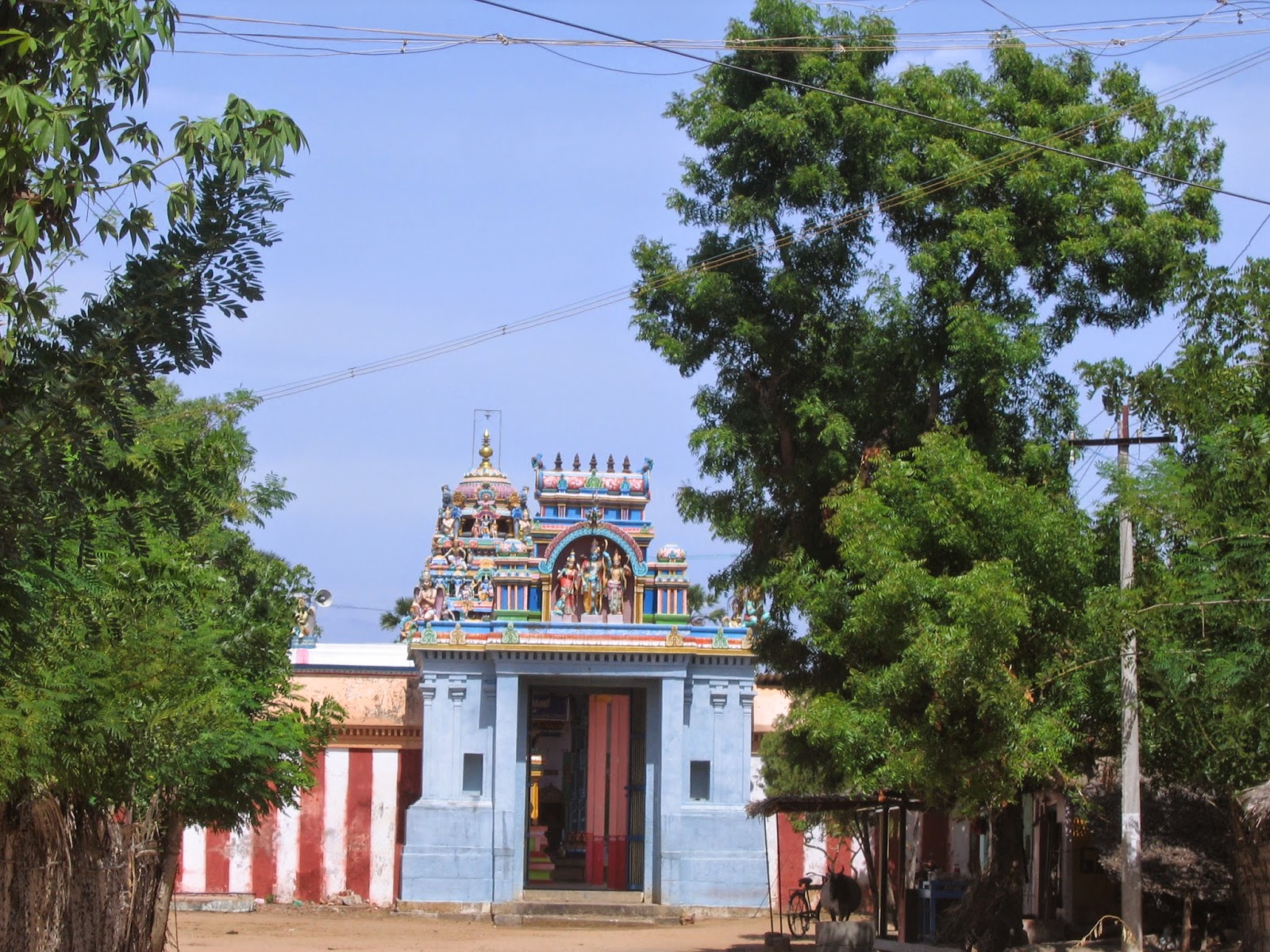
Perumpuliyur Sundararaja Perumal

Thirumazhisai Azhvaar stayed here on his way from Srirangam/ Anbil to Thiru Kudanthai
 Sun's rays fall on the Lord during three evenings in Panguni at the time of Sun Set

Located 4kms North West of Thiruvayaru on the Northern bank of the cauvery is the ancient Sundararaja Perumal temple in Perumpuliyur a temple whose legend dates back to the period of Thirumazhisai Azhwar.

Thirumazhisai Azhvaar’s Perumpuliyur stay
After having praised Lord Ranganatha of Srirangam in his Thiruchanda Viruttam verses...

பொற்றை  உற்ற முற்றல்  யானை போர் 
எதிர்ந்து வந்ததைப் 
பற்றி உற்று மற்று  மறுப்பு ஒசிந்து பாகன் ஊர் 

சிற்றெயிற்று முற்றல் மூங்கில் மூன்று 
தண்டர் ஒன்றினர் 
அற்ற பற்றர் சுற்றி வாழும் அந்தண்
 நீர் அரங்கமே  

and Lord Vadivazhagiya Nambi at Thiru Anbil in his Naanmugan Thiruvanathaaathi,
நாகத்து அணை கட்டி....நாகத்து அணை அரங்கம், பேர், அன்பில்..
ஆதி நெடுமால் அணைப்பார் கருத்தன் ஆவான் 

Thirumazhisai Azhvaar left for Thiru Kudanthai where at Sarangapani Koil he enquired if the Lord was tired after his long trip to Sri Lanka and if that was the reason he would not wake up to greet the Azhvaar
 நடந்த கால்கல் நொந்தனவோ 
நடுங்க ஞாலம் யேனமாய் ...........
கடந்த கால் பரந்த 
காவிரி கரை குடந்தயுள் 
கிடந்த வாறு எழுந்து இருந்து பேசு வாழி கேசனே 

During the long trip across the Cauvery from Srirangam to Kumbakonam, Thirumazhisai Azhvaar stayed here at Perumpuliyur sitting on a Thinnai.  While he was thus sitting and relaxing, he heard the loud vedic chanting at the beautiful agraharam. As he moved towards the group, they visualised him as an unknown outsider making a sudden entry and taking steps towards the lord and immediately stopped the chanting.

A disappointed Thirumazhisai Azhvaar retracted his steps and came back to the Thinnai where he was previously relaxing.

To their surprise, the scholars forgot the verses they were chanting and could not recollect the next stanzas. Noting their embarrassment, Thirumazhi Azhvaar just plucked a couple of paddy grains with the end of his nails and cut it into two. And they immediately remembered the particular verse where they had previously stopped.

Interestingly they also found Lord Sundararajan showing a special liking for this unknown entrant at their village. Repeatedly they noticed the Lord moving towards this stranger. A few among the crowd were not pleased with this special attention on this newcomer and they expressed their displeasure.

Thirumazhisai Azhvaar sang asking the Lord to provide darshan and open the eyes of the villagers:
அக்கரங்கள் அக்கரங்கள் என்று மாவதேன்கொலோ
இக்குறும்  பை நீக்கி என்னை ஈசனாக்க யெல்

சக்கரங்கள் கையனே சடங்கர் வாய் அடங்கிட
உட் கிடந்த வண்ணமே புறம் பொசிந்து காட்டிடே என வேண்டினர்

To the bewilderment of everyone present including the vedic seers, Sundararaja Perumal provided darshan on the chest of Thirumazhisai Azhvaar indicating the greatness of the ‘stranger’.

Immediately they realised their fault and invoked the blessings of the great saint poet and honoured him in the best way possible.

Thirumazhisai Azhvaar sung praise of the Lord of Perumpuliyur before making his way to Thiru Kudanthai.

West Facing reverse posture
In memory of this episode, similar to Sonna Vannam Seitha Perumal in Kanchipuram (http://prtraveller.blogspot.in/2007/10/108-divya-desam-kanchipuram-thiruvekka.html), the Lord here is seen in a West facing posture, a testimony that the Lord changed direction and reversed his posture to greet Thirumazhisai Azhvaar acknowledging his greatness.

At the western entrance of the temple is a Sudarshana Sannidhi (stone) where Lord Sundararajan first provided darshan to Thirumazhisai Azhvaar.


Vyakra Maha Rishi, the great rishi, came here and undertook penance. Since he had his right leg like a tiger’s leg, the place came to be called ‘perum’ puliyur.

In centuries gone by, big yagna was a regular occurrence here at perumpuliyur. There is a huge temple tank south of the temple.

Sun's rays on Sundararaja Perumal
Three days in Panguni, on March 17, 18 and 19, Sun’s rays fall on Lord Sundararajan in the evening during sun set, a very unique occurrence at this temple.

Vana Bhojanam was a special festive occasion in Karthigai in centuries gone by signifying that this was a forest and that people used to gather during festive occasions here at this temple.

There is an ancient Shiva temple near the Perumal temple.

Inscriptions
There are inscriptions in Telugu and Tulu inside the temple.  The temple is believed to have been renovated during the Chola and Nayak rule.

Festivals
10day Brahmotsavam in Chitrai with Chariot festival on Chitra Pournami
Vaikunta Ekadesi
Puratasi Thirumanjanam and Procession
Thirumanjanam on Deepavali

Thiru Kalyana Utsavam is being planned.

Quick Facts
Moolavar         : Sundararaja Perumal West Facing standing posture
Thaayar           :Sundaravalli Thaayar East facing posture
Separate Sannidhi: Narasimha facing South
Time               :630am-12noon and 4pm-7pm
Contact           : Navaneetha Krishnan Bhattar @9025716465 

How to reach
Perumpuliyur is a small village 3kms North of Thillai Sthanam off the Thiruvayaru- Kallanai Highway. Bus A 42 to the temple from Thiruvayaru. Auto from Thiruvayaru to the temple will cost Rs. 100 ( contact: auto driver Elango@99433 54358)

When here, also visit Srinivasa Perumal temple at Thillaisthanam.

Sunday, August 17, 2014

Srivanchiyam Varadaraja Perumal Temple

Lord Vishnu undertook penance at Srivanjiyam to re-unite with Mahalakshmi
A visit to Srivanchiyam is complete only if you have darshan of both Vanchinathaswamy and Varadaraja Perumal

 
Located 1/2km West of Vanchinatha Swamy temple is the Varadaraja Perumal temple in Srivanchiyam.

Lord Vishnu’s penance
The story goes that Vishnu ignored the presence of Brigu Rishi and continued to be engaged in conversation with Goddess Lakshmi. Angered at being thus ignored, Brigu rishi kicked Vishnu on the chest. Accepting his mistake, Vishnu apologised to the rishi. However, this action of the Lord angered Lakshmi. Since she resided on his chest and the rishi had kicked him on the chest, Lakshmi expected the Lord to seek an apology from the rishi instead of him apologising to the rishi.

Vishnu came from Vaikuntam and undertook penance here in Srivanchiyam at the sacred pushkarani of the Vanchinathaswamy temple invoking the blessings of Vanchinathan in an effort to locate Mahalakshmi who had gone away from him angered at the above incident.

It was Lord Shiva who appeared before Vishnu and helped him re-unite with Maha Lakshmi. Since Lakshmi’s anger subsided here and she came back to Lord Vishnu, this place came to be called ‘Sri’ Vanchiyam.

Mahalakshmi is seen in a separate sannidhi on the western side at the Vanchinathaswamy temple in a tall standing posture facing East.


Festivals
Garuda Sevai on Vaikunta Ekadesi around the four Mada Streets
Special Thirumanjanam on Thiruvonam day
Thirumanjanam on Puratasi Saturdays
Navarathri Utsavam

Parikara Sthalam for Mesha/Rishaba/Kadaga/Simha/Kanya dosham.

Quick Facts
Moolavar : Varadaraja Perumal in an east facing standing posture with Sri and Bhoo devi
Thaayar   : Mahalakshmi
Time        : 430pm-7pm
Contact    : Varadaraja Bhattar @ 94424 67631

Saturday, August 16, 2014

Srivanchiyam Vanchinathaswamy temple

Yama Dharma Raja served as the vahana for Lord Shiva and carried him to Thiru Kodikkaval from Srivanchiyam – Highest status for Yama at this temple
Bhoologa Kailasam - One of the 6 sacred Saivite Temples on the banks of the Cauvery- Praised by all four Saivite Saint Poets
 
Located 15kms North of Tiruvarur off the Kumbakonam-Nannilam Highway between Mudikondan and Puttar rivers is the ancient and huge Vanchinatha Swamy Temple in Sri Vanchiyam, a temple whose legend dates back to the Kretha Yugam and one that in its current form and architecture dates back to the Chozha period. The entire temple complex has a strong granite structure signifying the Chozha construction.

One of the 6sacred places
Historically, six places – Thiruvenkadu, Thiruvayaru, Thiru Mayuram (Mayiladuthurai), Thiru Vidaimarathur, Chaaya Vanam and Srivanchiyam - along the banks of Cauvery have been specified as sacred and comparable to visiting Kasi. Among these, Sri Vanchiyam counts as the most sacred.

Separate Sannidhi for Yama and Chitragupta
Yama Dharma Raja, the God of Death, was worried that by being the one who was responsible for deciding the mortality of everyone on earth and the timing, he was adding to his own sins and incurring the wrath of many. Having been the cause of the unreasonable demise of Markandeya Rishi who clung on to the Shiva Lingam at the time of his death at Thiru Kadaiyur, Yama felt depressed.  He came here and undertook penance invoking the blessings of Vanchinathar.

Lord Shiva appeared before him on the Barani day in Maasi and asked him for a wish. Yama Dharma Raja wanted Vanchinatha swamy to relieve the death fears of devotees from their sins of previous births. Devotees who visit Srivanchiyam and offer sincere prayers after bathing at the sacred pushkarani are believed to be relieved from any fears of death that they may have.

Yama also wanted to serve Lord Shiva as his Vahana. Pleased with the penance of Yama and his good thoughts, Shiva provided darshan at Thiru Kodikkaval with Yama taking him there from Srivanchiyam as his vahana (http://prtraveller.blogspot.com/2013/11/thiru-kotteeswarar-temple-thiru.html).  In memory of this event, every year on the occasion of Maasi Barani,Vanchinatha Swamy goes around on a procession on the Yama Vahana.  Since Yama plays the role of the security, this place is believed to be protected from earth quakes and natural calamities.

In recognition of his penance and his noble thoughts, Yama has been accorded the leading status at the Srivanchiyam temple. Devotees, after having bath at the sacred temple tank on the Northern side, have to seek the blessings of Yama at his sannidhi on the Southern side of the Eastern entrance, before they enter the sanctum of Vanchinathar.

Next to Yama is Chitragupta who is seen in a standing posture.

Equivalent to Kasi
If any one dies around the Mada Streets, the temple does not close and ‘secret’ poojas continue, though the big bell is not rung during this period as this temple is considered just as sacred as the Kasi temple.

Goddess Ganga who provides relief to devotees from all the sins that they may have committed in life came here to relieve herself from any sins. Answering her prayers, Lord Shiva appeared here and created the Gupta Theertham.

Sun God’s penance and liberation
The story goes that Brahmma’s son Dakshan refused to give his daughter in marriage to Shiva. Despite this, Dakshayini went ahead and married Shiva. Upset at this, Dakshan performed a Yagna inviting all but Shiva. Dakshayini protested against this decision but to no avail. Angered at her father’s decision to insult her husband, Dakshayini cursed all those present there for agreeing to participate in the yagna without the presence of Shiva and fell into the pyre.

Shocked at this turn of event, Shiva sent Veerabadra to knock out all those who were present at the Yagna. He went there and hit out at the Sun God, who had his teeth broken. Repenting his wrongful participation in light of Dakshan’s intent to insult Shiva, Surya undertook a month long penance at the sacred tank in the month of Karthigai and liberated himself.

Unique Posture
Bairavar, who is normally seen on his dog mount, provides darshan here in a Yoga posture without a vahana.

Mahisasura Mardhini
Answering the prayers of Devas, Goddess Durga came here and killed Mahisasura to liberate the earth from evil forces. Providing this special display here at this temple, Durga is seen with one feet on the ground and the other on the asura’s shoulder. Offering sincere prayers to durgai here will protect one from ‘Sei Vinai’ enemy elements.

Praised by all 4 Saint Poets
Srivanchiyam temple has been praised by all the four Saivite Saint poets- Sundarar, Thirunavukarasara, Thiru Gnana Sambandhar and Manicka Vasagar.

வன்னி கொன்றை மதமத்த மெருகொடு கூவிளம் 
பொன்னி யன்றசடையிர் பொலிவித்த புராணனார் 
தென்ன வென்று வரிவன்டிசை செய்திரு வாஞ்சிய 
மென்னையாள வுடையானிட மாகவுந்ததே - திரு ஞான சம்பந்தர் 

Also, Arunagirinathar has praised Lord Muruga of Srivanchiyam in his Saranagathi (Surrender) verses.

It was here at Srivanchiyam that Lord Shiva answered the prayers of Brahmma, Saptharishi, Agni, Surya, Sankapalan (Serpent Lord), Devas, Ganga and Parvathi and provided darshan to them.

Bhoologa Kailasam
Vanchinathan temple is also referred to as Bhoologa Kailasam (Srirangam is referred to as Bhoologo Vaikuntam). Over a 1000years ago, this was a West facing temple but over time, the Lord turned direction and is now seen facing the East. There are 2 nandis one behind the other in a west facing direction now.

At the Eastern entrance is the 5Tier 110ft high Raja Gopuram one of the biggest in the region. The huge 5acre complex houses three big prakaras with 4Mada Streets around the temple complex.

Inscriptions
Raja Raja Chozha contributed in a big to the improvement of the temple. During his period, the temple as well as the whole town was prosperous with happiness all around among the residents.

Raja Kesari Varma and Sadayavarma Sundarapandyan donated lands in big measure to the temple. The dakshinamurthy idol dates back to the 10th Century AD with Kulothunga I raising the wall of the Sannidhi. The Subramanya idol belongs to the Nayak period and 15th-16th Century AD. The Ashtabhuja Durga idol goes back to the Kulothunga III period when the temple also saw renovation. Later in the 2nd half of the 16th century, Chellappa Nayak directed a part of the taxed income to be handed over to the temple for the conduct of daily poojas and annual festivals.

The region had sandalwood trees all around. Hence this place was known as 'Gantharanya' kshetram.

Rahu Kethu
Rahu and Kethu disguised themselves as Devas in order to consume the nectar that brought immortality to the Devas. Finding out their malice intent, Lord Vishnu killed them as seen from the story on Thiru Kadaiyur. Here Rahu and Kethu are carved out of a single stone and seen together in a separate sannidhi.  (http://prtraveller.blogspot.com/2014/06/thiru-kadaiyur-amirtha-narayana-perumal.html).

Festivals
Karthigai 5 Sundays Utsavam
Maasi 10day Mahotsavam

Perumal Koil
When here also visit, the Varadaraja Perumal Temple West of the temple (http://www.prtraveller.blogspot.com/2014/08/srivanchiyam-varadaraja-perumal-temple.html)

Quick Facts
Main Deity: Vanchanatha Swamy facing east
Goddess     : Mangalambigai
Time          : 6am-1230pm and 4pm-8pm
Contact      : Swaminathan Gurukal@ 98421 81507 / 94880 03071

How to reach
Srivanchiyam is 16kms South of Tiruvarur. One can get down at Manakkal on the Tiruvarur- Nachiyar Koil highway. From Manakkal, auto will cost Rs. 100-125 (about 5kms).

From Achuthamangalam - on the Kumbakonam -Nannilam highway, Srivanchiyam is 2kms. Taxi from Kumbakonam and back will cost Rs. 600-750.

Friday, August 8, 2014

Manakkal Vaikunta Narayana Perumal Temple

7th Century AD Pallava Period temple referred to during Chozha rule as Thiru Peru Velur
Thiru Gnana Sambandar and Appar praised the Abhi Muktheeswarar temple here at Mannakal in their Thevaram Verses


Located 4kms from Thirukannamangai Divya Desam (http://prtraveller.blogspot.in/2008/05/thiru-kannamangai-bhaktavatsala-perumal.html) on the Tiruvarur-Kumbakonam Highway is the 7th-AD 9th century Pallava period Vaikunta Narayana Perumal temple in Manakkal.  One still finds the brick construction on the upper wall of the sanctum as well as the two tier Rajagopuram.

During the rule of Kulothunga Chozha and Rajendra Chozha, this place was referred to as Thiru Peru Velur and Thiru Peru Velur Vinnagaram. During the Nayak Period in the 15th century AD, this place was known as Siru Velur Aiyyampettai.

The temple had for long been in a dilapidated condition with the Raja Gopuram in a state of ruin. The temple was renovated recently.

Sukra Dosham Parikaram
The temple is a Sukra Parikara Sthalam. Offering sincere prayers here liberates one from Sukra Dosham. There is a separate sannidhi for Lakshmi Kubera.

Thevaram Praise of Appar
The Abhi Mukteeswarar temple at Manakkal was praised by Appar and Thiru Gnana Sambandar in their Thevaram Verses. As per the 12th Century AD inscription at that temple, this place was flourishing with the vibrant Mada Streets, lot of wealth and lands belonging to the temple and happy people residing here with Saivite-Vaishnavite unity.

Festivals
Procession on Vaikuna Ekadesi and Puratasi Saturday
Thirumanjanam on Tamil New Year

Quick Facts
Moolavar         : Vaikunta Narayanan in an East Facing Sitting Posture
Time                : 9am-1230pm and 5pm-8pm
Contact            : L Ramaswamy Bhattar @ 04366 326227 or 97880 40397
Ganesan archakar@9585809217 ( from 2023) 

How to reach
The temple is just over 10kms from Tiruvarur on the Kumbakonam State Highway just after Thiru Kannamangai Divya Desam. Buses every 15minutes from Tiruvarur. From Manakkal bus stop, auto to the temple will cost Rs. 30/- (1/2 km).

When here also visit Sri Vanjiyam Perumal temple – 5kms from here. Auto from the temple to Sri Vanjiyam will cost Rs. 150.

Wednesday, August 6, 2014

Thillai Vilagam Veera Kothandarama temple

The only Rama temple where Moolavar Lord is seen holding an arrow with the inscription ‘Rama Saram’ bringing out Rama’s philosophy in life
‘Deer Vahana’ Procession on the 11th day of Rama Navami Festival in Panguni is a special feature

Located 50kms from Tiruvarur on Thiruthuraipoondi - Adiramapattinam ECR is the Veera Kothandarama temple in the Dhandakaranya Kshetram of Thillai Vilagam, a temple whose legend dates back to the Ramayana. After defeating Ravana, and on his way back to Ayodhya, Rama stayed here in the ashram of Baradwaja Rishi.

Anjaneya’s Dasa Posture
Anjaneya is seen next to Sita (who is seen in a Kalyana Kolam) in a Dasa Posture with his right hand close to his mouth in a posture of whispering something to Lord Rama. The story goes that Anjaneya was reminding Lord Rama of the promise to Baratha to return to Ayodhya at the stipulated time. Hearing this, Sita asked Anjaneya to carry curd rice to Bharatha with the message that they were on their way. On finding Baratha in a state of disbelief, Anjaneya lifted him on his shoulder and carried him to this region. It is at Mudi -Kandan (now Mudikondan) that Baratha found Rama’s hair and instantly recognised that his Lord was genuinely on his way back. It was at Mudikondan that Rama hugged his brother Bharatha in a happy gesture of meeting him again after many years (http://prtraveller.blogspot.in/2012/06/mudikondan-kothandarama-temple.html).

Belief is that presenting curd rice to Anjaneya at this temple would liberate the devotee from problem associated with marriage and navagriha dosham. The curd rice is packed on Anjaneya's body and is not distributed to the devotees.
Grand Posture
The 5feet Moolavar Rama is seen in a majestic posture sporting a handsome smile. To his right is Sita seen in a Kalyana Kolam.

Kothandarama is seen providing a ‘Tribangi’ Seva here at this temple. The neck has one kind of a curve, the hip a different curve and the leg in a bent posture. 

The Moolavar idol of Kothandarama is believed to be at least a 1000years old. Rama is holding the bow in his left hand. On a close look at his hands, one is able to see the nerves, the ring and his sharp nails. One is also able to see the sharp distinctive fingers on each hand just like a human hand.

Rama Saram- His special arrow
On his right hand, Rama is seen holding the arrow that contains the writing ‘Rama Saram’, the only one of its kind in a Rama temple. These writings refer to his philosophy of life – Oru Sol (Rama would not go back on the word he has given), Oru Il (Only one wife – he would not look at another woman) and Oru Vil (The special bow).

He used his special arrow only thrice during his life. The first time was in Chitrakoodam to kill Kakasuran. The story goes that while he was resting on Sita’s lap, the asura took the form of a crow and pecked on Sita. As blood started flowing, a drop fell on Rama waking him from his sleep. Realising what had happened, he let go this special arrow at the asura ‘crow’. Surrendering to Rama, the asura gave away an eye in liberation of his wrong doing. Hence, to this day, crows cannot see straight.

The 2nd time Rama used the arrow to kill Vaali in Kishkinda and the third occasion was to kill Ravana in Lanka.

Rama’s legs – Distinctive features
Another interesting feature of the moolvar Rama is the distinctive marks. One is able to also see clearly the nerves and moles on the legs of Lord Rama. Also, one is able to see the knee cap on both the legs of the lord.

On his left leg, one finds the Raksha bandhan tied by mother Kausalya when Rama was young to protect him from evil forces.

5different Rama temples
The majestic posture of Veera Kothandarama at Thillai Vilagam is similar in facial posture to the ones at Mudikondan (Baalya Rama), Sri Vanjiyam (Hathambavur Rama), Madurantakam ( Eri Kaatha Rama) and Punnai Nallur (Saligrama Rama)

‘Thillai Vilagam’
Just adjacent to the Kothandarama temple is the Chidambareswarar Umayambigai temple dedicated to Lord Shiva, where one also finds the idol of Nataraja. This temple is believed to pre date the Chidambaram temple and the two temples of Shiva and Rama are seen next to each other almost in the same complex with an entrance on the Northern side of the Rama temple into the Shiva temple. It is in this context that the place came to be referred to as ‘Thillai’ ‘Vilagam’. Traditionally Brahmins used to live south of the Vilagam.

The Pancha Loka idols of the Thillai Vilagam Rama temple were found buried in the ground to the west of the temple in the early 19th century by Velu Thevar. The temple in its current form was built subsequent to that by Velu Thevar, whose clan are now the hereditary trustees of the temple (currently VG Sekar).

Festivals
Aadi Amavasai and Thai Amavasai days are sacred at this temple. Couples who bathe in the tank west of the temple on either of these two days are believed to be blessed with children.

11day Rama Navami utsavam in Panguni- with Vahana procession on each of the days
On the 4th day is the Garuda Sevai.
On the 10th day of the utsavam, Rama Pattabhibhisekam is performed with the Lord seen with a special crown.
On the 11th day is the Vidayatri festival where Rama goes on a procession on ‘Deer Vahana’ the only one of its kind.

Kothandarama Bhattar and his father Chakravarthy Bhattar have been performing selfless service at the temple for well over 60years now.

Quick Facts
Moolavar : Veera Kothandarama East Facing Standing Posture along with Sita, Lakshmana and Dasa Anjaneya
Time         : 830am-1230pm and 5pm-815pm
Contact    : C. Kothandarama Bhattar @ 80568 56894 or 04369 245725

How to reach

Thillai Vilagam is off the Tiruvarur / Thiruthuraipoondi Muthupet highway 19kms West of Thiruthuraipoondi and 6kms East of Muthupet. Buses ply every 15minutes from Thiruthuraipoondi to Muthupet. One should get down at Gopala Samudram (17kms from Thiruthuraipoondi and 7kms before Muthupet). From here, mini bus will take one to the temple (2kms).

From Tiruvarur, cab to the temple and back will cost Rs. 1000-1250.

One can also reach the temple from Pattukottai(35kms) or Vedaranyam (40kms)

Thursday, July 17, 2014

Gopinathan Perumal Temple Reddiarchatram

Twin Temples of Reddiarchatram
A hill temple where the handsome Lord Gopinathan is seen with a butter ball in each hand
Moolavar Lord is seen playing the Flute
Located 4kms South West of Kathir Narasinga perumal temple is the Gopinathan Perumal temple in Reddiarchatram on the banks of Maangarai River, whose legend dates back to the 13th Century AD and the Nayak Period.  Lord Krishna is seen in a standing posture playing the flute. The Utsava deity, Gopinathan, is seen holding a butter ball in each of his hands. Gopinathan’s mother Koppammal is seen carrying food on her head.

In the heart of Reddiarchatram is the Kathir Narasinga Perumal temple.

The story
A devotee from the Pandya Kingdom took up a long national temple trip. On his way, he reached the drought hit Bellary. He suggested to the Vellalla king that he should visit the Pandya region which was seen in prosperous light with greenery all round with the rivers brimming with water.

The king’s wife Koppammal and their son Gopinathan along with their retinue made their way to this place accompanied by the huge number of cows that were struggling to survive in the drought.

Once here, the cows immediately took a liking to this place and refused to leave from here. They seemed to enjoy the green tinge to this place and enjoyed Gopinathan playing his flute every day sitting atop the hill.But unfortunately, the drought of which Gopinathan had become so used to, caught up with him here as well. The rivers dried up. And it seemed that the joys of the cows were short lived.

A worried Gopinathan invoked the blessings of the Lord and took an oath to give up his life as a sacrifice if the rains returned. The place was immediately blessed with plentiful rainfall and the cows were joyous once again. It was now time for Gopinathan to fulfil his promise.Leaving behind the entire herd, he took along with just one atop the hill. He left his flute on the branch of a tree and tied the cow to the tree. And fulfilling his promise, he jumped from the hill on to the horns of the cow leaving him dead.

Koppammal who used to carry food for him every noon was surprised not to hear the sweet music emanating from the flute and wondered if all was well for she only heard the saddened noises from the cows. As she reached the spot, she found blood across the cow and the body of his hanging. In a state of shock, she too joined his son in death leaving the cows to fend without support.

Construction of the idols
Later, the Zamindar from the nearby Kannivadi village came here on a hunting expedition. To his surprise, his cows came to a standing halt here at this place while the cows belonging to Gopinathan turned to deer. Despite his best efforts, the zamindar could not hunt out the deer. Back in his village, a Saint explained to him Gopinathan’s greatness and that he had actually had darshan of the Lord himself.

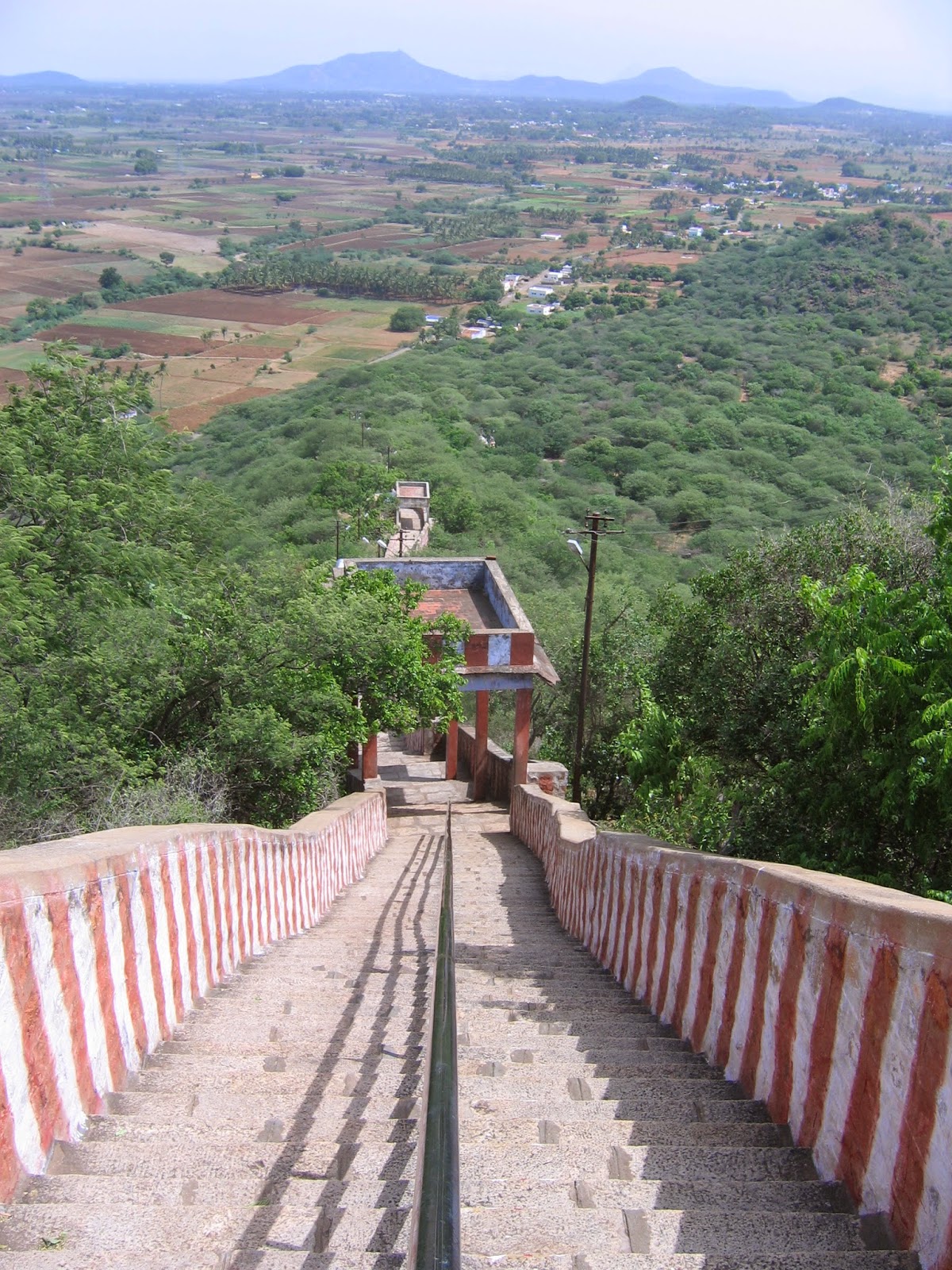
A pleased Zamindar built the idol of Gopinathan with a flute in hand and of Koppammal carrying food above her head. After later renovations, the temple in its current form and structure was built in the early 19th century AD. The temple is at a height of over 400feet with one having to climb over 600steps to reach the temple.

From atop the temple, one can get a glimpse of Dindigul in the East and the Western Ghats and Kongu hills in the West and the  Pothigai hills in the South.
  
Quick Facts
Moolavar         : Kannapiran East Facing standing Posture playing the flute
Thaayar           : Koppammal
Utsavar            : Gopinathan with Butter Ball in each hand
Time                : 8am-12noon
Contact            : JK Gopinath @ 9600519180/94439 19182 / 94434 60639 or Radhakrishnan  99766 17056

How to reach
Reddiarchatram is about 15kms West of Dindigul on the Palani highway. From Reddiarchatram bus stop, auto will cost Rs. 75 to the foot of the temple. From Kannivadi Cross Road, one has to take a right towards West to reach the temple. Currently, trains on the Dindigul-Palani route do not stop at Reddiarchatram station.

One can climb the 600+steps in about 30minutes.

Call the temple authorities on the above numbers before visiting the temple.

Friday, July 11, 2014

Sanjana aims at Rowing Gold for India

Special Knack of catching up with the Technical aspects is a special trait in Sanjana- Captain M.R. Ravindra
14year old Sanjana Shyam has just come off a Gold medal in Sub Junior Girls (fours) Nationals in Calcutta and the excitement in her face is quite palpable. But her feet are firmly rooted to the ground for she believes that this is just the beginning and that there is a long way to go in realising her ultimate dream that of rowing for the country and winning a gold medal.

And her captain and mentor Captain M. R. Ravindra believes she is champion material. He pays glowing tribute to the young rower. ‘Sanjana has great potential to make it big in rowing at the international level. She has tremendous grit and a special knack of catching up with the technical aspects of rowing, which is important at this initial stage of her career. She is also a disciplined girl.’

‘She is currently on the right path and has all the right attributes to make it big. And with hard work and discipline, has it in her to carve a name at the national level.’

Quits Badminton to take up Rowing
Sanjana was a top 8 ranked player at the state junior level in badminton a couple of years ago but a combination of distance and cost led her to saying it ‘quits to badminton’ at a time when she seemed to be doing well.

It was watching her mother Saraswathi (who had represented the state in rowing in the early 1990s) row at the Madras Boat Club that inspired Sanjana to take the ‘dip’ into the Adyar River.

Later, Captain Ravindra pushed Sanjana’s mother to get Sanjana initiated into rowing. Ravindra had his reasons. ‘Rowing is a non impact Sport. Chances of injuries are less. And it provides peace and solitude to the rower. More importantly, it helps you improve on your co-ordination skills and the ability to work as a team as even the slightest mistake by a player in the fours could spoil the team’s chances. Hence each of the four players has to co-ordinate to get the best results for the team.’

Rigorous Training
If the early wins are any indication, Sanjana seems to have made the right move. And in this quest, she is training very hard. 6times a week, she wakes up at 5am and is off to the boat club before rushing off to school, even having her breakfast during her drive to the school. Back from school, she is back into the waters, atleast twice or thrice a week, to improve her timing in the doubles sculls and fours that she currently specialises in. The Ergometer tracks her fitness levels and she is constantly being monitored on various fronts.

Sanjana’s younger sister Shilpa is her best friend and fan. She keeps complete track of Sanjana’s schedules and adjusts to her elder sister in a way that is a delight to her parents.
With Rowing requiring round the year training at varied intensities, the early morning schedule is one that her parents too are getting accustomed to. Her parents wake up at the knock of five every morning to drop her at the MBC and pick her back to then drop her at school.

Captain Ravindra , who  himself was a national champion in 1982, cautions Sanjana of growting expectations and the need to keep improving.  He is pleased with the fact that her parents are very supportive, especially given that this is not a glamourous sport and is not necessarily financially lucrative at the moment for rowers in India.
Ravindra draws an interesting analogy. ‘This is more like kite flying. Only the person flying it enjoys it. Rowing is a very technical sport, even more technical than Golf.  At the moment, there is not much limelight on it in India. It is the last amateur sport in the world. Hence, you need to have passion and a drive to row. And at the moment, Sanjana seems to have the passion to progress to the next phase.’

Rowing, in the long run, could throw open significant higher education opportunities for young rowers like Sanjana, if they continue to pursue this sport. ‘It is the oldest collegiate sport in the West. And Sanjana is likely to be welcomed with open hands by the Universities in the UK and Australia if she performs to the best of her potential in the next 5-6years.’
Ravindra believes that Sanjana is currently in the ‘grounding’ phase of rowing. With age on her side, she can focus the next two years on developing her skill sets and getting into peak fitness including reaching a height of 5.5”/ 5.7” and the appropriate weight. Once into the Junior Category, her progress can be rapid, if she practices hard over the next two years.