Saturday, January 31, 2009

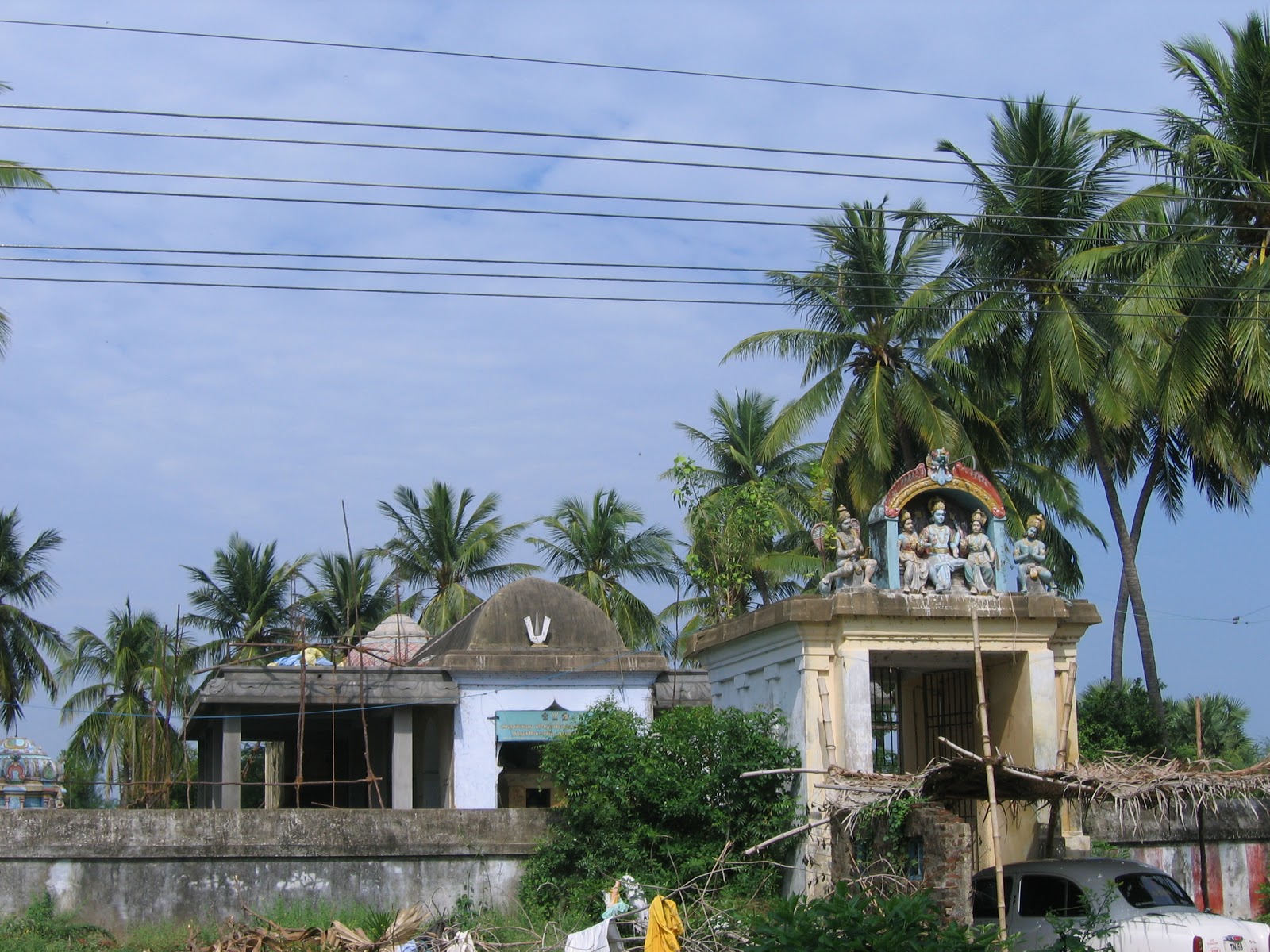
Thottiyam Veda Narayana Perumal Koil

Lord Vishnu is seen in sleeping posture using the four Vedas as his pillow
Guru- Budhan Sthalam - Prahalada seen as a 3 year old boy

Located in a serene village amidst a lot of greenery is the Veda Narayana Perumal Koil at Thiru Narayanapuram (or Veda Narayanapuram) about 4kms South West of Thottiyam, near Musiri (Trichy District), on the Northern banks of Cauvery.

A most distinct and unique feature at the Veda Narayanan temple is that Lord Vishnu is seen in a sleeping posture resting on and using the Four Vedas as his pillow. Lord Narayanan is said to have initiated Vedic Education to Brahmma and hence is referred to here as ‘Veda’ Narayanan.

Construction of the temple
Puranic Scriptures point to the fact that King Mahabala Vaanavaraya was taking his huge army to Mysore. As night befell, he took rest at this place. Lord Narayana is said to have appeared in his dream that night and asked him to install his idol here that was lying beneath the earth and to create festivals that people could enjoy. The Lord is believed to have assured him victory in his battle at Mysore.

Delighted at this, the king built the temple and dedicated this entire village to the temple. To date, about 160 acres of land belongs to the temple. It is a completely different story that the income from this is not being passed on to the temple. Hence, despite this rich history, the Veda Narayanan temple is today seen without much income. Also, the priest is offered only a meager salary. Will this change?

Prahalada as a 3 year old boy
Prahalada, who had only seen Lord Vishnu in an angry form while he was slaying Hiranyakashipu, wanted to see the soft side of the Lord. After undertaking penance here, Prahalad is said to have had a darshan of Lord Narayana in a more peaceful and happy form as a ‘Shantha Swaroopi’.

Lord Vishnu also promised a place for Prahalad near his feet - another unique feature seen at this temple is a 3 year old boy Prahalada in a standing posture at the feet of the sleeping Lord.

Goddess Sri Devi and Bhoo Devi are seen at the feet of Lord Veda Narayanan offering their prayers.

Pillai ThiruNaraiyur Araiyar Abhimana Kshetram
Thiru Naraiyur Araiyar came here with his wife and 6 children in the hope of finding Moksham. One night, the leaves from the palm tree at the temple caught fire. Shocked at seeing this, Thiru Naraiyur Araiyar immediately threw his 6 children towards the Lord as a cover for him and to protect him from the raging flames. Unfortunately, the Lord continued to burn. Araiyar then threw himself into the flames and hugged the Lord so the fire would not touch his favourite Lord.

Pleased with his devotion, the Lord appeared before him and granted moksham to the entire family of the Araiyar. Hence, this place came to be called Pillai Thiru Naraiyur Abhimana Kshetram.

Vedic Initiation to Brahmma

Brahmma once turned arrogant as he was the only one who could ‘create’ things in this world. Wanting to teach him a lesson, Lord Vishnu created a unique idol that left Brahmma wondering about its creator. When asked, Lord Vishnu feigned ignorance saying that Brahmma was the only one bestowed with the rights of creation. While agreeing to this, Brahmma questioned the Lord as to who could have created this image and how this could have appeared without his knowledge and approval.

Lord Vishnu brought the truth before Brahmma and a message to the people at large saying that we should do what is expected of us. However, we should not become arrogant as a result of the exclusive/ special powers given to us.

‘Guru’ and ‘Budhan’ Sthalam
Realising his folly, Brahmma requested Lord Narayana for the initiation of the Vedas. Lord Narayana is believed to have appeared before him here at Thiru Narayanapuram and undertaken the Vedic initiation. As he initiated the Vedic lessons to Brahmma, the Lord is referred to here as ‘Veda Narayanan’. Having played the role of an Acharya and Brahmma having been a student/disciple of Lord Vishnu, this temple is said to be a ‘Guru’ and ‘Budhan’ sthalam.

Success in Education
Veda Narayana Perumal of Thiru Narayanapuram is said to help devotees in their education and learning. As Brahmma himself was initiated with Vedic Education, this is a special temple on the education front. Students/ children who visit this temple offering their sincere prayers and place their books at the feet of Veda Narayanan are believed to come out with flying colours in their education.

Festival
11 day festival in Vaikasi including a 9 day chariot procession
21 day Adyana Utsavam in Margazhi
Puratasi Navarathri.

There are Utsavams through out the year at this temple.

Quick Facts
Moolavar : Veda Narayanan in Sleeping Posture facing East
Goddess : Vedanayaki Thaayar (Separate Sannidhi)

Temple Time : 730am -1130am and 430pm-8pm
Contact : Thiruvenkatam Bhattar/ G. Kuppusamy(madapalli)
Telephone Number : 99766 11898 / 98948 06131

How to reach the temple:
Veda Narayanapuram is located about 50kms from Trichy on the Trichy-Namakkal-Salem Highway near Thottiyam.

1. Take the Trichy- Namakkal-Salem bus. Get down at Thottiyam (about 10kms west of Musiri). Take an auto Rs. 75-100 to and fro from Thottiyam to temple
2. Take Trichy- Kulithalai bus (NH 67) or Chennai-Mangalore (6107 Exp). Get down at Kulithalai and take a bus across the new 2 km bridge across the Cauvery to Musiri bye pass. From there, take a bus to Thottiyam (buses to Namakkal/Salem)
3. Local bus No. 6A from Musiri to ThiruNarayanapuram
4. There are 2 buses every day from Trichy to Thirunarayanapuram ( 9am and 330pm)

Contact auto driver Pushparaj at Thottiyam bus stand @ 97504 12183

The temple is about 4 kms from Thottiyam bus stand on the Kaatuputhur road via the Arasalur Arch.


(This story is thanks to inspiration from one unknown Shri. Surya who posted a comment on one of my previous stories wanting me to write about this temple. My sincere thanks to him for the motivation)

Sunday, January 25, 2009

Thalaichanga Naanmathiyam Divya Desam

Chandran was liberated from his curse here
Lured by the beauty of the Naan Mathiyam Perumal of Thalaichangadu, Thirumangai Azhwar, sitting in Thiru Kannapuram, a Divya Desam about 50kms South West of here, indicated his instant desire to see the handsome Lord residing at this cool lotus filled Thalaichanga Naanmathiyam in his Periya Thirumozhi Verse 

கண் ஆர்  கண்ணபுரம் ....
தண் ஆர் தாமரை சூழ் தலைச்ச
ங்க மேல்திசையுள் 
விண்ணோர் நான் மதியை 
விரிகின்ற வெம் சுடரை 
கண் ஆரக் கண்டு கொண்டு கழிக்கின்றது 
இங்கு என்று கொலோ 
In the Periya Thiru Madal, Thirumangai refers to the special sacred water at Thalaichanga Naan Mathiyam Perumal temple: “நல் நீர்த் தலைச்சங்க நாள் மதியை ”. The sacred water (Theertham) tastes special here at this temple.

Inscriptions

Several inscriptions dating back over a 1000 years to the rule of Para Kesari Varma, Raja Raja Chola and Rajendra Chola period are seen on the outer walls of the Prakara that indicate significant contribution made by these rules to this temple and the .

In ancient times, Thalaichangadu was a commercial hub renowned for Conches, with the Eastern coast of Kaveripattanam just around 7kms from here.

Thalaichanga Naan Mathiyam Perumal temple’s legend has close connections with at least two other Divya Desams – Ranganathaswamy temple at Srirangam and Parimala Rangan Temple at Thiru Indhalur (http://prtraveller.blogspot.in/2007/08/108-divya-desams-thiru-indhalur.html).

Chandran liberated from curse
Chandran, who was learning under the tutelage of Guru Brihaspathi, fell for the beauty of his Guru’s wife and cast an evil eye on her. Brihaspathi, who came to know about this, uttered a severe curse turning Chandran into a disease prone being. A shocked Chandran pleaded with the Guru to pardon him but Brihaspathi pronounced that the biggest sin of life is to caste one’s eyes on another’s spouse and that Chandran would have to undergo the curse for having cast his eyes wrongfully on his Guru’s wife.

Another story goes that Dakshan offered the hand of his many daughters to Chandran after being impressed with his handsome looks. However, Chandran fell in love only with Rohini and disregarded the others. Dakshan viewed that Chandran had become arrogant as a result of his good looks and cursed Chandran to lose his youth and his ‘striking personality’.

Three Phased Parikara to cleanse sins
To cleanse himself from his sins, Chandran requested Brihaspati to suggest parikara and was directed by his Guru to invoke the blessings of Lord Vishnu for atonement from his sins.

As the first step in his three phased parikara, Chandran undertook bath at the Chandra Pushkarani and performed service at the Ranganatha temple in Srirangam for 15 years. This helped him liberate himself from his ‘physical disease’.

Subsequently, he moved to Thiru Indhalur (in Mayiladuthurai) and offered prayers to Lord Parimala Rangan. Answering his prayers, the Lord reduced the severity of his curse and brought back a few of his handsome features. As per Chandran’s request, this place in Mayiladuthurai came to be called Indhunna (a name denoting Chandran) - later Indhalur- and this region was referred to as Chandran Kshetram.

Finally as the culmination phase of his parikara process, he came here to Thalaichangadu Kshetram
(Aruna Vana Kshetram) had bath at the Theertham and undertook severe penance invoking the blessings of Lord Vishnu who appeared here in a Chandra Vimana along with Shengamalavalli Thaayar and liberated him fully from all his curses. Hence the Lord here is also referred to as Chandra Saabha Haran.

A pleased Chandran requested that the Lord fulfil the wishes of devotees who pray sincerely to him at this temple, just as he did and to relieve them from curses and doshams.

Priest’s long trip every day
Despite this temple now being in a remote location with very little facilities, a redeeming feature is the commitment and devotion of Varadarajan Bhattar, who travels close to 20kms every morning from Mayiladuthurai to perform service to the Lord here at this temple.

Quick Facts
Moolavar         : Naan Mathiyam Perumal East Facing Standing Posture
Thaayar           : Thalaichanga Naachiyar
Utsava Deity    : Vensudar Perumal (Yoma Jothi Piraan)
Utsava Thaayar: Shengamalavalli Thaayar
Temple Time     :  10am-530pm
Contact            : Varadarajan Bhattar @ 99652 73712

Festivals
3day Pavitrotsavam in Puratasi
Navarathri Utsavam was started in 2008 after a gap of several decades.
Vensudar Perumal goes on a procession to the Thiruchangadu Village on the occasion of Vaikunta Ekadesi (the only outside procession of the year)

How to reach
Thalaichangadu is 15kms East of Mayiladuthurai (the same distance from Sirkazhi) on the Karaikal Highway and 2kms from Karuvi/Poompuhar Entrance Arch.

From Mayavaram, buses every hour to Karuvi/Thalaichangadu. From Sirkazhi, one can board the Karaikal bound bus to reach the temple in 45 minutes.

Cab around Mayiladuthurai divya desams: jayaraj@ 97887 76365

From Mayiladuthurai, auto will cost Rs. 250 to Thalaichangadu.

Wednesday, January 14, 2009

Vedu Pari Thirumangai Azhvaar


‘Thief’ Thirumangai Azhvaar’s way laying the Lord and trying to steal Namperumal’s jewels is enacted on this 8th day of the Era Pathu Festival

The last of the Azhvaars Thirumangai Azhvaar made a significant contribution, visiting and singing praise of the Lord in 86 Vishnu temples. While all other Azhvaars got things done by showing love and devotion to the Lord, Thirumangai Azhvaar alone was different. He was forceful in his interactions with the Lord and sometimes even threatening. We have seen in several cases where the Lord has come down a step to make Thirumangai sing praise of him.

He had threatened to leave Thiru Indhalur(http://prtraveller.blogspot.com/2007/08/108-divya-desams-thiru-indhalur.html) without singing praise of Parimala Rangan as was the case in Thiru Ninravur(http://prtraveller.blogspot.com/2008/03/thiru-ninravur-bhaktavatsala-perumal.html). He is also the only Azhvaar seen with a spear in his hand.

Thirumangai initiatied the Prabhandham Festival in Margazhi
While one of Thirumangai Azhvaar’s biggest contribution to the Srirangam temple was his effort in building the huge fort like walls around the prakaarams, it was also Thirumangai who wanted this (Margazhi Festival) to be a Tamil Divya Prabhandham festival as against just the Vedic recital that existed before his time and requested the Lord to make this a Divya Prabhandham Festival. And the Lord is said to have agreed.

A festival for Thirumangai
Nathamuni wanted to create a festival for ThiruMangai Azhvaar for his contribution to the Prabhandham. Thus, started the 10 day Pagal Pathu festival (the opening 10 days of the Prabhandham festival) which precedes the Vaikunta Ekadesi. Lord NamPerumal listens to the 1st 2000 Paasurams at Arjuna Mandapam at the Srirangam temple during the first 10 days.

Thirumangai turns thief
The story goes that Thirumangai fell in love with the beautiful Kumudavalli. In order to attain her, he accepts the conditions laid by her- to feed a 1000 people every day. In this attempt, Thirumangai Mannan loses his wealth, but his love for Kumudavalli remains. To try and fulfil the conditions, he turns a thief and resorts to ‘stealing’.

To bring him back on the right path, Lord comes to meet Thirumangai in a disguised form. Thirumangai, however, remains focussed on attaining his beloved and he way lays the Lord and threatens to remove all his ornaments. Despite all his attempts, Thirumangai fails in his attempt to remove the valuables from the ‘disguised’ Lord.

Angered at his failure and shocked at this strong defence shown, Thirumangai questions if that person is a magician. It is then that the Lord appears along with the Goddess in a Kalyana Kolam and shows his real form to Thirumangai and utters the astaachara mandiram in the ears of Thirumangai.

Thiruvai Mozhi Thirunaal was created for the Lord to listen to the beautiful Tamil composition ‘Prabhandham’. The 8th day of this Era Pathu festival is entirely dedicated to Thirumangai in recognition of his contribution. On this day, even the Paramapada Vaasal is closed.

Vedu Pari Festival
In Srirangam, this day is celebrated as Vedu Pari. Lord Namperumal comes out on a Horse Vaahanam from the Santhana Mandapam. On this day, the people from the ‘Kallar community’, who currently reside on the banks of the Melur Road Theppakulam, come with sticks and weapons to way lay Lord Namperumal and to steal the jewels of the Lord. This drama is enacted on the Eastern Side of the Srirangam temple in front of the Ramar Sannidhi adjacent to the 1000 pillar mandapam between 5pm and 7pm on the 8th day of the Era Pathu Utsavam.

Namperumal’s List of Jewels read out
To confirm that all the jewels of the Lord is intact, the entire list of jewels of Lord NamPerumal is read out. It is a time for the devotees to listen in to the different kinds of jewels worn by the Lord. This is the only day in the year when the list of jewels is read out. We had seen earlier that Lord Namperumal wears 365 different kinds of dresses on the Kaisika Ekadesi day.

Another speciality on this day is the performance of Vaiyali inside the temple. On all other occasions, Vaiyali is seen only outside the temple premises (on street processions).

This year(2009), Vedu Pari Utsavam is to take place today(14th January).

Sunday, January 11, 2009

Thanjai Maa Mani koil Divya Desam

Lord Vishnu takes three different forms to kill three Asuras  

On the banks of Vennar, about 5kms North of Thanjavur on the Thanjavur-Thiruvayaru/Kumbakonam Road, are three Vishnu temples next to each other that together make up one Divya Desam referred to as Thanjai Maa Mani Koil - Veera Singa Perumal on the Eastern side, Manikundram Perumal 100 yards to the West and Neelamegha Perumal further to the West. NammAzhvaar, BhoothAzhvaar and Thirumangai Azhvaar have sung praise of the Thanjai Maa Mani Lord referring to the Lord as ‘Thanjai Yaali and Thirumangai Azhvaar in his praise of this Lord says  “En Seiken Adiyen, Uraiyeer Itharku Enrum En Manathey Irukum Pugazhth Thanjai Yaaliyai Pon Peya Ron Nenjam, Anru Idanthavanai Thazhale Purai Min Seivaan Arakan Nagar Pazhpada Soozh Kadal Sirai Vaithu Imaiyor Thozhum Pon Sei Maal Varaiyai Mani Kundrinai Anri En Manm Potri Ennaathey’ 

The Story Three Asuras- Thanjakan, Dhandakan and Ghajamughan – lived in this place and were creating havoc along with their army. Troubled by their constant harassment, Parasura Rishi offered his prayers to Lord Vishnu seeking his help in keeping the Asuras away. 

Neelamegha Perumal Vishnu is said to have first sent Garuda, who killed army of asuras leaving back only the 3 main asuras. Garuda, who appeared here all alone to destroy the entire army of the Asuras, is said to be continuing to reside and protecting the people of Thanjavur. Given the presence of Garuda, the age old belief is that there are no snakes around this place.
Neelamegha Perumal 
Following this, Lord Vishnu himself came down and killed Thanjakan, who realising his folly requested the Lord to name this place after him. Hence, this place came to be referred to as Thanjakanur and in course of time became Thanjavur. Mela Singha Perumal (Narasimha Perumal) Lord Vishnu then took the form of Narasimha to kill Asura Ghajamughan. As the Lord came in the form of ‘Yaali’(Narasimha), this place came to be called ‘Thanjai Yaali Nagar’.  

Inscriptions found here has reference to Sarobhoji king making significant contributions to this temple. 

Mani Kundram Perumal
The last asura, Dhandakan, angered at the death of the two others, went into the nether world. Lord Vishnu took the form of Varaaha, followed him and killed Dhandakasuran. Lord Vishnu then appeared on his own as Bhoo Varaahar at Sri Mushnum (to be seen in a separate story shortly) about 50kms North of this Divya Desam. 

As this was the place where Lord Vishnu brought an end to this mighty asura, this came to be called the Dhandakaranya Kshetram. Inscriptions found in Manikundram Perumal Koil point to significant contributions made to this temple by Maratha rulers in the 19th Century 

Thirumangai refers to Thanjai Maa Mani in his praise of this divya desam and calls this Vambulaan Cholai.
 

Festivals
Singa Perumal Koil- 10 day Chitrai Brahmotsavam 
Manikundram Perumal – 10 day Panguni Uthiram 
Neelamegha Perumal- 10 day Vaikasi Visakam Festival 

 Unjal Utsavam in all the three temples on Aadi and Thai Fridays 

Garuda Vaahanam-Street Procession in Vaikasi 

On the Vaikasi Thiruvonam day, 22 Lords from temples in and around Thanjavur including the the Thanjai Maa Mani Koil assemble at the Raja Street in Thanjavur and go on a street procession on the Garuda Vaahanam across the 4 Raja Streets. Also, on the Aadi Ekadesi day, there is a Thailakaapu Utsavam for all the three Lords of Thanjai Maa Mani koil. On the Thiruvonam day in Puratasi, there is a Desigar Utsavam at the Neelamegha Perumal Koil. 

Administration of the Temple 
The Thanjai Maa Mani koil is managed by the Thanjavur Palace, whose current prince is Shri. Babaji Rajah Bhonsle.  
 

Quick Facts 
Thanjai Maa Mani:
Neelamegha Perumal East Facing Sitting posture Goddess :Shenkamala Valli 
Manikundram : Manikundram Narayana Perumal East Facing Sitting Posture Goddess : Ambuja Valli Thanjai Yaali : Narasimha East Facing Sitting Posture Goddess : Thanjai Nayaki 

 Azhvaar : Thirumangai, NammAzhvaar and BhoothathAzhvaar

Temple Time : 730am-12noon and 5pm -830pm Priest : Narasimha Bhattar@93441 47850 / Sampath Bhattar 97919 48622 (Mani Kundram and Neela Megha Perumal) and (new) Narasimha Bhattar @ 63828 27048 (Singa Perumal Koil)

How to reach the Thanjai Maa Mani Koil 
Local buses every 10-15mts on the Thanjavur-Thiruvayaru route. Auto will charge about Rs. 75-100 from the Old Bus Stand One can also take the Thanjavur-kumbakonam bus to get down in front of the Thanjai Maa Mani Temple

Monday, January 5, 2009

Kudanthai Ramaswamy

A visit here is said to bring husband-wife unity, affection among brothers and strengthen friendship

Located half a kilometre south of Sarangapani Koil is Pattabhishekar Ramar Temple in Kumbakonam.

Built during the period of Achuta Nayak about 400 years ago, the Ramaswamy temple has each of the brothers (of Rama) in very devoted and respectful postures, ready to serve Rama.

It is said that Saarangan (of Sarangapani Divya Desam) appeared here in the form of Raama.

North facing Rama is a special feature at this temple, not seen in many other temples in India.

Rama is seen with Sita in a sitting posture flanked by Lakshmana who is holding Rama’s bow and waiting for his brother’s orders. Baratha is seen holding a brass umbrella over Rama, almost as to protect him from a hot sun while Shatrughna is fanning Rama.

Unique Hanuman
Lord Hanuman is seen with a Veena in one hand and reading the Ramayana in the other, not seen in any other temple.

Veda Paarayanam and Divya Prabhandham recital is a regular feature at the Ramaswamy temple.

Water Paint story of the Ramayana

One of the highlights of the Ramaswamy temple is the depiction, in the outer prakaram in a three layer format, of the entire Ramayana story sketched beautifully with water paint drawings along with the meaning of each sequence in the story.

Artistic SculpturesIn the mandapam outside the Sanctum, one finds several sculptures depicting historical events in a very artistic form. Some of the sculptures include Trivikrama Avataaram, Sugreeva and Vibheshana Pattabhishekam, Sita Kalyanam and Ahalya Saaba Vimochanam

Parikara Sthalam

It is believed that a visit to the Ramaswamy temple will bring about husband-wife unity, special affection among brothers and strengthen friendship. Belief also is that one’s enemies will go away and will actually become friends if they offer sincere prayers to Ramaswamy at this temple.

Festivals
Rama Navami Utsavam
10day Vahanam Utsavam leading up to Rama Navami. Also, the Chariot Festival during Panguni is a popular occasion at this temple. The old Chariot is being discarded and a new Chariot is being done up thanks to help from a devotee in Madras. The new one is expected to be ready by the Rama Navami Festival in Panguni.

Navarathri Festival
Grand 10 day festival during Navarathri where the Lord is decorated in different Alankaarams on each day

10day Kannadi Arai Oonjal Utsavam in Margazhi

Kanupodi Utsavam
On the Kanu day in Thai, Sita from Ramaswamy temple and Vijayavalli Thaayar from Chakrapani temple join Komalavalli Thaayar at the Sarangapani temple for Kanupodi Utsavam

Quick Facts
Moolavar : Pattabhishekar Ramar with Sita in a Sitting Posture facing North
Temple Time : 730am-12noon and 430pm-9pm
Priest : Soundara Raja Bhattar @ 94863 10896

How to reach
Auto will cost Rs.40 from the Kumbakonam Railway Stations/Bus Stand and Rs.25 from Sarangapani temple

Friday, January 2, 2009

Saligrama Kothandaramar Koil Punnai Nallur

The Only Ramar temple in India with all the moolavar deities made of the sacred ‘Saligramam’ Stone
1400 year old Utsavar idols of Raama, Sita and Lakshmana

‘Saligarama Kothandaramar’ Koil is located in Punnai Nallur, about 7kms East of Thanjai Maa Mani Divya Desam, on the Thanjavur-Nagapattinam Highway and about ½km North of the Thanjavur Mariamman koil. This temple is said to be the Abhimaana Sthalam of Neelamegha Perumal of Thanjai Maa Mani koil.

Saligrama Moolavar
This is possibly the only (Raamar) temple in India where the moolavar deities of Raama, Sita, Lakshmana and Sugreeva have been made of the sacred ‘Saligramam’ stone. One normally finds the black Saligramam (stone) in the shape of a small stone. Here at the Kothandaramar temple, each of the big sized moolavar idol (all of them are in Standing Posture) is from the Saligramam stone. It is believed that a Nepal king (who was the son in law of Thanjavur) presented the sacred ‘Saligramam’ stones to the Thanjavur king.

Historical Utsavar Idols
The utsavar idols of Raama, Sita and Lakshmana that one sees today are said to be 1400 years old. These were found buried at Puvanur village near Needamangalam about 25kms from here.

Special Status for Vaanara King Sugreeva
Another feature at this temple is the special status assigned to the monkey king Sugreeva. It is believed that Raama, in recognition of Sugreeva’s help in finding Sita, wanted the Vaanara King by his side.

Construction of the temple

The temple was built by the Maratha king Pratap Singh, who lived in the 18th century and who contributed in no small way to a number of Vishnu temples in and around Thanjavur. There are references to the fact that the Maratha queen Emunaambal Bai set aside a lot of fertile land for the Kothandaramar temple. She also contributed in various other ways to the progress of the temple. Maratha King Shivaji and Kaamatchiamba Bai also contributed in a big way to this temple.

Sun Signs - Another speciality
Lord Hanuman is seen in a separate sannidhi in a standing posture facing South with a lifted right hand and with a lotus in his left hand.

On the upper wall of the Hanuman sannidhi, one finds stone carvings of the 12 sun signs. The belief is that devotees who stand under their respective sun sign and offer sincere prayers to the Lord will be relieved from all the difficulties relating to their sun sign.

HayaGriva Sannidhi
It is also believed that Lord Hayagriva will assist in the education and intellectual learning for those who invoke his blessings here at the Kothandaramar temple on the Thiruvonam day every month.

Management of the temple
The Kothandaramar temple is under the management of Shri. Babaji Rajah Bhonsle, the current prince of the Thanjavur Palace.

A couple of other Kothandaramar koil in Tamil Nadu are Eri Kaatha Ramar koil in Madurantakam
( http://prtraveller.blogspot.com/2008/11/madurantakam-eri-kaatha-raamar.html) and
Ramar Koil in Vaduvur on the Thanjavur-Mannargudi highway
(http://prtraveller.blogspot.com/2008/12/vaduvur-kothandaramar.html)

Quick Facts
Moolavar Deities : Saligrama Kothandaramar Standing Posture with Sita, Lakshmana, and Sugreeva
Utsavar : Raamar with Sita Devi and Lakshmana
Temple Time : 7am to 12.30pm and 5pm to 830pm
Priest : C. Venkatesa Bhattar @ 97897 42778
Contact Address : 4/32 Ramar Sannathi Street Mariyammankovil(PO) Thanjavur 613501
Festivals : 9 day Rama Navami Utsavam in Panguni – Brahomotsavam
Garuda Sevai on Chaturthi day, Chariot procession on Navami day

How to reach the temple
One can board the Thanjavur- Nagapattinam /Amma Pettai and get down at Mariamman Koil stop.

Auto from Thanjavur bus stand/Railway Station / Thanjai Maa Mani Divya Desam will charge Rs.125-Rs.150 for a two way trip.

Saturday, December 27, 2008

Lakshmi Narasimha Perumal Pazhaya Seevaram

Kanchi Varadar makes his annual 20km trip to this temple on the day after Pongal

Lord Narasimha with Goddess Lakshmi

Located about 20kms east of Kanchi Varadaraja Perumal koil on the Kanchipuram-Chengalpet State Highway is the Lakshmi Narasimha Perumal koil in Pazhaya Seevaram.

The Story
Wanting a darshan of Lord Narasimha, Rishi Aathri Anusaya was undertaking penance at Naimisaarinyam. With his prayers not being answered there, the Rishi increased the intensity of his penance.

One day, he heard an invisible voice that asked him to move southward to the foot of Padmagiri parvatham where there is a confluence of three rivers

He is said to have to come this place and undertaken penance, facing East ward, on the banks of the three rivers- Palar, Cheyyar and Vegavathi- that meet here.

Lord Lakshmi Narasimha is said to have appeared before him and provided darshan facing the west. And as per the wishes of the Rishi, Lord Narasimha remained here, ever after and is seen in a grand sitting posture, west facing, with Goddess Lakshmi on his lap.

Historical Reference
One finds a reference to this episode in chapter 17 of the Brahmanda Puranam relating to Padmagiri Mahaatyam.

Lord Varadar’s yearly trip to Pazhaya Seevaram
The big highlight at this temple is the annual trip of Kanchi Varadar.

The story goes that the moolavar deity of Kanchipuram Perumal Koil (Lord Varadarajan) is said to have been damaged during the invasion of the Muslim rulers. As a damaged deity could not be worshipped, it was immersed in the temple tank (This moolavar deity- Athi Varadan- is taken out once every 40 years and placed outside for worship for a period of 10 days. This event will take place next in 2019).

The moolavar that we see today at Kanchipuram Varadarajar Perumal Koil was brought from Pazhaya Seevaram. In memory of this event, the Utsava idol of Kanchi Lord Varadarajan is taken on a procession once a year, on the ‘Maatu Pongal’ day during the Tamil month of Thai (Jan-Feb) to Pazhaya Seevaram.

Paari Vettai Utsavam
Lord Varadarajan leaves Kanchipuram on the evening of the Pongal day and reaches Pazhaya Seevaram Lakshmi Narasimha koil at 6am the next morning (He is scheduled to leave on the evening of 14th January 2009 to reach Pazhaya Seevaram at 6am on 15th January 2009).

The morning of Maatu Pongal day is one dedicated to the people of Pazhaya Seevaram, celebrating this once in a year ‘Paari Vettai’ Utsavam where they play host to Kanchi Varadar as the Lord goes on a procession around the streets of Pazhaya Seevaram.

At around 9am, Kanchi Varadar climbs the 250 odd steps( atop the Lakshmi Narasimha temple) to the hill top where he originally belonged !!!

That evening, along with Lord Narasimha of Pazhaya Seevaram, Kanchi Varadar is taken on a procession to Keezh Seevaram to the Prasanna Venkatesa Perumal koil at Thiru Mukoodal. Lords from five different temples congregate here that evening.

Back at Pazhaya Seevaram after about 3 hours, Kanchi Varadar bids good bye to Lakshmi Narasimhar at around 930pm at the Pazhaya Seevaram Temple and makes his way back to Chinna Kanchipuram for another year!!

Rivers in full flow
Devotees who have been to this temple in the 1960s/70s say that they used to reach here by bullock cart (there were no buses then) and would stay here for a month enjoying the cool breeze and peaceful surroundings. The rivers, they say, used to run full through the year which would make a wonderful sight from the top of the temple.

At the time of writing this piece, Palar was completely dry.

Management of the temple
Interestingly, this temple has been managed by a private Gujarathi trust (at least for the last 300 years) and has been maintained very well.

Quick Facts

Deity : Lakshmi Narasimha West Facing Sitting Posture
Temple Time : 730am-11am and 4pm-630pm
Priest : Srinivasa Bhattar
Contact : 94437 18137
Festivals : Brahmotsavam in Aani, Pavitrosavam in Aavani, Narasimha Jayanthi

Sunday, December 21, 2008

Ranji Trophy Tamil Nadu v Railways

Baffling decisions by Tamil Nadu think tank mark final day of the Ranji Trophy match against Railways
Abhinav Mukund, Ashwin lose out on opportunities on the Final day

The final day of Tamil Nadu’s Ranji match against Railways at the MA Chidambaram Stadium left one completely disappointed with the attitude of the team (read captain and coach). Having already qualified for the knock out stage, Tamil Nadu chose to bat out (with a changed batting order) the entire final day with a drab batting display instead of giving the bowlers the opportunity of a work out, ahead of the knock out match.

At the end of day 3, TN led by around 175 with all 10 wickets in hand (having led by around 150 on the first innings). Another 125-150 runs on the final morning may have been enough for Tamil Nadu bowlers.

Every indicator would have endorsed this decision- TN had already qualified for the knock out, Railways was out of contention and clearly disinterested in the proceedings on the final day and TN bowlers desperately needed a bowl (especially Ashwin and C. Suresh).

2 things stood out:

1. Not going for outright win/ Giving bowlers the opportunity
The decision to not give its bowlers a chance to have a go at a not so strong and a disinterested Railways team was baffling. Mind you, R. Ashwin has not been amongst big wickets this season, with L. Balaji coming back strong from his injury in the early league matches this season. Would Ashwin not have liked to bowl about 10-15overs ahead of the crucial knock out match later this week?

Would not have Yo Mahesh, who bowled very well in the 2nd half of day 3 and took 4 wickets to help TN with a sizeable lead, liked to have had a go at the Railways top order further boosting the confidence he had gained in the first innings, just 24 hours ago.

Has C. Suresh bowled enough this season (he bowled only 12overs in the first innings)? Was this not a great opportunity to give him a decent bowl in the 2nd innings ahead of the Knock out match in Bangalore.

Obviously, the TN think tank led by Dinesh Karthik and Coach WV Raman did not think it fit to set Railways a target on the final day…Did they fear Railways scoring 300 in 50odd overs on a final day pitch( i.e if TN had declared shortly after lunch). Is that the confidence TN has in its bowlers and against a reasonably weak Railways batting line up (whom TN had bowled out for 200 in the first innings).

2. Changes in the batting order
If Tamil Nadu had indeed decided last evening or this morning that they were not going for the outright and that there would be no declaration today on the final day, what business did they have to push Abhinav Mukund to No. 6.

Here is a boy, just 18 years and playing only his 2nd season in Ranji cricket, who reached 1000 Ranji runs in 11 matches with a brilliant 150 in the first innings against Railways, being asked to bat at No.6.

If indeed you had decided to bat out the day, why not give this talented youngster another chance to build on his profile of being a prolific scorer by sending him in his usual opening slot. Abhinav is no legend yet that you would rest him from batting and give others (even if they too are youngsters!!!) the opportunity. Abhinav is still in the process of establishing himself as the long standing opener for TN. He, earlier this year, unfortunately missed out on the chances at the U19 world cup (Virat Kohli who played there, has already moved up the ladder).

Lost Opportunity for Abhinav and Ashwin
Every innings and every match is crucial for emerging players and Abhinav and Ashwin have missed out on an opportunity to further stage their claims at the higher level. In fact, Dinesh Karthik, the captain, himself has just had a terrible run with the Indian team and that’s the reason he was in Chennai today and not in Mohali!!! Does he think that a double hundred and a hundred is good enough for him to take it easy on day 4 of a Ranji match (Unfortunately wicket keepers these days are judged on the number of runs they score).

Did he not see this (today’s 2nd innings) as yet another opportunity for him to impress upon the national selectors (Parthiv Patel has also got a double hundred in this round of matches. Having decided not to declare, should he not have batted in the top 4 and amassed more runs.

Who required practice today- Batsmen or the TN Bowlers?
Did TN Captain/Coach/Team Management require today’s batting display (by Arun Karthik/Prasanna/Vidyut/ Suresh Kumar) to conclusively decide as to who will make way for Badri and Vijay in the next match… I wonder !!!!!!!!!!!!

It was the time for Abhinav Mukund to score more runs as an opener (till the declaration time or to bat through the day), it was time for Yo Mahesh and Ashwin to bowl and see if they could bowl out Railways on day 4 (in worst case scenario, it would have been a good, competitive bowling practice for them).

Unfortunately, it turned out to be runs galore against a disinterested Railways bowling attack (Sanjay Bangar for a long part of the day didn’t bother to even change the field. He just let the game drift to a tame draw. Murali Kartik did not bowl, choosing to stand at slip and short mid wicket through the day).

Clearly, Yo Mahesh, C. Suresh and Ashwin lost out on an opportunity today. It would have been a nice challenge for Yo and Ashwin to bowl with a target of 300+ in 50 overs…and it would have made up for a good competitive bowl for them ahead of the knock out match.

Abhinav, M. Vijay, S. Badrinath and Dinesh Karthik have been in top batting form this season and they are confirmed choices for the next match and will fill the top 4 batting slots. Off Spinner Ashwin has just scored a century in the first innings and has many times in the past made useful batting contributions down the order.

Hence, if at all practice was required on the last day, it was for the bowlers of Tamil Nadu, not their batsmen. It would have been invaluable for Yo Mahesh and Ashwin to turn their arm over on the final day than have Arun Karthik and Suresh Kumar batting out a large part of the day(and despite their knocks on the final day, they may be the ones to be left out of the knock out fixture).

Saturday, December 20, 2008

Dasavatharam Temple Agaram Village

The only temple in India with all the Dasavatharam idols in one single stone
Parikara Sthalam for different kinds of Dosham including Pitru Dosham

Located about 15kms East of Tirunelveli off the Tuticorin highway on the banks of Tamaraibarani is the historical Anjel Enra Dasavatharam Perumal koil in Agaram Village in Vallanadu (Tuticorin District). The speciality of the temple is that one finds all the Dasaavatharam idols made from a single stone.

Dasavatharam Idols at Agaram Anjel Perumal temple

The Story
Mitrasaga, who lived in the Agaram Village, was a devotee of Lord Vishnu and he took it upon himself to spread the name of the Lord by enacting the Dasavatharam story through his dramas. Chandramalini, the daughter of a Kashmir king, was drawn by his artistic performance and fell in love with him.

She married Mitrasaga and came to stay with him in Agaram Village. Having enacted the Dasavatharam story several times through their plays, they wanted the real darshan of the Lord in that form.

One day after the morning bath at the Tamaraibarani Theertham, it is believed that Lord Vishnu appeared in an invisible form and chanted the Dwadasi Mantam – Om Namo Bhagavathey Vasudevaya.

Granted the prayers on this Dwadasi day in the Tamil calendar month of Maasi, Lord Vishnu is believed to have provided the Dasavathara darshan, all at the same time, at this place. Hence this place came to be known as Dasavathara Kshetram.

Chandramalini got Mukthi at this place- Lord Vishnu is believed to taken her in his Pushpaka Vimaanam.

Historical ReferenceIn the 4000 year old Veda Vyasa’s Tamaraibarani Mahatmiya Puranam, there are references to Manimahodaya Agraharam (which in course of time became ‘Agaram’ village) and the presence of a large number of Bhaagavathars here at this place. Hence, this was called Bhaagavatha Kshetram. The Agaram Village was also a place for Vedic Education.

Anjel Perumal

Dakshina Ganga
The Tamaraibarani Puranam points out the significance of a bath at the Dasavathara Theertham at this Dasaavathara Kshetram. A bath here is said to be equivalent to and bear the same fruits as a bath at the Ganges in Varanasi.

Garudan

Parikara Sthalam
Each Dasavathara idol relates to a Navagraha and the belief is that one will be liberated from all kinds of doshams if one bathes in the Tamaraibarani Theertham here, has a darshan of the Dasavatharam Lords and performs the relevant parikaram at this temple.

(Matsya- Kethu Parikaram, Koorma- Sani Dosham, Varaha Avataaram- Rahu, Vamana-Guru Dosham, Krishna- Chandran………….)

Liberation from Parental Curse
The Anjel Enra Dasavatharam Perumal is also said to be a place for liberation from Pitru Dosham (Parental curse) and is believed to be equivalent to visiting Kasi.

Renovation of the temple
A large part of the temple was destroyed by floods in the Tamaraibarani in the early part of the 20th century. However, the Dasavatharam idols have remained intact. In 1952, Shri. Muthuswamy Sastri is said to have spent Rs.50000 for Kumbabishekam of the Moolavar deity. In 2003, a Dasavathara Kainkarya Committee was formed to undertake complete renovation of the temple, including building walls around the temple and a parikara mandapam.

Temple in ruins
The committee is expected to perform the kumbabishekam in July 2009.

Those interested to help restore this ancient and special one of a kind temple can call: 04630 261142 or 97501 58622 or email dasavatharaperumal@gmail.com

Address: 2/43 New Agaram village, Vallanadu 628252 Tuticorin District


Quick Facts
Deity: Anjel Enra Dasaavatharam Perumal, East Facing Standing Posture
Utsavar: Anjel Perumal with Sridevi and Bhoodevi

How to reach Agaram Village
There are buses every 5-10minutes between Tirunelveli and Tuticorin. One can reach Vallanadu within 30minutes from Tirunelveli.

One can take an auto (about Rs. 40-50) from Vallanadu bus stop to the Dasavatharam Koil in Agaram Village (about 2kms)

Thursday, December 18, 2008

Fall of the Wall Rahul Dravid

9 months ago, I wrote a piece http://prtraveller.blogspot.com/2008/03/rahul-dravids-defensive-cricket-costing.html
on Rahul Dravid’s slow (and selfish) batting and the need for him to show more positive intent at the crease to hold to the coveted No. 3 spot in the Indian batting order.

We are now into the 2nd series since, there has been a change of test captain and a new selection committee headed by K. Srikkanth (known for his open and straight talking and decision making) but Rahul Dravid continues to occupy the No. 3 position and more importantly has continued with his defensive dead bat cricket.

Out of Form with a difference
Unlike several other cricketers, who when out of form and/or going through a lean phase are shaky and edgy, Rahul Dravid has looked solid in defence (though more often his first edge has been held behind the wicket). But that(his ultra defensive mindset) really has been his downfall. Rarely during this period, has one seen Rahul do what I think would have been(and continue to be) possible solution to his problems:

1. To take quick singles early on his innings so he does not get into a situation of 3 runs of 25 balls or 10 runs of 40 balls… (this is possible even with dead bat cricket). He just hasn’t showed any positive intent in his batting and more often than not his batting partner’s progress has been halted (not receiving the strike often enough). And Dravid’s own running between the wickets, while at the non-strikers end, has been less than positive( What is Robin Singh- fielding coach is also responsible for running between the wickets- doing!!!).

2. He has not tried to stroke the ball off the square. He has rather been content playing ‘dead bat’ cricket, playing the ball back down the pitch or to the cover fielder. Even his flicks to square leg or through the mid wicket have deserted him as have the hook and the pull which he has executed in the past, when in form.

3. The other brave and daring and to me the most sensible action on his part would have been for him to accept that he was no more the best batsman in the team and to have proactively moved down the order to No. 6, a position where a little bit of defensive cricket may not necessarily put pressure on his own team. Rahul could have requested and may be even aggressively pushed the team management to allow him to go at No. 6 or the team management could have forced him into this for his and the team’s benefit. Neither seems to have happened. MS Dhoni, known for his positive instinct, also has not done anything so far, on this front, though knowing him I do believe it will be only a matter of time, before Rahul Dravid is pushed down the order, where his slow batting will be less of a burden for the team.

No. 3 is a position that has traditionally been allotted to the best batter in the team. It is also a position given to one who is solid both against pace and spin. As Richie Benaud said earlier today, it is a position where the most important thing for the (No. 3) player is that he should have an attacking game as well.

Ian Chappell is of the view that No. 3 is a position where the player really sets up the pace of the game for his team and helps shape the game.

Rahul Dravid clearly in the last 12 months has slowed down the pace of the game (and this has not been reflected in a more glaring manner only because of Sehwag’s extraordinary aggression). Dravid has in fact, time and again, with his slow batting at No. 3, given the opposition an opportunity and almost almost opened the gate to put added pressure on the Indian top order.

Sooner than later, Rahul Dravid will have to accept the No. 6 spot as his best option to prolong his career, unless ofcourse if the team management under MSD believe it is time to induct M. Vijay or S. Badrinath in place of Dravid(which I think may not be a bad thing for Indian cricket under Dhoni). This could mean an end to his career, closely following the departure of Ganguly and Kumble.

This may not be the ideal way for Dravid to leave, having served India for over a dozen years, but he will have no one to blame but himself for the hole he has got into.

Defensive Mindset, Dead Bat Cricket , poor running between the wickets (and hence not rotating strike) and failing to stroke the ball beyond the square will stand out as reasons for the ‘Fall of the Wall’.

Sunday, December 7, 2008

Uthira Merur Sundara Varadar

8th Century AD temple built by Nandi Varma Pallava has several unique features not found in any other Vaishnavite Temple

Uthira Merur was home to a ‘Best in Class’ Constitutional Framework - No current politician may pass the Governance Model and Election ‘Code of Conduct’ laid out in 10th Century AD by Parantaka Chozha. 

The Current PM and Current CM of Tamil Nadu would not have met his 'Age Qualification' criteria!!!


Located about 85kms South West of Chennai is the 1300 year old three tiered Sundara Varadar temple in UthiraMerur, a town that holds a special place on the map of India, for it was here that the formal Guidelines for Assembly Elections and a constitutional framework was laid out for the first time ever in India.

In fact, our current constitution and governance model is said to have been modelled on the framework created by Parantaka Chozhan in 10th Century AD. Unfortunately, though, the disqualification criteria seem to have been given a serious pass by the Indian Electorate.

Sundara Varadar Temple built by Pallavas
It is believed that UthiraMerur was gifted to 1200 Vedic Vaishnavite Brahmin Scholars in the 8th Century AD by Nandi Varma Pallava who also built the Sundara Varadar temple. Clearly, a lot of focus was laid on Vedic Education during that period with this village being a hub of Vedic Learning. Hence, Uthira Merur was also referred to as ‘Chaturvedi Mangalam’, a place where one could hear the recital of the four Vedas all the time.

Was this temple constructed before 8th Century AD?
While the inscription leads one to believe that this was a 8th Century AD temple built by Nandi Varma Pallava, the construction materials used here raises the question if this actually was built much earlier, possibly in the 6th Century AD. Uthira Merur’s Sundara Varadar temple has been built using a mix of Karungal (base of the temple), red bricks and Lime (Tier 2 and 3).

Most of the temples built around the 9th/10th Century AD are ones built largely out of Karungal, while the 6th Century AD temples in Tamil Nadu were built with Karungal, red bricks and other materials. Hence it is quite possible that the construction of this temple may have actually started in the 6th Century AD and not 8th Century AD. However, there are no inscriptions confirming this…

The Story- Pancha Varada Kshetram
It is believed that Lord Vishnu, in different forms, gave darshan to Pancha Pandavas, who are believed to come here (Virata Parvam) during the time of their exile. Hence this place is also referred to as Pancha Varada Kshetram. While there are no inscriptions confirming the visit of the pandavas, several of the villages in and around UthiraMerur were named after the Pandavas and this serves as an indication that they visited this place.

Sundara Varadar

Details below:

Vaikunta Varadar provided darshan to DharmaRaja
Sundara Varadar - to Bheema
Achuta Varadar - to Arjuna
Aniruddha Varadar provided darshan to Nakula
Kalyana Varadar provided darshan to Sahadeva

Also, it is believed that Goddess Ananda Valli provided darshan to Draupadi.

Structure of the temple
While three Divya Desams- Thiru Koshtiyur (where Ramanuja was initiated the Thiru Mandiram), Parameswara Vinnagaram (Kanchipuram) and Koodal Azhagar (in Madurai) have three tiered Vimana, Sundara Varadar temple in Uthira Merur is one of the few non- Divya Desam with a three tiered structure. And this one is with a difference.

This historical temple has 4 deities each in Tier 1 and 2 and one deity in Tier 3 thus being the only Vaishnavite temple with Nine Murthies in a three tier structure. Hence, this is referred to be a Nava Murthy Sthalam. It was the belief that Nava Murthies could be installed only where over a 1000 Brahmins recite the Vedic Paaraayanam, another indication that Uthira Merur was a hub of Vedic learning in those days.
Drawings Photo- With special approval from Temple Authority

Nava Murthy Sthalam
The East facing standing posture of Sundara Varadar in the main sanctum is surrounded by the tall and handsome Achutha Varadar on the Southern Side, Aniruddha Varadar on the West (behind Sundara Varadar) and Kalyana Varadar on the Northern side.

Sincere Prayers
Those who pray here (with their horoscope) to Kalyana Varadar on 5 consecutive Wednesdays are said to find their life mate immediately. Those who offer prayers on Tuesdays to Achutha Varadar are said to find jobs immediately.

Four Murthies on Tier 2
On to Tier 2, one finds Vaikunta Varadar in a sitting posture (he provided Darshan to Dharmaputra). There are also idols of Nara Narayana- Arjuna and Krishna. Belief is that those who are not able to go to Badri can invoke the blessings of Nara Narayana at this temple and the devotees are said to get the desired results.

Also, on Tier 2 is Yoga Narasimha. It is believed that those who are not able to climb the several hundred steps at Sholingur can visit Yoga Narasimha here and the Lord here is said to fulfil the wishes of the devotees.

The fourth idol in Tier 2 is that of Lakshmi Varahar seen here in Sitting Posture (in Thiruvidanthai one finds Lakshmi Varahar in a Standing Posture).

Tier 3
As one climbs another 10 steps onto Tier 3, one finds Lord Anantha Padmanabha(Lord Ranganatha) in a sleeping posture atop Adhiseshan. Tier 3 presents another unique feature of this temple - the Dwarapalakas(in this case Dwarapalikas!!) of Lord Ranganatha are Goddesses Ganga and Yamuna, not seen in any other Vaishnavite temple.

Anantha Padmanabhan

TriMurthy inside the Sanctum
On this tier, one finds Vishnu (in sleeping posture), Brahma and Siva inside the sanctum, the only Vaishnavite temple where one can find the Tri-Murthies inside the sanctum. Shiva is seen here as an idol and not a lingam, which is another unique feature at this temple.

There are several interesting and colourful drawings inside the sanctum that gives one an insight into the encouragement given to artistic work in those days.


Did Thiru Mangai Azhvaar really miss out on Uthira Merur Temple?
Thiru Mangai Azhvaar has praised in ten verses Lord Vaikunta Varadan and this has been currently credited to Parameswara Vinnagara (Divya Desam) in Kanchipuram.

Says R. Seshadri, the hereditary Trustee at this temple, whose family has been managing the temple for the last 140 years (since 1869) “It is quite possible that Thiru Mangai Azhvaar may actually have sung praise of the Uthira Merur Varadar and his reference in the Paasuram of ‘Vaikunta Varadar’ and ‘Kachi’ may actually be of Vaikunta Varadar at Uthira Merur alongside the Varadar at Paremeswara Vinnagaram in Kanchipuram.”

“Several centuries ago, when Kanchipuram was the capital of the Pallavas, all the towns in this region may have been referred to by the Azhvaars in a generic address as ‘Kachi’, even when he was singing praise of different forms of Vishnu, in this Pallava Kingdom.”

There is a 3 ½- 4 feet idol of Thiru Mangai Azhvaar at this temple. It is difficult to believe that Thiru Mangai would not have visited Uthira Merur and that he would not have been lured by the Nava Murthy here.

Having said that, there are other temples in Tamil Nadu, which we have seen earlier that have escaped the attention of the Azhvaars.

Mannargudi Rajagopalaswamy http://prtraveller.blogspot.com/2007/05/mannargudi-rajagopalaswamy-temple.html and Krishnapuram Lord Venkatachalapathi(near Nava Tirupathi)
http://prtraveller.blogspot.com/2007/07/non-divya-desam-temple-tale.html are two two such.

Thirumangai Azhvaar also threatened to pass Thiruvazhandur (in Mayavaram) without singing praise of Parimala Rangan http://prtraveller.blogspot.com/2007/08/108-divya-desams-thiru-indhalur.html.

Uthira Merur and its special status in history

As seen above, Pallava king Nandi Varma Pallava was responsible for the creation of UthiraMerur and the Varadar temple. Chozhas, who succeeded the Pallavas here, can be credited with pioneering the ‘Process of Assembly Elections’ in India. Inscription that can be found here provide insights into the constitutional framework that was in vogue at that time.

The Chozha king Rajendra Chozha 1 also visited UthiraMerur and made significant contributions to the Sundara Varadar temple. Contributions were also made during the reign of Raja Raja Chozha. The Great Vijayanagara king Krishnadeva Raaya, who had a special liking for Vaishnavite temples, is said to have visited this place and made liberal contributions to the UtharaMerur Perumal koil. This was also said to be a ‘Thulabaaram Koil’ and Thulabaaram was said to be a common feature at this temple.

Belief is that one who does a simple 48 day pradakshanam at this temple will have all his wishes fulfilled.

10th Century AD Inscriptions- Governance Model

Assembly Hall-Currently Vaikunta Perumal Koil
The significance of UthiraMerur dates back to the 10th Century AD and the inscriptions relating to that period. The constitution of the assembly under Parantaka Chozha as detailed in the inscriptions (in Tamil as written in those days) that one can still find on the walls of the Assembly Hall, 200 yards east of Sundara Varadan Temple, leaves one in awe of the great governance model followed by this Chozha ruler.

Kolatunga Chozha, in the 11th Century AD, is said to have built the Vaikunta Perumal Koil on top of the super structure of the Assembly Hall, but the inscriptions remain intact on the walls of the temple. This structure has been recognised as a heritage monument and is currently under the Archeological Survey of India.

Clear cut policies were laid out regarding the mode of election, appointment of candidates, actions that would warrant disqualification to the assembly (No current politician may pass this governance model of Parantaka!!!!!!!).

Says Shri.Seshadri, “Not just electoral procedures and constitutional frame work, there were clearly laid out procedures for testing of gold, which was the currency for commercial transactions.”

List of qualifications

Age Limit
Minimum age for candidature – 35 years (reason being levels of maturity and experience)
Maximum age for candidature- 70 years (passing on the baton to the youth so they could contribute more actively to the society)

Property
Interestingly, one of the qualifications was the possession of immovable property. And this seems to have been based on a very sound logic that one who was responsible for public property should have had prior experience of handling his own property. The property should have been constructed on his own private site and not on public site.

Educational requirement
There was also an educational qualification laid out for candidates interested to contest in elections.

List of Disqualifications

1. One who has not presented accounts for the previous year
2. One who has accepted bribes
3. One who has appropriated another’s property(immoral conduct-seen on the West wall)
4. Acting against public interest

Interestingly, the entire family (both mother’s and father’s side) of the member will become ineligible to contest again for 7 generations, such was the severity of the disqualification norms and this acted a strong deterrent against committing frauds and behaving in an immoral way.

The election itself was a very open and transparent process conducted in the presence of all the people in the village and was to definitely include the (presence of the) priests.

When Rajiv Gandhi and Sonia Gandhi visited this temple over 2 decades ago, it is said that they were completely clued in on the constitutional framework of Parantaka Chozhan and that Rajiv Gandhi just rolled out to the people here the entire constitutional charter of Parantaka in a matter of minutes!!!

One would hope that the current set of politicians in India would take inspiration from the Governance model of Parantaka Chozhan and set us back on the right path.

Quick Facts
Moolavar : Sundara Varadarajar east facing Standing Posture
Vaikunta Varadar in Tier 1 Sitting Posture
Ranganatha in Tier 2 Sleeping Posture
Goddess : Ananda Valli Thaayar(Separate Sannidhi)

Temple Timing : 7am-12noon and 4pm-8pm
Priest : Aravamudhan Bhattar @ 94423 11138/ 97510 35544
Raja Gopala Bhattar @94863 69455
R. Seshadri(Trustee)@ 94430 68382

Festivals : Brahmotsavam in Chitrai, Pavitrotsavam in Aadi, Andal Aadi Pavitrotsavam- Recital of the 4 Vedhas, Sudarashana Homam in Puratasi

How to reach UthiraMerur
Direct Buses between Chennai and UthiraMerur(2 hours)
One can travel by train to Chengalpet(from Chennai) and then take a 30 minute bus trip to Uthira Merur

One can reach Uthira merur by car from Chennai in 1 1/2hours.
(Take the right after 69kms from Chennai on the GST road)

Saturday, December 6, 2008

Vallam Madhava Perumal Temple

A historical 12th Century AD temple built by Vikrama Chozhan back to its glory days
Located on the Thanjavur-Trichy National Highway, about 10kms from Thanjavur is the historical almost 900 year old Madhava Perumal and Yoga Narasimha temple in Vallam.

The Name-Vallam
Vallaba Chozhan, who ruled this region, founded this village. Hence this place came to be called Vallaba Puri. Over time, this became Vallam.

Historical Reference
Vikrama Chozhan who ruled Thanjavur between 1118 and 1136 built the Madhava Perumal koil. The temple was then called Vikrama Vinnagaram, a reference to this can be found in the inscriptions inside the Gowri Amman and Siva temple (a historical temple that is also said to have been built around the same time as the Madhava Perumal temple) about 2 kms from here.

The story
Indra is said to have come here, bathed at the Vajra Theertham and was liberated from the curse of Gowthama Rishi, who was undertaking penance here. Hence, the lord here is also called ‘Devendran’.

Swayambu Murthies
Both Madhava Perumal and Yoga Narasimha are ‘Swayambu’ idols. Abhishekam takes place only four times a year during Vishnupathi Punyakalam ( 2am) on the first day of the Tamil Calendar months of Vaikasi, Aavani, Karthigai and Maasi.

Madhava Perumal can be seen in a sitting posture with a folded left leg and the right leg on the ground.

The temple currently does not have Utsava deities, which are said to be under the protection of the Palace in Thanjavur. The temple authorities are hoping to have it installed inside the temple in the coming months.

Yoga Narasimha
Lord Narasimha is believed to have killed Vallasuran and then given darshan to the devotees here.

There are Sannidhis for Raama, Azhvaars and Thaayar. A slim Anjaneya looks handsome in a smallish idol. Andal, for whom a separate sannidhi was rebuilt, also looks beautiful.

Contributions to the temple
Pandyas, Hoysalas, Nayaks and Marata kings contributed significantly to the upkeep and renovation of this temple.

20th Century AD-Temple closed for half a century
The temple was ignored for a major part of the last century and remained closed for 48years. With bushes surrounding this entire area, the temple had almost gone into ruins and seemed to become a part of ‘history’ until it was revived a decade ago. After renovation, the temple was reopened in 1996 and has since regained a lot of its lost beauty.

The temple is seeing an increasing number of devotees, of late.

Mottai Gopuram
The temple is currently without a Gopuram. The one that existed previously is believed to have been knocked under the Sultan Invasion.

Quick Facts
Deity : Madhava Perumal (Devarajan) East Facing Sitting Posture
Yoga Narasimha –South Facing
Goddess : Komalavalli
Temple Time : 6am-10am, 530pm-8pm

Contact : S. Kuppuswamy Bhattar @ 99437 32491 or 04362 266553

Festivals : Aadi Pooram Andal Kalyanam, Puratasi Kalyana Utsavam

How to reach Vallam
Buses every 5 minutes between Thanjavur and Trichy. The temple is a 5 minute walk from the Vallam Bus Stand.

Where to stay
Best to stay in Thanjavur