Monday, January 25, 2021

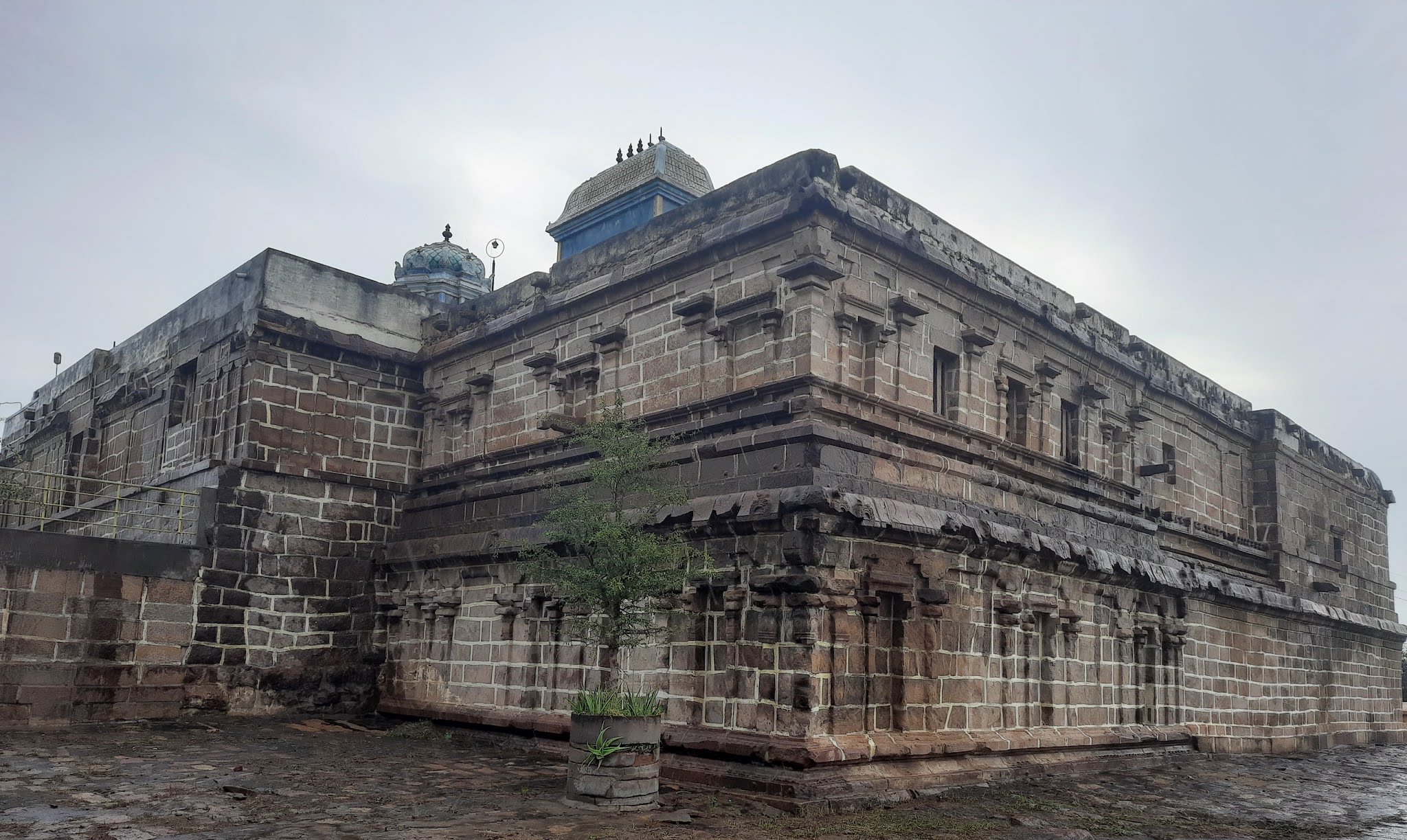
Vedantha Desikar Srinivasa Perumal Temple Mylapore

A Mega Samprokshanam took place in 1924 as part of the consecration celebrations of Srinivasa Perumal and Alarmel Mangai Thayar Sannidhi 
The temple has over the last century become one of the most popular temples in the city with round the year utsavams
In the summer of 1924, brothers Srinivasan Iyengar and Gopalan Iyengar (the grandfather of former Ranji Cricketer and MD of The Hindu K Balaji - https://prtraveller.blogspot.com/2020/09/a-blossoming-cricket-career-was-cut.html) made a generous financial contribution to the consecration of the Perumal and Thayar Idols at the Vedantha Desikar temple in Mylapore that was acknowledged in the speech by A Rangaswamy, the then Editor of the Swadesha Mitran on the Mandalabhisekam day end of July of that year. As an initial contribution made in memory of their father Kasturi Ranga Iyengar, the first Chairman of the Electoral Board, they donated Rs. 1000 towards the consecration. Over the following decades, The Hindu’s family members have been closely associated with the temple and the conduct of the utsavams. Till the middle of the 20th century, The Hindu family would bring bullock cart loads of Homam items and provisions for Thathiyaaraathanai for the utsavams at the temple including for the Pavitrotsavam which has been one of the grandest utsavams at the temple. It originally began as a three day Utsavam, expanded to five days and then for the last several decades has been a seven day utsavam with a Maha Poornahati on the final evening.

The Hindu family’s early contribution
The Mandalabhisekam on July 27 1924 was attended in the morning by large number of devotees. Anchored by Rajam Bhattar of Devaraja Perumal Temple, Kanchipuram (Conjeevaram), the ceremony was conducted as per the Pancharatra agama,  reported The Hindu in a city page story that week.

That afternoon, Rangaswamy emphasised, in a short and lucid speech, the importance of the shrine in satisfying the legitimate religious requirements (of having a Perumal and Thayar Sannidhi at the Vedantha Desikar Temple) of a large section of the people in Madras and prayed for the young people in the locality to live up to the high Hindu ideals of devotion to one’s deity and religious tolerance.

While the consecration of Perumal and Thayar Sannidhi took place in 1924, the Vedantha Desikar Temple itself is said to be over 300 years old.

On that Mandalabhisekam day, special reference was made to the contributions of the members of the Vembakkam community including the late V Bashyam Iyengar’s family, VC Seshachariar, members of the late V Desikachariar’s family and Justice VV Srinivasa Iyengar, who was also the President of the Electoral Board that year.
         The Early Patrons - Kasturi Gopalan Iyengar and Kasturi Srinivasan Iyengar

In that speech, Rangaswamy thanked the generous contribution made by Srinivasan and Gopalan Iyengar of The Hindu. This speech was followed by a lecture by Ananthachariar of Pachaiappas College who extolled the greatness of Srinivasa Perumal.

An announcement was made that day that an Endowment fund of Rs. 4000 was being planned for the  maintainence of the temple and contributions from the general public was sought for this purpose. 

Grand Procession of Perumal, Pey Azhvaar and Desikar
The Hindu reported that on the evening of July 27, there was a grand procession of Srinivasa Perumal, Pey Azhvaar and Vedantha Desikar around the four Mada Streets. Late in the evening, Araiyar Srinivasarangachariar of Srivilliputhur presented Abhinaya of Krishna Leela, one that went on well into the night (this writer wrote a story on his  grandson earlier this decade in The Hindu Friday Review and on this blog - https://prtraveller.blogspot.com/2013/08/araiyar-srinivasachariyar-srivilliputhur.html).

A Swamyam Vyaktha Perumal Idol!!!
N Sowmyan, who retired a couple of decades ago as AGM of United India Insurance, was a trustee for three years in the late 1990s. Born in 1901, his father Nelvoy Narasimhachar was in his late 20s when he was roped in as a priest within years of consecration of the Srinivasa Perumal and Alarmel Mangai Thayar sannidhi and served at the temple for over three decades till the 1960s. Sowmyan recalls the story narrated to him by his appa almost 70 years ago ‘When the devotees of the Vedantha Desikar temple were keen on the installation of idols of Perumal and Thayar, the then trustees sought the services of the sculptor on Kallukaran street (that was behind the Thanithurai market and the now Mundakanni Amman MRTS station). Much to his delight when he dug up a pit to start his work he heard the noise of strong stone and found the idol in perfect condition. In that sense, I would say our Srinivasa Perumal is a Swayam Vyaktha idol.”
A Scheme Temple from 1908
In April 1908, the Madras High Court promulgated a scheme to govern this temple (with the dominance of the Thenkalayars at that time, it is likely that a dispute between the two sects led to a battle in the court that resulted in the regulation as a Scheme temple) with a board of trustees and that is how it has been for well over a century.

Sowmyan says that the entire zone around the Vedantha Desikar temple was a Betal Nut field owned by the Naidus who were predominantly Thenkalayars.

Electoral Board and the First Trustees
A Vadakalai association was formed where any Vadakalai could become a member. Through a democratic voting system, these members elect a board of 11 members referred to as the Electoral Board which then selects three members as trustees of the temple for a period of five years. In the meeting convened on May 18, 1908, Kasturi Ranga Iyengar of The Hindu was elected as the Chairman of the Electoral Board. T Srinivasa Iyenga was appointed as the Secretary to the Board. C Sesha Iyengar, V Sesha Chariar and L Narayanaswamy Mudaliar were appointed as the Trustees to the temple with A Varadarajan Iyengar as Auditor of the accounts of the temple.
Kasturi Ranga Iyengar - The First Chairman of the Electoral Board - 1908

Veda Parayana Sabha-1905
Set up in 1905. the Veda Parayana Sabha has been organizing Thathiyaaraadhanai and Sambavanai during the big utsavams over the last century. The complete Vedas are recited thrice in a year while the Divya Prabhandham is presented in full a dozen times every year.

The initial decades after the consecration
94 year old K Raman, former MD of Best & Crompton, was born 2 years after the consecration of the Perumal and Thayar Sannidhi. His father KS Krishnaswami Iyengar, who was a Judge in the Madras High Court, later became the Chief Justice of the Cochin High Court. He served as the President of the Electoral Board and also as the Chairman of the Board of Trustees. Raman recalls the first decade after the consecration “In that initial phase of development, Justice VV Srinivasa Iyengar, The Hindu's Kasturi Gopalan and my appa were the three who took great interest in the development of the temple.”
Former MD of B & C K Raman who visited the temple every week for several decades

He remembers the efforts taken by Kasturi Gopalan when there were issues regarding securing the sacred water from the tank “When another temple refused water from ‘their’ tank, Kasturi Gopalan, who always wore a traditional attire and was an ardent devotee of this temple, went to the extent of building an exclusive sacred tank in his own property.”

K Balaji, grandson of Gopalan Iyengar, remembers the tank from his childhood days in the 1950s and 60s "It was a 65ftx75ft tank and for a long time, in those decades, the tank was brimming with water that sometimes went up to the steps especially in years when there was a bountiful monsoon."
                        Ranji Cricketer from the 1970s K Balaji (former MD of The Hindu)

Traditional way of Aradhanam
Way back in the 1920s, Gopalan Iyengar offered a large hearted instant solution when the temple found it a challenge to secure sacred water. Almost nine decades later, well water continues to be used for Thiru Aradhanam at the Vedantha Desikar Srinivasa Perumal temple while in many of the historical temples in the state, taps have been set up near the Moolavar Sannidhi. A few years ago, when there was severe water shortage, the archakas brought well water from Andavan Ashramam for Thiru Aradhanam. 

For Thotti Thirumanjanam
An important contribution made by Krishnaswami Iyengar was the presentation of the huge silver gangalams in which the deities could be fully immersed and used.
 
Sowmyan’s father had told him that Kasturi Gopalan Iyengar had played a crucial role in the consecration, both in terms of active participation in the celebration as well as making a significant contribution financially "While a formal corpus was not created, it was Gopalan Iyengar who was instrumental in creating adequate finances for the daily Thiru Aradhanam and providing rice and milk everyday to the temple." 

In that first decade, Kasturi Gopalan presented a Thirumangalyam for Moolavar Thayar, a Swarna sacred thread for Perumal with a Pavitram Knot and Vattil for Perumal and Vedantha Desikar. Right from that period, The Hindu family have been presenting Oil and Ghee Tins to light the lamp at the temple, a process that has continued till today.  Later S Rangarajan, son of Kasturi Srinivsan, presented a Velli Padmam for Moolavar Thayar.

Priest for three decades
Nelvoy Narasimhachariar was a Vedic scholar who studied in Madurantakam. Thiru Kosthiyur Sowmya Narayanan was a teacher there. Impressed with the commitment of the young boy, he handed his daughter in marriage to him. Interestingly, he continued the initiation of his now ‘son in law’ in the Vedas. 

Soon after, Narasimhachariar became an archaka at the Vedantha Desikar Sannidhi of Poundarakipuram Ashramam (https://prtraveller.blogspot.com/2021/01/musiri-lakshmi-narayana-perumal-temple.html) on the East Uthira Street in Srirangam. He was not particularly keen to move out of Srirangam and into a city based environment. However, his father in law who spoke to the then trustee VV Srinivasa Iyengar pushed him into making the move to Vedantha Desikar Srinivasa Perumal temple in Mylapore.
Nelvoy Narasimhachar Bhattar at the Sesha Vahana Purappadu with the two Big Kudais that was a distingushing feature of the procession in the early decades

Two decades later, his salary at the temple was Rs. 8 and the entire amount was taken away as rent for the quarters given by the temple. Sowmyan recalls with great delight that despite this, there were no financial constraints at any point in his childhood in the 1940s and 50s “Prasadam was handed out in large quantities to the archakas as part of their daily share. In addition, devotees who were pleased with the devotional rendering of archakas placed good amount of money in the Thattu.”

90 year old Vimala Rangaswamy, mother of TT Srinivasaraghavan (Sundaram Finance's MD who last week announced his retirement from the company), spent her childhood years in Nadu Street in Mylapore (opposite the Kapaleeswarar temple). Her father ANS Raghavan too had made contributions to the temple in the early years.
Vimala Rangaswamy - a Devotee from the 1930s who's seen the big transformation

She recalls the temple as being very small in those years in the late 1930s "My appa was a traditionalist and a disciple of Vedantha Desikar. The temple in Mylapore was the only one dedicated to our acharya and hence this was particularly close to his heart. He would take me to the temple frequently in my school days (National Girls High School). He used to contribute to the development of the temple and the conduct of the utsavams but would not share the specifics of these even to the family members as he always believed that one should not publicise such contributions to temples.”

"As a school girl, I remember the committed service of Nelvoy Narasimhachar. He was a very sincere archaka and devotees used to like the way he performed the archaka service at the temple.”

75 years of Sripadham
In 1946, Sripadham Kainkarya Association was formed as an exclusive group of Sri Vaishnavas engaged in the service of carrying the Lord during processions in all festivals of the Temple. This year will mark the completion of 75 years of their selfless service. During the big utsavams, the Sripadham and the Madapalli personnel slept within the temple complex so as to begin their service early the next morning such has been their commitment at the temple.

The fire that damaged the dwarapalakas
Around 70 years ago on the Deepavali day, the temple was gutted by a fire arising out of the bursting of crackers. A huge pandal had been put up for three utsavams - Desikar Utsavam, Pavitrotsavam and the Adyayana Utsavam. The Pandal that was put up ahead of the Desikar Utsavam would stay on till the end of the Adayayana Utsavam. 

Fire service personnel doused the fire but in the heat that had been generated the Dwarapalakas had been completely damaged. It was the archakas who slogged over the next month to collect enough ammunition to rebuild the Dwarapalakas. Sowmyan was physically present on the day of the fire and distinctly remembers the period that followed the fire “After the closure of the temple at 11am, my appa would carry a large gunny bag (sack) and visit every house in Mylapore asking if they had any old brass vessels to hand out. Soon there was a heap of vessels. It was from the collection of these old vessels that the idols were rebuilt.”

A Heavy Horse Vahana from Malabar Teak Wood
It was in the 1950s under the trusteeship of Advocate NR Raghavachar that Vahanas were built and Brahmotsavam launched. The key differentiator in that period was that the archakas saw this as their own temple and that reflected in the way they performed aradhana and almost lured the residents into devotion.
                        Krishnaswamii Iyengar - Presented the First Horse Vahana

It was Krishnaswami Iyengar who handed the Horse Vahana to the temple in the 1950s. K Raman recalls the quality of the Vahana “It was my appa who presented the first Horse Vahana that was so heavy it required over 20 Sri Patham personnel to carry it in processions. He sourced the teak from Kerala and the Vahana was built with Cochin Malabar Teak. Kasturi Gopalan presented a number of Vahanas during that period.”

A Great Moment – Raksha Bandanam for the first Brahmotsavam
Soolai Srinivasachar (Rajamani Bhattar) passed away end of last month at the age of 89. His wife Pankaja, who had moved to the temple’s quarters in the agraharam soon after her marriage in the mid 1950s, recalls with devotional tears the first Brahmotsavam at the temple within years of her wedding “My father in law (Soolai Raghavachar) had returned from Pushkaram and had been serving at this temple over the previous decade when the trustee of the time asked him to lead the first Brahmotsavam at the temple with Raksha Bandanam. It was also the time my husband joined the temple as an archaka at the age of 25.”
Pankaja Srinivasachar - a witness to the first Brahmotsavam

Over the next four decades, Rajamani Bhattar worked with five different sets of priests at the temple before he retired 15 years ago. The decades starting the 1960s saw the commencement of something new at the temple and devotees specifically came to the temple seeking that. It was a phase that saw the special devotional presentation of Sahasranama Archanai with a Raagam that captured the devotional attention of the visitors.

While his archanai style was unique, he also drew devotees with his Thiru Aradhanam and Alankaram something that Vimala Rangaswamy vividly remembers “He was one of a kind archaka. His alankaram of Perumal and Thayar was very special. Devotees would gather at the temple specifically to see the alankaram of the day, especially during the big utsavams. He would pay attention to minute details in the entire alankaram process. And it was always a delight for the devotees to have darshan of the Lord once the screen opened for devotees.”
 
His son Navalapakkam Ranganathan (https://prtraveller.blogspot.com/2015/02/navalpakkam-ranganathan.html) is proud to have received feedback from devotees belonging to different generations that such a sweet recital had not been experienced before his father’s entry and not in the last 15years after his retirement.

Voyali during Desikar Satrumurai
A distinguishing feature at the temple has been the Voyali on the final day of the Desikar Utsavam that continues to this day. There have been times when Thiru Kudanthai Andavan has made a trip to specifically enjoy the Voyali of the Sri Patham.  Devotees gather in large numbers to watch the Voyali along the agraharam.

Thaligai in large quantities
Another special feature at the temple in those decades was the presentation, in large quantities, of Puliyodharai on Vedanta Desikar Satru Murai night. Devotees would bring big boxes to carry home the prasadam. Similarly Kadambam and Dhadhyonam in large quantities was a feature in Anna Kooda utsavam that followed immediately after Deepavali.

The Devotee Connect 
By the 1960s the temple had become well established with huge tracts of lands firmly in its control. Almost the entire Venkatesa Agraharam and Alamelu Mangapuram belonged to the temple, donated in centuries gone by, by well wishers of the Vedantha Desikar Temple. The focus then turned to Abaranams and Vessels for Perumal and Thayar and improving the Madapalli

TS Santhanam's Family - Presence at temple 
81 year old S Ram, Chairman, Wheels India Ltd., and Director at Sundaram Finance Ltd., (https://prtraveller.blogspot.com/2020/06/tvs-ram-s-cricketer.html) recalls his father TS Santhanam being an ardent devotee of the Vedantha Desikar Srinivasa Perumal Temple “My father was a regular at the temple from the 1950s and he used to take me along when I was a school boy. From those early years, all of us in the family would visit the temple on the occasion of our birthdays and thus we made several visits to the temple each year from the 50s. This tradition continued for several decades.” 
                   S Ram, Wheels India - A Patron for 70 years

“It was my appa’s view that the utsavams should continue to be conducted uninterrupted through the succeeding generations and he was particular that the dedicated archakas of the temple and the Vedic and Prabhandham Scholars should be taken care of, financially.” 

“We have been actively participating and contributing to the Pavitrotsavam, Vedantha Desikar Utsavam, Sankranthi Utsavam and the fourth day of the Brahmotsavam.” 

In recent years, the larger Sundaram Group companies have made substantial contribution to the renovation exercises.

60 years ago, there was a discussion about the requirement of an abaranam for the Lord. When Madabhushi Sudharshan’s wife overheard the conversation as she made her way down the steps, in an instant moment she handed the Oddiyanam around her hip. It was with the proceeds from that that a new Kreedam was made for Srinivasa Perumal.

Over three decades later, when all the jewels were stolen in the Pongal week in the late 1990s, Gomathi (now a sub collector) a long time devotee, who saw Alarmel Mangai Thayar without a single Abaranam, burst into tears and immediately returned with an earring and nose ring after purchasing these from the North Mada Street. By the time the old jewels were recovered, the archakas had secured three times the lost jewels from the devotees within a fortnight. Such has been the connect with the devotees at this temple.

87 year old Kamala Kasturi, wife of legendary Editor of The Hindu, G Kasturi, recalls her mother in law Ranganayaki (wife of Gopalan Iyengar) presenting adornments to Alarmel Mangai Thayar.

Principal revokes the suspension order
An event at the Loyola College while he was in the intermediate led K Raman to the Srinivasa Perumal Sannidhi in 1944. That turned into a weekly devotional visit and continued for well over the next six decades “While I was trying out an experiment in the Chemistry lab, ‘elements’ tried to turn Father Murphy against me and I was rusticated for three years. I was directed by my appa to visit Srinivasa Perumal and invoke his blessings. And the order was revoked. And I turned into a full time devotee of this temple.”

84 year old Natteri Parthasarathy has been associated with the temple for six decades. A Vedic Scholar, who underwent Vedic education in Madurantakam, he has been presenting Vedic Recital at the temple since 1960. He has been the head of the Veda Parayana Sabha and on the Electoral Board during this period. He fondly remembers the generous contributions of leading industrialists and corporate personalities of the time “Over five decades ago, Padma Santhanam, wife of legendary automan TS Santhanam handed to the sannidhi a number of silver vessels.  Later, TT Rangaswamy (father of TTS) presented several pithalai vessels to the Madapalli of the temple.” 
                                            Natteri Parthasarathy - Vedic Recital from the 1960s

Archaka Partnership in the 70s and 80s
Rajamani Bhattar forged a partnership with Azhisoor Srinivasachariar (he joined the temple in the early 70s) through the 1970s and 80s. Throughout the decades of his service at the temple, he was clean with his food habits that came into public focus on the Poornahathi day in one of the Pavitrotsavams few decades ago. 
                                 Alankaram Specialist Rajamani Bhattar

Pankaja remembers the day when she saw the real devotion of her husband and his attachment to Srinivasa Perumal “After he fell down near the Madapalli, everyone at the temple tried to convince him to eat, but he refused to drink even a glass of milk till the Utsavam concluded the next morning at 4am and had his first food 7 hours later at around 11am after Thirumanjanam.” 

Samprokshanam in the 1970s- The Biggest renovation in 50 years
In the 1970s, the temple saw its biggest renovation in over half a century, led by Trustee Varadarajan. Till then, Perumal and Thaayar were close to each other separated only by a wall. The location where one now finds the Ramanuja Sannidhi had been the madapalli for several decades. The Azhvaars were seen just behind the Perumal/ Thaayar Sannidhi where one now finds the Chakkarathazhvaar Sannidhi. Ramar Sannidhi was North of the Perumal Sannidhi (Azhvaars sannidhi now). 

It was during that renovation that separate sannidhis were built for Rama (contributed by VD Ramaswamy Iyengar (Bashyam Iyengar’s family)), Ramanuja, Chakkarathazhavar with Madapalli being taken out to a different location east of the temple.  Originally the temple’s main entrance was further West in front of Vedantha Desikar Sanndhi. It was only later did the current entrance come up. Earlier the Veda Parayanam team comprised of only Vaishnavites. It is only in the recent past that Smarthas too been added to the Veda Parayanam team.

Computerisation in the late 1990s
It was during the trusteeship of Sowmyan that Computerisation was introduced at the temple for the first time. When he made a point to GK Raman the then MD of Sundaram Finance Ltd., he sent three desktops and two printers before Sowmyan returned to the temple that evening. It was also GKR who Sowmyan met when the temple was planning to construct a new chariot. Instantly he called the senior Wodeyar (Ramachandra Medical College) and asked Sowmyan to meet him. And this resulted in Wodeyar signing off a big cheque towards the construction of the chariot. GKR too made a sizeable contribution from Sundaram Finance for the construction of the chariot that now runs during the Brahmotsavam.
                      SF's MD from the 1990s - GK Raman - Paved the way for the New Chariot

The development has been huge in the last few decades. From just one hundi and a couple of service personnel to multiple hundis and a battalion of service personnel, the temple has really grown on the back of the huge devotional wave that has struck temples in recent years. Descendants of The Hindu family such as K Balaji, Nalini Krishnan, Nirmala Lakshman and Vijaya Arun (Vaikunta Ekadasi Muthangi as well as Rathnangi) and those in the Sundaram Group have been continuing to support the temple financially and otherwise in recent decades.

Jayaakya Samhita
In the Pancharatra Agama, this temple follows Jayaakya Samhita, one of the rare karmas out of the 100. In most temples, ‘Padmam’ system is followed while this is one of the few temples in the country to follow this Samhita.  It has been such devotional commitment of the priests for several decades from the 1920s that has helped create a positive vibration at the temple

Delighted at the Transformation 
Vimala Rangaswamy is delighted at the transformation the temple has seen “In my childhood years in the 1930s, this was a small temple with Desikar Utsavam as the main festival of the year. The Samprokshanam that took place a few years back and the grand celebrations of utsavams round the year are symbolic of the great development the temple has seen over the decades. It is almost unrecognizable from what I had seen eight decades ago except for the Vedantha Desikar Sannidhi.”
Former trustee Sathyanarayanan passed away a few years ago. But before his sudden demise, he played a stellar role as a trustee in recovering many of the properties that had gone out of temple’s decades in earlier decades. In recent times, a residential quarters has been built for the service personnel and last month Venkatesa Theertham was opened on a property belonging to the temple overcoming pressure from the powers that be who were keen on the property being handed over to them with the intention of providing such services to the mid and lower income people.

Srihari - Creating the next gen of Prabhandham members
The transformation at the Vedantha Desikar Srinivasa Perumal temple is symbolised in the way the Prabhandham Ghosti has been presenting the sacred verses during the utsavams over the last decade or so. Pankaja Srinivasachar recalls the long row of Vedic Scholars that would go into the East Street in the 1960s “In those years the Vedic Scholars clearly outnumbered the adyapakas. There were over 50 Vedic Scholars presenting the four Vedas during the Pavitrotsavam, Brahmotsavam, Desikar Utsavam and Adyayana Utsavams.”
P Srihari- Transforming the Prabhandham Ghosti

Natteri Parthasarathy’s son Srihari (https://prtraveller.blogspot.com/2015/11/srihari-parthasarathy-prabhandham.html) has been instrumental in creating the next generation of Divya Prabhandham members in large numbers over the last 25 years. A Deputy Editor at the Sports Desk of The Hindu, he would return home well after 1am after ‘making’ the sports pages but for over two decades he has been at the temple at 6am in the morning to initiate the young students into the sacred verses. If there is a vibrant Prabhandham Ghosti today at the temple that easily outnumbers the Veda Parayanam members, almost the entire credit goes to the tireless effort of Srihari.  He is now into the third batch of Prabhandm students, an initiative started way back in 1996. He has ensured that for the next several decades, there are enough Prabhandham experts at the temple to take forward the presentation especially during the large utsavams when the entire 4000 verses are recited.

Sunday, January 24, 2021

Musiri Chandra Mouleeswarar Temple

The financial plight of a long serving hereditary priest in a remote  HR & CE temple
He started with a monthly salary of Rs. 15 in 1975 that has now gone up to Rs. 750 after 45 years
Hereditary priest 63 year old Manicka Sundara Gurukal has been with the several centuries old Chandra Mouleeswarar temple in Musiri for 45 years. The temple comes under the control of HR & CE. After being initiated into the agamas at the Patshala in Thiruvayaru, he joined the temple in 1975 at a salary of Rs. 15. In the coming decades, the salary increased to Rs. 25 per month and then to Rs. 50 and Rs. 100. In the decades gone by there were several service personnel at the temple. But as with many remote temples in the state under the HR & CE, the low salary proved to be a deterrent and others made their way out seeking greener pastures elsewhere and he has been serving almost alone at the temple.

The temple has 14 acres of Nanjai land but the income is not accruing into the temple resulting in the priest remaining to be grossly underpaid after several decades. Despite the abysmally low salary, he has not explored other financially lucrative options for this has been a temple historically served by his forefather and he has seen it as his duty to continue to serve Chandra Mouleeswarar and Karpoora Valli Ambal till the end of his life.

A different tale at the Trustees run Perumal Temple
Half a Kilometer South of this temple is Musukonda Chozha period Laksmi Narayana Perumal Temple (https://prtraveller.blogspot.com/2021/01/musiri-lakshmi-narayana-perumal-temple.html), one where the hereditary Trustees, the Rayar, secured an order in 1929 to run it as an 'Exempted' temple. The trustees there are paying a salary to the priest there that is several multiples to the one paid at this Saivite HR & CE run temple.

With the financial challenges at the temple, his son Parameshwaran has now taken up a job as a Sanskrit teacher in Trichy while the father continues to be at the temple everyday of the year.
                    Current State of the AMBAL SANNIDHI

Mid Way halt to the Restoration Exercise
In addition to the financial challenges, there are other issues he has to encounter. With a few sannidhis in dilapidated condition and a mandapam having collapsed, the temple has been undertaking restoration of these. But after the district committee cleared the restoration the state committee has put the repair  works of the sannidhis and the damaged Vahana mandapam on hold half way into the exercise and the priest has had to face the wrath of the devotee donors for no fault of his. There are not many to take up his cause and find justice for the over four decades of his dedicate service at the temple.

This section had featured a story on the restoration issues that remote temples have been facing in the last few years following the direction by the Madras High Court to route all restoration cases through a six member panel. The panel has faced many issues and that has resulted in the number of restoration cases falling drastically (https://prtraveller.blogspot.com/2019/02/renovation-issues-in-tn-temples.html)  in remote temples with restoration applications pending clearance for many years.

After 45 years, he is now paid a salary of Rs. 750 per month.

The temple where Chandran performed pooja to liberate himself from Dakshan’s curse is now in bad shape with restoration work in multiple sannidhis having come to a halt and questions raised by the donors.
The priest continues to perform his service in as sincere a way as possible with Thai Poosam and Shasti Utsavams being two celebratory occasions at the temple. Devotees born on Mrigaseesha star visit the temple and invoke the blessings of Ambal Karpoora Valli. 

The Temple was improved upon by Vijayanagar and Nayak Kings. One finds several inscriptions inside the temple, many of which in bad condition.A stone sculpture just outside the Swami Sannidhi of a service personnel indicates the contribution of the Nayaks to this temple.
Manicka Sundara Gurukal's case is a reflection of the stark reality of long serving priests in historical remote temples. It is on behalf of such priests that Periya Nambi Narasimha Gopalan of Kulasekara Azhvaar Rajagopalaswamy temple in Mannar Koil, near Ambasamudram filed a case in 2018 for fair wages for priests in remote temples in Tamil Nadu (https://prtraveller.blogspot.com/2018/04/mannar-koil-bhattar-priest-salary-case.html). The High Court verdict is still awaited in that case.

It is hoped that one day the unflinching devotional service of Manicka Sundara Gurukal will be rewarded.

The temple is open from 7am to 12noon and 5pm to 8.30pm. Contact Gurukal @ 94435 15974.

Musiri Lakshmi Narayana Perumal Temple

Devotional Revival at the Musukunda Chozha Period Temple with the arrival of a new priest 
Paravakottai Andavan spent the Pre Acharya years in the agraharam in Musiri
Chakkarathazhvaar consecrated today as part of his Centenary Celebrations
Located 35kms West of Srirangam Divya Desam on the Gunaseelam - Thottiyam highway is the Musukunda Chozhan period East Facing Lakshmi Narayana Perumal temple in Musiri on the banks of Cauvery.

Chozha King's Presence here
On a return trip after his victory in one of the battles, Musukunda Chozha is believed to have stayed in Musiri during the month  of Aipasi and invoked the blessings of Lakshmi Narayana Perumal after having ‘Tula Snanam’ in Akanda Cauvery. In memory of his visit, this place came to be referred to as Musukunda Puri which over time has become ‘Musiri’.

Pre Acharya days of renouned Poundarikapuram Ashramam Head
It was here in the agraharam that Paravakottai Gopala Desikan Mahadesikan of the Poundarika Puram Ashramam spent the early decades of his pre acharya life as a Sanskrit Pundit and a librarian in the Govt Boys School in Musuri.

The current Trustee of the temple remembers the days when he was classmates at school with the current  Acharya of the ashramam.

It was from his house in the agraharam that Paravakottai Andavan walked away East towards Srirangam leaving his family behind.

The current trustee Ananda Theertham remembers his classmate letting out a huge cry on his father going away from the family but as is the process of those getting into Sainthood, he did not turn back that day and took the long 35kms walk to Srirangam.
It was Paravakottai Andavan who chalked out a clear set of aradhana krama for Lakshmi Narayana Perumal and the Utsavams to be conducted by presenting sacred verses in Sanskrit on the Perumal of Musiri. He also organised and presented a number of Kalakshepams here in Musiri.
An Exempted Temple
In 1929, the Rayar Family (another set of them manage the Koviladi Appa Kudathan Divya Desam) secured an official order for this temple to be categorized as an ‘Exempted’ Temple and to run the temple based on the hereditary rights of the Rayars (Gunaseelam Prasanna Venkatesa Perumal temple secured an order in 1932, following the order given to this temple) - https://prtraveller.blogspot.com/2009/02/gunaseelam-prasanna-venkatesa-perumal.html.

It was Pichumani’s (the well know Sthalathar of Gunaseelam) grandfather who performed aradhana at the Lakshmi Narayana Perumal temple in Musiri all those decades ago.

From Corporate life to a remote temple archaka
Balaji Bhattar, with a MBA from St. Josephs Trichy had worked with WIPRO in the IT industry for a few years before the initiation from the current Head Paravakotyao Chinna Andavan (son of Paravakottai Gopala Desikan Maha Desikan) of the Poundarikapuram Ashramam to quit the high paying corporate job and to dedicate the rest of his life in service of the Lord. His wife and children too have been taking their lives in the direction of the Lord. His wife has a Masters in Prabhandham and is currently pursuing a PHD in Prabhandham while his two young sons are looking to assist their father in his day to day temple activities.
Festivals
Since the arrival of Balaji Bhattar, a number of the utsavams have been revived to its full glory. Thiruppavadai Sevai is being performed thrice a year – Laddu Thiruppavadai Sevai on the 16th day of Margazhi, Periya Thiruppavadai Sevai on Aani Moolam and Puliyodharai Thiruppavadai Sevai on the third Saturday of Puratsasi.

On each of the ten days of the Navarathri Utsavam, there is a special ‘dasavatharam’ alankaram with a Horse Vahana procession through the agraharam on the Vijayadasami day. There are historical stone carvings of Dasavatharam idols atop the Vimanam at this temple.

Lakshmi Narayana Perumal is adorned with Sandhana Kaapu on the Pongal day, while Laksha Archanai is performed through Margazhi with Parivettai Utsavam on Kanu.

On the occasion of Vaikunta Ekadasi, the Lord goes out on a procession through the agraharam on the Garuda Vahana.
Another day when he goes on a procession on the horse vahana is  the occasion of Panguni Uthiram.

Within three months of the temple performing a homam every Shravanam as directed by the current pontiff of the ashramam, a devotee from Madras offered an utsava Chakkrathazhvaar idol, the consecration of which is taking place today Sunday (January 24, 2021) in the presence of the current Head of the Ashramam as part of the Centenary celebrations of Paravakottai Andavan.
There are plans to convert the huge area behind the temple into a mandapam where Kalyana Utsavam can be conducted in the future.

As has been the case with  a large number of temples under the HR & CE administration, the administration here too have found it difficult to secure income from the lessees of the 110 acre land that is under the temple’s possession. It is an ongoing battle that is likely to continue in the years to come.
Contact Balaji Bhattar @ 89035 54426

When here, visit 

Thottiyam Veda Narayana Perumal Temple (https://prtraveller.blogspot.com/2009/01/thottiyam-veda-narayana-perumal-koil.html) - a few kms west of Musiri

and 

Arasalur Navaneetha Krishnan Perumal Temple (https://prtraveller.blogspot.com/2014/09/navaneetha-krishnan-temple-arasalur.html) where too the priest quit a corporate banking job to dedicate his life to service to the Lord


Sunday, January 17, 2021

Thuvariman Rangaraja Perumal Temple

Brindavanam of 40th Jeer of the Ahobilam Mutt at Thuvariman highlights his achievements
Street Procession of the Lord, Bhajanai in the Vibrant Agraharam and Thathiyaradhanai to several hundreds on Puratasi Saturday were special features at the temple on the banks of the once famous Kiruthumal River
Located just under 10kms West of Madurai enroute Sholavandan Janaka Narayana Perumal temple  and Kuruvi Thurai Ratha Vallabha Perumal (Guru) temple is the Rangaraja Perumal temple in Thuvariman at the foot of Nagamalai on the banks of Kiruthamal River. In the not so distant past, there was a vibrant agraharam with street processions of the Lord.

The construction of the temple
80 year old S Venkatraman says that his forefathers were original inhabitants of this historical agraharam “Our forefathers came from Dwaraka and settled down here several centuries ago.  When famine struck, God appeared in their dreams and asked them to build a Perumal temple.”

Street Procession
He recollects the years when the Lord used to go on a procession on the occasion of Sri Jayanthi “Following Homam and Thirumanjanam, the Lord used to go till the end of the agraharam that was full of traditionalists. On the occasion of Rama Navami, Homam was conducted at the temple with a Vedic Scholar reciting the Ramayana.”
Thathiyaradhanai on Puratasi Saturday
Till the 2nd half of the century gone by, Puratasi Saturdays witnessed big celebrations at the temple with the residents presenting Bhajanai carrying their own Harmonium presenting devotional songs through the long agraharam with lot of greenary around and one could see tall trees, some of which have survived the infrastructure developments around this region. On the 5th Saturday, Thathiyaradhanai was presented to several hundreds of devotees who gathered near the temple.

Margazhi Utsavam too is celebrated with Pongal distributed to residents every morning after the recital of Thiruppavai.

Kiruthumal- A once Famous River
It is in Thuvariman that one finds Naga Malai, one of the three historical hills of Madurai – the other two being Yaanai Malai (https://prtraveller.blogspot.com/2009/12/yoga-narasimha-narasingam-madurai.html) and Pasu Malai. Venkatraman remembers the overflowing Kiruthumal River from his childhood days “The river originated from Thuvariman and used to flow wide and long through the city winding its way around Koodal Azhagar Divya Desam. Its legend dates back to the Matsya Avatharam.” (https://prtraveller.blogspot.com/2017/12/koodal-azhagar-pallandu-utsavam.html)
It is difficult to visualize that in the decades gone by, the river was so pure and clean that devotees had bath in the river “The 43rd Jeer of the Ahobilam Mutt had bath in the Kiruthumal River when he visited Thuvariman.”

However, with the rapid development of the city over the last couple of decades, the river has been polluted and contaminated and the possibility of a sacred bath before a visit to the temple and the Brindavanam has become a thing of the past. 
                                               
Brindavanam of 40th Jeer
Just adjacent to the temple on the banks of the Kiruthumal River is the Brindavanam of the 40th Jeer of the Ahobilam Mutt Sri Ranganatha Satakopa Yateendra Maha Desika who attained Paramapatham this week 98 years ago. 
The highlights of his achievements have been engraved on a stone plaque inside the Brindavanam at Thuvariman. These include driving away the ‘Brahmma Rakshasha at Ahobilam. Venkataraman says that not too many dared to visit the historical divya desam fearing the Rakshasha. It was the 40th Jeer who drove away the Brahmma Rakshasha and paved the way for devotees to visit Singavel Kundram (https://prtraveller.blogspot.com/2020/11/ahobilam-temple-restoration.html). The Thiru Nakshatram of the 40th Jeer is celebrated in Thuvariman.

A Devotional Influence
Retired HOD (Sanskrit) of Madras University Professor Padmanabhan recalls the impact on a lady devotee who had visited the Thuvariman temple on her way from Dindigul to Madurai. She felt a sudden devotional wave had struck her after her presence at the temple and Brindavanam and in a trance scribbled something on a paper in Sanskrit. Interestingly, she did not know the language at all. Unable to fathom what she herself had written, she was directed to the Professor who much to his delight found that to be the Dhaniyan of the 40th Jeer of the Ahobilam Mutt. Such is the devotional influence of the Thuvariman temple on devotees.

Like with many other historical towns, the original inhabitants left Thuvariman and the agraharam about 50 years ago seeking greener pastures in bigger cities and very few traditionalists are left now. In recent decades, it is Venkaraman who has anchored improvements both at the temple as well as the Brindavanam. In the margazhi that has just gone by, residents from Thuvariman and nearby visited the temple early in the morning in good numbers listening to the Thiruppavai verse of the day. They also enjoyed the akkara vadisal that was presented on the 27th day of Margazhi. 
It is hoped that one day in the near future some of the original inhabitants will return to the once vibrant agraharam at Thuvariman and may be have bath in the cleaner and purer Kiruthumal River.


How to Reach
Thuvariman is just under 10kms from Madurai on the Arappalayam-Sholavandan road. Buses every 10 minutes from Periyar Bus Stand towards Thiru Vedagam/ Sholavandan. Auto from Madurai Junction  (https://prtraveller.blogspot.com/2020/01/madurai-junction-executive-lounge.html) will cost Rs.150.

Wednesday, January 13, 2021

Uyyakondan Thirumalai Ujjevanathar

Saint Poets praised the Rock Temple as Thiru Karkudi
Located 7kms West of Uchi Pillayar Koil in Tiruchirapalli on the banks of Uyyakondan Canal is the Saint Poets praised Ujjevanathar Rock temple in Uyyakondan, one of the 27 temples administered by Dharmapuram Atheenam. The temple is built atop 30 feet rock. Around the rock is an equally tall square stone wall. Further away in the outer prakaram is another stone wall just as high as the other two. There are five prakarams in the temple. A new five tier Raja Gopuram was built about a decade ago as part of the renovation exercise undertaken by the Atheenam. 

Greenary all around in Sundarar’s Praise
Sundara Moorthy Nayanar who reached here from Venjamaa Koodal praised the location as on being full of greenery
கடியாà®°் பூà®®் பொà®´ில் சூà®´்ந்து  திà®°ு கற்குடி 
கரையாà®°் சோலைகள் கந்தாà®°் சோலைகள் காà®°ாà®°் பூà®®் பொà®´ில் சூà®´்
While high rise buildings have taken over around the temple, in the not so distant past one could get a glimpse of the greenery around Trichy and the over flowing Cauvery from atop the hill. 

Historical Name
Inscriptions dating back to the Chozha period refer to the Lord as Uchinathar, Uyyakondan nathar, Vizhumiyaar and Vizhumiya Devar and the location as Nandi Varma Mangalam. Sembian Maha Devi donated lands for Koil Pooja and refers to the canal as Vairamega Canal. 
It is from the well in the third prakara that water is brought for Abhisekams. Inscriptions dating back to the rule of Rajendra Chozha refer to donation of paddy made specifically for the conduct of Abhisekam on his birthday on Thiruvathirai. 

Karan Invoked Aalvadayar
At the foot of the rock temple is the Karan (Karan Dooshan of Ramayana period) invoked Aalvadayar temple while in the North East of the hill temple is the Idai Theerthavar Sannidhi.

In memory of Markandeya’s pooja at Uyyakondan invoking the blessings of Ujjevanathar to free him from the timing of his early death, there is a stone sculpture in front of Nataraja Sannidhi at this temple.
Thiru Gnana Sambandhar reached here from Thiru Mazhapaadi and sung praise of the Lord. Thirunavukarasar (Appar) came here after visiting Thiru Painjali and says that he found the Ambal here
காà®±்குடி கற்பகத்தை கண்ணாà®° கண்டேன்  
Thai Poosam- Congregation of Lords
On the occasion of Thai Poosam, Ujjevanathar and Ambal make a trip to Somarasampettai with Vayalur’s Kumarar too joining them there for a grand celebration.

Uyyakonda Nayanar donated lands for the conducted of 12 day Utsavam in Vaikasi while Chaturvedi Mangalam Maha Sabha handed 10 kalam Paddy and lands for the conduct of the 4 day Vasantha Utsavam. Raja Raja Chozha donated lands for the conduct of daily pooja and jewels in Gold for festivals.

Panguni Brahmotsavam
There was also a donation of tax free land in Nerkundram for conduct of the pooja and the Panguni Utsavam. There is a specific reference to three Veli land given for the conduct of Uchi Kaala Pooja and celebration of one day during the Panguni Utsavam. South of the temple in the fourth prakaram is  Muthi Theertham, opposite which is the Vasantha Mandapam from where the Ujjevanathar departs on his vahana processions during the Brahmotsavam in Panguni. 
Land was also donated for the conduct of the Artha Jaama Pooja. 
Tunnel for War Times
The Trichy Gazette points to this temple being a Haven during war times in the 18th Century when war broke out between the French, English and the Mysore Kings. Some damage was caused to the huge walls in the shooting that took place from here. During that period, there was also a secret tunnel from the temple that served both as a hideout as well as an escape route. 

The temple is open from 8am to 12noon and from 5pm to 8pm. Contact Rajaram Gurukal @ 9790092887.

Tuesday, January 12, 2021

Srirangam Saathatha Raghuram

Serving with a smiling face at the Moolavar Sannidhi of Ranganathaswamy Temple for five Decades

Even as a young boy, his mind was not attracted to academics. His father took him along as an eight year old to watch the performance of his service and taught him the devotional way of presentation. He was more inclined to be at the temple than in school and quit academics before he entered his teens to join the historical service that he has now been performing for fifty years. While there has been a devotional wave in the last 2-3 decades at the temple, it was not always so and service personnel who served at the temple went through severe financial challenges Here is the story of one such who has served at the temple for five decades without a break. 

Saathaatha Vaishnava S Raghuram belongs to the Saathatha Vaishnava clan, one that had been assigned certain specific services, each day of the year and during utsavams, by Ramanuja at the Ranganathaswamy temple in Srirangam.  They are referred to as Saathaatha Vaishnavas as they signify their status as True Vaishnavas in all respects except wearing the sacred Poonal (referring to them as ‘Poonal Saathaatha’ Vaishnavas). In a number of temples, they are also referred to as Koil Vaishnavas or Dasa Nambis. 

Role of Saathaatha Vaishnavas
In the early stages, many centuries ago, the Saathaatha Vaishnavas were engaged in sharpening and cleaning out the palm leaves to be used by Ramanuja for his writings. They also used to clear his pathway to the temple every morning and would alert the devotees ahead of time all along the way. The devotees would then lay out beautiful kolams to welcome Ramanuja in front of their homes.
Safe Keep of Jewels, possession of Outer Keys, ensuring ‘quiet’ during sacred recitals, leading the procession with ‘Velli Thadi’ and Presenting ‘Kattiyam’ on special occasions were some of the key activities assigned to the Saathaanis 900years ago. During processions, the Saathaatha Vaishnavas have the rights to carry the torch, a service referred to as ‘Thiru Mooga Bandham’. It is also their responsibility to maintain silence around Namperumal during sacred recitals. 

At the Moolavar Sannidhi, Saathathas have the duty of presenting the Tulasi for Archanai and the flower garland each day for the deity as well as ‘Thirumeni Kaaval’. The responsibility to pick up and hand over the provisions from the stores is also on them.  

While in the few years at Srirangam Boys High School, he would go and sit at the nearby Singaperumal Koil during the breaks. His focus was away from academics and on the back of poor performances he quit school before he was into his teens and joined service at the Moolavar Sannidhi. Others in the Saathatha clan (4 different families) chose performance of service at street processions and utsavams but when his father took him one day to the Moolavar Sannidhi, Saaathaatha Raghuram felt blessed to be performing service at the Lord’s feet each day of the year and has stayed there performing the service of ‘Thirumeni Kaaval’ and the services at the Moolavar Sannidhi for the last five decades.

Father’s Devotional message
His father Saathaatha AK Srinivasan served at the Ranganathaswamy temple in Srirangam temple for over six decades  till he was into his 80s ( he passed away last month at the age of 97) handed out a clear message to him as a young boy “There are many options to make money in life but very few get to serve at the feet of Lord Ranganatha through one’s lifetime. Ensure you create a devotional experience for the devotees who come there with different problems and for who those few seconds before the Lord are the most important moments of the day.”

To this day, he follows that strong piece of advice from his father as he describes through each moment of his daily service that stretches from 5am in the morning to noon. To those devotees, who have seen him perform service inside the moolavar sannidhi, his voice is unmistakable ‘Look at the Lord’s feet and invoke his blessings. Watch his face and the Adhiseshan above and pray well’ is a nonstop message that a devotee hears when he is at the Sannidhi.

5 paise as income in his initial phase
While he enjoyed the presence at the Lord’s feet, it was a financially challenging time. He recalls the first decade of his service at the temple “In the late 1960s and early 70s, there was no crowd at the temple. I would get 5 paise a day for my service. We would get pongal in the morning and plain rice in the afternoon and night from the temple. We were contended with that. I would get some bit of sambar and rasam from the neighbours and have my meal.”

Till about the early 1980s, when breaking of coconuts was allowed near the Dwajasthambam, he would get half a coconut once in a while from the archakas that he would take back home for chutney.
He recalls the long wait for the devotees “It would be difficult for many to visualize but there was minimal thattu kaasu in those days. There were not many outstation devotees who made regular trips to Srirangam. I would sit just outside the Moolavar Sannidhi and hope that a few devotees would turn up that day so I could take back home 25/50 paise. I would wash and wear the same Veshti each day of the year.”

Once when several blind school children made a trip to the temple, it was Saathatha Raghuram who provided them the devotional experience as he described the sleeping posture of Ranganathaswamy “The happiness that I saw in the faces of those children remains fresh in my memory. Those sorts of experiences made up for the financial shortcomings.” 

Saathaathas into the corporate world
For many, the financial challenge was too much to take. With very little income from the temple and turnaround not in sight, many in the Saathaatha Vaishnava clan, who lived in the Saathara Veethi of Srirangam(https://prtraveller.blogspot.com/2017/10/srirangam-namperumal-vijayadasami.html), moved on to corporate jobs from the 1980s and away from temple service. But Saathatha Raghuram held on at the Lord’s feet. During that phase, he also made trips to Jeeyapuram and Uraiyur for the long processions of Namperumal crossing the Cauvery in Panguni as part of the Brahmotsavam.

Wife's Role - Tragedy at home
In additional to the financial challenges, there were other hurdles he had to face and overcome early on in life. Tragedy struck him one after another when the dearest of his sisters, who had been married off to an auditor in Azhvaar Tirunagari(https://prtraveller.blogspot.com/2019/06/nava-tirupathi-garuda-sevai.html), died of snake bite at a young age and his own child died prematurely in the 1990s. Unmindful of the setbacks, he continued to perform service with devotion.

During this phase, it was his wife Rohini who played a transformational role in his life to keep his devotion going. His father in law, from Sri Vaikuntam Divya Desam (http://prtraveller.blogspot.com/2008/05/srivaikuntam-vaikunta-nathan-divya.html), had been a Post Master and would stay at Sathara Street in Srirangam during his trips in the 1970s and 80s. Seeing the unflinching devotion of Raghuram in those young years, he had identified him as his son in law very early on despite the presence of other brothers/cousins in the family. 
It was Rohini who took care of the children of his eldest sister after her passing away bitten by the snake in Azhvaar Tirunagari. It was also Rohini who gave him the courage to carry on with life after the death of their child in the womb. 

Saathaatha Raghuram recollects the day when his father took him a second time to the Moolavar Sannidhi “Like he did in the early 1970s, my father took me along to the Moolavar Sannidhi just under 15 years ago and standing in front of Ranganathaswamy invoked the blessings of the Lord to provide me with children so this service that the Saathaathas have been performing for over 900 years could be continued.”

Answering his father’s prayers and much to his delight, 14 years after his marriage, he was blessed with a son who is now already being initiated into temple service. He is hoping to initiate his second son too into service at the feet of Ranganathaswamy.
 
2000s - The Devotional Revival and Huge Crowds
In recent decades, in a complete turnaround crowds have swelled and devotees now do not have more than few seconds. While he encountered financial challenges in the first part of his service waiting hours for those few devotees who would place some thattu kaasu, finding the right words to make devotees happy in the few seconds in front of the Lord was a completely new challenge he has come to terms with in the last 10-15 years. During this period, his finances have grown significantly and his focus in recent times has been to make those few moments devotionally memorable for the devotees

The big financial turnaround in fortunes also led to other challenges, this time physical. Decades of standing in front of the Lord for long hours, eating at odd hours every day and the high stress of shouting out hour after hour in an effort to keep the devotees happy led to physical health related issues when he was into his 50s.

Heart Operation and the Wife's Support
A few years ago, he had to undergo a serious heart operation and was in bed for a couple of months. During this period, he credits his second life entirely to the efforts of his wife "I was almost on death bed. It was Rohini who was the real motivational support cheering me on to my recovery. This month too (margazhi of 2021) she is the one who wakes up first at home at 3am to facilitate my early presence at the temple."

It was with her support and motivation that he has come back now into the Moolavar Sannidhi with a new found devotional vibrancy.

The first decade or two of his service at the temple was financially very challenging and God posted a serious test to his devotional powers. While he did not come through the exams at School and exited early, this examination though a lot more severe has been enjoyable. It is one where he had to capture the hearts of both the Lord and the devotees and he realised very early on that one could not do that without devotion. He considers it a great blessing that God has given him the strength to stay through the course despite all the challenges, financial and otherwise, he had to encounter in life. 

It is possible to make a lot of money in life but the emotions of a presence for 50 years in the Moksham Sthalam on earth is truly a different experience. Providing a happy darshan to every single devotee and seeing their delightful faces every day of the life is an unmatched feeling. Saathaatha Vaishnava Raghuram has experienced that and is looking to spend the rest of his life at the feet of the Moolavar Lord at the Ranganathaswamy temple in Srirangam. 

Thursday, January 7, 2021

Kapaleeswarar Brahmotsavam 2019 2020

The Possibility of a Devotional Bonanza at the historical temple in Mylapore is real
The Devotees could witness this once in a life time occurance of two full fledged Brahmotsavams one after another, in the coming months
This year’s (Saarvari) Panguni Brahmotsavam at the Kapaleeswarar temple is likely to take place in a couple of months time starting the third week of March. But before that, the devotees may be in for a real surprise. One could actually get to witness in the coming months (Thai or Maasi) the Brahmotsavam that had not been conducted last year (Vikari) in the Panguni of 2020 following the lockdown restrictions that were imposed in the middle of March 2020.

Prescription in the Agamas 
The Agamas have laid out clear processes for aradhana and conduct of utsavams during war times and emergencies “As per the Saivite Agama, a Brahmotsavam that could not be held as scheduled due to unforeseen circumstances and put off indefinitely should necessarily be conducted in the coming months (before the next Brahmotsavam) once normalcy returned”, says Kapali Vaidhyanathan Gurukal, a long serving priest at the Kapaleeswarar temple 
As early as the initial phase of the lockdown in 2020, the priests of the Kapaleeswarar temple had presented various options to the authorities for the conduct of the Brahmotsavam. However, the extension of the lockdown for well over six months and the restrictions on street processions meant these options could not be explored earlier. 

Last Year's Brahmotsavam likely in Thai or Maasi?
With the permission granted recently to the street procession around the four Mada Streets for the Nataraja Utsavam in Margazhi and the further easing of restrictions on temple processions across the city with Street Processions for Andal's Neerattam having begun this week in multiple temples and the Varadaraja Perumal Procession on the occasion of Hastham in Thiruvallikeni last evening, it is likely that the Kapaleeswarar temple would explore the possibility of conducting the Brahmotsavam relating to Vikari year (Panguni of 2020). If a decision is taken in that direction, it will have to be conducted before the start of this year’s Panguni Brahmotsavam ( the Utsavam is likely to start in the third week of March with Theerthavari on Panguni Pournami Sunday March 28). 

It may be recalled that the Kapaleeswarar temple had performed a one off Thiru Kalyana Utsavam in the first week of June last year without the physical presence of devotees. 
Brahmotsavam should be full fledged 
As per the Vaishnavite agama, a Brahmotsavam that could not be held on its original date if conducted later after normalcy returns should be done with the full and active participation of the people and not just as a formality for the records, says Agama expert Vasan Bhattar of the over 1000 years old Therazhundur Divya Desam near Mayiladuthurai. 

Devotional Bonanza -Two Brahmotsavams within a short period
If the discussion fructifies into performing last year’s Brahmotsavam in its full form with Vahana processions and the authorities grant permission to conduct the grand utsavam that had not been held last year, then it will be a once in a life time devotional bonanza for devotees of the Kapaleeswarar temple with them being able to witness two Brahmotsavams one after another probably within a month of each other. 

54 year old IT Enterpreneur TN Venkatanarayanan, who has been a resident of Nadu Street all his life, has been watching the Panguni Utsavam every year from the 1970s from a vantage point on the first floor with several devotees thronging his house for that exclusive view of Arubathu moovar and the Chariot Procession. 
He remembers the Utsavam creating a carnival atmosphere around the Mada Streets “The entire family was involved in the festivities. It was a great feeling to host several friends and relatives during the festival. We used to invite them, proactively. Our house was full of guests and visitors during this period.” 

Venkatanarayanan says that it was during such times that children listened to legendary temple tales relating to the Saint Poets “As families got together for the utsavam, the elderly used to narrate historical stories about the temple, the significance of the processions that kept the children engrossed. There was a charm attached to the festival. Those that were part of the utsavam always saw it as a spiritual and divine blessing. The utsavam always provided the people with positive vibration that energized them in their day to day activities” 

While the cancellation of the utsavam in the Panguni of 2020 was a big disappointment for him and many other Kapali devotees, the prospects of two Brahmotsavams in the coming months closely following each other may be pleasing to their ears. 

This section will track the developments over the next fortnight.