Tuesday, June 19, 2018

SVPB Udumalpet Soundararajan

The Industrialist who changed the face of cricket in the Coimbatore region 
His wards, M Senthilnathan  captained India in the Inaugural U19 World Cup and UR Radhakrishnan almost made it to the Indian Test Team in New Zealand
His Two Early picks  - S Sukumar and NP Madhavan - have remained loyal to him for several decades
For over three decades from the 1930s, the Udumalpet Cricket Club (UCC), one of the oldest cricket clubs in the Coimbatore district, languished at the bottom of the circuit. Time and again, they were thrashed by teams in the Coimbatore league that dashed the young dreams and hopes and led to a shattering of confidence and self belief.

And then arrived on the scene a young 20 year old visionary who was to go on to transform the way cricket was played in the region. He provided the local cricketers from Udumalpet with a cricketing exposure that was hitherto not seen in the region and helped local talent reach the summit.

The Grand Son of the legendary industrialist GV Govindaswamy Naidu (who had founded the Sri Venkatesa (Textile) Mills in 1933), M Soundararajan returned to Udumalpet in the early 1960s soon after graduating from Loyola College to head the newly launched Paper Mills (his grandfather was 80 years old then), an expansion that was driven by the then Industries Minister R Venkatraman.

Soundararajan was a University level tennis player. The sports lover in him could not accept the sad state of cricket in the district. There was very little help for these cricketers and the talent just did not blossom for want of exposure and guidance. Every time UCC went to play a match in the Coimbatore league, he would be disheartened to hear the story of yet another loss. At some point in that low phase in the late 1960s, the pain became unbearable. He was simmering inside to correct this anomaly.

He wanted to really break the shackles and prove to the world that cricketers from a remote village too could play as competitively as their city counterparts and villages too could produce outstanding cricketers.

The Tease that led to the transformation
In the early 1970s, his sister married the owner of Ramakrishna Steels, a company that was actively involved in the Senior Division league in Coimbatore. Through the early part of that decade, each time he went to his brother in law’s house, he had to hear the long story of how Ramakrishna Steels handed out a severe beating to the Udumalpet team and how incompetent his team was. This infuriated Soundararajan further. He just could not take it any longer. He promised to himself after one such meeting that he would revolutionise the way cricket is played in Udumalpet and went about it aggressively.

Ropes in Ram Singh to Coach Udumalpet Players
He roped in the legendary left arm spinner AG Ram Singh to coach the cricketers in Udumalpet one and a half months in a year. For the first time in their lives, the young cricketers of this remote village were closely monitored by a top cricketer who taught them the nuances of batting and bowling. 
Ram Singh was extremely good at initiating technical points into the minds of young cricketers and they clearly benefited. Soundararajan was delighted at seeing some improvement in the cricketers with some bright individual performances but the team continued to lose badly at the hands of the top teams in Coimbatore. He simply could not digest the fact that his team came back every time with the heads down.

The First Signing - From Salem to Udumalpet!!!
In 1974, on the suggestion of AG Ram Singh, he called on a young 17 year old college boy from Salem. The boy had just completed his first year B.A and his coach in Salem, Narayanan, spoke highly of him. After watching him at the nets, Soundararajan asked the young boy to continue his studies from Udumalpet. It was an improbable suggestion. For a teenager to think of shifting from Salem to Udumalpet just for the sake of cricket was something no parent could contemplate in the 1970s. However, Soundararajan was insistent on securing the boy and convinced him and his father. The boy’s coach Narayanan too endorsed the move. And indeed he shifted base to Udumalpet that same summer. Soundararajan provided him accommodation at a house on Ansari Street and enrolled him in the 2nd year in a college in Pollachi. 


He signed the boy for the SVPB (Sri Venkateswara Paper Boards) team for that season. That youngster played for combined districts and the University team in that phase also scoring a century on debut in the University match against Calcutta. Immediately after he completed his graduation a couple of years later, Soundararajan offered him a ‘cricketing’ job in the company in 1976. 
Opening bat S Sukumar was the first big signing of Soundararajan and remained one of his favourite cricketers. The signing of Sukumar was an indication of the aggressive intent of Soundararajan.

The 2nd Batch - Peter Fernandez and S Srinivasan
A couple of years later, Soundararajan signed in Peter Fernandez from Madras. And soon after came S Srinivasan, from Bombay, a cricketer who had played alongside Sunil Gavaskar. With the hiring of these three, SVPB’s performance began to improve. By the beginning of the next decade, SVPB had become lot more competitive. But the big wins were still elusive. 
A young Soundararajan is seen standing third from right

Following AG Ram Singh, Soundararajan brought  in the revered Audi Chetty as the Coach. He was to enjoy a great relationship with the players for well over a decade and was an integral part of the team that won many championships in the 1980s.

Roping in a Ranji Player
In 1982, NP Madhavan (http://prtraveller.blogspot.com/2016/05/np-madhavan.html), who had already had a century under his belt in Ranji Trophy and was working with IOB in Madras mentored by V Krishnaswamy (http://prtraveller.blogspot.com/2016/08/krishnaswamy-v.html), came to Coimbatore to explore options with LMW, a strong cricket team in the Coimbatore First Division. However, former Ranji star B Kalyanasundaram (http://prtraveller.blogspot.com/2011/08/kalli-b-kalyanasundaram.html), who had moved to LMW at the end of his Ranji career, did not meet the financial expectations of Madhavan and was not ready to go the extra distance to secure Madhavan. And hence he returned quietly to Madras. However, in a dramatic turn of events, he was asked to come and meet Soundararajan within 24 hours. Madhavan took the Kovai Express in the morning and returned to Coimbatore. Soundararajan was so impressed with the stroke play of Madhavan as well as his conduct that he was inclined to hire Madhavan but the latter could not take an immediate call.

To leave a banking job and to move to a remote location such as Udumalpet was unthinkable in those days.  Soundararajan was determined, though.  Very soon, he met with Madhavan’s father and asked him to permit his son’s move to Udumalpet, in a way similar to how he had convinced Sukumar’s father the previous decade.

Madhavan’s father belonged to a middle class family and Madhavan had taken a housing loan from the bank for the construction of a house in Madras. These were points of worry as well for the family. Soundararajan assured Madhavan’s father that he would take care of his son and in return wanted a 3-5 year commitment from Madhavan. Not only did Soundararajan offer him more than double of what he was earning at that time, he also committed to taking care of the housing loan.

Madhavan’s father relented and Madhavan quit IOB to join SVPB in Udumalpet. It was Soundararajan’s biggest signing to date – An in-form Ranji player moving from a banking job in Madras to his team in Udumalpet. In his very 2nd match in Coimbatore that season, Madhavan slammed a century at the Forest College ground to secure SVPB a victory, leaving Soundararajan delighted.

Madhavan looks back at those few days in complete disbelief ‘I never had any plans to move to Udumalpet. Since LMW was looking for players, I came there along with another close cricketing friend but returned immediately as that did not materialize. My plan was to continue in Madras. The call from Soundararajan within hours of my return took me by total surprise. Only after my father was fully convinced that it was a good move for me and only on his direction did I accept the offer.”

The 1980s – The Big Turnaround for Udumalpet
Both Madhavan and Sukumar were terrific contributors for SVPB at the top of the order during the 1980s. 

That phase remains Soundararajan’s happiest moments in life. SVPB began beating the then star teams LMW and Ramakrishna Steels in the Coimbatore league, quite comfortably. They began winning Championships in Coimbatore. The team performed remarkably well in outstation tournaments as well and had become so strong that Soundararajan had a 2nd team (Sri Venkatesa Paper Mills) in the first division league in Coimbatore. Buoyed by the success, Soundararajan gunned for bigger roles for his players.
SVPB Under Brijesh after winning the Championship at the Forest College Ground

Just providing opportunities in the Coimbatore league for players from Udumalpet was not enough. He wanted the budding talent to blossom in the first division of the prestigious league in Madras. By the time he was in his 40s, Soundararajan had taken many big business risks in his life and he says ‘this was one such’. He wanted to prove that players from small town could achieve big if their talent was harnessed properly at the right time. And thus he took over the running of Globe Trotters in 1984. In the years that followed, he spent an unbelievable sum of money on cricket, a size that was unimaginable for a team from the districts but Soundararajan gave them the best of exposure and a platform on which they could learn and grow.

Securing Brijesh Patel for SVPB
Soundararajan had a business relationship with India and Karnataka star Brijesh Patel and his family for his textile business. In one of those business meetings, he asked if Brijesh could play for his team and thus he secured for SVPB, the biggest outstation signing in TN cricket at that time. Brijesh was a big brand name in national cricket having amassed runs a plenty in Ranji Trophy and to sign him on for SVPB was a coup that Soundararajan struck.  Brijesh was a father figure in the team and he mentored many of the upcoming players in Udumalpet helping them graduate to the next level in the 1980s. 

“Brijesh Patel was the greatest inspiration to all our cricketers in the 1980s. He molded the entire set of players into a strong unit and brought us many trophies” says the 75 year old Soundararajan as his eyes light up recounting those memories of signing up Brijesh.

Beating a strong SPIC team captained by Venkataraghavan and winning the MCC Dyanora Trophy beating Chemplast remains etched in Soundararajan’s memory.

Big Hopes on Two Local Boys
It was also the phase when he signed up the upcoming VB Chandrasekar (http://prtraveller.blogspot.com/2016/01/vb-chandrasekar.html),who had come to Coimbatore to pursue his collegiate education at CIT , teenagers UR Radhakrishnan and M Senthilnathan (both local boys in Udumalpet). It was Soundararajan who signed up the teenager Robin Singh in the mid 80s and also supported his college education through that period. It was he who gave the big early exposure in Indian cricket to Robin Singh.

Soundararajan had big hopes of the two local boys whom he had seen from their school days. He was confident that Radhakrishnan and Senthilnathan would scale the peak. 

Within a couple of years, Senthilnathan (http://prtraveller.blogspot.com/2013/10/cricket-stories-of-1990s-torturous.html) had elevated to the national level captaining the India U 19 team to Australia much to the delight of Soundararjan. Senthilnathan was part of the Ranji Trophy winning team in 1987-88. But it was downhill for him since and did not quite meet Soundararajan’s expectation of him. 
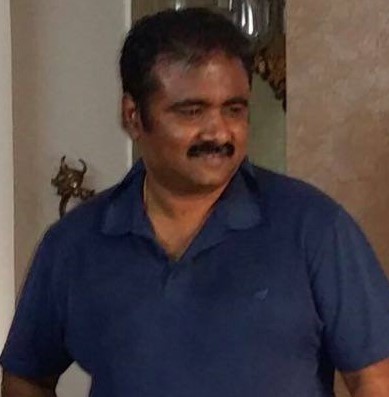
“Senthilnathan was immensely talented and it was a great moment for all of us when he captained the India U19 team in Australia. He was fit as a fiddle in those early days and his fielding was a delight to watch. But somehow his attitude changed after that, he put on a lot of weight and was never the same again. He should have definitely played higher grade of cricket for the talent he possessed” says Soundararajan as he looks back at Senthilnathan’s downfall with a tinge of disappointment and sadness. 

UR Radhakrishnan (http://prtraveller.blogspot.com/2018/03/ur-radhakrishnan.html) was signed up as a young teenager in the early 1980s after a casual stint at the open cricket ground in Udumalpet. By the end of that decade, he was on the verge of selection for the Indian team in New Zealand. He scored a double hundred and a century in Ranji Trophy as well as big hundreds in Duleep Trophy. Radhakrishnan was desperate to play for India and fulfill Soundararajan’s vision of producing a player for India from Udumalpet. He knew that the industrialist had pinned his biggest hope on him and he tried to give his best. That unfortunately did not materialize though Radhakrishnan’s non inclusion was not necessarily on merit!!
Radhakrishnan looks back at not being able to make it into the Indian team as his one regret “It was Soundararajan’s dream that I should play for India. He was confident that I would. He encouraged and backed me all the way through my teenage phase. For his sake, I wanted to play for India. The fact that I could not fulfill his dream remains my big regret in life.”

Off Spinner M Subramaniam (Idly Subba) and AP Suresh Kumar too made significant contributions for SVPB in that phase. Kerala Ranji players such as K Jayaraman and Balachander and Karnataka stars such as Prakash and Sanath Kumar too played for SVPB in the 1980s.

It was a golden period for SVPB. Many championships in the Coimbatore League, outstation tournament wins, solid performances in the first division league in Madras made it the happiest decade for Soundararajan in his life.  For some of the tournaments, he brought in big national stars such as Ashok and Rahul Mankad, Balwinder Sandhu and Ghavri to play for SVPB. Legendary Gundappa Viswanath too played for SVPB. It was a great experience for the local boys of Udumalpet to play alongside these legends.  

Madhavan at No. 10, Peter Fernandez bats No. 11 for SVPB
Sukumar remembers a match from that decade. With Ashok Mankad captaining that match, he asked as to how good Peter Fernandez and NP Madhavan were. Soundararajan told him that they were Tamil Nadu state cricketers. Ashok heard him out and told him ‘Okay. Good. Then Madhavan will bat at No. 10 and Fernandez at No. 11’. From losing to local teams in the Coimbatore league, SVPB as a cricket club had gained national recognition.

Sukumar almost had an offer letter on hand from RBI along with off spinner NS Ramesh but he refused to be lured leaving Selvakumar furious at this talented opener opting for an unknown club and corporate in Udumalpet as against the ‘Central’ Bank of India. “For many years, he did not talk to me angered at my decision to continue with SVPB in Udumalpet” says Sukumar looking back at his loyalty to Soundararajan. At that time, the salary at RBI would have been higher but in these four decades he has had absolutely no regrets for the treatment by Soundararajan and the management has been truly amazing.

We still cherish memories of playing alongside Brijesh, GRV, BS Chandrasekar and Ashok Mankad in that period in the 1980s ‘He has taken care of my happiness in a way very few others would have. Such has been the large heartedness of Soundararajan.”

Soundararajan’s drive was the prime reason for cricket to flourish in the Coimbatore region. There was a period in the 1980s when even big named players could not get into the Coimbatore districts team such was the strength of the team. It was Soundararajan who had made it so.

Cricket Support from his two brothers
His brothers - Velusamy and Amarnath too were very fond of cricket. The three of them never missed a single Pongal Test played at Chepauk in those decades in the 60s and 70s. Velusamy and Amarnath supported Soundararajan completely in his cricket initiatives. At different points of time, all of them played for in some form or the other for the teams from Udumalpet. Each of the brothers would take turns to be present for SVPB's matches and would encourage the team in taking on the bigger guns in those early formative years.
Amarnath flanked by Sukumar and Madhavan at the new temple under construction

If Soundararajan led the cricket initiative, it is Amarnath who is now leading the exercise to build the largest Perumal Temple in Udumalpet off Thali Road. Soundararajan is of the view that without the unflinching support from his two brothers he could not have embarked on such a large cricket initiative.

A Great Human Being as well
Sukumar also points to the great human side of Soundararajan  “While he did a lot for cricket in the region, all of us also learnt a lot from him on life. Even when he was well into his 40s, he would never sit in front of his father that was the respect he had for elders. The care he showed for his parents was something one had to see to believe."

"To actually spend in lakhs on cricket in the 1980s when the production was just upwards of 10 tons was a sizeable investment. But such was his passion for cricket and his vision to get district cricketers from Udumalpet on to the next level that he roped in high profile players to help the local players get the exposure of playing alongside top notch cricketers"

"He had the mind to spend a lot of money on cricket and clearly there were a number of cricketers who benefited immensely from Soundararajan and each of us are extremely grateful to him for his contribution to cricket.”
India's Fastest bowler from the 1980s TA Sekar (http://prtraveller.blogspot.com/2013/08/ta-sekar-fastest-indian-bowler-of-1980s.html) echoes Sukumar's sentiments "Soundar is a very good human being and encouraged a lot of cricketers from Udumalpet. He was a good friend of mine. When ever he came to Madras, he would call on me and we would meet at his guest house on TTK Road and have a long and engaging chat on Cricket."

It may be recalled that when SVPB wanted to hand over Globe Trotters after 4years in the TNCA First Division, it was MRF, of which TA Sekar (http://prtraveller.blogspot.com/2013/08/ta-sekar-architect-behind-worlds-best.html) was an integral part, that took over and has since been running the club for the last three decades.

After he joined SVPB, Madhavan struck a century for Tamil Nadu in the knock out of the Ranji Trophy in the mid 1980s and he too had several luring offers “I continued to get many exciting offers through the 1980s from various banks and corporates but Soundararajan took great care of me that I never felt like I missed anything in life. Not once since 1982 did I ever contemplate moving out of Udumalpet and the SVPB Group.”  


Both Sukumar and Madhavan have risen to the post of Vice President in the company and built large and beautiful villas in Udumalpet something that may have been unlikely in Madras. 
                      NP Madhavan's house in Udumalpet

The Cricket Revolutionary from Udumalpet
From being beaten by the smallest of teams in the lower rung of the Coimbatore league in the early 1970s, SVPB emerged as a strong competitive side giving the best of teams a run for their money in the TNCA 1st division, the prestigious Arlem and Tripanuthura tournaments in the 1980s. 

Now 75, Soundararajan closely watches Dhoni on the big screen from his sprawling house East of Udumalpet on the Madathukulam Highway and wonders if one or two from his team could have scaled that peak  in those decades gone by like the small town boy that Dhoni was!!! Two local boys from Udumalpet who studied in the Government school reached the top, well almost. M Senthilnathan captained the Indian U19 team in Australia in the late 1980s and UR Radhakrishnan was on the verge of selection for the Indian Test Tour to New Zealand.
Soundararajan has the greatest words of praise for the two boys who he personally went after – S Sukumar, the first cricketer he roped for his team and NP Madhavan, who he forced to quit IOB and join SVPB "Both have remained loyal and humble for four decades despite their achievements Their contribution, both to our cricket team as well as to our Group has given me great satisfaction.” 
Players from a remote and unknown cricket district of Tamil Nadu had an opportunity to share the dressing room with the best of Indian cricketrs in the 1980s, something that no player in that region could have dreamt of a decade earlier. Coimbatore became the most competitive district in Cricket in the 1980s.

One man was the sole architect of this transformation. The cricketing fraternity of Coimbatore remains ever grateful to him for he revolutionized the way the district cricketers thought and played. He made them dream and helped their dreams come true. He supported them all the way, treated them as his own family, took care of their education, their marriage and even their children’s education and marriage expenses.

He gave the cricketers in the district ‘a never before experienced’ confidence of taking on the big boys in cricket. M Soundararajan was a cricketing visionary who single handedly changed the face of Coimbatore cricket in the 1970s and 80s.

(The story has been subsequently edited for Headline and Content)

Saturday, June 16, 2018

Kongilachan Thirumaligai Srirangam

Ramanuja assigned the service of Thathiyarathanai at the Ranganathaswamy Temple to Koil Kongilachan, one of his 74 disciples

Descendents hope that one day this Kainkaryam at the Madapalli will come back to them 
It is Friday morning and the first day of Aani. The day also coincided with Thiruvathirai, the star of Vaishnavite Saint Ramanuja. 39 year old Ramarajan, a descendent of Koil Kongilachan, the 27th disciple of Ramanuja, is busy performing aradhanam at the Kongu Piratti Koil Kongilachan Thirumaligai in Mangamma Nagar, South of the Srirangam Raja Gopuram, for the Lakshmi Narasimha Idol that Ramanuja had presented to each of his 74 disciples. 

Ramarajan’s father Sridharan Narasimha Acharya, aged 87 years, who had learnt the entire Divya Prabhandham from his father at a very early age was standing just behind him. A frail figure now, Sridharan presented Periyazhvaar's verses praising the different flowers that the Lord likes while his son placed those flowers before each of the idols. 
ஆமாறு அறியும் பிரானே
அணி அரங்கத்தே கிடந்தாய்
ஏமாற்றம் என்னைத் தவிர்ந்தாய்
இருவாட்சிப் பூச்சூட்ட வாராய்

திரு உடையாள் மணவாளா
திருவரங்கத்தே  கிடந்தாய்
மருவி மம்ண கமழ்கின்ற
மல்லிகை பூச்சூட்ட வாராய்’

On each of the Thiru Nakshatrams and on other sacred days in the year, these descendants of Koil Kongilachan perform aradhanam to Lord Lakshmi Narasimhar with the fullest of Bhakti, keeping far away the luring sounds of the mobile instruments.

Ramarajan’s grandfather Aadhi Sesha Narasimhacharya, born in 1901, was a great Divya Prabhandham exponent. He lived his entire life of over eight decades in service to the Lord of Srirangam participating in the Prabhandham Ghosti at the temple. He also performed Samasrayanam for his disciples. 
The legend
Kongu Piratti and Kongilachan belonged to the Kongu region (off Sathyamangalam near Coimbatore). The story goes that the Kongu region had been struck with famine arising out of drought and hence the two reached Srirangam to invoke the blessings of the Lord Ranganatha and Ranganayaki Thayar.

One day, Kongu Piratti was taken aback by hundreds of people comprising of Kings, Acharyas, Devotees and many others falling at the feet of Ramanuja on a street Ghosti. Surprised at the mass appeal of Ramanuja, she went up to him and asked him in full public view as to why everyone was falling at this feet instead of the feet of the Lord. Ramanuja was truly impressed at the confident nature of Kongu Piratti and told her that he had two special mantras that he initiated to people and it was the secret of how one had to live life. When asked if he could initiate that to her, he asked her to come to his place ( Sri Ranga Narayana Jeer Mutt) on the Northern side of Srirangam in front of the Ranganayaki Thayar Sannidhi at the conclusion of the Ghosti.

There Ramanuja initiated Kongu Piratti with the Ashtachara Mantra and Dwaya Mantra.Soon after the initiation, Kongu Piratti heard the news that her home town was filled with rain and that people there were thrilled with the sudden turn of events.

When it was time for her to return to the Kongu region, she went back to the Mutt and met Ramanuja.  She requested him not to get angry with what she was going to say. It was then that Ramanuja showcased how different he was to the incarnations of Lakshmana and Balarama. He asked her what she meant by ‘anger’ indicating that he knew not what anger was. She requested him to initiate her once again with the two special mantras for she had not been able to register it the previous time and now that she was going away to her home town.

Ramanuja's Anywhere, Anyone, Anytime initiation
Ramanuja told her that he would initiate the mantra anywhere to anyone at anytime and there were no restrictions whatsoever. And thus he initiated her a second time with the mantra.  Gathering enough courage, she asked him if he could present her with something that she could keep in memory of the meetings in Srirangam. When he said that he just had a stick and was not in possession of anything else, she requested if she could take the footwear of his that she found there.  And Ramanuja happily presented that to her. 
Subsequently, when the Chozha king created trouble for Ramanuja, he handed the Kashayam Vastram to Koorathazhvan and left the temple town in a White Vastram along with his disciples. For 15 days it is believed that he did not have any food. When he entered the Sathyamangalam region, it is said that Varadaraja Perumal and Perundevi Thayar, disguised in the form of hunters, provided darshan to him and directed him down the hill to a place where they would find good sacred food from the house of Kongu Piratti.

Kongu Piratti's respect for Ramanuja
When they reached the house and introduce themselves as having come from Srirangam, Kongu Piratti immediately enquired about the well being of Ramanuja. Like true disciples, they confirmed his happy state even though he had not eaten for 15 days.

When Kongu Pratti was presenting Thathiyaarathanai, Muthaliandaan and Kidambi Achan enquired as to who she was presenting the food to, she replied that it was to the sacred feet of Ramanuja whom she had met in Srirangam. In disbelief, the disciples reveal to her that Ramanuja was very much present there and that if her bhakti was true she should identify him. They threw a condition to her that they would eat only if she identified him. 

Muthaliandan and Kidambi Achan led the way with a small ghee lit lamp for her to try and identify Ramanuja on that late evening in pitch dark conditions. Even though Ramanuja was in a white vastram, she identified him much to the delight of the revered saint. However since she had presented the Thathiyarathanai to the feet of Ramanuja that evening, he said he would not be able to eat again.
The next morning her husband Kongilaachan was back at his home. Ramanuja had made up his mind during this trip that he would eat only at the hands of men. Hence while Kongu Piratti was keen to make the morning food for Ramanuja, she could not do so. Kongilachan like most men had not entered the kitchen and had not mastered the art of cooking. With a screen across them, Kongu Piratti narrated the mix of ingredients and the process of making the food that morning and they presented it to Ramanuja who also presented a Kalakshepam there. It was there at the home of Kongu Piratti that he wore the Kashayam vastram once again.

When much later, Ramanuja wanted to build the Thondanur tank, it was Kovilachan who organized the ‘Varaaham’. No sooner had the acharya thought about the requirement of funds in his mind, it is believed that Kovilachan organized it for him.

Thathiyarathani Kainkaranyam at Srirangam Temple
When Ramanuja finally returned to Srirangam, he assigned a kainkaryam at the Ranganathaswamy temple for each of the 74 disciples. Kongu Piratti and Koil Kongilachan were handed the task of managing the Madapalli and presenting Thathiyarathanai for Periya Perumal.

On his death bed, when his disciples asked as to who would be the next acharya, Ramanuja directed them to Kongu Piratti. She spread the hair and knotted it thrice with each knot indicating a specific meaning to the future course of action.

Ramanuja had handed each of them a Lakshmi Narasimhar idol that he had secured through his penance. He told them that even in periods when they are not able to perform the assigned service at the temple, they should ensure that they perform the daily aradhanam for this idol at their Thiru Maligai.


Ramarajan himself is a Rig Vedam Ganapadigal and has dedicated his life to the presentation of Vedas. His two young sons too have been initiated into Vedic learning and are currently at the Vedic Patshaala in Krishnapuram, near Tirunelveli (http://prtraveller.blogspot.com/2007/07/non-divya-desam-temple-tale.html).
                                                 
Thathiyarathanai Kainkaryam in the future??
Ramarajan, whose forefathers had performed Thathiyarathanai for Lord Ranganatha in the centuries gone by, bemoans the fact that the Kainkaryam has gone out of their hands. He is hopeful that one day this specific service that Ramanuja himself had assigned would come back to them. Until then, he is focusing on reciting the Vedas, 15 days in a month at Tirumala and presenting Kalakshepam regularly, though he is saddened by the fact that even on the morning of Ramanuja’s Thiru Nakshatram (June 15) when he presented a one hour aradhanam, none of the large contingent of disciples of Kongu Piratti and Koil Kongilachan made the effort to come to the Thirumaligai and be part of the sacred event. Such is the turn that life has taken but he is committed to performing the service on all sacred days at his Thirumaligai till the day the Thathiyarathanai service beckons him back at the Ranganathaswamy temple.

Coimbatore Podanur Junction

The Story of how the Coimbatore - Palani - Dindigul Broad Gauge Rail Route has gone completely Unutilised in the 1st year of launch

Podanur Junction, Just 6kms South of Coimbatore  Junction, has potential to become an important terminal - 5 Platforms, huge two wheeler and car parking space, entry point from Kerala and Pollachi and direct road to airport
It has now been well over a year since the Coimbatore – Palani- Dindigul broad gauge line became fully operational (Sorry -  became fully ready to be operated like the decades gone by). However the operational schedule on that route leaves one completely shocked wondering as to how the bus and the political lobby can still hold sway in Tamil Nadu, especially in this digital information world.

Historical Facts till 2000
Till the meter gauge section from Dindigul to Coimbatore via Palani  was closed a decade ago (i.,e till around 2000 for 30-40 years from 1960s/1970s),  there was a daily night express train from Coimbatore to Rameswaram via Pollachi, Udumalpet, Palani, Dindigul, Madurai starting at Coimbatore at 10 pm. A similar express train operated in reverse direction to reach Coimbatore at 5am. This train used to run full on all days.

Also, there were 5 daily passenger trains between Coimbatore and Dindigul via Pollachi and Palani – both ways that served both as connecting trains to express trains at Dindigul and Coimbatore as well as helped passengers travel to temple destination such as Palani. These trains always ran to full capacity in those decades.

There was a daily connecting passenger train for Nilagiri Express from Dindigul/Palani to Coimbatore. The train had halted at Palani (approx 530pm), Udumalpet (615pm), Pollachi (7pm) and used to reach Coimbatore at 745pm. Nilagiri Express used to depart in those days at around 830pm. So there used to be several 100s of passengers who travelled from Palani in this passenger train to catch the Nilagiri Express to Madras. 

Similarly there was a connecting train in the morning to Nilagiri Express from Coimbatore that left Coimbatore at 6am or so to Palani / Dindigul stopping at Pollachi and Udumalpet. Thus, several hundreds headed for Pollachi/ Udumalpet/Palani boarded this passenger train after alighting from the Nilagiri express in morning at Coimbatore.

Coimbatore - Dindigul : Current Scenario
The newly built broad gauge line of 167 kms from Coimbatore to Dindigul via Pollachi- Palani has remained completely unutilized for over a year now, though even now all the buses from Coimbatore to Palani and Dindigul run full from morning till night. Each bus carries around 50-75 passengers where as a single passenger train could carry 750 to 1000 passengers. 
There are multiple flyovers being constructed on the Coimbatore Pollachi National Highway (at Kinathukadavu / Eechanari ...) leaving the road very congested at multiple points along the highway. It now takes almost two hours at peak traffic for the buses to cover a 40 km trip between Coimbatore and Pollachi.

A ‘Special’ passenger train (Yes, that’s how the Southern Railway has named it!!!) leaves Coimbatore Junction for Pollachi every morning at 545 am. Nilagiri Express arrives at Coimbatore Junction at 5 am and Cheran Express arrives at 6.10 am. This passenger train has been shockingly timed so that neither the passengers of Nilagiri Express (one will not wait 45 minutes to board a passenger train to reach a destination 40 kms away- the train actually  reaches CBE much earlier) nor those of Cheran Express will be able to board the train to Pollachi, indicating a clear motive to help the buses run full.

The Big Questions
Why is there no express train or passenger trains running on the Coimbatore- Pollachi-Udumalpettai-Palani- Dindigul rail route (there is one weekly night express train to Tirunelveli on this route that leaves Cbe at 11.50pm!!!) a full one year after the 167 km broad gauge line became operational.

Why is the (Weekly) Coimbatore Rameswaram Express, the (Daily) Coimbatore-Tuticorin Express and the (Daily) Coimbatore Nagercoil Express running via Tirupur and Erode and not via Pollachi and Palani  (Coimbatore-Tirupur-Erode-Dindigul is 240kms).

When a 167 kms is fully unutilized, the Southern Railway is using the already congested Tirupur –Erode route to travel 240 kms to cover the same distance.

Why is there not a single daily passenger or express train in the morning or night in the Coimbatore to Palani/Dindigul route.

Extension of Cheran Express to Pollachi
Cheran Express arriving at 6.10 am at Coimbatore Junction can easily be extended to Pollachi to reach there at 7 am. In the evening, Cheran Express can start from Pollachi at 930 pm and reach Coimbatore at 10.15 pm and it can leave Coimbatore at the current departure time of 10.40 pm (after a stoppage of 25 minutes). This way Pollachi will have an originating train as well.
WIKI PHOTO
Making Podanur Junction a big terminal
There are five platforms lying unutilized at the Podanur (PTJ) Junction (6kms South of Coimbatore Junction). Podanur is probably the only Junction in the Southern Railway that boasts of Five Platforms and is still so completely unutilised (except for passing trains between Trivanduram and Chennai Central). This station can be renamed as Coimbatore South Junction. So there can then be Coimbatore North, Coimbatore Junction and Coimbatore South Junction, two of these can be terminals.

Since there are five platforms at Podanur Junction, many trains can start from Podanur (Coimbatore South) Junction  and run both towards Palani and Dindigul as well as towards Palakkad and Shoranur.
WIKI PHOTO
Does the Central Railway Ministry know that there are 300 car parking available and 2000 two wheeler parking available at the Podanur Station as against a cramped and Congested Coimbatore Junction with very minimal parking.

Podanur is an entry point from Kerala (Palakkad) into Coimbatore, it is also an entry point from Pollachi, Udumalpet and Palani. Podanur is also easily accessible from the Peelamedu (Coimbatore) airport via Ramanathapuram and Singanallur road route. 

Podanur is only 20-30 minutes away from Coimbatore Junction by road. There are bus facilities available right outside the station. It is a bus terminal. Bus No. 4 runs from Podanur (South Coimbatore) to Thudiyalur (North Coimbatore) – it is one of the oldest bus routes in Coimbatore.

Making PTJ a terminal is a very viable option which ever one sees. It will help generate lot more revenue for the railways at very little additional investment (i.e only passenger amenities need to be upgraded at Podanur Junction).

The Southern Railway can also look at daily passenger trains to run from Podanur (Coimbatore South) to Palani and to Mettupalayam. This way all the five platforms will be well utilised while at the same time easing Coimbatore Junction of platform congestion. At the moment, there are many trains that lay on platforms for 12 hours at a stretch after its arrival thus consuming a line for a long period of time.

Tourist Destination to Temple Destination - A Train?
Southern Railway can also introduce daily night passenger train from Palani (Temple Destination) to Mettupalayam (Tourist Destination base to Ooty). This train can start from Palani at 1030pm and reach Mettupalayam at 430am/5am via Udumalpet, Pollachi, Podanur and Coimbatore. On the return route, a passenger can start from Mettupalayam at 10pm or so (after tourists have finished visiting Ooty) and reach Palani at 430am (for morning darshan)

Coimbatore to Madurai via Palani and Dindigul is only 220 kms. A daily express train can leave Mettupalayam /Coimbatore / Podanur at 10pm or so and reach Madurai at 4am/5am. Similarly a train can leave Madurai at 11am and reach Coimbatore / Podanur / Mettupalayam at 5am/6am. Even at an average slow speed of 40kms (which is below express speed), this distance can be covered in less than 6kms.

Since Podanur has 5 platforms, without congestion, 2 to 3 new trains can be easily accommodated there as an originating station. It will also free Coimbatore Junction of a lot of space as Palani and Dindigul bound trains can start from Podanur. A few food stalls and a lift to each of the platforms will help passengers access each of the platforms easily. This Junction has the potential to become a big terminal.

MEMU/ DEMU trains in the Coimbatore Zone
The Southern Railway can operate the popular MEMU/DEMU trains for short distances – Mettupalayam to Palani can be MEMU or DEMU, Coimbatore/Podanur to Palani can be MEMU/DEMU (only 100 kms) like how they operate from Chennai Egmore to Melmaruvathur every morning - Only sitting without sleeper berth or AC coaches

Suggestions to Southern Railway
Here are a few suggestions that the Southern Railway can consider:

1. Mettupalayam – Palani Daily Passenger (both ways)
2. Podanur- Dindigul/Madurai Night Express (1030pm dep / 430am arrival)
3. Connecting Passenger in the morning for Nilagiri Express to Pollachi/Udumalpet/Palani at 5am or so
4. Connecting Passenger in the night for Nilagiri Express from Palani/Udumalpet/Pollachi to reach CBE at 20.00hours
5. Extending Cheran Express to Pollachi to give Pollachi an originating express
5. Podanur –Rameswaram Express Day or Night Express
6. Podanur – Tirunelveli Express Day or Night Express
7. A Day Express on CBE- MDU route like Pallavan or Vaigai (From Coimbatore to Dindigul/Madurai)- Departing from Podanur at 645am and reaching Madurai at 12.45pm. In the reverse direction, the train can leave Madurai at 2pm and arrive at Coimbatore Junction at 8pm (since this section is almost fully free, an express train can easily cover the 220 kms distance in 5 hours running at 45kmph).

Wednesday, June 13, 2018

Michaels Ice Cream Tiruchirapalli

Trichy's Favourite Ice Cream Shop is completing 80 years 
Way back in 1939, a small 200 feet shop was opened at the foot of the famous Rockfort (Uchi Pillayar Koil) Temple opposite the Main Guard Gate in Trichy that sought to serve ice creams and Grape Syrup to visitors  and college students. It also served as a snack bar for villagers who brought vegetables and fruits from nearby villages every morning to Tiruchirapalli.

The Burma Bazaar  around the sacred tank became a popular destination for goods from overseas market. The area also was home to all the popular colleges in the city.  The Thayumanavar temple and the Uchi Pillayar Koil was a sacred temple for devotees from across the state. 

Despite all these favourable factors that triggered the entry of Michaels, it still remains a remarkable  achievement to have first survived eight decades and to have also emerged as the most favourite ice cream brand of Tiruchirapalli.
In the first few decades of its launch, Grape Syrup, available for 25 Paise, was the biggest hit among the customers who have since remained loyal to this brand of ice cream for several decades.

What is admirable over these decades has been the focus on quality. While the parlour has moved on to the third generation of brothers, quality has remained the same. Each day, they heat and boil the milk to the brim losing 20% (of the milk) in this heating process. They use the purest of the chocolate powder in the preparation of chocolate ice cream. On weeks that they are not able to source the best of ingredients, those flavours are not stocked, such is their commitment to quality. And that is the reason, that despite the emergence of several large and big branded ice cream shops cropping up in the town in recent times, people continue to flock to Michaels to taste different flavours such as Pista, Fruit Salad, Chocolate, Strawberry in small cups. 
It continues to be priced low with the costliest of ice creams priced at Rs. 15 and the popular grape syrup still at just Rs. 12/-.

V Mahendran ( referred to by customers and colleagues as Pandyan) has been serving customers now for close to three decades. When he joined, the ice creams were priced at just Rs. 1/50 as was the Grape Syrup.

He is thrilled at the commitment of the owners over such a long period of time and their focus on quality as he brings out the branded choco powder from inside to showcase their commitment to quality 'Even on a single day, they have not compromised on the quality. If on any the best of choco powder is not available, on that day, chocolate ice cream will not be made and we will be one ice cream short on that day.'
He has found great satisfaction in serving customers day in day out during these three decades of his stint here at Michaels. Most of the decades long customers call him as Pandyan and he almost knows what their next order would be.

There are many college students who take delight in working part time here just for the joy of serving Trichy's favourite ice cream to customers. No soon has one finished Pista, one can hear the loud call for a Kesar Badam. Most customers usually end with their 'Favourite of all' - the Grape Syrup.

Another youngster who serves at the joint recalled my January trip to the shop when I visited  again almost six months later, last week, that's the level of customer service at Michaels.

It is summer time and Mango is a big hit, with many customers first going for the tasty pure Mango cream.
Anyone visiting the busy Burma Bazaar below the Rockfort temple rarely misses a bite and a sip at Michaels. It is the customer and not the profit intent that is driving the third generation owners to continue this popular brand into the ninth decade, making available over 10 different flavours. And it is a journey that is likely to continue much into the future.
                           Jerome - One of the Third Gen Owners

Michaels Ice Cream is open between 10am and 10pm.

Sunday, June 10, 2018

Thiruvanaikaval Jambukeswarar Temple

From a Vibrant Fourth Prakaram in the 20th Century, the Ul Veethi sees dramatic changes in the last few decades

The Underground drainage system from the Cauvery has been shut, Tall Apartments have sprung up all around, Sacred Tanks have diminished and Archakas are in Short Supply having sought greener pastures in the corporate world

The 43 day Brahmotsavam culminating in the Pancha Prakara Utsavam in Panguni continues to be one of the longest and grandest festivals in Tamil Nadu
Located on the Northern Banks of Cauvery is the Lord Jambukeswarar temple in Thiruvanaikaval, (http://prtraveller.blogspot.com/2014/12/thiruvanaikaval-jambukeswarar.html) one of the Pancha Bhootha Sthalams, where Lord Shiva manifests himself as ‘Water’ (among the five elements). Hence this is referred to as a ‘Neer’ Sthalam. Thiruvanaikaval is one of the famous Mada Koils built by Ko Chenganan Chozhan. A Mada Koil is one whose architecture is such that an elephant would not be able to enter the sanctum.

The residents of Thiruvanaikaval, especially those in the Fourth Prakaram, lived in great harmony in the 20th century mingling with each other and leading a highly contended life. The daily discussion centered around God and the temple until the political intervention in the 1960s changed their lives forever as humiliation in public led the NextGen to a life away from the temple. Since the 1970s, many have left the agraharam selling away their lands moving into a new modern city life.

66 year old ST Subramaniam (STS) Pandithar and his forefathers have lived in an old fashioned agraharam home on the North Ul Veethi (street) in the fourth prakaram and have been performing aradhana at the temple for well over a century.  
Life in Thiruvanaikaval a 100 years ago
His father had earlier performed service for over four decades since the time he was a teenager, while his grandfather was at the temple for several decades in the later part of the 19th century and early part of the 20th century, both of whom had dedicated their entire lives to the service at the temple. Till the 1920s this location was completely an island with minimal access to the temple. Giving importance to both the ancient Saivite and Vaishnavite (Srirangam) temples, the British built the railway station right between the two, equidistant to both. 

His grandfather, who never wore a shirt in his entire life, always sporting the panchakacham, also never drank a single cup of coffee in his life. He barely received Rs. 10/- as thattu kaasu while in his father’s time this went up to Rs. 40/- in the 1940s and 50s. Being Mirasuthaars, they did not get any salary from the temple.

He performed pooja for 45 minutes every morning before leaving for the temple . He never went anywhere outside Thiruvanaikaval and his entire life revolved around service to Lord and Ambal.

Till the 1960s, the Sankara Mutt on the North Ul Street reverberated with students eager to learn the Vedas and the Agamas. The Chettiars promoted Patshaalas for each of the Vedas was vibrant on the North Street till half a century ago. STS himself learnt the Sastras and Agamas at the Sankara Mutt. 

4th Prakaram – The traditional residents
As per the tradition in the fourth prakaram, three fourth of the residents were Brahmins with the Iyers performing pooja at the temple residing in the North Street facing the South. Kshatriyas too lived alongside them.  The Brahmins of Thiruvanaikaval in those decades comprised of Sastris, Astrologers, Archakas, Vedic Pundits, Purohits and Thevaram experts. 

Washermen, Barbers, Musicians, Kothanars and Panthal makers too lived in this fourth prakaram. The Kshatriyas possessed a Kaalai Maadu in their homes and used it as a bullock cart. On the North East of the agraharam was the grave yard. Historically there was a tank on all the corners. These were converted to houses in the 1980s as infrastructure development took over in this region. 
STS, as he is fondly called by the entire resident community of Thiruvanaikaval, remembers the time in the 1950s as a school boy.  'The vibrant agraharam comprising of Brahmins and Kshatriyas reverberated with children in hundreds playing different games, especially on the weekends and during the summer vacation.  Also, during the big festivals especially the Pancha Prakara Utsavam, people used to come and rest at the agraharam homes mingling in large groups and exchanging dharmic thoughts.'

Living in Thatched Huts
Till Dalmia Cements set up the plant in Kallakudi Pazhanganatham, almost all the houses in the entire 4th prakaram comprised of thatched huts. It was only subsequently since the 1970s that cement construction came into play in this agraharam. The houses followed a similar 5-7 stage pattern (like the ones in Srirangam), with the 5th stage of the house having an open roof to allow air and sunlight into the house. The sixth stage was traditionally the kitchen. Each house in the 4th prakaram had a coconut tree and a flower garden with the residents presenting flowers to the Lord each day.  Every household had a sacred cow too.

The Drainage System - From the Cauvery to the tanks
One of the interesting features of Thiruvanaikaval till the century gone by was the underground drainage system through which excess water from Cauvery and Coloroon flowed into the sacred tanks. This helped the grand celebration of the Theoppotsavam. But this passage was closed a few decades ago much to the disappointment of the residents.

Respectable Life of the Archakas
The archakas were well respected in those decades. Each day of the year, they were presented with food that was rich in quality, and high in quantity. In the evenings, archakas used to share the 3 ½ padi payasam and 25 Vadas, amongst the 24 Mirasuthaars. In centuries gone by, the traditional convention was that any payment made by the devotees from the Kodi Maram to Moolasthanam belonged to the archakas.

Through the 20th century, Archakas had financial issues but contentment helped them survive through very difficult phases. For decades, STS left home at 6 am and returned only after 1 pm. And then in the evening, he would come back home only after 10 pm. It has been a physically tiring journey. But never in that period did any of the archakas lose their self respect.

The Grand Historical Festivals
Each of the utsavams was typically taken care of by a Sect. Kshatriyas managed the Kuthirai Vahanam Utsavam, Navarathri was supported by the Iyengars, the popular Rishabaha Vahanam was taken care of by the Aasaarees. The Diwan Bahadur Sundarachariar Trust presented the Silver Horse Vahanam to the temple several decades ago. Through the 20th Century, the 43 day festival culminating with the Pancha Prakara Utsavam (http://prtraveller.blogspot.com/2018/04/thiruvanaikaval-pancha-prakara-utsavam.html) in mid panguni remained one of the longest and grandest in TN temples. 
The big negative change in the last few decades
The negative change in the last few decades
The political changes that took shape in the 60s and 70s with the anti Brahmnical wave meant that the lives of the archakas took a severe beating. The HR & CE placed hundials at key locations to take this away from the archakas’ kitty. Since the 1970s, the archakas suffered at the hands of the HR & CE officials. Many times they were publicly insulted by the officials and had to listen to their orders including meting out special treatment to VIPs and Politicians. Huge patience became a pre requisite to survive here.

The Neivedyam for the Lord and Ambal has come down dramatically in recent decades. Now archakas received well below one fourth of what they used to receive half a century ago in terms of daily prasadam. The evening prasadam too has been done away with. Both the quality and quantity has gone down taking away an important component of archaka’s daily tradition. 
Now huge apartments taller than the temple complex have sprung up all around the temple affecting the sanctity of the temple. Groundwater has been taken by these flats affecting severely the Jhala Thathva of this sacred location. The Vedic Paatshaalas too have given way to apartments.  Also on the North Street in the fourth prakaram, one now finds a long stretch of garden. This new construction has prevented rain water from reaching the temple Nandavanam.

A Big Setback to the Archakas
As per the traditions here, the Archakas had to get married to be able to perform pooja. Historically, the Brahmins married from within the agraharam. The Archakas stuck to the temple and rarely did they go outside in the century gone by. The greatest setback to the archakas in recent times has been the difficulty in finding brides within the community, leaving them in the lurch.

STS says with a tinge of sadness that girls of Thiruvanaikaval are not ready to marry local Brahmins as they do not see the services of archakas as a positive story and almost look down upon them.

STS’ son learnt sukthas at the Sankara Mutt during his school days in the last decade. However, having seen the humiliation that his father had to endure and the tiring long days, his son developed an aberration from an early age. STS had to perform under severe heart and still show patience for 12 hours. It was unbearable conditions physically and mentally.  In fact STS had joined the temple in the early 1980s to relieve his father from his sufferings who had been there for the previous four decades.  After performing service for over three decades, STS' energy is completely drained and has nothing left to fight.

STS’s son like so many of his generation decided early on to move away from this service and is now in the IT world in Bangalore in air conditioned comfort far away from the world of his father who at 66 continues to perform service at the temple from 6am in the morning sweating it out, showing great amount of patience while facing different kinds of emotions from the devotees, VIPS, Politicians and the HR & CE officials.
A Bleak Future Ahead?
A century ago there was divinity and unflinching belief in God and the archakas were a respected lot and the devotees looked up to them for blessings. To touch the Lord and perform pooja was considered a special blessing. Even in his father’s time, it was so. Now the devotee numbers have risen but has the bhakti process improved is a question STS wants every devotee to ask his /her conscience. Money is driving everything. 

Looking at the deterioration of the environment in and around the temple, STS wonders what the future would hold for the sincere archakas of ancient temples in Tamil Nadu who have given their lifetime in the service of Lord. His unflinching faith in God has seen him survive those decades and it is with that same faith that he continues to enter the temple every morning. He is confident that his son will return one day to serve the Lord, unmindful of the favourable conditions.

20 young students have stuck on to Vedic Education at the Sankara Mutt and they are initiated into the ancient scriptures by three Vedic Gurus, thus providing some hope for the future.