Saturday, May 20, 2017

Pullam Bhoothangudi Divya Desam

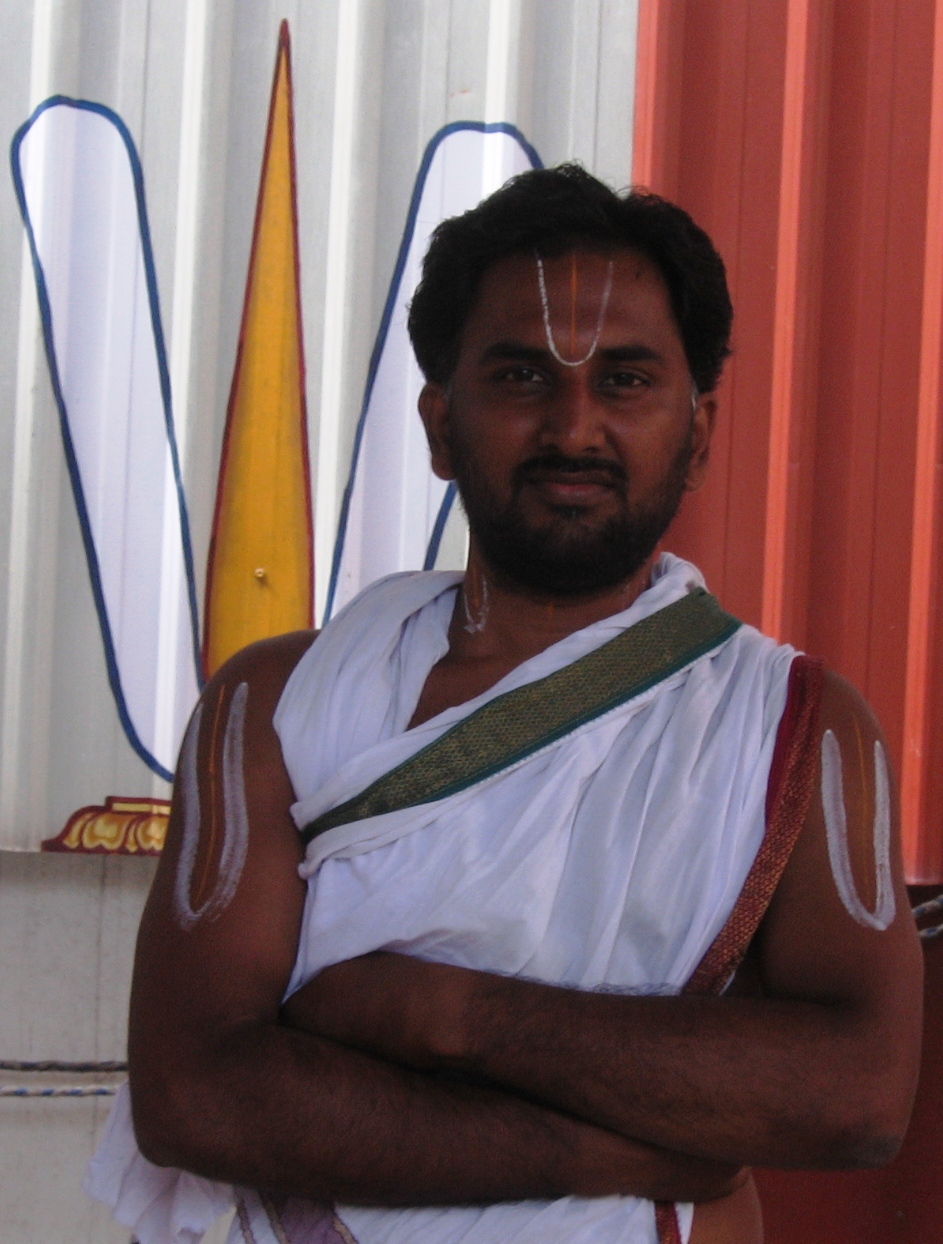
70 years of Selfless Service in a remotely located historical temple and yet the Wealthy Ahobila Mutt does not deem it worthy to build even a small house for the Bhattar in the Agraharam!!!

And a Salary less than that of  a New Cook!!

கற்பு ஆர் புரிசை செய் குன்றம் 
கவின் ஆர் கூடம் மாளிகைகள் 
பொற்பு ஆர் மாடம் எழில் ஆரும் 
புள்ளம் பூதங்குடி தானே 
Pullam Bhoothangudi Divya Desam (http://prtraveller.blogspot.in/2010/04/pullam-bhoothangudi-valvil-rama-divya.html) is a temple whose tale relates to the legendary episode of Jatayu Moksham from the Ramayana.  Praised in the Periya Thirumozhi by Thiru Mangai Azhvaar as a well laid out city with huge Mansions and Mandapams ( much in contrast to what it is now), Pullam Bhoothangudi was home to scores of Vedic Seers who in their chants through the day spread the message of forgiveness and patience as part of one’s lives.

மறையால்  முத்தீ அவை வளர்க்கும் 
மன்னு  புகழால் வண்மையால்  
பொறையால் மிக்க அந்தணர் வாழ் 
புள்ளம் பூதங்குடி தானே 

Thiru Mangai Azhvaaar describes the scene around the temple during his time over 1000 years ago in these ten verses at the beginning of the fifth canto.

நறிய மலர்மேல் சுரும்பு ஆர்க்க 
எழில் ஆர் மஞ்சை நடம் ஆட 
பொறி கொள் சிறை வண்டு இசை பாடும்
புள்ளம் பூதங்குடி தானே 
The temple was amidst huge groves where bees provided sweet musical tunes to the dancing peacocks, Pullam Bhoothangudi, where Lord Rama is seen in a Bala Sayana Posture, was a place with huge water tanks and wet fields in which fish fell prey to the birds that then took their prized scalp to feed their young ones.

பள்ளச் செருவில் கயல் உகள 
பழனிக் கழனி அதனுள் போய் 
புள்ளுப் பிள்ளைக்கு இறை தேடும் 
புள்ளம் பூதங்குடி தானே 

There were huge coconut groves and coconuts constantly fell from the trees (that is one commonality that existed till the end of the last century as seen in the story below). The scared fish jumped in and out of water and water birds kept flying away. He also praises the place as being home to Vedic Seers who constantly chanted the Vedas trying to understand its inner meaning.
கா ஆர் தெங்கின் பழம் வீழ 
கயல்கள் பாய, குருகு இரியும் 
பூ ஆர் கழனி எழில் ஆரும் 

The temple was surrounded with beautiful red lotuses that seemed to bloom all through the year in the water tanks, where one also found bees drinking nectar and humming sweet tunes. He makes a specific reference to Punnai Trees that sprinkled golden turmeric like pollen.

Water, he says, gushed from the Cauvery with gems being washed ashore on to the banks in Pullam Bhoothangudi. 

While Thiru Mangai Azhvaar has praised the place in such glory, when infrastructure development happened over the last century, this particular location as well as Athanur Divya Desam (http://prtraveller.blogspot.in/2010/04/athanur-divya-desam.html), a couple of kms East remained sidelined and became to be classified as a ‘remote temple’ among Divya Desams. 

While several other Divya Desams have flourished because of the infrastructural development and ease of access, Pullam Bhoothangudi has been off the radar and been a rather quiet Divya Desam without too much of a devotee crowd.

For several decades, till the end of the 20th Century, there was no access to this Divya Desam in a sad contrast to having been a ‘Well Laid Out City’ with mansions during Thiru Mangai Azhvaar’s period.

Right through the previous century, one had to weed through the green fields North of Swami Malai to reach this temple. And later, over the last couple of decades, a small one way mud road from Swami Malai was the only improvement in terms of access to this temple.

Five Decades of Pooja for very little financial rewards
M Krishnamurthy (Kannan) Bhattachar performed aradhana at this Divya Desam for five decades. Through the early decades, he was paid a salary of just Rs. 25 per month.  He had no house of his own and stayed in the agraharam house right opposite the temple paying a rent of Rs. 5 from out of his salary. 
A contented life in the Agraharam
Despite the lack of financial resource, the Bhattar and his family lead a peaceful life, for they were contended and did not desire things beyond their means.

The temple handed him every day a few kgs of rice for his service. The farmers who respected the Bhattar for his devotional service would come and hand over vegetables before they actually went to the market for the sale as a mark of respect to him. Jaggery too was presented to the Bhattar by the farmer who grew it towards the far end of the agraharam on the Eastern side. There were other residents who presented spices and pulses once in a while for his selfless service to Lord Rama. The then young Gopalan Bhattar, son of Kannan Bhattar, who was in his early schooling in the 1970s, would go to the fields and pluck Makka Cholam that was available in plenty.

Krishnamurthy Bhattar was held in such high esteem for his service to Lord Valvil Rama and that mattered much more to him than any financial rewards.  Despite the limited financial resource, the family was just simply happy that they had a small place to stay and food to eat every day. And that is all they sought in their life. Not once did Kannan Bhattar complain about the lack of money.

A rare Thattu Kaasu of Rs. 2 stolen away by the wife!!!


Krishnamurthy Bhattar received Rs. 2 once in a while as Thattu Kaasu when a rare devotee would make it to the temple crossing the fields from Swami Malai. He would come back home and hide it so it does not come to the notice of his wife. But pressed by the need for daily sustenance, she would somehow find this money and buy tamarind for that week’s Rasam. Angered at losing out even this Rs. 2, the bhattar would leave the house and go back to the temple to invoke the Lord’s blessings. Such was his way of life back in the 1960s and 70s.

The Coconut Falls and Rain seeps in
His wife, Jayalakshmi now aged 86 wonders as to how she managed to run such a big family with so little money in all those decades.She would make Rasam every day and the entire family would eat that along with Naarthangai. But even this was only on days when her husband Bhattar would bring home some Thattu Kaasu. Otherwise they lived their life on 'curd rice' with a fair mix of water (it was freely available then)!!!! 
Residing under the thatched roof, she remembers being woken up often in the middle of the night to the loud fall of the coconut from the huge coconut trees plunging the family into a state of despair for water would make its way through the broken roof into the house during the rains. This fall of the coconut remains the only commonality from Thiru Mangai Azhvaar's description of Pullam Bhoothangudi. The Punnai tree described by him in his verses too fell away recently.

46 year old Gopalan Bhattar grew up in Pullam Bhoothangudi enjoying the ‘Mann Kuliyal’ (Wet Sand bath). Often, he would spread clay across his body for 20 minutes and this would soon become completely dry on the body. Once washed with water, this was considered a sacred bath for it would remove all the dirt from the body and one felt a certain sense of purity after this. He rues the fact that gone are those days of such natural bath.

Brahmotsavam Celebrations
Dhadhyonam was presented to the carriers of the Lord in big numbers during Brahmotsavam. They felt blessed and happy and would carry the Lord with devotion each day. They were paid no money for this service and placed a high premium on the sacred food that was handed to them for this service.

Brahmotsavam was a time for grand celebrations and the agraharam reverberated with devotion during those ten days. These days it is such a humungous task to find enough people to carry the Lord even on this big annual festival.

20 kms walk every day to perform service in temples
The Bhattar who also performed aradhana at the Perumal temple in Innambur (http://prtraveller.blogspot.in/2016/08/ezhuthurai-nathar-temple-innambur.html) would for decades walk 20 kms a day making those daily trips morning and evening to Innambur via the fields.

Finally, Gopalan Bhattar's elder brother purchased a cycle for his father for Rs. 100 and during his final years Krishnamurthy Bhattachar cycled his way around Pullam Bhoothangudi, some consolation for a man who had not sat on a cycle for a major part of his life.

Mukkoor Azhagiya Singar liked the devotional service of Krishnamurthy Bhattachar and would lie down at the Bhattar’s house for rest for he considered it sacred to sleep in the home of a person who offered such selfless devotional service. Just this gesture of the chief of Ahobila Mutt provided enough life time happiness for the Bhattar.

Sacred Learning to serve the Lord vs 'Learning to leverage financially'
During the 1980s, Gopalan Bhattar learnt Prarthana Sooktham and Anna Sooktham, these were secret interactions that Bhattars have with the Lord seeking HIS permission for each of the processes in the temple. Gopalan Bhattar learnt all the sookthas that were to be useful behind the scene (inside the curtain). All his relatives and friends scoffed at him for not learning sookthas that would turn out to be financially lucrative in life (for example for Sudarshana Homam).

But he was clear that he would not go after money and that his life would be dedicated to performing service to the Lord.

After Gopalan Bhattar took charge of the temple after the passing away of his father in 1998 (he received just Rs. 45 as his monthly salary in the year of his death), he has revived many of the ancient utsavams.

A sad noting in the diary
There were plans to revive the historical Pavitrotsavam at the temple in the 1970s/80s but the authorities did not approve the plans. In the diary of Krishnamurthy bhattachar is found a jotting where he records with sadness his inability to perform the Pavitrotsavam during his life time even though this was discussed with the authorities as an important utsavam to perform for the Lord. In those decades of his father, the Lord had just a single piece of Vastram for the entire year which was considered a sin that they committed on the Lord keeping him tied to a single cloth through the year.

When Gopalan Bhattar chanced upon those notes in his father’s diary, he was keen to realise that unfulfilled dream of his father and started a three day pavitrotsavam after convincing the authorities. 
Over the last couple of decades, Gopalan Bhattar, as the single bhattar has performed dedicated service to Lord Valvil Rama much like his father had done earlier for several decades. And yet recognition from the hugely wealthy Ahobila Mutt hasn’t come easy.  For his couple of decades of single handed management of poojas and utsavams, he is still paid much lower than the temporary staffer in the Madapalli (who threatens every now and then to quit).

Gopalan Bhattar, who has been a resident of the agraharam for much of his five decades, still does not a have house of his own despite Ahobila Mutt owning land in the region.  With money pouring in from overseas, it would not be too much of an ask for the Mutt, in recognition of the 70 years of service of the father and son at this remote location, to build a house for the Bhattar in the agraharam. One wonders if the Chief of the Ahobila Mutt is even aware of the reality at the temple or is this all the recognition for a Bhattar family that has provided seven decades of selfless service. No house after 70 years and a salary lower than that of the cook do not add credibility to the management of the Mutt. During the Brahmotsavam, Gopalan Bhattar is seen all alone decorating the Lord in a special alankara each day. And after the procession, he is seen unwinding the Lord late into the night that sometimes goes as late as 2am.

The temple saw a big renovation over the last decade an example of which can be seen from the Raja Gopuram. But when it comes to rewarding the priest for his service, the mind does not come forward easily. It seems questions are always asked of the priest irrespective of the sincerity of their service thus bogging them down to the limited financial pay.
 

And yet unmindful of leading a financially insecure life, there are those like Gopalan Bhattar who continue to perform their duty with sincerity and devotion in the sweltering Summer's day without any of the modern day cooling equipment to assist them in this remote, not easily accessible Divya Desam of Pullam Bhoothangudi. They see this as an exclusive opportunity to serve the Lord and financial reversals don't bog them down.

( A more recent temple at Innambur without any of these historical legends - managed and administered by The Hindu Family pays almost three times the salary of the Divya Desam Bhattar !! Such is the reality of life)


Athanur Divya Desam

The situation was no different at Athanur Aandalakkum Divya Desam 2kms East of Pullam Bhoothangudi. 58 year old Balu has been the Mei Kavalar (Security) for almost the last two decades. His father had played the same role for over 40 years. He is now paid a salary of Rs. 1500. For several decades in the 2nd half of the 20th century Ramabadran Bhattachar took care of the aradhana at the temple while now 80 year old Sadagopachariar, who was born and brought up in Athanur performed the Madapalli activities, in return for which they received 6 Kalam and 5 Kalam rice respectively and a salary of Rs. 100 per month.

Thiru Mangai Azhvaar in the Periya Thiru Madal refers to the Lord of Athanur as one who measures time – The yesterday, Today and Tomorrow
அன்னவனை ஆதனூர் ஆண்டு அளக்கும் ஐயனை
நென்னலை இன்றினை நாளையை

These Bhattars and the security staff have been counting on the prospect of 'Good Time' but that has seemed an endless wait.

With absolutely no access to Athanur from Swami Malai and no transport facilities, one had to walk all the way across the fields or take a bullock cart ride through the pits and holes from Swami Malai one that would be far more tedious than a walk.  Rarely would a devotee turn up at the temple. Despite these, Brahmotsavam was performed in a grand way with the local residents playing the role of Sri Patham Thangis and carrying the Lord around on Vahana Processions across the streets of Athanur. 
Over the last 15 years, Balu has been opening the main door at 630am and stays on till 12.30pm. He comes back again at 4pm and stays on till 730pm in the evening. With better roads and slightly improved bus services, he says that the devotee crowd has increased over the last decade but still nowhere like the temples in the main town of Kumbakonam and other bigger towns and cities. One has to still keep the temple open and wonder if a devotee will turn up on a week day.

With his devotional attachment to the temple, he has also doubled up as a garland maker and knots flower garland every day for the Lord in addition to the security services for which he is paid an extra 500 per month by the Ahobila Mutt. 
Over the last 15 years, Seshadri Bhattar has taken over and has been performing arathana service staying in a small thatched house North of the temple. 

One only has to hope that the Chieftains at the Mutt would also look closely at the lives and the livelihood of these bhattars in addition to focusing on 'big ticket' items and that there would be a turnaround sometime in the lives of these bhattars.

Wednesday, May 17, 2017

Desikar Mahavira Vaibhavam Ayodhya Canto

Enforcement of one’s right is not the way to a Dharmic life but fulfilling a father’s wish is
Rama as the 'Lord of Dharma'
Having showcase the teenage valour of Rama in the first 20 Churnikas through the Bala Canto (http://prtraveller.blogspot.in/2017/01/vedantha-desikar-mahaveera-vaibhavam.html) , Vedantha Desikar showcases first Dharmic qualities of Rama, the importance he placed to fulfilling his father’s wishes above all else and then his noble qualities in the Ayodhya Canto that comprises of a short eight churnikas. 

Desikar brings out Rama’s love for his brother Lakshmana after the latter had built a beautiful home in Chitrakoota and how his presence had made his stay in the forest so enjoyable and without pain. 

Towards the end of this canto, Desikar sets the stage for the upcoming Cantos by showing Rama’s love for Sita as well as his invincible powers that even Indra, Shiva and Brahmma could not match. He has had a lovely and happy time during this phase alongside Sita and his dutiful brother Lakshmana.

அன்ருதபய முஷித ஹ்ருதய பித்ரவசன பாலன 
ப்ரதிஜனாவஜனாத யவ்வராஜ்ய

Desikar having showcased Rama’s valour of breaking two bows in succession and returning to Ayodhya with his wife Sita towards the end of the Bala Kaandam now showcases the dharmic side of Rama.

He begins the Ayodhya Canto with a simple churnika where he crowns Rama as the Lord of Dharma. All was set for his coronation the next day and grand celebrations were on at Ayodhya. People were eagerly looking forward to the Prince taking over the kingdom from Dasaratha.

It was at this time that Manthara angered at the celebratory process all around poisoned the mind of Kaikeyi and made her call out for the two unfulfilled boons that her husband had granted her earlier for saving his life.

Shocked at her making such an outlandish attitude of invoking an old promise at this inappropriate moment, the great emperor swooned following which Kaikeyi called on Rama and revealed the fulfilment of his father’s promise – that of him spending 14 years in the forest and crowning her son Bharata as the king and the predicament he was in, in conveying these to his beloved Rama.

It is in relation to this background that Desikar brings out the Dharmic qualities of Rama. To him, nothing was more important than making his father fulfil his promise.

It is a great lesson in life on the way to Dharmic life. In this heart warming Churnika conveying a great message, Desikar says that Rama did not battle an eyelid at hearing this piece of information from Kaikeyi. To most others, this would have been shocking news but not to Rama.

To him, the state of mind on hearing the news of the coronation, earlier, and that of now being despatched to the forest were the same. Fulfilling his father’s wish was paramount to him. Not for a moment could he visualise a scenario of his father’s promise being broken. Wearing the robe of a crown prince or that of one in a bark in the forest- both were the same to him for each was the wish of his father.

In this churnika, Desikar showed through Rama’s conduct that enforcement of one’s right is not the way to Dharmic life but fulfilling a father’s wish is.

நிஷாத ராஜ சௌஹ்ருத சுசித ஸுசீல்ய சாகர
பரத்வாஜ ஷாசன பரிகிரஹித விசித சிட்ரகூட கிரி கடக தட ரம்யாவசத

Rama and Nobility
Desikar then goes on to the next quality of Rama- Nobility towards people of all classes and strata.

When he reached the banks of the Ganges, he greeted hunter and boatman Guha with a warm embrace, unmindful of the fact that Guha was a mere tribesman. He did not forget that Guha was a friend from earlier times and illustrated to the world through this episode as to what friendship meant to him.

Having spent time with Guha, Rama moved on to the ashrama of Sage Bharadwaja crossing the Ganges. The sage directed him to the plains below the hills of Chitrakoota and Rama instantly followed the Sage’s instructions. There Lakshmana built a Home so beautiful that Rama felt at peace with himself in the midst of birds and parrots and was full of beautiful colourful flowers and fruits.

He had fallen so much in love with that place that rarely did he miss the richness of his wealthy kingdom and felt that he could spend the rest of his life in this beautiful place.

When Sumantra who had stayed back on the banks of the Ganges in the hope that Rama would return was convinced that it was now a forlorn hope, he returned to Ayodhya to convey the news to King Dasaratha, on hearing which the King breathed his last.

ப்ரணத பரத மகுட தட சுகடித பாதுகா கர்யாபிஷேக
நிரவர்தித சர்வலோக யோகக்ஷேமா

When Bharata who was at his uncle’s place was called back to be informed of the developments, he promised to return with Rama.  On reaching Chitrakoota after dispelling the suspicion of Guha, he tried his best to convince Rama to return but Rama remained steadfast in the fulfilment of his father’s wish.

Unable to convince Rama, Bharata carried back with him the pair of Sandals of Rama and placed it on a throne in Nandigrama where he performed the coronation ceremony for Rama and ruled the kingdom through the Sandals.

Despatches the crow on a Worldwide Trip
பிஷித ருசி விஹித துரித வள மதன தனய பலி புகுணுகதி சரபஸ
ஷயன    த்ருண ஷகள பறிபதன பய சகித சகல சுரமுனி வர பஹுமத மஹாஸ் ட்ர சாமர்த்ய

திருஹிந ஹர வலமதன துராலக்ஷ்ய ஷர லக்ஷ்ய

Desikar moves on to the next and the last episode in the Ayodhya Canto and to his invincible powers, one that showcased his dear love for Sita. This episode also set the scene for the upcoming trauma that he was to undergo.

When a crow pecked at Sita, while Rama was asleep on her lap, he rose and angered at the pain caused to his wife, invoked the power of the Brahmastra and directed a simple blade of grass towards the crow.

Unable to get protection from any of the renowned sages as well as from Shiva and Brahma, the crow came back and sought protection from Sita. Her compassionate gesture meant that Rama forgave the crow by taking out just one eye, bringing loud cheer from the celestials and the Sages.

Setting the stage for the purpose of his incarnation

தண்டகா தபோவன ஜங்கம பாரிஜாத

Having seen the return of Bharata, Rama was keen to shift locations for he expected the residents of Ayodhya to turn up in large numbers to convince him to return. Around the same time, the sages who were continuously harassed by Khara suggested that he leave this place. Thus Rama moved into the Dhandakaranya forest where after meeting Sage Atri and his wife Anasuya, he moved on further. A number of the rishis there requested his help in protecting them from the asuras.


It is in this connection that Desikar refers to Rama being like a Parijatha. While the tree provides everything to those who ask from a stationary position, Rama was mobile moving from one to another demolishing asuras thus fulfilling the wishes of the rishis.

Friday, May 12, 2017

Thiru Vellarai Raja Gopuram

7 Tier 125 Feet Raja Gopuram to come up in Thiru Vellarai Divya Desam in 2-3 years
When constructed, this complete 'Lime Mortar' Tower will rank amongst the tallest Temple Towers in Tamil Nadu
Petitioner Ramesh says there can be no Raja Gopuram unless the HR & CE Act and GO 171 are amended
The Towers at the main entry point of two prominent and ancient Divya Desams near Trichy had been left as Mottai Gopuram and remained as such till the 1980s when a decision was taken to construct a world beating Raja Gopuram at the Southern entrance to the Ranganathaswamy temple in Srirangam, that now stands tall at 236 feet.

The other one, the Pundarikakshan temple at Thiruvellarai Divya Desam (http://prtraveller.blogspot.in/2016/10/thiru-vellarai-divya-desam.html) dates back to a period when 3700 Vaishnavite families lived in the town. For reasons, unrecorded, the Raja Gopuram at the Northern entrance remained unfinished.

A few years ago, the then CM of Tamil Nadu (Late Ms. J. Jayalalitha) announced in the assembly plans to construct a Raja Gopuram at Thiruvellarai.  

The hereditary priests of the temple are all excited that their temple too would get a Raja Gopuram similar to the one at Srirangam as one of the priests guides me up the dark and steep steps into the inside of the battered Raja Gopuram that is also home to several bats. From the inside of the current structure, he turns South and points to the towering Raja Gopuram at Srirangam with the Rock Fort temple in its background and is optimistic that one day Thiruvellarai too would have a towering temple tower that the residents would be proud of.


Some of the ground work had started at the Divya Desam but the Madras High Court order restraining renovation in temples meant the work came to a grinding middle of last year.

Subsequently, with the High Court directing the appointment of a Panel to decide on the merits of renovation in temples, Thiru Vellarai seemed to get a life line with the Panel issuing an order to strengthen the existing structure at the Northern Entrance based on the technical reports.

Agama Objection to a Northern Raja Gopuram
The Vaikanasa Agama expert too had raised objection on the construction of a Raja Gopuram on the ‘Northern Side’ but the temple authorities through the Pancharatna Agama experts pointed out and clarified that their agama does not impose any such restrictions.

Northern Entrance shut, Eastern Entrance Opened
The Northern entrance which has for long been the preferred entrance to the temple has now been closed and the eastern side of the temple has been completely revamped and the entrance there reopened after several decades. 
The strengthening of the existing structure, it is being claimed, is being done through the best of modern technology. In fact a small model gopuram using these materials has been built and placed near the Northern entrance. This process of strengthening which began a few months ago is likely to take another few months. Over 30 cracks had developed in the structure and these are being rectified.

Once the existing structure is strengthened, the authorities will seek a formal approval from the panel for the construction of the Raja Gopuram. The authorities see this as a mere formality and are confident of securing the approval from the panel as they say they have followed the directions of the panel.

The construction of the 'Lime Mortar' Raja Gopuram, the authorities say, is expected to commence later this year and the plan is to complete the 7 Tier, 125 feet plus towering structure in 2-3 years.

When complete, the Raja Gopuram will rank amongst the top five tallest towers in the Divya Desam list and thus in a matter of three decades Mottai Gopurams in two ancient temple towns near Trichy would have seen towering Raja Gopurams!!!


While the temple authorities are thus confident of going ahead with the construction of the Raja Gopuram after following the due processes as laid down by the court appointed panel, TR Ramesh, President, Temple Worshippers Society, who has petitioned many a case at the Madras High Court relating to alterations to temple structure is of the opinion that this will not stand the test of law ‘There is no Executive Officer for the Srirangam temple as the Position of the EO expired on 16th July 1966 (http://prtraveller.blogspot.in/2017/01/hr-ce-irregularities.html). Thereafter no EO has been appointed to the Srirangam temple. Consequently, there can be no EO for the Thiruvellarai temple (as this is a sub- temple of Srirangam Ranganathaswamy temple). As a result, the initiatives taken under the EO’s order is Void Abinitio, in law.’
Quoting the Government Order 171 (a copy of which is available with prtraveller) passed by the Tamil Nadu Government in 2013, Ramesh says that that particular GO categorically states that any construction in a heritage site must be done in accordance with the principle of conservation of monuments laid down in the Venice Charter of 1966, Article 4 and Article 6 of which state that ‘it is essential to the conservation of monuments that they be maintained on a permanent basis’ and that ‘Conservation of a monument implies preserving a setting which is not out of scale. Wherever the traditional setting exists, it must be kept. No new construction, demolition or modification which would alter the relations of mass and colour must be allowed.’

Based on these, Ramesh says that it is clear there can no new construction or modification at the Thiruvellarai temple and that the proposed construction is impossible as long as Section 116 of HR and CE Act (One can only do preservation and maintenance of heritage structures) and GO 171 are not amended.

While petitioner Ramesh now sports a new look (as compared to the one in January of this year), it looks like the temple will not have it easy on having its own new look anytime in the near future, given his determination to take them on based on the rules governing alteration relating to heritage structures!!!

Varadaraja Acharya, a descendent of Engal Azhvaan and a resident of Thiru Vellarai for several decades is devotion personified. Sitting in a far corner of the temple in a devotional posture, he says 'it is all up to Lord Pundarikakshan to decide what is good for the devotees and that if he wills, the towering Raja Gopuram will come up.'
One will have to wait and watch as to the direction in which this story unfolds in the coming months. 

Saturday, May 6, 2017

Rama Navami Utsavam Srirangam

Kulasekara Azhvaar’s daughter in a Serthi Sevai with Lord Namperumal at the Arjuna Mandapam

Unlike many other Divya Desams in Tamil Nadu, historically the Rama Navami utsavam has been celebrated on the Navami (9th day after the No Moon Day) day in Chitrai at the Ranganathaswamy temple in Srirangam. 
It is the day of the coming together of Sera Kula Valli Nachiyar and Lord Namperumal and the one day in the year when the otherwise secluded and almost unnoticed sannidhi North West of Arjuna Mandapam comes to light. Through the year, on the occasions that Lord Namperumal enters the Arjuna Mandapam, it is at the Sannidhi of ‘Thuluka’ (Bibi) Nachiyar that he stops by.

King turned Saint Poet Kulasekara Azhvaar, of Thiru Vanjikalam, was a great devotee of Lord Rama and he had a special liking for Lord Ranganatha. He himself was born on Punarvasu.

Kulasekara Azhvaar married a Pandya princess and ruled the Chera kingdom from Vanji and later won over Madurai. In his verses he refers to himself as the King of Madurai and a Chieftain of Koodal. He also refers to himself as the head of Kozhi and hence may have expanded his kingdom to his favourite city of Srirangam (Uraiyur) as well.

Relinquishing his kingdom, he came and settled down in Srirangam and was taken over by the idol presented by Lord Rama to the residents of Srirangam.

Perumal Thirumozhi
He was so moved by the Lord of Srirangam and the devotion of the residents that he dedicated the first three decads of his Perumal Thirumozhi to the Lord and his devotees at Srirangam. With each passing decad, Kulasekara Azhvaar, from being a new entrant to this temple town showcases how well entrenched he had become at this sacred town and how he now knew the Lord very well.
தேட்டருந்திறல் தேனினைத் தென்னரங்கனை
திருமாதுவாழ் வாட்டமில் வனமாலை மார்வனை
வாழ்த்தி மால்கொள் சிந்தையராய்

ஆட்ட மேவியலந்தழைத்து 
அயர் வெய்தும் மெய்யடியார்கள் தம் 
ஈட்டம் கண்டிடக் கூடுமேல்
அது காணும் பயனாவதே
After thus beginning with three decads to the Lord of Srirangam, Kulasekara Azhvaar ends Perumal Thirumozhi with three decads dedicated to Lord Rama including narrating the entire Ramayana in the final decad of ten verses.

So heart warming was his experience here in Srirangam that he wanted to give the hand of his daughter to the Lord of Srirangam. This episode of Kulasekara Azhvaar’s daughter being seated alongside Lord Namperumal, the Utsava deity of Lord Ranganatha is played out every year on the occasion of Rama Navami utsavam.
Namperumal made his way to the Arjuna Mandapam at 7.30am on Thursday morning and soon after was joined by Kulasekar Azhvaar’s daughter.

Araiyar Sevai - Kulasekara Azhvaar's Verses
Araiyars led by Araiyar Sampath Kumaran presented these favourite verses of Kulasekara Azhvaar on the Lord of Srirangam much to the delight of the devotees seated in front of and around the Arjuna Mandapam. 


மெய்யில் வாழ்க்கையை 
மெய்யெனக்கொல்லும்
இவ்வையந் தன்னொடும் 
கூடு வதில்லையான்

ஐய்யனே அரங்கா என்று அழைக்கின்றேன்
மையல் கொண்டொழிந்தேன் 
எந்தன் மாலுக்கே 
Namperumal and Sera Kula Valli were then given a sacred bath on yet another hot summer day in Srirangam.

In a rare once in a year opportunity, Sera Kula Valli Nachiyar was all smiles being the Queen of the day. Decked with glittering jewellery and seated alongside Namperumal, she provided a Serthi Sevai at the Arjuna Mandapam.

As the devotees stood in front of the two, one was reminded of the elevation of spirit referred to by Kulasekara Azhvaar in his Perumal Thirumozhi and there seemed to be a mood of true devotion reverberating around the Arjuna Mandapam.

Devotional Tears
While the Chandra Pushkarani, a 100 yards away had dried up, there was no dearth of water around the Arjuna Mandapam for in line with Kulasekara Azhvaar’s praise, tears rolled down the eyes of the devotees much like the flood in times of heavy rains. As they shed tears standing in front of the Lord, one could sense the true love they had and that these devotees were truly experiencing their favourite Lord. 
Ahead of Lord Namperumal’s evening out for the Kodai Utsavam, Sera Kula Valli Nachiyar bid him a sad adieu and one could almost see yet another round of tears, this time rolling out of the eyes of Kulasekara Azhvaar's daughter as she headed back to that remote, usually unseen location at the far and secluded end of the Arjuna Mandapam for yet another year!!!

Wednesday, May 3, 2017

Srihari Prabhandham Acharya Felicitated

Prabhandham Students felicitate their Acharya for two decades of service at the Vedanta Desikar temple, Mylapore
Last week, Prabhandham Acharya P Srihari (http://prtraveller.blogspot.in/2015/11/srihari-parthasarathy-prabhandham.html) achieved an important milestone of passing on the significance of the Nalayira Divya Prabhandham to a second batch of students (the first batch had completed their course in 2006). This batch comprising of around 40 students had begun their knowledge quest in 2007 and they graduated on April 23 (Sunday) morning with the Satrumurai taking place at the Vedanta Desikar temple.It was a morning for the students to show their love for the Acharya who had made a difference to their lives over the last decade as they showered loving gifts on their dear Acharya. 

The Early Days - The route to selfless service
In the early days in the late 90s, when Srihari began teaching, the Prabhandham classes, under the auspices of Vedaparayana Sabha, were in the evening. It was only after academics coincided with these classes that a request was made by a couple of the students  to shift the class to early morning. Seen from this background, Srihari’s contribution to our Sampradayam assumes even greater significance. Working at the Sports Desk at The Hindu, Srihari returned home only after 1am every night after the sports pages were made. And yet for the sake of his students, over the last two decades he has been at the temple at 6am imbibing the Prabhandham verses into the next generation of students, many times even forsaking the much needed sleep.
 
Bharath Nandakumar, now 30, began learning under Srihari at the age of nine, way back in the mid 1990s. He has nostalgic memories of those days dating back a decade and a half and to the time of learning the Periya Thiru Madal. For students in the early stage of learning, this usually proves to be a challenging experience for verses there comprise of very long sentences. But despite making it to the class after just a few hours of sleep, the Acharya would just close his eyes and reel out the verses never once missing a single word of the Madal showcasing to the students the importance of devotion while learning the Prabhandham. 
A Mentor in their personal lives 
To Bharath and many others in the group, Srihari was not just a Prabhandham Acharya. He was a mentor to them in their personal life as well. When Bharath reached that critical phase and an age when academics and prabhandham seemed to be at logger heads with each other, his father, who worked in Barathan Publications, wanted him to focus on academics and directed him to let go the Prabhandham classes. Srihari took great care of these young boys in those days and tracked their progress outside of the Prabhandham  class as well. No sooner did he hear the news of the decision to discontinue the Prabhandham class, Srihari went to Bharath’s house to meet his father.

It was a transformational hour for Barath in his life for it was that convincing conversation that Srihari had that got Bharath back into the Prabhandham class.  He of course continued to focus on his academics and became a certified Company Secretary but much before he graduated in academics he had completed his Prabhandham course under the caring eyes of Srihari. 

'It is solely because of Acharya Srihari's conversation that day, 15 years ago, that devotees make refreshing enquiries of my absence at the Ghosti even if its just for a day or two. It is a blessed feeling to have been initiated into the Divya Prabhandham and Desikar Prabhandham by Acharya Srihari.'

A majority of the students in the first batch were in the adolescent phase. Bharath says that it was Srihari who kept their feet firmly grounded on devotional lines not allowing them to be swarmed away into the world of temptations that is part of that phase of life. ‘He groomed us throughout that ten year phase on the way to live and was equivalent to a parent in the way he took care of us. He took a lot of responsibility for the way we came up.’

Applauding a good effort
Barath also throws light on another special feature of his Acharya. ‘A decade ago, I was reciting the 2nd lines of the difficult Tiruviruttam verses on a street procession on the occasion of Desikar Utsavam. At the end of the utsavam, he came up to me to appreciate my presentation and commended me for managing well the 2nd lines of the pasuram.'

However, kudos from the Acharya did not always come easy for the students. When a delighted Bharath went up to his Acharya to enquire about the pleasing way they had presented the difficult last 30 verses of the third canto of Periya Thirumozhi (relating to Nangur), he was asked to go and come back with a similar recital a year later for the Acharya to check, for those verses had just been taught and he felt that it was still sharp in the memory and wanted to test if the sharpness still remained 12months later, such was the high standards Srihari set for his students!!!
Pulling up a forgetful student
On another occasion, during the Deepavali Ghosti, Bharath forgetting the verses of Naanmugan Thiruvanthathi did not go unnoticed and the Acharya took it up with him right at the end of the procession. Over the next 3-6 months, he ensured that Bharath was right up there on the Naanmugan Thiruvanthathi day and got him to perfect the presentation by the end of the year. Srihari always assessed the strengths and weaknesses of his students and put in his best efforts to cut out their shortcomings.

Bharath had always taken that extra liberty with his Acharya and while still in his class VII, he went up to his Prabhandham Guru and asked if he can teach ‘Athigiri Mahatmiyam’. When the Acharya handed him the book and asked him to recite that very long Paasuram starting with ‘Chiththu Asiththena…’, Bharath fumbled in the very first line.

He had a timetable for each of the verses and knew exactly when to initiate his students into them.
  
Bharath is proud that his Acharya kept aside many of his other personal commitments during that phase to pass on his knowledge to his batch of students. Grooming and growing these students into the devotional path had remained Srihari’s mission during that period. The significance of his Acharya's contribution became even more pronounced to Bharath when during the early days of his corporate life. Bharath's night shift meant he would come back home only after 3am. And with the Utsavam procession slated for 6am, he was caught in a 'No Man's land' of whether to sleep (if he does so, will he oversleep) or remain awake till the time of the procession. And yet, for almost two decades, Srihari initiated these students with just a few hours of sleep every night.

Another student of the first batch, K Dayanidhi (Srinath) is now the Dept in- charge 
(Vaishnavism) at the Madras University. And the teachings of Srihari is sure to come in handy as he passes on the significance of the Prabhandham verses to his students.

Unfortunate Development
Amidst all of the dedicated two decade long service of Acharya Srihari has also been the external transformation that one has been part of over the last few years. While the first batch of students remained blissfully unaware of the mobile revolution and were fully focused on the getting the best out of their acharya, unfortunately it has been a more painful exercise for Srihari with the 2nd batch of students clearly falling prey to distractions around them.

Last month,a former trustee of the Desikar temple and student of the 2nd batch was seen texting messages during the Ghosti while the Tiruvoimozhi verses were being presented at the Rama Navami Utsavam inside the temple. It served as a timely reminder to all, that not just the youth but the older generation too are compromising with the Lord lured by the mobile and its instant messaging technology.

Also, the new generation of prabhandham students have nick names and pet names that go against the messages from the Divya Prabhandham.  While Periyazhvar (http://prtraveller.blogspot.in/2015/09/periyazhvar-naming-child.html) directed mothers to name their child after God so at least one would refer to the God’s name while calling out for them, one often hears names inside the Desikar temple that is far away from the name chosen by the mother. Calling out as ‘Kapali’, ‘Dollar’, ‘Thakkali’ and so on just seems inappropriate within the temple premises and during the processions and does not seem to be in line with Periyazhvar’s advocacy.

Srihari's Praise at Thiru Kudanthai
In December last, the temple authorities as well as the devotees in Thiru Kudanthai applauded the devotional fervor with which the Mylapore Ghosti presented there during the Pagal Pathu Utsavam, the credit for that huge appreciation from the temple that was instrumental in the revival of the Nalayira Divya Prabhandham clearly goes to the two decade long selfless service of Acharya Srihari.

Debate between a Vidwan and an Acharya
An interesting debate between Azhisur Srinivasachariar and Srihari was a highlight at the felicitation event on Sunday morning. When the 91 year old, Azhisur Srinivasachariar referred to Srihari as 'Swami', the latter strongly objected saying that he had undergone Kalakshepam under the great Vidwan and hence it was not appropriate for him to refer to his student as Swami.
However, Azhisoor Srinivasachariar dismissed Srihari off remarking that he had rendered a great service to the Vaishnavite community by creating the next generation of students that will keep the Prabhandham traditions going for the next several decades and that the occasion was appropriate for Srihari to be referred to as ‘Swami’ even though he had once been his student!!!

Referring to the Maaley Manivanna Pasuram, where Andal presents the specific process to be followed (Conch, Drum, Ghosti…), Srinivasachariar praised Srihari for the systematic way in which he has brought up his students since the mid 90s. If today there is a strong Ghosti to reckon with, in Mylapore, the credit for that goes to Srihari, he said. 

The Final Word
Srihari, who gifted a sacred Prabhandham book to each of his dear students, had the final word on the morning leaving a very important message for the 75+ students 'Present the sacred prabhandham with sincerity, Do it with the intent of Service to God and Do not go outside and present the Prabhandham for financial benefits.’

That was also one of the unforgettable lessons to his students throughout the two decade long teaching - to present these verses to God and not to use it to further their financial interests. It is a lesson that has remained etched in the memory of the first batch of students who have vowed not to use this as a financial tool in their life.