Sunday, July 8, 2018

Cheran Maha Devi Amma Nathar Koil

The 2nd among the Nava Kailayam Temples, the Amma Nathar Koil has beautiful sculptures and inscriptions dating back at least a 1000 years

Archakar has been performing daily service for two decades and now gets just Rs. 1400 every month for his selfless service!!! 
Located 4kms off the Railway Station on the Southern Banks of Tamaraibarani on a long winding dark road without Street Lights is the huge Ammanathar Koil in Cheran Maha Devi, the 2nd among the Nava Kailayam temples and one dedicated to Chandran among the Nava Graham.  The Lord is flanked on his right in a separate sannidhi by Avudayambal (Gomathi Ambal).

Sangili Bhoothathar seen in a separate sannidhi in front of the temple is said to provide security to the temple. Historically there was a road leading from the Appan Venkatachalapathy Perumal temple (http://prtraveller.blogspot.com/2011/09/appan-venkatachalapathy-temple-cheran.html), just half a km away. However, in recent decades, this road has been shut and hence the archakar as well as the devotees have to take long winding dark route through the Ramaswamy temple (http://prtraveller.blogspot.com/2011/09/cheran-maha-devi-ramaswamy-temple.html). If the authorities relay the route connecting the Srinivasa Perumal temple and Amman Nathar temple, devotees will be able to reach the temple from the Cheran Maha Devi – Mukoodal highway.
Selfless Service without financial returns
As with many ancient temples in this region, there is a huge amount of land attached to the temple but the income from the lands do not accrue to the temple. Hence it is the same story of the archakar being left in the lurch and having to find that devotee to present something to the Lord including basic requirements such as oil to light the lamp and provisions for the madapalli for the daily sacred offering to the Lord.

Despite the difficulty in reaching the temple, Chandrasekara Bhattar has been performing selfless service at the temple for over two decades. He now gets a salary of a mere Rs. 1400 for his service every month. One wonders as to how an archaka can run a family with a salary from the HR & CE as meager as this. And yet unmindful of the financial difficulty, he is present at the temple every morning before 7am to perform pooja. On most week days, he is seen sitting along with the security, who assists him at the temple, waiting for that elusive devotee find his way through to the temple at the far Northern end of Cheran Maha Devi. And when finally that devotee arrives, his eyes light up and he performs an archanai in a most devoted way chanting in a special loud tone. 

Over the decades, when lady devotees visited the temple in the evening, it was he who ensured their safe trip back to Cheran Maha Devi before locking the temple for there are absolutely no lights anywhere in the vicinity of the temple and the only lights one now finds are the ones from inside the train that runs very close to the temple.
HR & CE's lack of Support and care
The HR & CE which manages the  temple receives an annual income of Rs. 1.5 crore from the Papanasam temple alone, the first among the Nava Kailayam temples. And yet, the salary paid to an archakar within this set of temples is abysmally low.

Support from Venu Srinivasan's Trust??
It is heard that the Venu Srinivasan led TVS Trust, that has transformed the Nava Tirupathi (Perumal) temples, has also been supporting a couple of the Nava Kailayam temples in Srivaikuntam and Thenthiruperai, East of Tirunelveli. It is hoped that he will be able to look into this ancient temple as well and the service this archakar has been providing for a long period of time and support this one as well.

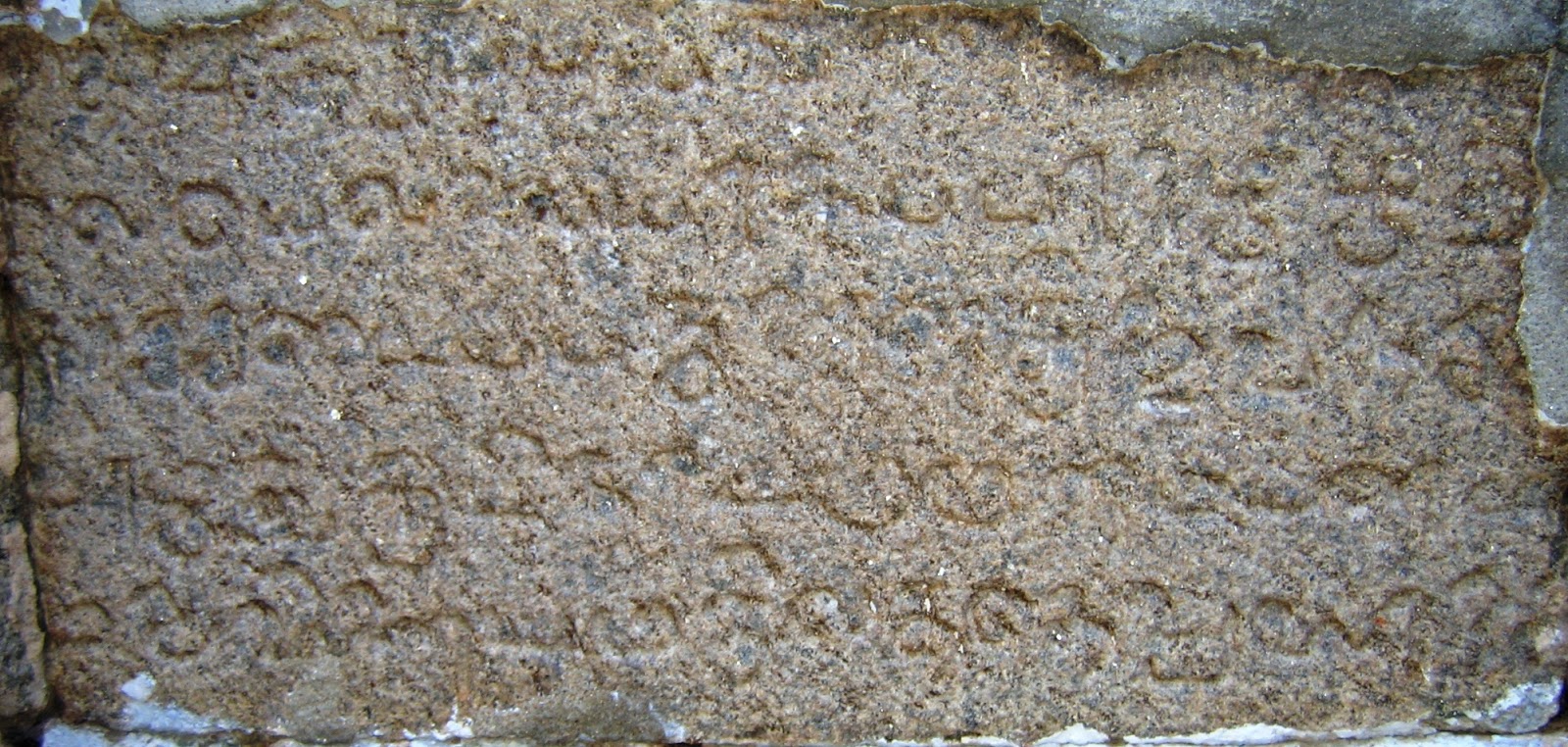
The temple surrounded by big walls on all the four sides has some of the most beautiful sculptures on the pillars. There are also a number of inscriptions on the walls dating back a 1000 years. Kulothungo Chozha is believed to have contributed improvements to the temple. 
Romasa Rishi’s penance – Tamaraibarani banks
Seeking Mukthi, Romasa Rishi, the disciple of Agastya, went to this preceptor who was performing penance at the Pothigai Hills and asked for the way to attain this. Agastya picked up 9 Lotus buds from his Kamandalam and let them down. He asked Romasa Rishi to install a Shiva Lingam at each of the places where this bud rests and to invoke the blessings of Lord Shiva at each of those places.  
It was at Cheran Maha Devi that Lord Shiva presented darshan as Amma Nathar to Romasa Rishi. There is a stone sculpture of the rishi performing the penance invoking the blessings of the Shiva  Lingam in front of the Amma Nathar Sannidhi.

Nandanar stood at the entrance of the temple and sang praise of the Lord but the Nandi was blocking his darshan. It is said that the Lord asked the Nandi to move slightly so Nandanar could have darshan of the Lord from his standing position.

The Devoted Sisters
The story goes that two sisters, who wanted to make contributions to the temple, chanted the name of Lord Shiva and grounded paddy on a traditional stone grinder. When they presented their offerings to the Lord, they were surprised to find gold coins as prasadam, an indication of how the Lord rewards sincere prayers of devotees.

They used this to renovate and make improvements to the temple. In memory of this episode, one finds a sculpture of the two sisters grinding the stone at the entrance to the main sanctum.

Festivals
Aipasi Uthiram Kalyana Utsavam
Aani Anusham Varusha Abhishekam
Margazhi Aruthira for Moolavar Natarajar

On Maha Sivarathri in Maasi, the temple is open the whole day with four Kaalam pooja in the night. 
Liberation from Chandra Dosham – Monday Pooja
Monday Pooja is special at this temple. To liberate one from Chandra Doshma, five Abhisekams are done with Pomegranate and Venpongal or Kalkandu Chakkarai Pongal is presented to the Lord on Monday morning.

How to reach
From Cheran Maha Devi bus stand, an auto to the temple will cost Rs. 80. There are no buses to the temple.

The temple is open between 7am-10am and 5pm-6pm. Contact Chandrasekara Bhattar @ 94422 26511.

Friday, July 6, 2018

Srirangam Madapalli Transformation

From IT in the US to Madapalli in Srirangam
Updated on Nov 10 (Lakshmi Narasimhan went on a 3 day leave in September and has not returned to the temple. He had said that he had given his entire last earnings from his IT firm to the Ramanuja Trust Mission whose Managing Trustee has come under the scanner today and who is stated to have 'gone missing')
The Madapalli at the Ranganathaswamy temple in Srirangam is currently witnessing one of the biggest transformational changes in temples in Tamil Nadu in recent decades. Two software professionals have quit high paying jobs in the corporate world and have joined the Madapalli in an endeavour to dedicate their lifetime to the service of Lord Ranganatha and with a vision to restore the Madapalli to its ancient glory.

40 year old V. Lakshmi Narasimhan had been in a plump job in the IT industry for close to two decades serving as a software architect in top tier 1 Companies. All his life he has been a multi faceted personality. As a student of the Hindu School, Triplicane, he won the budding mathematician award. He was also a poetry writer, violinist and a school topper in Table Tennis. His father Venkatapathy was proficient in the Nalayira Divya Prabhandham and an expert in Sri Bashyam and initiated him into these. But computers dragged him away into the IT world in the late 1990s. During this period in the IT industry, he has been associated with social and religious service organizations and has contributed to charities to propagate the service minded approach of Vaishnavite Saint Ramanuja.

The Big Call – From IT to Madapalli
He had always cherished a dream to perform service at the Ranganathaswamy temple in Srirangam.
During the time, he was contemplating a move back to his roots in Srirangam, he came to know through Vaishnavasri Krishnamachari, publisher of Vaishnava Sampradayam books based in Srirangam that the temple was looking for devoted personnel at the Madapalli. After quitting his job in the IT industry last year, Lakshmi Narasimhan spent time at two ancient Divya Desams – Ahobilam and Badrinath to try and explore divinity. The period there gave him a lot of clarity and refinement on his way forward in life. And he took up the big call to move away from the corporate world to perform service at the madapalli and to propagate the Ramanuja Sampradayam.

When Pon Jayaraman, JC of the temple took charge at the temple a few years ago, he felt a shortage of quality people to run the Madapalli in the traditional way. The Madapalli staff did not even sport the traditional attire while at work inside the temple. He was keen and determined to restore the Madapalli to its ancient glory days but found committed people not easily forthcoming to take up service at the Madapalli.

And when he sent out word that he was looking for devoted people to perform service in a traditional way, Sri Vaishnavasri Krishnamachari managed to elicit a positive response from C.L. Srivatsan, a Post Graduate from NIT Trichy. He was just 31years old and had worked at reputed firms such as Cognizant and IISC, Bangalore. Excited at the opportunity to perform service at the feet of the Lord of Srirangam, Srivatsan quit his high profile job, packed his bags and headed to Srirangam last year along with his pregnant wife. 
Months after Srivatsan joined, Lakshmi Narasimhan took the call to move away from the corporate world and he too has now been serving at the madapalli for since the beginning of this year. 

Securing the IT Professionals for the Srirangam Madapalli
Sri Vaishnavasri Krishnamachari who assisted the temple in roping in these two, has always been a strong advocate for the traditional way of service at the temple “Madapalli is a highly sacred place and there is a certain tradition in the way things are done at the Srirangam temple including the attire - sporting 12 Thiruman, wearing Panchakacham and having a tuft. For decades, the personnel at the temple have disobeyed even the basic tradition."
"Both Lakshmi Narasimhan and Srivatsan were highly qualified professionally and were drawing big salaries. They have sacrificed everything, let go of the financial interests and entered the Madapalli as a cook with a service motive.  There are thousands of Vaishnavites to talk and give speeches on idealism but very few when it comes to practical living and execution. This is particularly visible in the temple Madapalli. There is an opportunity for Vaishnavites to serve the Lord but no one is eager to come forward. Lakshmi Narasimhan is a benchmark for Temple Madapalli across the state. He lives by the tradition. A few more of his clone is required to help in the transformation process at the Srirangam temple.”

Financially Lakshmi Narasimhan, who has also been mentoring Srivatsan, younger to him by almost a decade, does not even get 5% of what he received in his last job in IT. However serving the Lord and performing service in the way Ramanuja wanted has been a truly fulfilling experience for him. In the few months that he has been here, he has received backing from the JC for this traditional way of service ‘The greatest support has come from the JC. He has empowered me to do the right thing in the right way at the Madapalli without fear of opposition.”

Initiating the Transformational Process
Both Lakshmi Narasimhan and Srivatsan have embarked on a number of initiatives that is slowly helping the revival of the Madapalli back to its traditional days.  Cleaning of the sacred well, using organic vegetables and the traditional earthen pots for cooking have been a few.

The two of them have been bestowed with the responsibility of preparing the Periya Avasaram (full meals), Sheeranam, Sthala Samba and Aravanai. They are also initiating the process of introducing the traditional ten vegetables for the Periya Avasaram for the Periya Perumal. Both of them also recite the Ramanuja Nootranthathi while performing their service at the Madapalli.

The feedback even at this early stage has been very positive. The quality of food has been like never before in recent decades. 
Lakshmi Narasimhan says that while money is essential for basic living, it also poses as a hurdle for Wisdom.  He firmly believes that God would do wonders when one offers complete surrender and is looking forward to this new journey of ‘Sastras’ based life. He is of the view that sacred food presented with sincere devotion to the Lord can transform people.

A Life Defining Change
Madapalli was an unexpected opportunity that came his way and Lakshmi Narasimhan has grabbed it with both hands letting go of everything else in life. He works through the day and night by the fire, bathes in well water, eats just once a day in the traditional way like his ancestors and walks bare foot most of the time. Having dedicated everything to the Lord, he is suddenly feeling a sense of stress free life. If the Lord wills, he does not want to leave the Madapalli at Srirangam in this life time. He is hoping that more like minded people will join him soon in this devotional transformation journey.

Only time will tell.

PS: A version of this story featured in today's The Hindu Friday Review 

Tuesday, July 3, 2018

Thiruvallikeni Prabhandham Ghosti

Kaaval Kazhani Ananthacharya the Visionary of the renaissance of the Ghosti MA Venkatakrishnan the Architect

The NewGen skip lucrative global offers in favour of the opportunity to present the Nalayira Divya Prabhandham at the Parthasarathy Perumal Divya Desam in Thiruvallikeni 
A 27 year old Professional returned from the US in May 2014 after doing his Masters in CFD (Computational Fluid Dynamics) at the University of Texas. He had a great offer on hand from a top corporate in the US and the opportunity to start a long career presented itself before him. But his mind was elsewhere, several thousands of kilometers away, back at his roots in Thiruvallikeni. As a teenager, he had developed a great interest in the Nalayira Divya Prabhandham, the 4000 sacred verses of the Vaishnavite Saint Poets Azhvaars having been initiated into this by his auditor father, who himself was part of the first batch of students in the mid 1970s that led to the revival of interest in the historical verses.

His priority was clear. He wanted the recital of the sacred verses at Thiruvallikeni to be an integral part of his everyday life and thus without any second thoughts, returned to Madras letting go the alluring offer in the US. However, he encountered a unique problem when he began searching for a job here in Madras. His sole condition to the prospective employers of not wanting to be sent overseas on assignments left them stunned.

Every prospective employee would typically ask the possibility of overseas engagements but here was one who even in his very first job was stressing on his intention to stay back in the city through the year. This condition took him longer than usual to find that first job.

He is not alone among the new gen at Thiruvallikeni to lay importance on the recital of the Nalayira Divya Prabhandham. Another youngster, in his 20s, who had completed his ‘Pilot’ degree from the University of Florida, too returned to Madras with a specific intent to be part of both the Ghosti as well as the Sri Patham.

A third resident of Thiruvallikeni has just completed his MBA from the University of California Davis and is returning this fortnight also to join the Prabhandham Ghosti and Vedic Recital.

Such has been the transformation in recent times in the Ghosti at this ancient Divya Desam from the not so rosy past. While Thiruvallikeni has historically been renowned for Prabhandham Ghosti, there was a period in the 20th century when things had taken a downward turn. By the 60s and early 1970s, the size of the Prabhandham Ghosti at the Parthasarathy Perumal Divya Desam in Thiruvallikeni had dwindled driven by a variety of factors.

Across temples in Tamil Nadu, it was one of the worst phases with anti brahmincal wave sweeping the state (http://prtraveller.blogspot.com/2016/10/therazhundur-divya-desam.html). There was insecurity all around. It was a period that saw original inhabitants from several ancient Divya Desams and Thevaram Sthalams sell their historical lands and move to cities seeker greener pastures in corporate jobs(http://prtraveller.blogspot.com/2017/07/thiru-mogur-kalamegha-perumal.html). It was also a phase that saw traditionalists in the city move into private corporate positions.

Kooram Bashyam and TA Srinivasaraghavan are both into their mid 80s and have been rendering this sacred service for several decades. They have seen the Ghosti from the 1940s “In those decades, the Ghosti was not big as one sees today. It was purely honourary service and continues to be so. We present day in day out purely out of devotion for the Lord without expectations of any monetary returns.” 
Fighting it all alone-Kaaval Kazhani Ananthacharya
There was also a lot of factionalism in Thiruvallikeni in those days.  Through the tough times in the 1950s and 60s, the legendary Kaaval Kazhani Ananthacharya held the Ghosti team together fighting tooth and nail for their rights ensuring that it did not collapse in the midst of the various differences that existed at the temple in those decades. He joined the Ghosti when he was in his early 20s way back in the 1940s and served as the Secretary of the Adyapaka team for over two decades from the mid 1950s.

Ananthacharya wanted every activity within the temple to be done in a traditional way and did not compromise on any aspect be it the alankaram for the Lord or presentation of Thaligai or the conduct of the Ghosti. He did not tolerate even a minor deviation from tradition, a characteristic that did not always go well with the temple authorities.

Outside of his temple service, Anathacharya held a high post – he was a Tahsildar. But when it came to providing service to the Lord, he would be at the temple on time. He would arrive by the jeep, remove the attire of the Tahsildar and would transform himself into the role of an Adyapaka in a matter of minutes. He paid attention to the minutest of details including on posture of the Ghosti during the recital.

60 year old P Rangarajan, Sanskrit Professor, Chinmaya Vidyalaya  had seen Ananthacharya from close quarters through the late 1960s and 70s since the time he was a young boy "Kaaval Kazhani Swamy easily ranked the best among the Seva Kalam experts. I have not seen anyone as devoted as him in the presentation of Kattiyam.  Half a century later, his style of presenting the Kattiyam on occasions such as Kaithala Sevai and Thirumanjam remains firmly etched in one’s memory. His was one of the most unforgettable presentations.” 
“It was he who taught us the way to present the Arulichayal. He told me one day way back in the 1960s as to the posture when presenting the verses on street processions. From that day, I have always been with folded hands when in front of the Lord and during the Ghosti” says Rangarajan.

When Rangarajan once asked Ananthacharya to teach him the Prabhandham verses, the revered acharya politely asked the little boy to stand by his side and listen to the presentation of the Dhaniyan. And that was how he was initiated into the first set of verses “When he had a few minutes off from the temple service, he would call us and teach us a few verses sitting in the temple prakaram, such was his attachment to the Divya Prabhandham and the positive intent to share the verses with the younger generation.”

55 year old NR Srinivasan (Singan) currently a staffer at Tamil Nadu News Print too was initiated into Divya Prabhandham by Ananthacharya. He attributes the current flourishing nature of the Ghosti to the efforts of Ananthacharya in the 60s and 70s.
"He was a born disciplinarian. It was he who taught us the way of 'Experiencing God' and the manner of conduct when in front of God. A lot of us from that generation owe our learning entirely to Kaaval Kazhani Swamy.  The fact that you are seeing Ghosti in such large numbers at this Narasimha Brahmotsavam over the last ten days is entirely due to his vision of forging a strong Ghosti at this Divya Desam."

Another long time resident of Thiruvallikeni KS Soundararajan too is in his mid 50s and has been part of the Ghosti for many decades. To him Ananthacharya was a true role model “Kaval Kazhani Swamy was a role model for any new aspirant. He had a voice that stood out in the crowd. His attire when he entered for the Ghosti was immaculate. It was he who inspired the new generation on the importance of learning and presenting the sacred verses in front of the Lord.  There were many in the temple who just could not withstand the strict discipline and his stringent traditional ways but even they were stunned at his style of presenting the Kattiyam and stood speechless watching his unflinching devotion to the Lord.”

Golden Jubilee Celebrations and the Big Turning Point
Former Head of Vaishnavite Department, Madras University and author & publisher of sacred books, MA Venkatakrishnan(MAV) was still a school boy when he began interacting very closely with Ananthacharya in the late 60s and early 70s. It was Ananthacharya who initiated MAV into a major part of Nalayira Divya Prabhandham.

1973-74 marked the Golden Jubilee of the landmark Madras High Court Judgment of 1923 which had placed the rights of the Prabhandham Ghosti on the Thengalai Vaishnava Brahmins of Thiruvallikeni and the right to add members on the Adyapakas of the Prabhandham Ghosti. MAV was keen to celebrate the Golden Jubilee in a grand manner and expressed his eagerness to do so, to Ananthacharya.

A look back The Landmark Judgment of 1923
In the early decades of the 20th century, there was constant friction between the trustees of the Parthasarathy temple and the members of the Ghosti.  The trustees were elected by the local people. At one point of time, they wanted to appoint the Adyapakas as servants and this was strongly objected to by the Ghosti.  This led to an even greater friction and there was an ‘A’ Ghosti (appointed by the Trustees) and a ‘B’ Ghosti appointed by the residents.  This friction finally led to a case in the Madras High Court.  In a landmark judgment, an order was passed in 1923 placing the right of appointment of Ghosti members on the local residents of Triplicane and away from the trustees.

Following this judgment, an association was formed by the Ghosti and qualifications were laid out for becoming an Adyapaka of the Ghosti at the Thiruvallikeni Divya Desam. One had to be married, had to have a tuft and the traditional attire, should have crossed 25 years, have knowledge of at least 2000 sacred verses (and other verses relating to recital during different utsavams/occasions) and had to have been a resident of Thiruvallikeni for at least (the previous) six months.

Five decades later, when a few of the local residents filed a case citing non inclusion in the Ghosti, the Judge ordered that the right to add members of the Ghosti lay with the elderly members of the Adyapakas (7 out of the current 16 Adyapakas form the elderly members group). 

Ananthacharya hands over responsibility to MAV
Ananthacharya had been solely responsible for the development of the Ghosti leading up to that phase. He was very vocal and had fought for the rights of the Ghosti through his life time. He saw developing the team and expanding interest in the Prabhandham recital as a more important objective than any grand celebrations and used the golden jubilee milestone as an opportunity to revive interest in the Ghosti. 
Knowing the enthusiasm and the inherent networking capabilities of MAV, Ananthacharya saw the potential in MAV and placed on him the enormous responsibility of reviving the Ghosti. He suggested the idea of a Divya Prabhandham Patshala to coincide with the Golden Jubilee and asked MAV to create afresh and develop the Prabhandham members for the next generation by initiating them into the sacred verses.  However, what followed may have been even beyond Ananthacharya's wildest imagination and gave him great delight in the coming three years, before his sudden demise in  1977.

MAV’s aggressive style
MAV went about his task in an aggressive way. He was determined to get the youngsters interested in Divya Prabhandham. He put out a notice across Thiruvallikeni about the launch of the Prabhandham class and instilled in the minds of the Vaishnavite residents around the temple the importance of sending at least one member of the family. And the response was remarkable. Very soon he managed to mobilize 70 students, mostly youngsters. Never before had a class seen such great strength all at one time and it showed MAV’s networking ability even at that young age. 

And as a 20 year old, who had just completed his own initiation, MAV began training students into the sacred verses. They all sat in a small packed front room of his house to learn each day between 6am and 7am. He started with Moonram Thiruvanthathi, for that was recited frequently at the ‘Veethi Purapadu’ at the Parthasarathy Perumal Divya Desam. He encouraged the students to be part of the Ghosti during the street processions and recite these Iyarpa verses.

A Unique Model that inspired the students
MAV also followed a unique model that motivated and inspired the students to have sustained interest in the verses. 'Voltas' Ravi Sundar remembers the monthly tests that MAV used to conduct on Divya Prabhandham “MAV followed a unique way to motivate the students. Each of us eagerly awaited the tests and competed with each other in a positive way to bag the prize for the best performers. The tests were a big source of motivation to the students and helped create sustained interest in these sacred verses.”


With the experience of teaching students in those years at the Vivekananda College, MAV knew the art of generating interest among the boys in these sacred verses.

T. A Bhakti Saran, one of the students from that batch of 1974 and who continues to be part of the Ghosti to this day, remembers the inspirational role of Ananthacharya during the first 2-3 years.
"Though Kaaval Kazhani Swamy had placed the mantle of running the class on MAV, he would finish his morning service at the temple and stand at the entrance of MAV’s house and watch the performance of the boys. At the end of the class, he would appreciate the boys for the presentation. The mere presence of Kaval Kazhani Swamy was a big motivation for all of us. Having finished his service at the temple, it would have been fair of him to have gone back home but rarely did he do that. He would always stay back at MAV’s house till the end of the class and took delight in our learning. One could sense the happiness in him on seeing the big size of the class and the interest that MAV had managed to create in the young students."

The days around the two Brahmotsavams, Ramanuja Utsavam and Manavala Mamunigal Utsavam were off as was the period leading up to our annual examinations. Prabhandham class was never in conflict with the academics. 

52 year old S Sampath Kumar ( Insurance Sampath) belonged to the initial batch of students of MAV in the mid 1970s. His mother was instrumental in driving his Prabhandham interest at home.  While he had to focus on academics as a school boy, his mother would enquire every day about the verses learnt that morning and that served as a great motivation for the young boy. 
He too remembers the way his Acharya MAV planned the annual calendar keeping in mind the big utsavams “the days around the two Brahmotsavams, Ramanuja Utsavam and Manavala Mamunigal Utsavam were off as was the period leading up to our annual examinations. He wanted us to excel in academics and thus the Prabhandham class was never in conflict with academics.”

When the elderly saw the buzz around the temple, they too joined the class and were initiated into Divya Prabhandham.  Thus the base for the revival of the Ghosti and the large numbers that one sees today in Thiruvallikeni was created in the 70s and 80s. 

Kaaval Kazhani Swamy's
sons too have followed in the footsteps of their illustrious father with active participation in the Ghosti with one of them also having foregone outstation career growth opportunities to be in Thiruvallikeni to be able to present the sacred verses on a daily basis 'Nothing is more important in my life than presenting the Arulichayal' is his view.


The 80s and 90s
Following the sudden death of Ananthacharya, C Parthasarathy took over the role of Secretary of the Adyapakas and played a key role in the development of the Ghosti for the next 20 years. It was he who roped in MAV into the Adyapaka team in the early 1990s just prior to the Samprokshanam.

There is a healthy mix now of adyapakas aged above 60 (15 out of the 16 are above 60 years), a fair size of middle aged members who had come through in the 1980s and a large contingent of youngsters who are seeing the recital of the sacred verses as an important aspect of their everyday life.

2000 Services Annually
Each day of the week, one of the 7 senior members of the Adyapaka team is bestowed the responsibility of the Prabhandham Thodakkam. There is an unwritten code that the Adyapakas should attend at least 10 days in a month. They meet at least once a year to review the year gone by and to plan for the year ahead to see if anything could be improvised. But they try not to alter anything that has been historically followed. While MAV, who has been the Secretary of the Adyapakas for almost the last two decades, has initiated improvisations once in a while, he has agreed with the larger views of the group and has always wanted it to be a consensus based Ghosti. 
The Ghosti provides 2000 services annually. On some days in the year, the Ghosti presents 7 services. The entire 4000 verses are presented in full five times a year and in a ‘shortened’ way on another five occasions. The Prabhandham team also presents the Iyarpa verses in full during the seven day utsavams such as Vasanthotsavam, Pavitrotsavam, Davana Utsavam and Theppotsavam. On the final day of the two Brahmotsavams, the Ghosti's service expands to 6 hours at a stretch reciting the entire Tiruvoimozhi as was seen yesterday.

The future
Driven by the revival in the 1970s and 80s, the sacred verses are now taught by multiple teachers, each with a set of students, and individually as well by father to the son .

It is refreshing to see kids as young as 10 years joining in large numbers in the recital of Divya Prabhandham during the street processions at the Thiruvallikeni Divya Desam. Youngsters in their 20s who have let go big overseas career opportunities are serving as an inspiration for the school boys and teenagers with their devotional rendering every day to make the recital of the sacred verses an important part of their lives. 
Despite minor differences of opinions that crop up every now and then, the Unity of the Prabhandham Ghosti has been a big differentiating factor at Thiruvallikeni. Four decades after the launch of a concerted exercise to drive residents of Thiruvallikeni into the recital of Nalayira Divya Prabhandham, the transformation seems complete. 

Tuesday, June 19, 2018

SVPB Udumalpet Soundararajan

The Industrialist who changed the face of cricket in the Coimbatore region 
His wards, M Senthilnathan  captained India in the Inaugural U19 World Cup and UR Radhakrishnan almost made it to the Indian Test Team in New Zealand
His Two Early picks  - S Sukumar and NP Madhavan - have remained loyal to him for several decades
For over three decades from the 1930s, the Udumalpet Cricket Club (UCC), one of the oldest cricket clubs in the Coimbatore district, languished at the bottom of the circuit. Time and again, they were thrashed by teams in the Coimbatore league that dashed the young dreams and hopes and led to a shattering of confidence and self belief.

And then arrived on the scene a young 20 year old visionary who was to go on to transform the way cricket was played in the region. He provided the local cricketers from Udumalpet with a cricketing exposure that was hitherto not seen in the region and helped local talent reach the summit.

The Grand Son of the legendary industrialist GV Govindaswamy Naidu (who had founded the Sri Venkatesa (Textile) Mills in 1933), M Soundararajan returned to Udumalpet in the early 1960s soon after graduating from Loyola College to head the newly launched Paper Mills (his grandfather was 80 years old then), an expansion that was driven by the then Industries Minister R Venkatraman.

Soundararajan was a University level tennis player. The sports lover in him could not accept the sad state of cricket in the district. There was very little help for these cricketers and the talent just did not blossom for want of exposure and guidance. Every time UCC went to play a match in the Coimbatore league, he would be disheartened to hear the story of yet another loss. At some point in that low phase in the late 1960s, the pain became unbearable. He was simmering inside to correct this anomaly.

He wanted to really break the shackles and prove to the world that cricketers from a remote village too could play as competitively as their city counterparts and villages too could produce outstanding cricketers.

The Tease that led to the transformation
In the early 1970s, his sister married the owner of Ramakrishna Steels, a company that was actively involved in the Senior Division league in Coimbatore. Through the early part of that decade, each time he went to his brother in law’s house, he had to hear the long story of how Ramakrishna Steels handed out a severe beating to the Udumalpet team and how incompetent his team was. This infuriated Soundararajan further. He just could not take it any longer. He promised to himself after one such meeting that he would revolutionise the way cricket is played in Udumalpet and went about it aggressively.

Ropes in Ram Singh to Coach Udumalpet Players
He roped in the legendary left arm spinner AG Ram Singh to coach the cricketers in Udumalpet one and a half months in a year. For the first time in their lives, the young cricketers of this remote village were closely monitored by a top cricketer who taught them the nuances of batting and bowling. 
Ram Singh was extremely good at initiating technical points into the minds of young cricketers and they clearly benefited. Soundararajan was delighted at seeing some improvement in the cricketers with some bright individual performances but the team continued to lose badly at the hands of the top teams in Coimbatore. He simply could not digest the fact that his team came back every time with the heads down.

The First Signing - From Salem to Udumalpet!!!
In 1974, on the suggestion of AG Ram Singh, he called on a young 17 year old college boy from Salem. The boy had just completed his first year B.A and his coach in Salem, Narayanan, spoke highly of him. After watching him at the nets, Soundararajan asked the young boy to continue his studies from Udumalpet. It was an improbable suggestion. For a teenager to think of shifting from Salem to Udumalpet just for the sake of cricket was something no parent could contemplate in the 1970s. However, Soundararajan was insistent on securing the boy and convinced him and his father. The boy’s coach Narayanan too endorsed the move. And indeed he shifted base to Udumalpet that same summer. Soundararajan provided him accommodation at a house on Ansari Street and enrolled him in the 2nd year in a college in Pollachi. 


He signed the boy for the SVPB (Sri Venkateswara Paper Boards) team for that season. That youngster played for combined districts and the University team in that phase also scoring a century on debut in the University match against Calcutta. Immediately after he completed his graduation a couple of years later, Soundararajan offered him a ‘cricketing’ job in the company in 1976. 
Opening bat S Sukumar was the first big signing of Soundararajan and remained one of his favourite cricketers. The signing of Sukumar was an indication of the aggressive intent of Soundararajan.

The 2nd Batch - Peter Fernandez and S Srinivasan
A couple of years later, Soundararajan signed in Peter Fernandez from Madras. And soon after came S Srinivasan, from Bombay, a cricketer who had played alongside Sunil Gavaskar. With the hiring of these three, SVPB’s performance began to improve. By the beginning of the next decade, SVPB had become lot more competitive. But the big wins were still elusive. 
A young Soundararajan is seen standing third from right

Following AG Ram Singh, Soundararajan brought  in the revered Audi Chetty as the Coach. He was to enjoy a great relationship with the players for well over a decade and was an integral part of the team that won many championships in the 1980s.

Roping in a Ranji Player
In 1982, NP Madhavan (http://prtraveller.blogspot.com/2016/05/np-madhavan.html), who had already had a century under his belt in Ranji Trophy and was working with IOB in Madras mentored by V Krishnaswamy (http://prtraveller.blogspot.com/2016/08/krishnaswamy-v.html), came to Coimbatore to explore options with LMW, a strong cricket team in the Coimbatore First Division. However, former Ranji star B Kalyanasundaram (http://prtraveller.blogspot.com/2011/08/kalli-b-kalyanasundaram.html), who had moved to LMW at the end of his Ranji career, did not meet the financial expectations of Madhavan and was not ready to go the extra distance to secure Madhavan. And hence he returned quietly to Madras. However, in a dramatic turn of events, he was asked to come and meet Soundararajan within 24 hours. Madhavan took the Kovai Express in the morning and returned to Coimbatore. Soundararajan was so impressed with the stroke play of Madhavan as well as his conduct that he was inclined to hire Madhavan but the latter could not take an immediate call.

To leave a banking job and to move to a remote location such as Udumalpet was unthinkable in those days.  Soundararajan was determined, though.  Very soon, he met with Madhavan’s father and asked him to permit his son’s move to Udumalpet, in a way similar to how he had convinced Sukumar’s father the previous decade.

Madhavan’s father belonged to a middle class family and Madhavan had taken a housing loan from the bank for the construction of a house in Madras. These were points of worry as well for the family. Soundararajan assured Madhavan’s father that he would take care of his son and in return wanted a 3-5 year commitment from Madhavan. Not only did Soundararajan offer him more than double of what he was earning at that time, he also committed to taking care of the housing loan.

Madhavan’s father relented and Madhavan quit IOB to join SVPB in Udumalpet. It was Soundararajan’s biggest signing to date – An in-form Ranji player moving from a banking job in Madras to his team in Udumalpet. In his very 2nd match in Coimbatore that season, Madhavan slammed a century at the Forest College ground to secure SVPB a victory, leaving Soundararajan delighted.

Madhavan looks back at those few days in complete disbelief ‘I never had any plans to move to Udumalpet. Since LMW was looking for players, I came there along with another close cricketing friend but returned immediately as that did not materialize. My plan was to continue in Madras. The call from Soundararajan within hours of my return took me by total surprise. Only after my father was fully convinced that it was a good move for me and only on his direction did I accept the offer.”

The 1980s – The Big Turnaround for Udumalpet
Both Madhavan and Sukumar were terrific contributors for SVPB at the top of the order during the 1980s. 

That phase remains Soundararajan’s happiest moments in life. SVPB began beating the then star teams LMW and Ramakrishna Steels in the Coimbatore league, quite comfortably. They began winning Championships in Coimbatore. The team performed remarkably well in outstation tournaments as well and had become so strong that Soundararajan had a 2nd team (Sri Venkatesa Paper Mills) in the first division league in Coimbatore. Buoyed by the success, Soundararajan gunned for bigger roles for his players.
SVPB Under Brijesh after winning the Championship at the Forest College Ground

Just providing opportunities in the Coimbatore league for players from Udumalpet was not enough. He wanted the budding talent to blossom in the first division of the prestigious league in Madras. By the time he was in his 40s, Soundararajan had taken many big business risks in his life and he says ‘this was one such’. He wanted to prove that players from small town could achieve big if their talent was harnessed properly at the right time. And thus he took over the running of Globe Trotters in 1984. In the years that followed, he spent an unbelievable sum of money on cricket, a size that was unimaginable for a team from the districts but Soundararajan gave them the best of exposure and a platform on which they could learn and grow.

Securing Brijesh Patel for SVPB
Soundararajan had a business relationship with India and Karnataka star Brijesh Patel and his family for his textile business. In one of those business meetings, he asked if Brijesh could play for his team and thus he secured for SVPB, the biggest outstation signing in TN cricket at that time. Brijesh was a big brand name in national cricket having amassed runs a plenty in Ranji Trophy and to sign him on for SVPB was a coup that Soundararajan struck.  Brijesh was a father figure in the team and he mentored many of the upcoming players in Udumalpet helping them graduate to the next level in the 1980s. 

“Brijesh Patel was the greatest inspiration to all our cricketers in the 1980s. He molded the entire set of players into a strong unit and brought us many trophies” says the 75 year old Soundararajan as his eyes light up recounting those memories of signing up Brijesh.

Beating a strong SPIC team captained by Venkataraghavan and winning the MCC Dyanora Trophy beating Chemplast remains etched in Soundararajan’s memory.

Big Hopes on Two Local Boys
It was also the phase when he signed up the upcoming VB Chandrasekar (http://prtraveller.blogspot.com/2016/01/vb-chandrasekar.html),who had come to Coimbatore to pursue his collegiate education at CIT , teenagers UR Radhakrishnan and M Senthilnathan (both local boys in Udumalpet). It was Soundararajan who signed up the teenager Robin Singh in the mid 80s and also supported his college education through that period. It was he who gave the big early exposure in Indian cricket to Robin Singh.

Soundararajan had big hopes of the two local boys whom he had seen from their school days. He was confident that Radhakrishnan and Senthilnathan would scale the peak. 

Within a couple of years, Senthilnathan (http://prtraveller.blogspot.com/2013/10/cricket-stories-of-1990s-torturous.html) had elevated to the national level captaining the India U 19 team to Australia much to the delight of Soundararjan. Senthilnathan was part of the Ranji Trophy winning team in 1987-88. But it was downhill for him since and did not quite meet Soundararajan’s expectation of him. 
“Senthilnathan was immensely talented and it was a great moment for all of us when he captained the India U19 team in Australia. He was fit as a fiddle in those early days and his fielding was a delight to watch. But somehow his attitude changed after that, he put on a lot of weight and was never the same again. He should have definitely played higher grade of cricket for the talent he possessed” says Soundararajan as he looks back at Senthilnathan’s downfall with a tinge of disappointment and sadness. 

UR Radhakrishnan (http://prtraveller.blogspot.com/2018/03/ur-radhakrishnan.html) was signed up as a young teenager in the early 1980s after a casual stint at the open cricket ground in Udumalpet. By the end of that decade, he was on the verge of selection for the Indian team in New Zealand. He scored a double hundred and a century in Ranji Trophy as well as big hundreds in Duleep Trophy. Radhakrishnan was desperate to play for India and fulfill Soundararajan’s vision of producing a player for India from Udumalpet. He knew that the industrialist had pinned his biggest hope on him and he tried to give his best. That unfortunately did not materialize though Radhakrishnan’s non inclusion was not necessarily on merit!!
Radhakrishnan looks back at not being able to make it into the Indian team as his one regret “It was Soundararajan’s dream that I should play for India. He was confident that I would. He encouraged and backed me all the way through my teenage phase. For his sake, I wanted to play for India. The fact that I could not fulfill his dream remains my big regret in life.”

Off Spinner M Subramaniam (Idly Subba) and AP Suresh Kumar too made significant contributions for SVPB in that phase. Kerala Ranji players such as K Jayaraman and Balachander and Karnataka stars such as Prakash and Sanath Kumar too played for SVPB in the 1980s.

It was a golden period for SVPB. Many championships in the Coimbatore League, outstation tournament wins, solid performances in the first division league in Madras made it the happiest decade for Soundararajan in his life.  For some of the tournaments, he brought in big national stars such as Ashok and Rahul Mankad, Balwinder Sandhu and Ghavri to play for SVPB. Legendary Gundappa Viswanath too played for SVPB. It was a great experience for the local boys of Udumalpet to play alongside these legends.  

Madhavan at No. 10, Peter Fernandez bats No. 11 for SVPB
Sukumar remembers a match from that decade. With Ashok Mankad captaining that match, he asked as to how good Peter Fernandez and NP Madhavan were. Soundararajan told him that they were Tamil Nadu state cricketers. Ashok heard him out and told him ‘Okay. Good. Then Madhavan will bat at No. 10 and Fernandez at No. 11’. From losing to local teams in the Coimbatore league, SVPB as a cricket club had gained national recognition.

Sukumar almost had an offer letter on hand from RBI along with off spinner NS Ramesh but he refused to be lured leaving Selvakumar furious at this talented opener opting for an unknown club and corporate in Udumalpet as against the ‘Central’ Bank of India. “For many years, he did not talk to me angered at my decision to continue with SVPB in Udumalpet” says Sukumar looking back at his loyalty to Soundararajan. At that time, the salary at RBI would have been higher but in these four decades he has had absolutely no regrets for the treatment by Soundararajan and the management has been truly amazing.

We still cherish memories of playing alongside Brijesh, GRV, BS Chandrasekar and Ashok Mankad in that period in the 1980s ‘He has taken care of my happiness in a way very few others would have. Such has been the large heartedness of Soundararajan.”

Soundararajan’s drive was the prime reason for cricket to flourish in the Coimbatore region. There was a period in the 1980s when even big named players could not get into the Coimbatore districts team such was the strength of the team. It was Soundararajan who had made it so.

Cricket Support from his two brothers
His brothers - Velusamy and Amarnath too were very fond of cricket. The three of them never missed a single Pongal Test played at Chepauk in those decades in the 60s and 70s. Velusamy and Amarnath supported Soundararajan completely in his cricket initiatives. At different points of time, all of them played for in some form or the other for the teams from Udumalpet. Each of the brothers would take turns to be present for SVPB's matches and would encourage the team in taking on the bigger guns in those early formative years.
Amarnath flanked by Sukumar and Madhavan at the new temple under construction

If Soundararajan led the cricket initiative, it is Amarnath who is now leading the exercise to build the largest Perumal Temple in Udumalpet off Thali Road. Soundararajan is of the view that without the unflinching support from his two brothers he could not have embarked on such a large cricket initiative.

A Great Human Being as well
Sukumar also points to the great human side of Soundararajan  “While he did a lot for cricket in the region, all of us also learnt a lot from him on life. Even when he was well into his 40s, he would never sit in front of his father that was the respect he had for elders. The care he showed for his parents was something one had to see to believe."

"To actually spend in lakhs on cricket in the 1980s when the production was just upwards of 10 tons was a sizeable investment. But such was his passion for cricket and his vision to get district cricketers from Udumalpet on to the next level that he roped in high profile players to help the local players get the exposure of playing alongside top notch cricketers"

"He had the mind to spend a lot of money on cricket and clearly there were a number of cricketers who benefited immensely from Soundararajan and each of us are extremely grateful to him for his contribution to cricket.”
India's Fastest bowler from the 1980s TA Sekar (http://prtraveller.blogspot.com/2013/08/ta-sekar-fastest-indian-bowler-of-1980s.html) echoes Sukumar's sentiments "Soundar is a very good human being and encouraged a lot of cricketers from Udumalpet. He was a good friend of mine. When ever he came to Madras, he would call on me and we would meet at his guest house on TTK Road and have a long and engaging chat on Cricket."

It may be recalled that when SVPB wanted to hand over Globe Trotters after 4years in the TNCA First Division, it was MRF, of which TA Sekar (http://prtraveller.blogspot.com/2013/08/ta-sekar-architect-behind-worlds-best.html) was an integral part, that took over and has since been running the club for the last three decades.

After he joined SVPB, Madhavan struck a century for Tamil Nadu in the knock out of the Ranji Trophy in the mid 1980s and he too had several luring offers “I continued to get many exciting offers through the 1980s from various banks and corporates but Soundararajan took great care of me that I never felt like I missed anything in life. Not once since 1982 did I ever contemplate moving out of Udumalpet and the SVPB Group.”  


Both Sukumar and Madhavan have risen to the post of Vice President in the company and built large and beautiful villas in Udumalpet something that may have been unlikely in Madras. 
                      NP Madhavan's house in Udumalpet

The Cricket Revolutionary from Udumalpet
From being beaten by the smallest of teams in the lower rung of the Coimbatore league in the early 1970s, SVPB emerged as a strong competitive side giving the best of teams a run for their money in the TNCA 1st division, the prestigious Arlem and Tripanuthura tournaments in the 1980s. 

Now 75, Soundararajan closely watches Dhoni on the big screen from his sprawling house East of Udumalpet on the Madathukulam Highway and wonders if one or two from his team could have scaled that peak  in those decades gone by like the small town boy that Dhoni was!!! Two local boys from Udumalpet who studied in the Government school reached the top, well almost. M Senthilnathan captained the Indian U19 team in Australia in the late 1980s and UR Radhakrishnan was on the verge of selection for the Indian Test Tour to New Zealand.
Soundararajan has the greatest words of praise for the two boys who he personally went after – S Sukumar, the first cricketer he roped for his team and NP Madhavan, who he forced to quit IOB and join SVPB "Both have remained loyal and humble for four decades despite their achievements Their contribution, both to our cricket team as well as to our Group has given me great satisfaction.” 
Players from a remote and unknown cricket district of Tamil Nadu had an opportunity to share the dressing room with the best of Indian cricketrs in the 1980s, something that no player in that region could have dreamt of a decade earlier. Coimbatore became the most competitive district in Cricket in the 1980s.

One man was the sole architect of this transformation. The cricketing fraternity of Coimbatore remains ever grateful to him for he revolutionized the way the district cricketers thought and played. He made them dream and helped their dreams come true. He supported them all the way, treated them as his own family, took care of their education, their marriage and even their children’s education and marriage expenses.

He gave the cricketers in the district ‘a never before experienced’ confidence of taking on the big boys in cricket. M Soundararajan was a cricketing visionary who single handedly changed the face of Coimbatore cricket in the 1970s and 80s.

(The story has been subsequently edited for Headline and Content)